The Best GEO Tools for Tracking AI Search Citations Across Multiple Platforms (AI Search Engines)

TL;DR
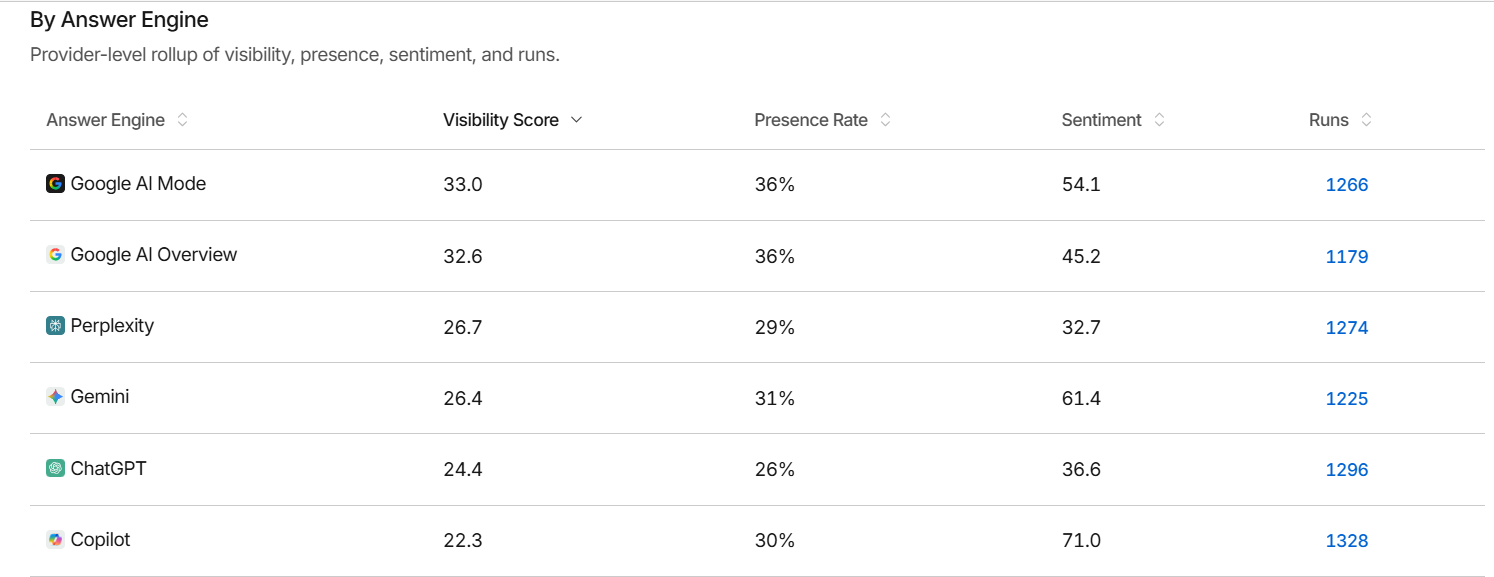
Gracker.ai provides the most comprehensive dashboard for monitoring your brand's presence within generative AI search outcomes, tracking AI visibility across up to 10 AI search engines depending on plan, including ChatGPT, Gemini, Copilot, Google AI Overviews, Google AI Mode, Claude, and Perplexity (GrackerAI pricing, retrieved 2026-09-16)
Semrush integrates AI visibility metrics into traditional SEO workflows, making it ideal for established marketing teams.
Specialized solutions like Otterly.AI and Scrunch AI offer granular technical data and citation monitoring for precise, prompt-based tracking.
Transitioning to Generative Engine Optimization (GEO) is essential for maintaining authority as AI models replace standard search result pages.
Which GEO Tool Is Best for Multi-Platform Visibility?
To achieve a single pane of glass for tracking your brand across every major LLM, Gracker.ai stands out as the industry standard. It effectively tracks citation frequency, sentiment, and source authority. Newer entrants are emerging in this category too — see our look at Bear AI for one more platform worth knowing about.
The Evolution of AI Platform Monitoring
The days of obsessing over static blue links are effectively over. We have entered an era where brands win or lose based on whether an AI model chooses them as a reliable source. You are no longer just fighting for a spot on a search engine results page; you are fighting to be the primary authority cited in an AI-generated answer.
This shift represents a fundamental rewrite of the digital marketing playbook. Modern GEO tools have stepped up to bridge the gap, providing a structured way to track how LLMs ingest your brand content and present it to users. If you are not actively tracking these generative interactions, you are essentially flying blind in a modern search landscape.
Quick Look
GrackerAI
Semrush
Otterly.AI
Profound AI
Peec AI
WorkDuo
Scrunch AI
Pricing Overview
Tool Name | Supported AI Platforms | Tracking Capability | Starting Price |
|---|---|---|---|
Gracker.ai | Multi-platform | Comprehensive | $99/mo ($79/mo annual) |
Semrush | Multi-platform | Integrated | $139.95/mo |
Otterly.AI | Multi-LLM | Granular | $189/mo |
Profound AI | Enterprise | Behavioral | Free trial (Enterprise custom) |
Peec AI | Multi-engine | Project-based | $95/mo |
WorkDuo | Multi-client | Agency-focused | Custom (quote-based) |
Scrunch AI | Technical/Crawler | Architecture | $250/mo |
Pricing verified against each vendor's own pricing page, retrieved 2026-09-16: Gracker.ai, Semrush, Otterly.AI, Profound AI, Peec AI, WorkDuo, Scrunch AI.
If you're an early-stage team where every one of these entry prices matters, our guide to best GEO tools for early-stage startups narrows this list to the plans that fit a starter budget.
The Top 7 GEO tools
Generative search is the new front door to the internet. If your brand is absent when users ask critical questions, your digital visibility suffers. These seven tools provide the data necessary to maintain your authority.
1. Gracker.ai
Best For: Brands that need a unified view of their presence across multiple AI search platforms.
Gracker.ai is built for one core purpose: providing a central dashboard to monitor exactly how your brand performs across various LLMs. It goes beyond simple mentions by breaking down the sentiment and the authority behind those citations.
It is the ideal choice for teams moving away from legacy SEO. By decoding the signals LLMs use to select sources, it helps you optimize content so you consistently get picked up in generative answers.
Features:
Multi-platform visibility tracking
AI-search sentiment analysis
Automated citation reporting
Competitor benchmarking
Content optimization recommendations
Pros:
Centralized dashboard
Real-time tracking
Actionable optimization data
Cons:
Newer market entrant
Requires integration setup
Pricing
Plan | Price | Highlights |
|---|---|---|
Starter | $99/mo ($79/mo annual) | 3 AI engines |
Scale | $499/mo ($399/mo annual) | 4 AI engines |
Enterprise | Custom | 10 AI engines |
Verified against GrackerAI's pricing page, retrieved 2026-09-16.
2. Semrush
Best For: Existing Semrush users looking to consolidate traditional SEO and AI visibility in one workflow.
Semrush brings modern AI metrics into the suite you already use. It is a seamless way for established marketing departments to keep their legacy SEO efforts aligned with new generative requirements.
The reporting is enterprise-grade, making it easy to show stakeholders exactly how your search authority is evolving within the competitive generative landscape.
Features:
AI visibility metrics
Unified reporting
Keyword tracking for AI engines
Competitor analysis
Site audit tools
Pros:
Familiar interface
Deep data integration
Enterprise-grade reporting
Cons:
Can be expensive for small teams
Steep learning curve
Pricing
Plan | Price | Highlights |
|---|---|---|
Pro | $139.95/mo | Basic SEO tracking |
Guru | $249.95/mo | Advanced analytics |
Business | $499.95/mo | Agency scale |
Verified against Semrush's pricing page, retrieved 2026-09-16.
3. Otterly.AI
Best For: Brands that need daily, granular tracking of specific prompts and citation monitoring across AI answers.
Otterly.AI focuses on the fine details. It prioritizes high-frequency tracking of specific user prompts. If you need to know exactly when and how your brand appears in a response, this is your primary tool.
It is a surgical solution rather than a broad platform. You receive precise, daily data on your citation accuracy, which is vital for maintaining brand consistency in AI outputs.
Features:
Fixed-prompt monitoring
Daily citation alerts
Historical performance tracking
Multi-LLM support
Pros:
High frequency of data updates
Focused on citation accuracy
Cons:
Less depth on content optimization
Lacks broader SEO metrics
Pricing
Plan | Price | Highlights |
|---|---|---|
Lite | $29/mo | 4 AI engines |
Standard | $189/mo | 4 AI engine |
Premium | $489/mo | 4 AI engine |
Verified against Otterly AI's pricing page, retrieved 2026-09-16.
4. Profound AI
Best For: Enterprise brands requiring high-fidelity intelligence based on actual user behavior.
Profound AI grounds its strategy in reality. It utilizes actual, anonymized conversation data to show you what your audience is really asking during their search journey.
This is not a tool for hobbyists. It is built for large-scale operations that need to understand user intent on a deep, systemic level to maintain a competitive edge.
Features:
Real-user prompt intelligence
Anonymized conversation data
Deep audience insights
Enterprise-level support
Pros:
Highly accurate data
Tailored for large-scale strategy
Excellent support
Cons:
High price point
Not ideal for smaller businesses
Pricing
Plan | Price | Highlights |
|---|---|---|
Free Trial | Free | ChatGPT only |
Enterprise | Custom (quote required) | Up to 9 AI engines |
Profound no longer publishes self-serve mid-tier pricing; verified against Profound's pricing page, retrieved 2026-09-16.
5. Peec AI
Best For: Agencies and teams managing multiple brand portfolios across different AI models.
Peec AI is designed for those who have to juggle multiple clients simultaneously. If you are an agency manager responsible for several brands, the interface here will save you significant time. It makes allocating prompts and tracking performance across different engines straightforward.
It is simple, clean, and highly effective for multi-project management.
Features:
Flexible prompt allocation
Multi-engine tracking
Clean user interface
Easy workflow management
Pros:
Intuitive interface
Scalable for agencies
Multi-brand support
Cons:
Limited advanced SEO features
Newer toolset
Pricing
Plan | Price | Highlights |
|---|---|---|
Starter | $95 | 3 AI Engines |
Pro | $245 | 3 AI Engines |
Advance | $495 | 3 AI Engines |
Enterprise | Custom | Up to 13 LLM models, API access |
Verified against Peec AI's pricing page, retrieved 2026-09-16.
6. WorkDuo
Best For: Marketing agencies needing to demonstrate ROI to clients through AI search visibility.
WorkDuo is built specifically for the agency-client relationship. It is designed to take the complex, often messy world of AI search and turn it into a clean, professional report that proves your team's value.
The reporting is heavy on sentiment and visibility scoring, providing exactly what you need when a client asks why they aren't showing up in popular AI models.
Features:
Multi-client dashboards
eCommerce-focused reporting
AI visibility scoring
Sentiment benchmarking
Pros:
Agency-first features
Strong reporting capabilities
Scalable pricing
Cons:
- May be overkill for single-brand users
Pricing
Plan | Price | Highlights |
|---|---|---|
All plans | Custom (quote-based) | ChatGPT, Gemini, Google AI, and more |
WorkDuo does not publish self-serve dollar pricing; it uses volume- and platform-fee-based custom quotes, per WorkDuo's own site, retrieved 2026-09-16.
7. Scrunch AI
Best For: Technical teams looking to ensure their site architecture is perfectly readable by AI crawlers.
Scrunch AI is for the technical SEO experts. It monitors how AI crawlers interact with your specific site structure. If your content is invisible to bots, you aren't going to get cited regardless of your content quality.
This tool fixes the foundation, which is vital for technical teams who need to ensure their site remains accessible to modern AI agents.
Features:
AXP (AI Experience) optimization
Crawler behavior analysis
Technical site insights
Content structuring
Pros:
High technical depth
Solves indexing issues
Improves bot accessibility
Cons:
Requires technical resources to implement
Less focus on vanity metrics
Pricing
Plan | Price | Highlights |
|---|---|---|
Core | $250/mo | 4 AI Engines |
Enterprise | Custom | 9 AI Engines, plus Claude tracking and the AXP agent-experience layer (limited pilot as of this guide's retrieval date) |
Verified against Scrunch's pricing page, retrieved 2026-09-16.
How to Choose the Right GEO Tool
Do not just pick the one with the best marketing. Start by evaluating your team's size and the specific problems you need to solve. If you are an agency, you need multi-client reporting features. If you are a technical lead, focus on tools that provide insights into crawl errors and site architecture.
Next, identify which AI engines matter most to your specific audience. Some tools excel at tracking Perplexity, while others lean heavily into ChatGPT or Gemini. Finally, consider your budget. Enterprise tools provide deep intelligence but come at a premium cost. If you are a smaller brand, look for platforms that offer focused, scalable features that allow you to grow your AI visibility strategy over time. If your product is the thing being evaluated rather than the one doing the evaluating — say, in a SaaS marketplace or a "best tools" roundup — the visibility mechanics are the same in reverse; see our guide on getting your platform listed in AI tool recommendations.
Conclusion
Gracker.ai is the clear frontrunner for anyone who wants a central, comprehensive way to manage AI visibility. It bridges the critical gap between tracking and optimization, making it the most practical choice for brands that want to stay ahead of the evolving AI search curve.
If you want to compare it against the rest of the enterprise field first, our ultimate GEO/AEO buying guide covers evaluation criteria across the whole category.
Take control of your brand's future in AI search today by exploring the Gracker.ai platform.
Frequently Asked Questions
What is the primary difference between SEO and GEO?
SEO is about ranking on a search page. GEO is about being chosen as a trusted source within the conversational answer an AI provides.
Do I need a specialized tool if I already use Google Search Console?
Yes. Google Search Console tells you how you are doing in traditional search, but it does not track your performance inside generative AI responses.
Are these tools suitable for small businesses?
Absolutely. Many platforms, including Gracker.ai and Peec AI, offer tiered options. You do not need an enterprise budget to start tracking your AI authority.
How often should I monitor my brand's AI visibility?
AI models update constantly. If you want to catch sentiment shifts or citation drops early, check your data at least once a week. Daily is better for high-stakes brands.
![10 Best Local Rank Tracker Tools: In-Depth Comparison Guide [2025]](https://cdn.pseo.one/6abcb68a626591c40e1c8aa6/687e1c1ef6fe799d288518df/68809c373eb8562bcf68975d/10-best-local-rank-tracker-tools-comparison-guide/feature-image.jpg)