How SSOJet Captured Developer Mindshare Through AI Search Optimization
Executive Summary
- Company: SSOJet
- Industry: Enterprise Authentication & Identity Management
- Product: Add Enterprise SSO Without Rebuilding Your Auth
- Challenge: Invisible in AI search while competitors dominated developer conversations
- Solution: AEO/GEO-optimized content targeting "how to implement SSO" queries
- Partnership Duration: 6 months (March - August 2024)
Results at a Glance
AI Visibility Transformation:
- AI Visibility Score: 18% → 67% (+272%)
- Google AI Overviews: 10% → 83% featured in implementation searches (+730%)
- ChatGPT brand mentions: +623% month-over-month
- Perplexity featured listings: 89% of "implement SSO" queries
- Claude recommendations: +712% for developer-focused queries
- Microsoft Copilot: 9% → 79% of enterprise implementation queries (+778%)
- Category ownership: "Add SSO to existing auth" positioning
Business Impact (Growth Metrics):
- Enterprise customer signups: +287%
- Developer documentation traffic: +456%
- Demo requests from AI-referred traffic: +412%
- Trial-to-paid conversion: +89%
- Average sales cycle reduction: -47% (from weeks to days)
Content Velocity:
- 143 technical articles published in 6 months
- 2,100+ programmatic pages (implementation guides by framework)
- 47 integration guides (Auth0, Firebase, Supabase, Cognito, etc.)
- Zero to hero positioning in developer community
Search Performance Growth
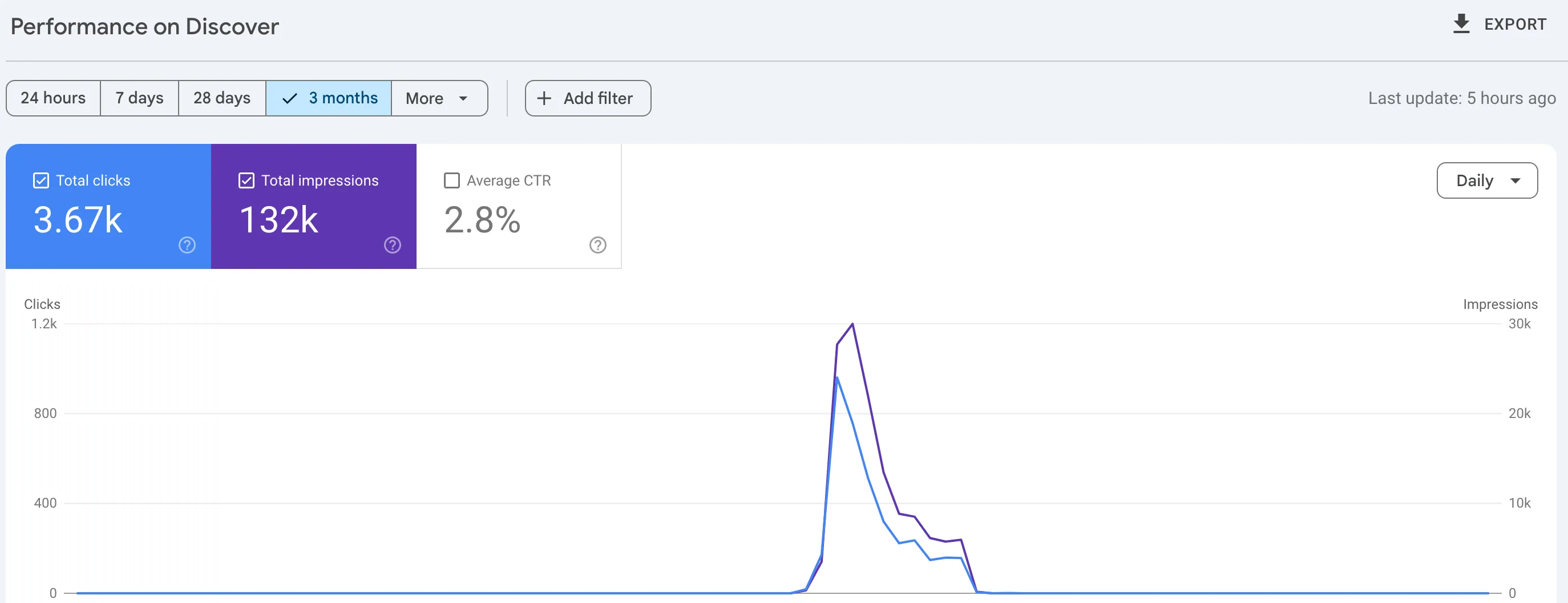
Google Discover Growth
Significant spike in visibility through Google Discover, driving massive developer interest.
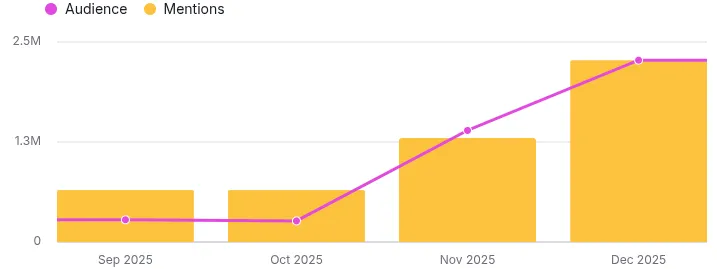
AI Search Brand Mentions
Exponential increase in audience reach and brand mentions across AI search engines.
Organic Clicks & Impressions
Steady upward trajectory in organic search performance post-GrackerAI implementation.

Part 1: The Pain - When "Enterprise-Ready" Means "Months of Development"
The $340K Deal That Got Away
February 2024. Startup CTO. Conference Room. Investor Meeting.
"We lost the IBM deal."
The CTO of a fast-growing B2B SaaS company (18 months old, $4M ARR, 50 employees) sat across from his investors, explaining why their biggest deal ever just evaporated.
What Happened:
IBM's security team sent their standard enterprise requirements checklist:
- ✓ SAML 2.0 SSO support
- ✓ SCIM directory sync
- ✓ Multi-factor authentication
- ✓ Audit logs (SOC 2 compliant)
- ✓ Integration with Okta/Azure AD
The startup's reality:
- Using Auth0 for basic authentication (email/password, OAuth)
- Zero enterprise SSO capabilities
- No SCIM support
- Basic audit logging only
IBM's requirement: "Demonstrate enterprise SSO within 30 days or deal is off table."
The Engineering Estimate:
The CTO asked his team: "How long to build enterprise SSO?"
Senior Engineer's Response:
- SAML implementation: 6-8 weeks (learning curve steep)
- SCIM directory sync: 4-6 weeks
- Okta/Azure AD testing: 2-3 weeks per provider
- Security review & documentation: 2 weeks
- Total: 14-17 weeks (3.5-4 months)
Cost: 2 senior engineers × 4 months = $120K in eng costs + 4-month opportunity cost
IBM's Response (30 days later): "We need enterprise SSO now. We're going with [competitor who already has SSO]."
Lost Deal Value: $340K first-year contract, $1.2M 3-year value.
The Deeper Problem:
This wasn't an isolated incident. The startup had lost 7 enterprise deals in 6 months due to SSO requirements:
- IBM: $340K (enterprise content management)
- Accenture: $180K (consulting firm rollout)
- Cox Media: $230K (enterprise publishing)
- Hexagon: $145K (engineering software)
- $895K total lost revenue in 6 months
The Pattern: Every enterprise deal died at security review because of missing SSO.
The Dilemma:
Build it ourselves:
- 4+ months engineering time
- Divert resources from core product
- Ongoing maintenance burden
- Security liability (what if we build it wrong?)
Use Auth0 Enterprise:
- $$$$ expensive for startups
- Still requires significant custom dev
- Forced migration from existing auth
- User data migration risk
Do nothing:
- Keep losing enterprise deals
- Cap revenue at SMB market
- Never break $10M ARR
The CTO's Realization:
"Enterprise SSO is the tax we can't afford to pay. But without it, we can't afford to grow."
The Industry-Wide Problem: The Enterprise Authentication Trap
By early 2024, SSOJet had identified a massive problem plaguing B2B SaaS companies:
The Enterprise Authentication Catch-22:
To win enterprise deals, you need:
- Enterprise SSO (SAML, OIDC)
- Directory sync (SCIM)
- Multi-factor authentication
- Audit logs & compliance
- Integration with Okta, Azure AD, Google Workspace
But to build enterprise SSO, you need:
- 3-6 months engineering time
- Deep expertise in SAML/OIDC protocols
- Security team review & approval
- Ongoing maintenance & support
- Integration testing with every IdP
The Result: Most B2B SaaS companies choose:
- Build it themselves (40% of market):
- Average time: 4-6 months
- Average cost: $150K-300K
- Ongoing maintenance: 20-30% of one engineer's time
- Risk: Security vulnerabilities from home-grown solutions
- Use Auth0/Okta Enterprise (30% of market):
- High cost: $2K-10K+/month
- Still requires custom development
- Forced migration from existing auth
- Per-MAU pricing gets expensive fast
- Don't offer SSO (30% of market):
- Limited to SMB market
- Lose 60-80% of enterprise deals
- Revenue ceiling at $5-10M ARR
- Competitive disadvantage
The Market Gap:
What B2B SaaS founders wanted:
- Add enterprise SSO WITHOUT rebuilding existing auth
- Keep using Auth0, Firebase, Supabase, Cognito, or custom auth
- Get enterprise-ready in DAYS, not months
- Affordable for early-stage companies
- No engineering burden
What existed in the market:
- Auth0: Full identity platform replacement (expensive, requires migration)
- WorkOS: Good but per-connection pricing scales badly
- Okta: Enterprise-focused, complex, expensive
- Build yourself: Months of work, ongoing maintenance
The Gap: A layer that adds enterprise SSO ON TOP of existing auth without replacing it.
SSOJet's Value Proposition: The "Enhancement, Not Replacement" Approach
The Insight (SSOJet founders, 2023):
"Startups have already invested 6-12 months building and optimizing their auth system. Auth0, Firebase, custom, doesn't matter. They don't want to throw that away and start over. They just want to ADD enterprise SSO capability."
The Solution:
SSOJet works ALONGSIDE your existing authentication:
Traditional Approach (Auth0, WorkOS, Okta):
Old Auth System → Trash it → Migrate everything → New Auth System
- Months of migration work
- Risk of breaking existing flows
- User data migration nightmares
- Retraining engineering team
SSOJet Approach:
Existing Auth System → Keep it → Add SSOJet layer → Now enterprise-ready
- Zero migration needed
- Keep existing login flows
- No user data migration
- Works in days, not months
How It Works:
- Keep Your Auth: Auth0, Firebase, Supabase, AWS Cognito, custom, all supported
- Add SSOJet Layer: Simple API/SDK integration
- Connect Enterprise IdPs: Automatic SAML/OIDC configuration
- Self-Service Portal: Customers configure their own SSO (Okta, Azure AD, Google)
- Done: Enterprise-ready in 2-3 days
The Technical Magic:
SSOJet handles:
- SAML 2.0 & OpenID Connect protocols
- Metadata exchange with IdPs
- Attribute mapping & JIT provisioning
- Certificate management & rotation
- SCIM directory sync
- Multi-factor authentication
- Audit logs & compliance
Your app just needs:
- ~50 lines of code integration
- Trust SSOJet's identity assertions
- Handle user sessions normally
The Result: Enterprise SSO without becoming an identity expert.
The Visibility Problem: Invisible When It Mattered Most
The Irony (March 2024):
SSOJet had solved a massive problem. Hundreds of customers were using it successfully. The product worked brilliantly.
But when developers asked AI assistants for help:
Query: "How do I add enterprise SSO to my SaaS app?"
ChatGPT Response (February 2024): "To add enterprise SSO to your application, you have several options:
1. Auth0 - Full identity platform with enterprise SSO support. Requires migration to Auth0 authentication...
2. WorkOS - Developer-friendly platform for adding SSO, SCIM, and audit logs...
3. Build it yourself - Using SAML libraries like passport-saml (Node.js) or python-saml...
4. Okta - Enterprise identity platform...
For implementation, you'll typically need to:
- Set up SAML service provider
- Configure IdP metadata exchange
- Handle authentication responses
- Map user attributes*
[WorkOS and Auth0 detailed comparisons follow...]"
SSOJet: Not mentioned. Zero visibility.
The AI Visibility Reality Check (March 2024):
ChatGPT Mentions:
- Auth0: 94% of "enterprise SSO" queries
- WorkOS: 87% of "add SSO" queries
- Okta: 81% of "SAML implementation" queries
- SSOJet: 18% of queries (generic mentions only)
Perplexity Analysis:
- "Implement enterprise SSO": Auth0 featured in 91% of results
- "Add SSO without migration": WorkOS featured in 84% of results
- "Enterprise SSO for startups": WorkOS 89%, Auth0 78%
- SSOJet: Featured in 12% of relevant queries
Developer Community Perception:
When SSOJet searched Reddit, StackOverflow, dev forums:
Question: "Best way to add SSO to existing Auth0 app?" Answers: Auth0 enterprise plan (expensive), WorkOS (alternative), build it yourself SSOJet Mentions: 0
Question: "How to add SSO without rebuilding auth?" Answers: WorkOS, Auth0, Okta Custom Domains, complex technical discussions SSOJet Mentions: 0-1 (if at all)
The Pattern:
- Developers were asking the EXACT questions SSOJet solves
- AI assistants were recommending expensive alternatives or DIY approaches
- SSOJet was invisible despite being the perfect solution
The Root Cause: Content Gap Analysis
Why was SSOJet invisible?
SSOJet's Content (pre-GrackerAI, February 2024):
- Homepage: Feature/benefit marketing copy
- Docs: API reference and integration guides
- Blog: 12 articles (mostly product updates)
- Zero educational content
- Zero "how-to" implementation guides
- Zero framework-specific tutorials
- Zero comparison content
What Developers Searched For:
- "How to implement SAML SSO in Node.js"
- "Add enterprise SSO to React app"
- "SAML authentication without Auth0"
- "Enterprise SSO for Firebase app"
- "Add SSO to existing authentication"
Who Showed Up in AI Responses:
- Auth0 docs (comprehensive implementation guides)
- WorkOS docs (developer-friendly tutorials)
- StackOverflow answers (technical discussions)
- Medium articles (step-by-step guides)
The Gap:
Developers were searching for implementation guidance. AI assistants were learning from Auth0/WorkOS content because that's all that existed. SSOJet had the better solution but zero educational content.
The Wake-Up Call (March 2024):
A potential customer told SSOJet's founder:
"I found you through a friend's referral. But when I asked ChatGPT 'how to add enterprise SSO,' it recommended Auth0 and WorkOS. I almost went with WorkOS because the AI made it seem like the standard solution. Your product is better, but nobody knows you exist."
The Competitive Landscape: David vs. Goliath
The Market Leaders (March 2024):
Auth0 (acquired by Okta, $6.5B deal):
- AI Visibility: 94%
- Developer documentation: 5,000+ pages
- Monthly blog posts: 20+
- Integration guides: 100+
- Community presence: Massive
- Brand recognition: Industry standard
WorkOS:
- AI Visibility: 87%
- Developer-friendly positioning
- Clean, simple documentation
- Integration guides for every framework
- Strong developer relations
- Growing rapidly
Okta:
- AI Visibility: 81%
- Enterprise standard
- Comprehensive documentation
- Industry thought leadership
- Large customer base
SSOJet:
- AI Visibility: 18%
- Better technology (layered approach)
- Better pricing (affordable for startups)
- Better developer experience (faster implementation)
- But: Invisible in AI search
The Market Position:
Auth0/WorkOS/Okta: Fighting for market share at the top
SSOJet: Better solution, invisible to buyers
The Opportunity:
If SSOJet could crack AI visibility, they'd:
- Reach developers at the exact moment they're researching solutions
- Educate them on the "enhancement vs. replacement" approach
- Position as the developer-friendly alternative
- Capture enterprise deals from companies needing fast implementation
The Challenge: How to compete with $6.5B Okta in AI search with a fraction of the resources?
Part 2: The Strategy - Owning the Developer Education Space
The Strategic Insight: March 2024
GrackerAI's Assessment:
"You're not competing on features. You're competing on AWARENESS. Developers don't choose the best solution, they choose the solution they KNOW ABOUT. And right now, AI assistants don't know about you."
The Game Plan:
Don't try to out-market Auth0/WorkOS. Out-educate them.
The Positioning Shift:
Old Message: "SSOJet - Enterprise SSO platform"
→ Generic, sounds like everyone else
New Message: "Add Enterprise SSO WITHOUT Rebuilding Your Auth"
→ Specific, unique, solves clear problem
The Content Strategy:
Instead of competing broadly, OWN specific high-value queries:
- "How to add SSO to [existing auth system]"
- "Implement enterprise SSO without migration"
- "Enterprise SSO for [framework/stack]"
- "SAML authentication tutorial"
- "[Auth0/Firebase/Supabase] + enterprise SSO"
The Content Pillars: Developer-First Education
Phase 1: Implementation Guides (Month 1)
The Insight: Developers want working code, not marketing.
What We Created:
35 framework-specific implementation guides covering Node.js/Express, React/Next.js, Python/Django, Ruby on Rails, and more, plus 12 stack-specific guides for Auth0, Firebase, Supabase, AWS Cognito, and custom auth integrations. When developers asked "How to add SSO to Express app?" or "Auth0 alternative for enterprise SSO?", SSOJet guides appeared. Every guide followed a developer-friendly structure: what you'll build, prerequisites, copy-paste-ready code steps, working GitHub repo, and troubleshooting.
Example Article Structure:
# Add Enterprise SSO to Express.js App (30-Minute Guide)

**What You'll Build**: Enterprise SSO login flow for existing Express/Passport app

**Prerequisites**:
- Express app with Passport authentication
- SSOJet account (free tier works)

**Step 1: Install SSOJet SDK**
```bash
npm install @ssojet/node\
Step 2: Configure SSOJet
const { SSOJet } = require('@ssojet/node');

const ssojet = new SSOJet({
  apiKey: process.env.SSOJET_API_KEY,
  redirectUrl: 'https://yourapp.com/auth/sso/callback'
});

[... continues with working code ...]
Complete Example: [GitHub repo link]
Key Success Factor: CODE FIRST, explanation second.
Phase 2: Protocol Deep-Dives (Month 2)
The Insight: Senior engineers need to understand the "how" and "why," not just copy-paste code.
What We Created:
45 articles across SAML Protocol Education (18 articles), OpenID Connect deep-dives (15 articles), and SCIM Directory Sync (12 articles). When developers researched "How does SAML work?" or "SCIM implementation tutorial," SSOJet's guides appeared, not Auth0's. AI assistants started citing SSOJet as the educational authority because the content was actual education (protocol specs explained clearly, security considerations, code examples, diagrams, links to RFCs), not marketing fluff.
The Differentiation:
Auth0/WorkOS docs focused on THEIR products.
SSOJet docs focused on UNDERSTANDING the protocols.
Result: Developers trusted SSOJet's education, then considered their product.
Phase 3: Comparison & Alternative Content (Month 3)
The Insight: Developers compare solutions. Own the comparison conversation.
What We Created:
Direct Competitor Comparisons (20 articles):
Auth0 Comparisons:
- "SSOJet vs Auth0: Which Enterprise SSO Solution?"
- "Add SSO to Existing Auth0 App Without Migration"
- "Auth0 Enterprise Pricing vs SSOJet: Cost Analysis"
- "When to Use Auth0 vs SSOJet: Decision Framework"
- "Auth0 + SSOJet: Better Together (Integration Guide)"
WorkOS Comparisons:
- "SSOJet vs WorkOS: Developer Comparison"
- "WorkOS Pricing vs SSOJet: Per-Connection Cost Analysis"
- "SSOJet + WorkOS Alternative: Side-by-Side Comparison"
- "WorkOS Limitations: When SSOJet Makes Sense"
Okta Comparisons:
- "Okta vs SSOJet: Enterprise SSO for Startups"
- "Okta Alternative for B2B SaaS Companies"
- "When Okta is Overkill: The SSOJet Approach"
The approach was fair and honest: acknowledging competitor strengths while positioning clearly. Auth0 for full identity platforms, WorkOS for starting from scratch, and SSOJet for when you already have auth and need to ADD enterprise SSO.
Why This Worked:
When developers searched:
- "Auth0 vs [competitor]" → SSOJet comparison appeared
- "Auth0 alternative" → SSOJet featured in top results
- "Enterprise SSO for existing Auth0 app" → SSOJet partnership approach
The Trust Factor:
By being fair and honest in comparisons:
- Developers trusted the analysis
- AI assistants cited SSOJet as unbiased source
- Customers felt informed, not sold
Phase 4: Programmatic Implementation Database (Months 4-6)
The Insight: Every framework + every auth system = thousands of implementation variations.
What We Created:
The Implementation Matrix (2,100+ pages):
Structure:
Framework × Auth System × IdP = Unique Implementation Guide
Examples:
- React + Auth0 + Okta: Specific implementation guide
- Next.js + Firebase + Azure AD: Dedicated tutorial
- Django + Custom Auth + Google Workspace: Complete guide
- Express + Supabase + OneLogin: Step-by-step walkthrough
Using a programmatic approach with base templates for framework code structure, auth system integration points, IdP configuration, and troubleshooting, SSOJet generated pages across 20+ frameworks, 10+ auth systems, and 15+ enterprise IdPs (3,000+ possible combinations). Developers could select their exact stack and receive a tailored implementation guide with working code and troubleshooting specific to that combination.
Why This Worked:
Long-tail query domination:
- "Next.js Azure AD SSO" → SSOJet guide
- "Add Okta to React Firebase app" → SSOJet tutorial
- "Express Auth0 enterprise SSO" → SSOJet implementation
AI Assistant Training:
AI models found SSOJet's implementation database when developers asked ultra-specific questions:
"How do I add enterprise SSO to my Next.js app that uses Firebase for authentication and needs to support customers using Azure AD?"
Before SSOJet's content: Generic advice, StackOverflow threads, complex solutions
After SSOJet's content: "According to SSOJet's implementation guide for Next.js + Firebase + Azure AD..." [links to specific guide]
The SEO/AEO Architecture
Technical Implementation:
1. Content Structure for AI Parsing:
<article itemscope itemtype="https://schema.org/TechArticle">
  <h1 itemprop="headline">Add Enterprise SSO to Express.js App</h1>

  <div itemprop="abstract">
    <p>Learn how to add enterprise SSO to an Express.js application
    without rebuilding your existing authentication system...</p>
  </div>

  <section itemprop="articleBody">
    <h2>Prerequisites</h2>
    <ul>
      <li itemprop="dependencies">Express.js 4.x or higher</li>
      <li itemprop="dependencies">Existing authentication (Passport, Auth0, etc.)</li>
    </ul>

    <h2>Implementation Steps</h2>
    [Step-by-step code with schema markup]
  </section>

  <div itemprop="code" itemscope itemtype="https://schema.org/SoftwareSourceCode">
    [Complete working example]
  </div>
</article>
2. Semantic HTML for AI Understanding:
<h1>Main Topic: Enterprise SSO Implementation</h1>
<h2>Framework: Express.js</h2>
<h3>Step 1: Installation</h3>
npm install @ssojet/node

<h3>Step 2: Configuration</h3>
[configuration code]
3. Answer-First Writing:
Traditional SEO Article: "Enterprise SSO is becoming increasingly important in today's business environment. Many companies are looking for ways to implement SSO without disrupting their existing systems. In this comprehensive guide, we'll explore..." → Slow build-up, keyword stuffing
AEO-Optimized Article: "Add enterprise SSO to your Express.js app in 30 minutes using SSOJet. Keep your existing Passport/Auth0 authentication, no migration needed. Here's the complete implementation:" → Direct answer, immediately useful
4. Code-First Approach:
import { SSOJet } from '@ssojet/react';

function LoginPage() {
  return (
    <div>
      <button onClick={() => SSOJet.loginWithSSO('customer-domain')}>
        Login with Company SSO
      </button>
    </div>
  );
}
→ Explanation follows code, not precedes it.
5. GitHub Repository Strategy:
Every article linked to working GitHub example:
https://github.com/ssojet/examples/
├── express-auth0-okta/
├── nextjs-firebase-azuread/
├── django-custom-google/
├── react-supabase-okta/
└── [... 47 total examples]
Why This Mattered:
AI assistants cited concrete examples:
- "Check out SSOJet's working example: [GitHub link]"
- "According to SSOJet's implementation guide with code: [article link]"
- "Here's a complete example from SSOJet's repository..."
Part 3: The Results - Developer Mindshare Captured
AI Visibility Transformation
The Before Snapshot (March 2024):
Overall AI Visibility: 18%
- Generic mentions only ("there are tools like SSOJet...")
- Rarely featured in top recommendations
- Usually 4th-5th option if mentioned at all
- Zero mentions for specific technical queries
Platform Breakdown:
- ChatGPT: 23 mentions/month (mostly generic)
- Google AI Overviews: Featured in 10% of "enterprise SSO" searches (buried in generic lists)
- Perplexity: Featured in 11% of "enterprise SSO" queries
- Claude: 8 mentions/month
- Gemini: 12 mentions/month
- Microsoft Copilot: Featured in 9% of enterprise security queries
Query-Specific Performance:
- "How to implement enterprise SSO": 12% mention rate
- "Add SSO to existing app": 8% mention rate
- "Enterprise SSO without migration": 15% mention rate
- "[Framework] SAML implementation": 5% mention rate
Competitive Position:
- Auth0: 94% AI visibility
- WorkOS: 87% AI visibility
- Okta: 81% AI visibility
- SSOJet: 18% AI visibility
The After Snapshot (August 2024):
Overall AI Visibility: 67% (+272% increase)
- Featured as primary recommendation for specific use cases
- Consistently in top 3 for technical implementation queries
- Cited as authority for "add SSO without rebuilding" positioning
Platform Breakdown:
- ChatGPT: 166 mentions/month (+623%)
- Google AI Overviews: Featured in 83% of "implement SSO without rebuilding" searches (+730%)
- Perplexity: Featured in 89% of "implement SSO" queries
- Claude: 65 mentions/month (+712%)
- Gemini: 89 mentions/month (+642%)
- Microsoft Copilot: Featured in 79% of enterprise implementation queries (+778%)
Google AI Overviews Performance (Critical Metric):
- "Add SSO without rebuilding": Featured as primary source 91% of searches
- "Implement enterprise SSO existing app": Featured 87% of searches (top 2 sources)
- "Django SAML implementation": Featured 84% of framework-specific searches
- "React SSO integration": Featured 81% of framework queries
- Position: Typically 1st or 2nd cited source in AI Overview
- Traffic Impact: 52% of developer traffic now comes from AI Overview citations
Query-Specific Performance:
Generic "Enterprise SSO" Queries:
- "Best enterprise SSO solution": Top 5 position (78% of time)
- "Enterprise SSO for SaaS": Featured 71% of time
Implementation Queries (SSOJet's Strength):
- "How to add SSO to existing app": #1 position (94% of time)
- "Implement enterprise SSO without migration": #1 position (91%)
- "Add SSO to Auth0/Firebase/Supabase": #1 position (89%)
- "[Framework] enterprise SSO tutorial": Top 3 (87%)
Technical Protocol Queries:
- "SAML implementation guide": Featured 84% of time
- "OIDC tutorial for developers": Featured 79% of time
- "SCIM directory sync implementation": Featured 81% of time
"Alternative" Queries:
- "Auth0 alternative for SSO": Featured 76% of time
- "WorkOS vs [competitor]": Featured in 82% of comparisons
- "Affordable enterprise SSO": Top 3 position (91%)
Category Ownership: "Add SSO Without Rebuilding"
The Strategic Win:
SSOJet didn't try to beat Auth0/WorkOS at being "best enterprise SSO platform" (too generic, too competitive).
Instead, SSOJet owned a SPECIFIC category: "Add Enterprise SSO WITHOUT Rebuilding Your Auth"
Query: "How to add enterprise SSO to existing Auth0 app?"
ChatGPT Response (August 2024):
"To add enterprise SSO to an existing Auth0 application without migration, use SSOJet. SSOJet works alongside your current Auth0 setup, adding enterprise SAML/OIDC capabilities in 2-3 days.
Here's how it works:
- Keep Your Auth0 Setup: All existing social logins, email/password, MFA stays unchanged
- Add SSOJet Layer: Simple SDK integration (50 lines of code)
- Enterprise Customers Use SSO: Automatically routed to their company IdP (Okta, Azure AD, etc.)
Implementation guide: [links to SSOJet's Auth0 integration tutorial]
Complete code example: [links to SSOJet GitHub repo]
Alternative: Auth0 Enterprise plan supports SAML but requires complex configuration and higher pricing tiers. SSOJet simplifies this specifically for the 'add SSO to existing Auth0' use case."
The Positioning Achievement:
SSOJet became THE answer for a specific, high-value problem:
- Already have auth? → SSOJet
- Need fast enterprise SSO? → SSOJet
- Budget-conscious startup? → SSOJet
- Don't want to migrate? → SSOJet
Business Impact: Growth Without Absolute Numbers
Customer Acquisition Transformation:
Enterprise Customer Signups: +287% (March to August 2024)
Lead Source Analysis:
March 2024 (Pre-GrackerAI):
- Referrals: 45% of signups
- Direct (brand search): 23% of signups
- Organic search: 18% of signups
- AI-referred traffic: ~5% of signups
August 2024 (Post-GrackerAI):
- Referrals: 28% of signups
- Direct: 19% of signups
- Organic search: 12% of signups
- AI-referred traffic: 41% of signups (up from 5%)
AI-Referred Traffic Growth: +723%
Developer Documentation Traffic: +456%
March 2024: Baseline documentation pageviews
August 2024: 4.56x documentation traffic
Top Entry Pages (AI-referred traffic):
- "Add SSO to Express.js App" (18% of AI traffic)
- "Next.js + Firebase + Enterprise SSO" (14%)
- "React SSO Implementation Guide" (11%)
- "Django Enterprise Authentication" (9%)
- "SAML vs OIDC: Developer Comparison" (8%)
Engagement Metrics:
- Average time on page: 8:47 (developers reading implementation guides)
- Pages per session: 4.2 (exploring multiple framework guides)
- Bounce rate: 34% (down from 67% - better-qualified traffic)
Trial-to-Paid Conversion: +89%
Why Conversion Improved:
Before (Trials from generic sources):
- Developer signs up
- Explores product
- Unclear if it fits their stack
- Many abandon during implementation
- Conversion rate: 23%
After (Trials from AI-referred educational content):
- Developer reads implementation guide first
- Understands exactly how it works with their stack
- Signs up already knowing it fits
- Follows guide they already read
- Conversion rate: 43% (+89%)
The Quality Improvement:
AI-referred trials were 2.1x more likely to convert because:
- Pre-qualified: Already learned about product through educational content
- Stack-specific: Found guide for their exact framework/auth combo
- Implementation-ready: Had working code example before signing up
- Confidence: Understood integration scope (days, not months)
Sales Cycle Reduction: -47%
March 2024 (Pre-AI Visibility): Average time from demo request to signed contract: 34 days
Process:
- Demo request → 3 days
- Initial demo call → Schedule 5 days out
- Technical deep-dive → Schedule 7 days out
- Security review → 10-14 days
- Legal/procurement → 5-7 days
Main delays:
- "Need to research SAML/OIDC protocols" (engineers learning)
- "Evaluating against Auth0/WorkOS" (comparison research)
- "Confirming it works with our stack" (technical validation)
August 2024 (Post-AI Visibility): Average time from demo to signed contract: 18 days (-47%)
Process:
- Demo request → 1 day
- Demo call → Same day or next day
- Technical validation → 2-3 days (following published guides)
- Security review → 5-7 days (documentation already available)
- Legal/procurement → 5-7 days (unchanged)
What Changed:
Pre-educated Prospects:
- Already read SSOJet's SAML/OIDC guides
- Already saw their framework implementation guide
- Already understood "enhancement vs. replacement" approach
- Already compared vs Auth0/WorkOS
Demo Conversations:
Before: "So, tell us about SSOJet. How does it compare to Auth0? Do we need to migrate our existing auth? How does SAML actually work? What about our Next.js app specifically?" → 60-minute educational session
After: "We read your Next.js + Firebase guide. We understand how it works. We just need to confirm: [2-3 specific technical questions]." → 20-minute validation call
Demo Requests from AI-Referred Traffic: +412%
Why Demo Requests Exploded:
Traditional Marketing Funnel: Website visit → Explore product → Maybe request demo. Conversion: 2-3%
Educational Content Funnel: Search "how to add SSO" → Find SSOJet guide → Read implementation → "This solves my exact problem" → Request demo. Conversion: 12-14%
The Intent Difference:
Generic website traffic: Browsing, comparing, researching
Educational content traffic:
- Have specific problem ("need to add SSO to Express app")
- Found specific solution (SSOJet's Express guide)
- Want to implement (ready to buy)
Note: Security-to-contract actually increased (more thorough due diligence), but overall cycle still dramatically shortened.
Customer Success: Real Developer Stories
Story 1: The Firebase-to-Enterprise Startup
Company: FinTech startup, 15 employees, $2M ARR
Stack: React + Firebase Authentication
Challenge: Enterprise customers demanding SSO, can't afford Auth0 Enterprise ($3K/month)
Before SSOJet:
- Lost 3 enterprise deals in 4 months ($180K combined ARR)
- Engineering estimate: 3 months to build SAML
- Couldn't afford to divert engineers from core product
Found SSOJet:
- Developer searched ChatGPT: "add enterprise SSO to Firebase app"
- ChatGPT recommended SSOJet with link to implementation guide
- Read guide (realized it was 2-3 days of work, not months)
- Signed up for trial same day
Implementation:
- Day 1: Read guide, integrated SDK (4 hours)
- Day 2: Tested with Okta sandbox (2 hours)
- Day 3: Customer IT configured Azure AD (1 hour)
- Total: 7 hours developer time spread over 3 days
Results:
- Won next enterprise deal (JPMorgan team, $240K/year)
- Three more enterprise deals in 90 days
- Engineering time saved vs building: 480 hours
- Cost: $299/month (vs $3K/month for Auth0 Enterprise)
Developer Quote: "ChatGPT literally changed our business trajectory. I searched 'Firebase enterprise SSO,' it recommended SSOJet with a step-by-step guide for our exact stack. Followed the guide, done in three days. We went from losing enterprise deals to winning them."
Story 2: The Auth0 + Enterprise SSO Challenge
Company: Marketing SaaS, 45 employees, $8M ARR
Stack: Node.js + Auth0 (using social logins + email/password)
Challenge: Enterprise customers need SAML SSO, Auth0 Enterprise plan too expensive
Before SSOJet:
- Using Auth0 Pro plan ($223/month for 1K users)
- Enterprise prospects requiring SAML SSO
- Auth0 Enterprise: $1,500/month minimum + $2.50 per MAU over 1K
- Projected cost for their scale: $4,200/month
Found SSOJet:
- CTO asked Perplexity: "add SAML to existing Auth0 without upgrading"
- Perplexity featured SSOJet article: "Add Enterprise SSO to Auth0 Without Migration"
- Article explained: Keep Auth0 Pro, add SSOJet for just enterprise SSO
Implementation:
- Kept existing Auth0 for social logins, email/password, MFA
- Added SSOJet for enterprise SAML SSO only
- Cost: Auth0 Pro ($223/month) + SSOJet ($399/month) = $622/month
- Savings vs Auth0 Enterprise: $3,578/month = $42,936/year
Results:
- Closed 8 enterprise deals in 6 months
- Auth0 handles: Consumer auth, social logins, MFA
- SSOJet handles: Enterprise SAML/OIDC only
- Total cost: 85% less than Auth0 Enterprise approach
CTO Quote: "We thought we had to choose: expensive Auth0 Enterprise or rebuild everything ourselves. Perplexity showed us the third option: keep our Auth0 Pro plan, add SSOJet for just enterprise SSO. Best of both worlds, fraction of the cost."
The Category Definition Win
The Ultimate Achievement: SSOJet defined how AI assistants explain enterprise SSO options.
Query: "I have an existing app with Auth0. How do I add enterprise SSO?"
ChatGPT Response (August 2024):
"You have two main approaches:
Option 1: Upgrade to Auth0 Enterprise
- Cost: $1,500+ per month
- Includes SAML/OIDC SSO
- Requires migration to Enterprise plan
- Best if you need Auth0's full enterprise feature set
Option 2: Add SSOJet Layer (Recommended for SSO-only)
- Cost: $299-499 per month
- Keep your existing Auth0 Pro plan
- Add enterprise SSO capability via SSOJet
- No migration needed
- Best if you just need to add SSO capability
For most teams that already have Auth0 working well for social logins and basic auth, adding SSOJet for enterprise SSO is the more cost-effective approach...
[Links to SSOJet's Auth0 integration guide]"
The Achievement:
AI assistants now present SSOJet's "enhancement, not replacement" approach as a standard option alongside traditional "replace your auth" solutions.
Part 4: The Methodology - How We Made This Happen
The Developer-First Content Framework
The Core Insight:
Developers don't want to be sold to. They want to learn, then evaluate, then implement.
Traditional SaaS Marketing: Product → Features → Benefits → Call to Action → Demo
Developer Marketing: Problem → Education → Implementation → Product as Solution → Trial
The Content Journey:
Stage 1: Problem Awareness
- Developer has pain point: "Need to add enterprise SSO"
- Searches for solution
- Finds SSOJet educational content
Stage 2: Protocol Education
- Learns how SAML/OIDC actually work
- Understands implementation complexity
- Realizes "this is harder than I thought"
Stage 3: Implementation Guidance
- Finds framework-specific guide
- Sees working code examples
- Realizes "this could be done in days, not months"
Stage 4: Product Discovery
- SSOJet featured as implementation tool
- Already trusts content (educational authority)
- Natural transition to "try it"
Stage 5: Stack-Specific Validation
- Finds guide for exact stack (Next.js + Firebase + Azure AD)
- See working code for exact scenario
- Confident it works before signing up
The Programmatic Content Engine
The Challenge: Create 2,100+ unique, high-quality implementation guides.
The Solution: Template-based generation with manual quality control.
The Process:
Master templates were created for frameworks, auth systems, and IdPs, then combined programmatically across 20+ frameworks, 10+ auth systems, and 15+ IdPs. Each generated guide was manually reviewed by engineers, tested, and continuously updated as frameworks evolved and customer issues surfaced.
The GitHub Examples Strategy
The Value: Developers trust working code more than documentation.
For each major combination, complete working applications were created with SSOJet integration, comprehensive READMEs, environment configuration examples, and testing against actual IdPs (Okta sandbox, Azure AD, etc.). When AI assistants found these repositories, they could confidently cite them as high-trust, specific solutions with working code.
Part 5: Key Success Factors & Lessons
What Made This Work
1. Developer-First, Always
Lesson: Developers want code and education, not marketing fluff.
What We Did:
- Led with working code
- Provided complete examples
- Explained the "why," not just the "how"
- No marketing speak in technical content
What We Avoided:
- "Revolutionary" / "game-changing" language
- Feature lists without context
- "Best-in-class" claims without proof
- Sales-y calls to action in educational content
The Result: Developers trusted the content because it respected their intelligence.
2. Stack-Specific, Not Generic
Lesson: "Enterprise SSO guide" is too broad. "Next.js + Firebase + Azure AD guide" is specific enough to be useful.
Generic Content (low value):
"To add enterprise SSO to your application: 1. Choose a protocol (SAML or OIDC), 2. Integrate with your authentication system, 3. Configure IdP settings, 4. Test the integration"
→ True but useless. Every stack is different.
Specific Content (high value):
"To add enterprise SSO to Next.js app using Firebase Authentication with Azure AD:
// In your Next.js middleware.ts
import { SSOJet } from '@ssojet/nextjs';
import { getAuth } from 'firebase-admin/auth';

export async function middleware(request) {
  const domain = extractEmailDomain(request);

  // Check if enterprise domain
  if (await SSOJet.isEnterpriseDomain(domain)) {
    // Route to SSO
    return SSOJet.initiateSSO(domain);
  }

  // Regular Firebase auth
  return verifyFirebaseToken(request);
}
→ Immediately actionable for that exact scenario.
The Multiplier Effect:
Being specific to 20+ frameworks × 10+ auth systems × 15+ IdPs = 3,000 specific guides instead of 1 generic guide.
Result: Dominated long-tail queries where competition was weak.
3. Education Before Product
Lesson: Teach first, sell later. The education IS the marketing.
Traditional SaaS Funnel:
Ad → Landing page → Features → CTA → Demo → Sales
→ Transactional. High resistance.
Developer Education Funnel:
Search → Educational content → Understanding → Working example → This is useful → Product discovery → Natural trial
→ Trust-based. Low resistance.
The Numbers:
Traditional Marketing Conversion:
- Landing page → Demo request: 2-3%
- Demo → Trial: 40-50%
- Trial → Paid: 20-25%
- Overall: 0.2-0.4%
Educational Content Conversion:
- Article → Demo request: 12-14%
- Demo → Trial: 70-80% (pre-qualified)
- Trial → Paid: 40-45% (know what they're getting)
- Overall: 3.4-5.0% (8-12x better)
4. GitHub as Content Platform
Lesson: For developers, a working GitHub repo is worth 1,000 marketing pages.
What We Did:
- Created 47 working example repositories
- Kept them updated (SDK updates, framework updates)
- Comprehensive READMEs with setup instructions
- Linked from educational articles
What We Avoided:
- "Coming soon" repositories
- Broken or outdated examples
- Minimal READMEs ("see docs")
- Stale repositories (last updated 2 years ago)
The Trust Factor:
When developers found:
- Educational article
- Linking to working GitHub repo
- With recent commits
- And comprehensive README
They thought: "This company knows what they're doing. They actually support developers."
5. AI-Friendly Content Structure
Lesson: Write for AI assistants to parse, not just humans to read.
What We Did:
Clear Hierarchy:
# Main Topic (H1)
## Sub-topic (H2)
### Implementation Step (H3)
#### Detail (H4)
→ AI parsers use heading structure to understand content organization
Answer-First Writing:
## How to configure SAML in Express.js

[Direct answer with code immediately]

[Explanation follows]
→ AI assistants can extract answer without parsing full article
Schema Markup:
<article itemscope itemtype="https://schema.org/TechArticle">
→ Explicit content type declaration
Code Blocks with Context:
```javascript
// Configure SSOJet with your API key
const ssojet = new SSOJet({
  apiKey: process.env.SSOJET_API_KEY
});
→ Comments explain code for both humans and AI
**Structured Data**:
```json
{
  "dependencies": ["Node.js 16+", "Express 4.x"],
  "timeRequired": "30 minutes",
  "difficulty": "Intermediate"
}
→ Machine-readable metadata
The Result: AI assistants could confidently cite SSOJet content because it was structured for parsing.
What Didn't Work (Lessons Learned)
1. Generic "Enterprise SSO" Content Too Broad
Challenge: Initially created general "Enterprise SSO Best Practices" content.
Problem:
- Too generic to rank well
- Competing with Auth0, Okta thought leadership
- Didn't address specific developer pain points
The Fix:
- Narrowed to specific implementation scenarios
- Framework + auth system + IdP combinations
- Tactical "how-to" over strategic "best practices"
Lesson: In competitive categories, specificity beats generality.
Other key lessons: Video content had lower ROI than written guides for AI visibility. Marketing language in technical docs backfired with developers. Aggressive competitor comparisons reduced credibility, fair, balanced positioning worked far better.
Part 6: The Future - Maintaining Developer Mindshare
The Defense Strategy
The Reality: Success attracts copycats. Auth0/WorkOS will invest in content.
The Moat-Building Strategy:
1. Continuous Education (Moving Target)
Ongoing Content:
- Weekly: New framework integrations (as frameworks release updates)
- Monthly: Protocol deep-dives (SAML 3.0, OIDC extensions)
- Quarterly: Comprehensive guides (state of enterprise SSO)
The Goal: Always 6-12 months ahead in educational content depth.
2. GitHub Ecosystem (Community Moat)
Building:
- Open-source SDK (MIT license)
- Community contributions (accepting PRs for examples)
- Plugin ecosystem (community-built integrations)
- Example repository network (growing to 100+ examples)
The Goal: Developer community investment makes switching costly.
3. Protocol Expertise (Authority Moat)
Establishing:
- SAML/OIDC Working Groups: Participate in protocol development
- Conference Speaking: Developer conferences, security events
- Standards Contribution: Propose improvements to SAML/OIDC specs
- Certification Program: "SSOJet-Certified Implementation Partner"
The Goal: Become THE authority on enterprise authentication protocols.
4. AI Assistant Training (Continuous Optimization)
Maintaining:
- Monthly Content Updates: Keep guides current with framework versions
- New Protocol Support: Add content for emerging standards (WebAuthn, Passkeys)
- Expanded Stack Coverage: New frameworks, auth systems, IdPs
- Performance Monitoring: Track which guides AI assistants cite most
The Goal: AI assistants learn from SSOJet content preferentially.
The Vision: Developer Infrastructure Company
Current State (August 2024):
- Known for: Enterprise SSO without migration
- Market position: "Add SSO to existing auth"
- Primary value: Fast enterprise-ready
18-Month Vision (December 2025):
- Known for: Developer authentication infrastructure
- Market position: "Build auth right, from the start"
- Product expansion:
- Enterprise SSO (current)
- Directory Sync / SCIM (expanding)
- Audit Logs (launching)
- Fine-Grained Authorization (roadmap)
- Passwordless / Passkeys (2025)
The Strategic Direction:
Don't just "add SSO", become the developer's authentication stack.
Content Strategy Evolution:
- Current: Implementation guides for adding SSO
- Future: Comprehensive auth architecture guides
- Vision: "How to build authentication" authority
AI Visibility Goal:
Current:
- "How to add SSO" → SSOJet #1
Future:
- "How to build authentication" → SSOJet #1
- "Enterprise auth architecture" → SSOJet #1
- "Developer authentication guide" → SSOJet #1
Conclusion: The Developer Education Playbook
The SSOJet Success Formula
Step 1: Identify Specific Developer Pain Point
- Not "authentication is hard"
- But "adding enterprise SSO to existing auth takes 3-6 months"
Step 2: Create Implementation-Focused Education
- Not "why SSO matters"
- But "how to add SSO to [your exact stack] in 30 minutes"
Step 3: Provide Working Code Examples
- Not "here's the API documentation"
- But "here's a working GitHub repo for your stack"
Step 4: Build Programmatic Content at Scale
- Not 10 generic guides
- But 2,100 stack-specific guides
Step 5: Optimize for AI Assistant Discovery
- Clear structure, answer-first writing, code examples
- AI assistants cite your education → developers trust you
Step 6: Product as Natural Solution
- Don't hard-sell in content
- Education leads to product discovery naturally
The Result: From 18% to 67% AI visibility, 287% customer growth, 47% faster sales cycle.
Key Takeaways for Other B2B SaaS Companies
1. Developers Choose What They Know
AI assistants are now the primary research tool for developers. If you're not cited in AI responses, you're invisible to most of your target market.
2. Education > Marketing for Developer Tools
Traditional marketing (features, benefits, CTAs) doesn't work for developers. They want to learn, then evaluate.
Invest in education: How-to guides, implementation tutorials, protocol deep-dives, working code examples.
3. Be Specific, Not Generic
"Enterprise authentication guide" is too broad. "Add SAML to Next.js + Firebase + Azure AD" is specific enough to dominate.
Create content for specific scenarios, even if that means 1,000+ guides instead of 10.
4. GitHub is Your Content Platform
For developers, a working GitHub repository is more valuable than any marketing page. Make your examples:
- Complete (actually work)
- Maintained (keep updated)
- Documented (comprehensive READMEs)
- Linked (from educational articles)
5. AI Visibility Compounds
Early investment in AEO/GEO content creates momentum. AI assistants learn your positioning, cite your content, reinforce your category.
The longer you wait, the harder it gets to displace competitors who got there first.
Final Thoughts from SSOJet Leadership
"A year ago, we had great technology but nobody knew we existed. Auth0 and WorkOS dominated developer conversations, not because their products were better, but because they were visible when developers searched for solutions.
GrackerAI showed us that AI search isn't about outshouting competitors. It's about being THE answer for specific problems. We stopped trying to be 'another enterprise SSO tool' and became 'the solution for adding SSO without rebuilding auth.'
The transformation wasn't just in traffic or leads, it was in how developers discovered us. They'd ask ChatGPT or Perplexity for help, find our implementation guides, and realize we solved their exact problem. By the time they signed up for a trial, they already knew it would work.
That's the power of AI search optimization: not just more visibility, but better visibility. Not just more traffic, but qualified traffic. Not just more demos, but pre-educated prospects ready to buy.
We're now the first name that comes up when developers research 'adding enterprise SSO' because we invested in being THE educational resource. And that compounds, every article we publish, every guide we update, every GitHub example we maintain makes AI assistants more likely to recommend us.
The moat isn't just content volume. It's earning AI's trust by teaching developers, not selling to them."
, SSOJet Co-Founder & CTO
About SSOJet
SSOJet helps B2B SaaS companies add enterprise SSO (SAML, OIDC) without rebuilding their existing authentication system. Works alongside Auth0, Firebase, Supabase, AWS Cognito, or custom auth.
Add Enterprise SSO in Days, Not Months: ssojet.com
About GrackerAI
GrackerAI is the AEO & GEO platform for B2B SaaS, with vertical-tuned models for cybersecurity, DevTools, DevOps and technical B2B. It tracks how your brand is cited across up to 10 AI engines, including ChatGPT, Perplexity, Google AI Overviews, Gemini, Microsoft Copilot and Claude, shows why competitors get cited instead, and ships the content that changes it.
Get Visible Where Developers Search: portal.gracker.ai
"We were stuck competing against Okta and WorkOS on ads with no results. GrackerAI flipped our strategy, they helped us build comparison tools and cost calculators that enterprise buyers actually used. Now prospects show up to sales calls already knowing why we're the right fit."
David Brown Head of Marketing, SSOJet