Technical SEO vs. Content SEO: HOW Each Works Differently

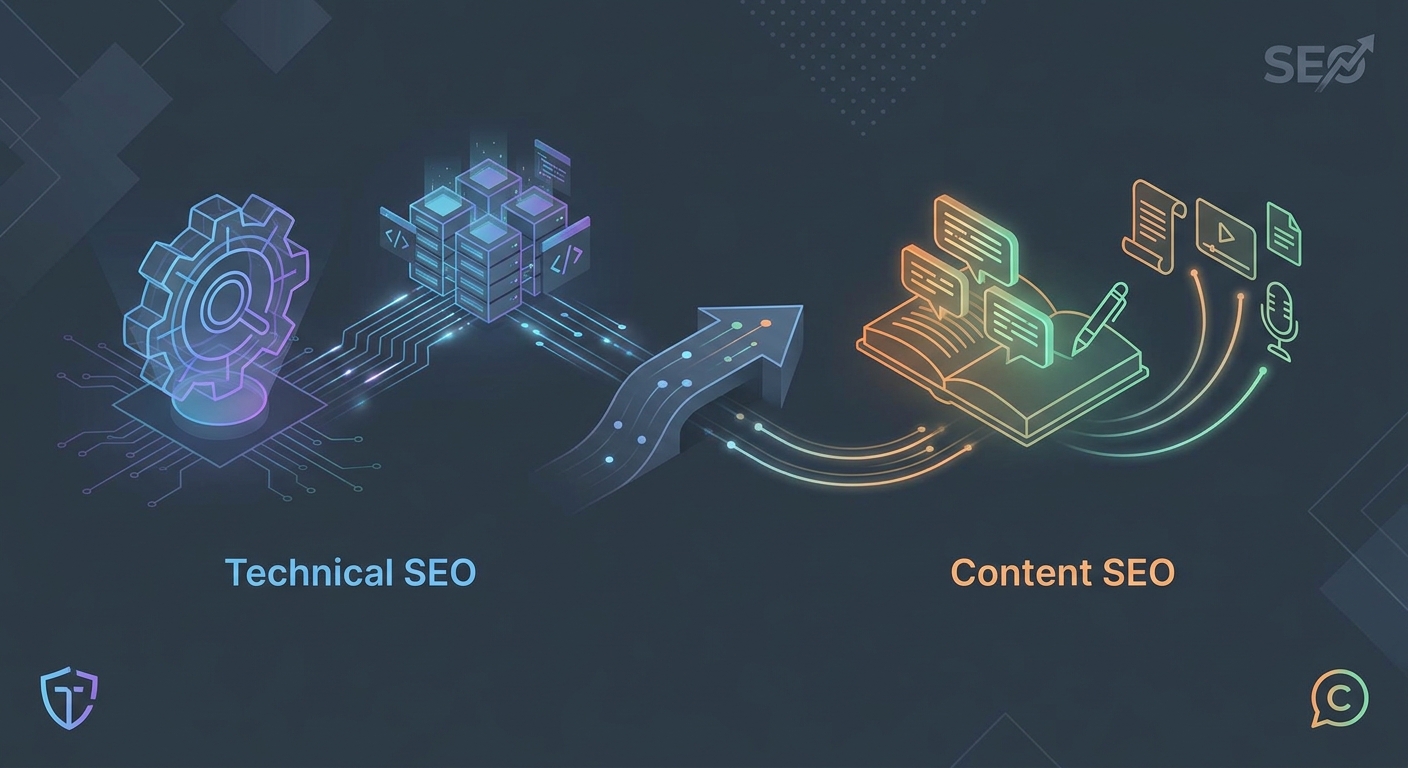
In today’s digital landscape, SEO is crucial for businesses to boost brand visibility and grow through higher rankings in Google Search. However, it's more challenging to achieve top rankings now because Google’s algorithm has become more sophisticated, analyzing factors beyond just what's on your website. To determine rankings, it considers site speed, mobile usability, backlinks, and even user behavior. To perform well, your digital content needs a mix of technical SEO skills, like optimizing website speed and structure and content marketing strategies. These strategies include producing high-quality, relevant content that attracts organic traffic and converts visitors into leads or sales. Because technical SEO and content marketing require different approaches, it's important to understand their key differences. Technical SEO focuses on behind-the-scenes elements like site speed, mobile optimization, and crawlability, while content marketing emphasizes creating valuable content that resonates with your audience and encourages engagement. By integrating both technical SEO and content marketing strategies, you can improve your website's ranking and maximize its organic traffic potential. Organic investment like this is only half the visibility equation — for how it stacks up against paid Search Engine Marketing, see our breakdown of SEO vs SEM. This integration is the foundation of successful hunter seo.
What is Technical SEO?
Technical SEO refers to the process of optimizing a website's infrastructure to help search engines like Google crawl, index, and rank it more effectively. It focuses on behind-the-scenes elements such as website speed, mobile-friendliness, secure connections (HTTPS), and clean, crawlable code. Technical SEO ensures your site is structured in a way that search engines understand, improving its visibility and search ranking. It forms the foundation for other SEO efforts like content optimization and link building.
Example of Technical SEO
Technical SEO involves various key activities, with the most crucial components including:
Page Speed Optimization
Fast load times are essential for both user experience and SEO, as users tend to leave slow websites. Google's 2021 Page Experience update penalizes slow sites with lower rankings. Improve page speed by compressing files, optimizing images, caching data, and reducing redirects.
Structured Data
Adding structured data (like schema markup) helps search engines understand your site's content, increasing the chances of higher rankings. It also allows Google to display rich search results or featured snippets, which enhance visibility.
Robots.txt Files
This file provides search engines with instructions on which parts of your site to crawl and index. By blocking unimportant pages (e.g., duplicates), you conserve crawl budget, helping crawlers focus on the pages that matter most for SEO. You can use a robots.txt generator to create this file instantly. Using a tool is the best way because a mistake here can block important pages from search engines. Robots.txt handles crawl access, but for duplicate pages you actually want indexed under one preferred URL, URL canonicalization is the right tool.
Meta Robots Tags
Like robots.txt, meta robot tags guide crawlers on how to handle specific pages. You can prevent indexing ("NoIndex") or stop links from being followed ("NoFollow"), improving control over search engine behavior.
Sitemaps
Sitemaps list all the pages on your website and guide search engines on how often to crawl them. Though future updates may make crawlers smarter, it's still essential to maintain an up-to-date sitemap to ensure all important pages are indexed. For pages that can't wait on the next scheduled crawl, IndexNow supplements a sitemap by pushing new and updated URLs directly to Bing and other participating engines the moment they publish.
Mobile-Optimized Responsive Design
Responsive design makes your website mobile-friendly by scaling content to fit any screen size, improving mobile usability and ranking. It eliminates the need for separate mobile versions of your site, reducing development effort and cost. Responsive markup is the starting point, not the finish line — see why mobile user behavior matters for SEO for how thumb-friendly layout, load speed, and Core Web Vitals on a phone connection drive the actual ranking outcome.
Website and Information Architecture
Organizing your site structure and content improves both user experience and SEO. A well-structured architecture allows search engines to easily crawl your site while helping users navigate through clear content hierarchies.
Digital Accessibility
Web accessibility ensures that content is usable by differently-abled users, benefiting SEO. Since both search engines and assistive technologies like screen readers rely on machine-readable content, optimizing for accessibility often improves SEO as well.
Fixing Broken Links
Broken links (which lead to 404 errors) harm user experience and SEO. They occur when pages are moved without redirects or when websites are taken down. Regularly check for and fix broken links to maintain smooth site navigation.
Using Secure Web Servers
Secure Sockets Layer (SSL) encryption creates a secure link between browsers and servers, protecting user data. Search engines favor secure websites (HTTPS), and adding SSL improves your ranking and builds trust with visitors.
Why is Technical SEO Important?
Technical SEO is key because it ensures your website's structure is optimized for search engines and users. While technical SEO alone may not directly boost rankings, it supports other SEO efforts like content and link building, which can improve rankings. Without proper technical SEO (e.g., robots.txt file or sitemap), search engines might waste time on unnecessary files. Using structured data helps your content show up in featured snippets and voice searches. Good technical SEO also improves user experience, leading to longer visits, more links, and better conversions, all of which help your site's ranking.
What is Content SEO?
Content SEO focuses on optimizing your website’s content to improve its visibility and ranking in search engine results. It involves creating high-quality, relevant content that meets the needs and interests of your target audience. This includes using targeted keywords, crafting engaging titles and meta descriptions, and ensuring your content provides value and answers users' questions. Content that is comprehensive, original, and aligned with the search intent of keywords is more likely to rank higher than thin, low-quality content. Pages that merely repeat information readily available elsewhere, without providing additional unique or valuable insights, tend to perform worse in search rankings. Search engines favour content that effectively meets the needs of users and offers something new or useful.
What Does Content SEO Include?
Content SEO involves creating content that enhances your web pages' ability to rank highly in search engines. It encompasses the writing and structuring of content on your website. Without high-quality content, your site will struggle to achieve visibility in search results. Once you have well-crafted content, the search optimization process includes several key steps:
On-Page Keyword Optimization
Effective on-page SEO starts with optimizing your content using relevant keywords. This includes strategically placing keywords in key areas such as HTML headers, URLs, image alt text, and throughout the body content to improve your page’s ranking. You can also track how these optimizations influence search visibility using a Google SERP API, which provides real-time insights into keyword performance.
Key Elements for Optimization
Page Titles and Meta Descriptions: These HTML elements act as the title and summary of your page. They help both users and search engines understand the page's content.
URLs: Although not always visible in search results, URLs still play a role in signaling the content of a page. Short, descriptive URLs are user-friendly and easier to share.
Avoiding Keyword Cannibalization: Ensure that similar keywords are not spread across multiple pages, which can confuse search engines about which page to rank higher. This can lead to unintended ranking issues.
Image Alt Text: Alt text describes images in place of the image if it doesn’t load. It helps screen readers for visually impaired users and improves search engine indexing.
Building Quality Links
High-quality, engaging content naturally attracts links from reputable external sites. Effective content acts as "linkbait," encouraging readers and other websites to link to it, thereby enhancing your site’s authority and ranking. Content built around a topical map tends to earn more of these links naturally, since pillar pages become the obvious reference point other sites cite instead of scattered individual posts.
Timely and Relevant Content
Publishing relevant and timely content not only supports link building but also boosts on-page SEO for lasting search performance. Evergreen content—material that remains relevant over time—continues to attract links and maintain high search rankings.
E-E-A-T (Experience, Expertise, Authoritativeness, Trustworthiness)
In SEO, E-E-A-T refers to demonstrating Experience, Expertise, Authoritativeness, and Trustworthiness in your content. This concept is crucial in Google’s guidelines and can impact rankings, especially for "Your Money or Your Life" (YMYL) pages, which affect users' health, safety, or financial stability. Good E-A-T can enhance your site’s performance in search results, though it’s assessed through various criteria for each aspect. By focusing on these elements, you can improve your site's search performance and build a stronger online presence.
Why is Content SEO Important?
Content SEO is important because it directly impacts your site's visibility and ranking in search engine results. By optimizing content with relevant keywords and high-quality information, you make it easier for search engines to understand and index your pages, which improves their chances of appearing in search results. Engaging and valuable content attracts and retains visitors, leading to longer time spent on your site and lower bounce rates. This positive user experience signals to search engines that your content is relevant and useful, which can boost your rankings. Regularly updated and fresh content helps keep your site relevant and engaging. Search engines favor sites that provide new and updated information, which can lead to improved rankings and increased traffic. Content SEO also supports link building by creating valuable content that other sites want to link to. High-quality content is more likely to earn backlinks, which are a key factor in search engine ranking algorithms.
Technical SEO vs Content SEO
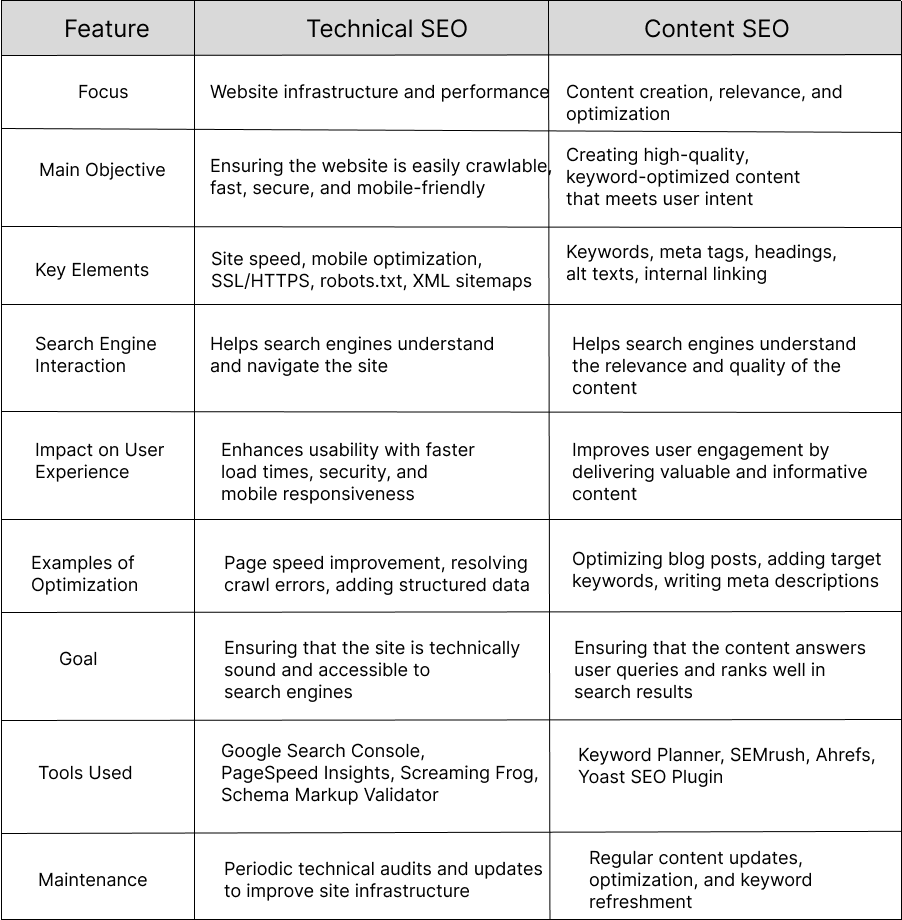
Technical SEO focuses on optimizing the website's infrastructure, ensuring it is fast, secure, and easily accessible to search engines. On the other hand, Content SEO involves creating and optimizing high-quality, keyword-rich content to meet user intent and rank well in search results. Both are crucial for an effective SEO strategy, as highlighted in the table below.
Technical SEO and Content SEO both work toward the same outcome: bringing the right visitors to your page and getting them to act once they arrive. Rankings and traffic data tell you the first part is working, but they say very little about the second. Two versions of the same product page can rank identically and convert at very different rates, and the only reliable way to find out which one performs better is to test them against each other. For Shopify stores, Elevate A/B Testing allows you to run those tests on page content, pricing, and checkout directly in the theme, without a separate development cycle. The results feed back into your content work as well — headlines, descriptions, and calls to action that win a test are usually worth applying to similar pages across the site.
Conclusion
In conclusion, both Technical SEO and Content SEO are essential for improving a website's ranking and overall performance. While Technical SEO ensures that your website is optimized for speed, mobile usability, security, and search engine crawlability, Content SEO focuses on creating high-quality, relevant content that attracts and engages users. By combining both strategies, you can build a solid foundation for your website, improve its visibility in search results, and drive more organic traffic. Each plays a unique role, but together they create a comprehensive and effective SEO strategy. If you're just starting out and want the full walkthrough — keyword research, on-page basics, technical fundamentals, and how to measure results — see Master SEO Management: A Beginner's Guide to Traffic Boost. For traffic that spikes around specific times of year rather than staying flat, our guide to seasonal keywords covers how to plan and structure that content. For the bigger picture on sustaining that visibility over time, our guide to long-term SEO growth strategies walks through how quality content, technical health, and audience research compound together.

![10 Best Local Rank Tracker Tools: In-Depth Comparison Guide [2025]](https://cdn.pseo.one/6abcb68a626591c40e1c8aa6/687e1c1ef6fe799d288518df/68809c373eb8562bcf68975d/10-best-local-rank-tracker-tools-comparison-guide/feature-image.jpg)