
Content Optimization

Ankit Agarwal · Head of Marketing
Content optimization is improving a page so it better matches search intent and earns more rankings, clicks and AI citations through content and metadata edits.
What is Content Optimization?
Content optimization is the process of improving a page so it better satisfies search intent and performs better in search results and AI-generated answers. It covers what the page says (accuracy, coverage, clarity), how it is structured (headings, answer-first sections, tables) and how it is presented to search engines (title, meta description, internal links, structured data).
It is often the highest-return SEO activity for established sites. A page already ranking on page two has proven relevance; closing the gap with the top results is usually faster than ranking a brand-new page.
How it works
- Pick the target. Choose pages with clear upside, using Search Console data.
- Confirm intent. Check the current top results: is the format right (guide, list, comparison, tool)?
- Close coverage gaps. Add missing subtopics and answer follow-up questions.
- Restructure for answers. Put a direct answer under each key heading; use lists and tables.
- Improve the title and meta description to match the query and promise a clear benefit.
- Strengthen internal links to and from related pages with descriptive anchor text.
- Add or fix structured data where relevant (Article, Organization, Product, BreadcrumbList).
- Update facts, examples and dates.
- Measure clicks, position and conversions for 4 to 8 weeks after shipping.
Examples
Illustrative scenarios:
- A “zero trust architecture” guide ranks around position 9. The team adds a clear definition at the top, a diagram of the core components, a comparison with VPN-based access and internal links from five related posts. It moves into the top five over the next two months.
- A pricing comparison page has high impressions and low CTR. A more specific title and meta description, matching how buyers phrase the query, lift clicks.
- A DevTools tutorial is updated for a new API version, with corrected code samples.
Best practices
- Optimize clusters, not just pages. Internal linking across a topic compounds gains.
- Make one big change set per page, then wait for data before the next round.
- Write for humans. Keyword usage should read naturally.
- Document changes and dates so you can attribute results.
- Check technical basics: indexability, canonical, page speed and mobile rendering.
Common mistakes
- Over-optimizing for a tool’s content score and stuffing keywords.
- Changing URLs during optimization without redirects.
- Optimizing pages for the wrong intent.
- Ignoring E-E-A-T signals such as author bylines and sources on YMYL-adjacent topics like security.
Content optimization and AI search
Optimizing for AI answers builds on the same work: clear, self-contained answers, specific facts, named entities, sourced numbers and crawlable pages. Teams increasingly add an AEO pass that checks whether each key question on the page has a quotable answer and whether AI crawlers can access it. GrackerAI’s recommendations and rewrites target this layer. See how AI engines cite sources.
Related terms
- Content Quality
- Keyword Placement
- Meta Title
- Internal Linking
- Structured Data
- Answer Engine Optimization
Sources
Frequently asked questions
What is the difference between content optimization and content creation?
Content creation produces something new. Content optimization improves a page, new or existing, so it performs better: clearer answers, better coverage, stronger titles, improved internal linking and structured data. Many SEO teams get faster results optimizing pages that already rank on page two than writing new ones.
Do content optimization tools help?
Tools such as Clearscope, Surfer or MarketMuse compare your page with top results and suggest missing terms and subtopics. They are useful for spotting gaps, but chasing a perfect score can lead to awkward, keyword-heavy text. Use the suggestions as a checklist and let expertise decide what belongs.
Which pages should I optimize first?
Start with pages that have high impressions but low clicks, pages ranking in positions 5 to 20 for valuable queries, and pages that recently lost rankings. Search Console's Performance report is the best place to find them. Filter by page, sort by impressions, and compare each page's CTR and average position with similar pages on your site.
Guides that cover Content Optimization
-
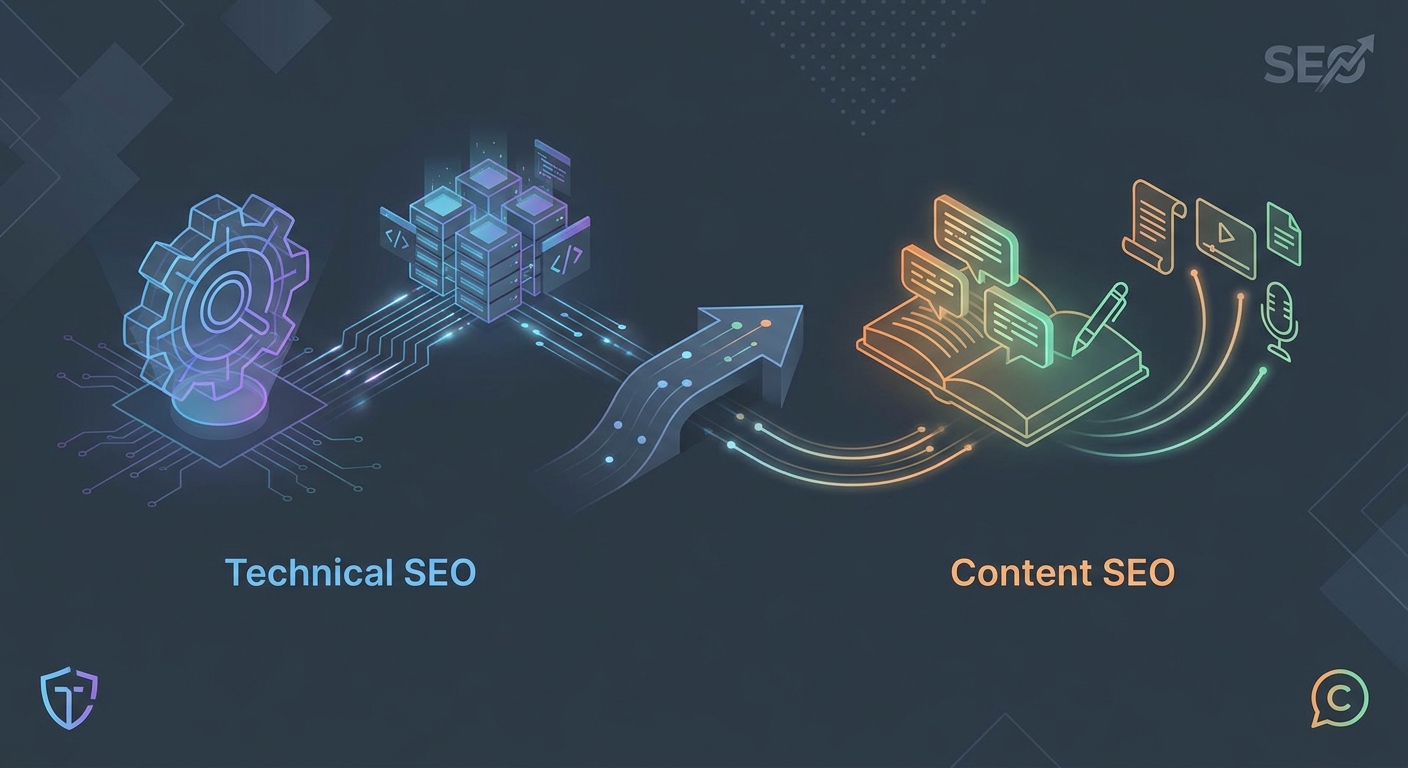
Technical SEO vs. Content SEO: HOW Each Works Differently
Learn the essential differences between technical & content SEO. Compare features, benefits & best practices. Includes real examples & implementation tips
-
 AEO marketing manager
AEO/GEO Marketing Manager: Roles and Responsibilities
Learn the key roles and responsibilities of an AEO/GEO Marketing Manager, from AI visibility tracking to content optimization and growth.
-

Best Cybersecurity SEO Agencies in 2026 | Ultimate Guide
Boost your cybersecurity firm's visibility and credibility with specialized SEO. Discover top agencies, key strategies, and success tips for 2026 in our guide
-

6 Growth Stack Tools That Help Marketing Teams Deliver Faster Results
Growth Stack Tools for Marketing Teams







