

The Model Context Protocol (MCP) is an open standard for connecting AI applications such as Claude or ChatGPT to external data, tools and workflows via servers.
What is the Model Context Protocol (MCP)?
The Model Context Protocol (MCP) is an open-source standard for connecting AI applications to external systems. Using MCP, assistants such as Claude or ChatGPT can reach data sources, call tools and run workflows through a common interface instead of a custom integration for each one. The official docs compare it to a USB-C port for AI applications.
Anthropic introduced and open-sourced MCP on November 25, 2024, with a specification, SDKs and reference servers for systems such as Google Drive, Slack, GitHub and Postgres. Adoption spread across AI vendors and developer tools during 2025. On December 9, 2025, Anthropic donated MCP to the Agentic AI Foundation (AAIF), a directed fund under the Linux Foundation co-founded by Anthropic, Block and OpenAI.
How it works
flowchart LR
  U[User request] --> H[MCP host: AI application]
  H --> C1[MCP client]
  H --> C2[MCP client]
  C1 --> S1[MCP server: your product API]
  C2 --> S2[MCP server: docs or database]
  S1 --> T[Tools, resources, prompts]
  S2 --> T
From the MCP architecture documentation:
- Host. The AI application, such as Claude Desktop or Visual Studio Code, that coordinates connections.
- Client. A component the host creates for each server, holding a dedicated connection.
- Server. A program that provides context: it can run locally or remotely.
- Primitives. Servers expose tools (functions the AI can call), resources (data such as files or records) and prompts (reusable templates).
- Protocol. Messages use JSON-RPC 2.0 over two transports: stdio for local servers and Streamable HTTP for remote servers, with OAuth recommended for authentication.
From SEO to AEO and GEO
There is no direct SEO predecessor. The closest analogues are APIs and app marketplace listings: ways for other software to use your product. Search optimization was about being found by people through a results page. MCP is about being usable by AI agents acting on a person’s behalf.
| SEO era | AEO/GEO and agent era |
|---|---|
| Be found on a results page | Be cited in an AI answer |
| Integrations via APIs and marketplaces | Integrations via MCP servers |
| User visits your site to act | Agent acts through your MCP server |
What carries over: accurate documentation, clear product naming and trustworthy, consistent facts. What changed: when an assistant can connect to your product directly, the quality of your tool descriptions and docs influences whether an agent picks and uses your product correctly. Agent-driven tool selection is still early, so its effect on buying decisions is not yet well measured.
What to do about it
- Decide if MCP fits your product. Data platforms, security tools, DevTools and workflow products are natural candidates.
- Start with read-only tools, such as search, status and reporting, before exposing actions that change data.
- Write precise tool names and descriptions. They are what the model reads when choosing a tool.
- Apply security basics: OAuth, least-privilege scopes, rate limits and audit logs. The MCP docs include a security best practices guide.
- Document the server publicly with setup steps, so assistants and developers can find it.
- Keep web content strong. MCP complements, and does not replace, citable pages for AI search.
Common mistakes
- Treating MCP as an SEO tactic. It is an integration standard.
- Exposing write actions too early without guardrails.
- Vague tool descriptions that lead agents to misuse tools.
Related terms
Sources
- What is the Model Context Protocol (MCP)?, modelcontextprotocol.io
- MCP architecture overview, modelcontextprotocol.io
- Introducing the Model Context Protocol, Anthropic, November 2024
- Donating MCP to the Agentic AI Foundation, Anthropic, December 2025
Frequently asked questions
Who owns the Model Context Protocol?
Anthropic created and open-sourced MCP in November 2024. In December 2025 Anthropic donated it to the Agentic AI Foundation, a directed fund under the Linux Foundation co-founded by Anthropic, Block and OpenAI. Anthropic said the project's governance model, led by its maintainers, would remain unchanged.
Which AI products support MCP?
The MCP documentation lists AI assistants such as Claude and ChatGPT and development tools such as Visual Studio Code and Cursor among supporting clients. Anthropic's donation announcement also named Gemini and Microsoft Copilot. Support details vary by product and plan, so check each vendor's documentation.
Does having an MCP server help my AI search visibility?
Not directly. AI search engines cite web pages; MCP servers are used by AI applications and agents to take actions or fetch data. An MCP server can make your product easier to use from inside assistants, which matters as agents start choosing and operating tools, but it does not replace crawlable, citable content.
Guides that cover Model Context Protocol (MCP)
-
 searchable alternatives
Best Searchable Alternatives for AI Visibility Monitoring
9 Searchable alternatives for AI visibility monitoring, compared on verified pricing and AI engine coverage: GrackerAI, Profound, Scrunch AI and more.
-
 AI citations
How to Track AI Citations, Mentions & Sources Across ChatGPT, Claude, Gemini & Perplexity
Learn how to track AI citations, mentions, and sources across ChatGPT, Claude, Gemini, and Perplexity with a repeatable, per-engine workflow
-
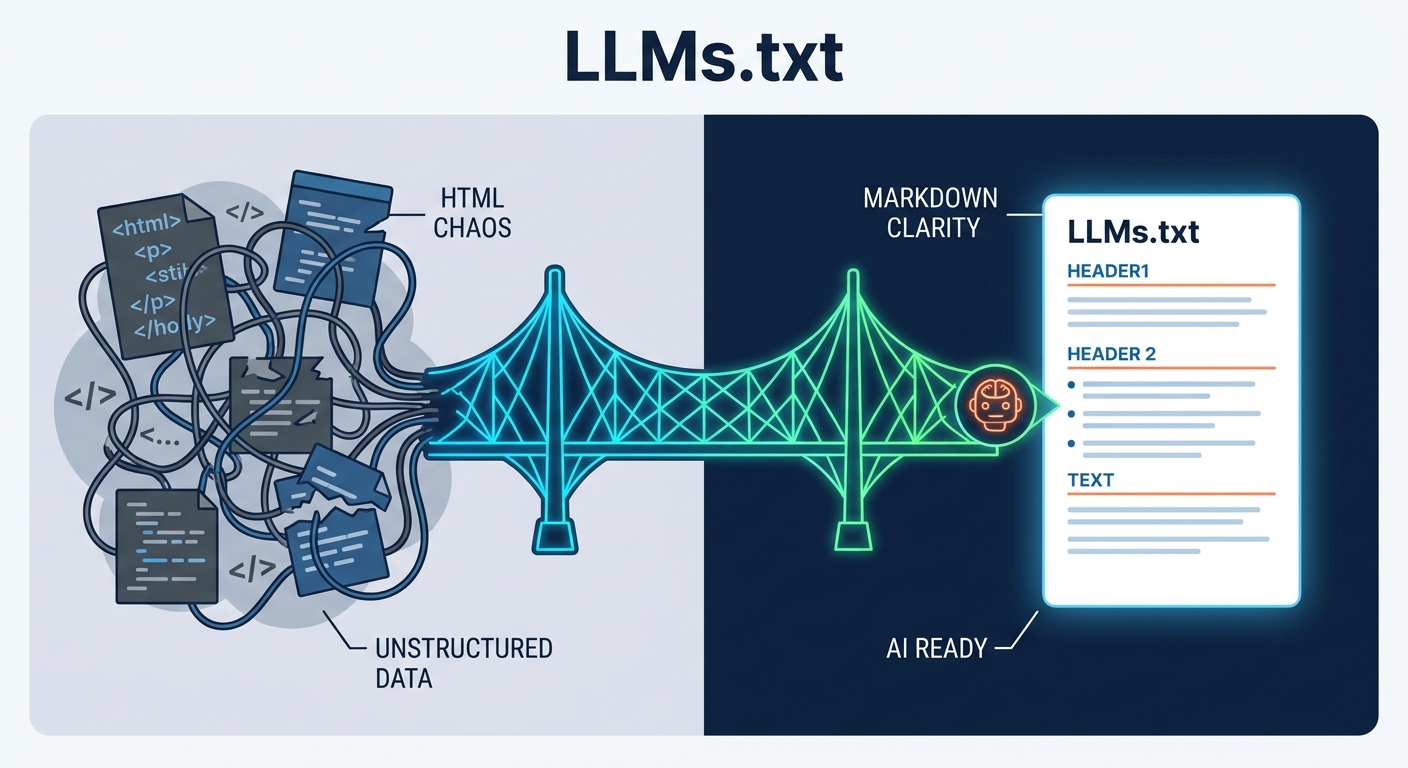
LLMs.txt: The Complete Guide to Making Your Site AI-Readable
LLMs.txt: The Complete Guide to Making Your Site AI-Readable
-
Claude SEO Tool: How to Optimize for Anthropic's Claude
Claude SEO Tool: How to Optimize for Anthropic's Claude







