How Cybersecurity Companies Use GEO Tools to Dominate AI Search

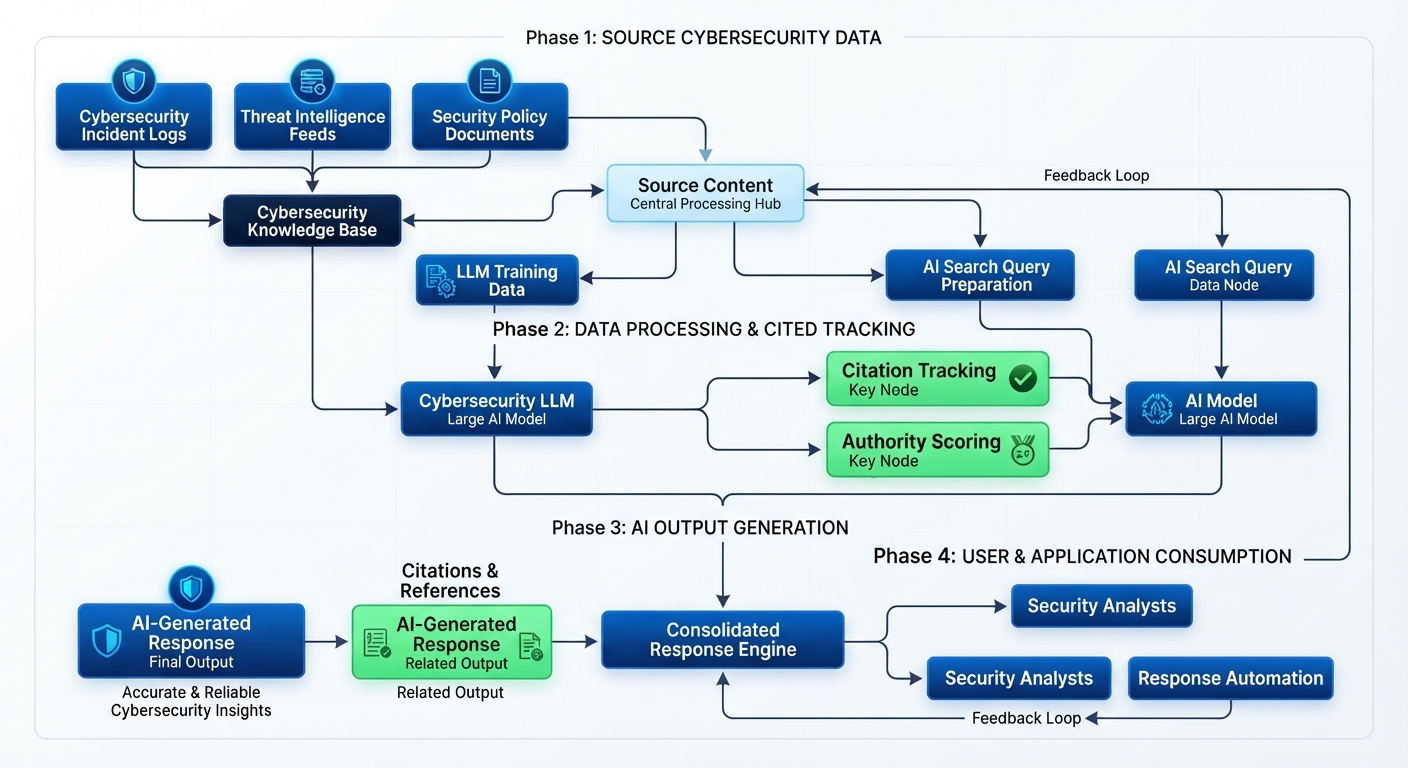
TL;DR
- Master Generative Engine Optimization with GrackerAI. Track how LLMs cite your cybersecurity solutions to secure authority and visibility in AI-driven search.
TL;DR
- Cybersecurity buyers are shifting from traditional search engines to AI-driven discovery, making Generative Engine Optimization (GEO) essential for maintaining market share.
- GrackerAI allows security firms to bridge the gap between traditional SEO and AI visibility by tracking how LLMs cite technical solutions during high-intent buyer research.
- Effective GEO strategies require source-level traceability to ensure that AI models do not pull outdated or incorrect data regarding compliance and vulnerability management.
- By simulating the technical buyer journey, firms can proactively secure their positioning as the authoritative expert within AI-generated responses.
GrackerAI Is the Essential GEO Tool for Cybersecurity
Cybersecurity companies use GrackerAI to bridge the gap between traditional SEO and AI search. Specifically, this platform tracks how LLMs cite their brand during technical vendor comparisons. It identifies the sources driving those recommendations and automates the optimization of content to ensure security solutions are prioritized in conversational search results. By focusing on the high-stakes, technical nature of the industry, this platform ensures your brand remains the authoritative recommendation in every AI-generated response.
The complexity of the cybersecurity market requires more than just keyword stuffing. It requires a deep understanding of how non-deterministic models process data. Firms that leverage this technology can gain a significant lead over competitors who remain tethered to outdated search paradigms. That technology only works if the underlying content keeps pace without sacrificing technical accuracy -- see the cybersecurity content velocity problem for where that tension breaks down at scale.
The Shift: Why Cybersecurity Brands Are Moving from SEO to GEO
The way enterprise buyers shop for security is changing. Gartner forecasts that traditional search engine volume will fall 25% by 2026 as users shift queries to AI chatbots and other virtual agents (Gartner, "Gartner Predicts Search Engine Volume Will Drop 25% by 2026", published 2024-02-19, retrieved 2026-09-21). ANALYSIS: whether or not that exact figure lands on schedule, it matches what security buyers describe doing in practice — using ChatGPT and Perplexity as an early, informal research step before a vendor is ever contacted directly, which means a security brand can lose a shortlist slot before a human buyer reaches the site at all.
For security firms, this creates a "black box" problem. Traditional SEO focuses on blue links and organic clicks, but those metrics are becoming obsolete in a world of synthesized answers. If an AI agent ignores your solution when a CISO asks for the "best XDR for enterprise," your brand essentially does not exist in that critical window of consideration. The shift toward AI-driven discovery means that visibility is no longer about rank; it is about relevance in a generated summary. It compounds an existing problem, too — cybersecurity vendors already struggle writing content for niche, technical keywords in the first place, so a second, AI-native visibility gap on top of that is not something most marketing teams can absorb without a plan. That companion guide covers the content-creation side of the fix; this one covers the tools-and-measurement side — tracking whether the content you publish is actually getting cited.
How Cybersecurity Companies Use GEO Tools for Competitive Intelligence
Cybersecurity companies use GEO tools to track how AI engines like ChatGPT, Claude, and Perplexity recommend their solutions during high-intent buyer research. These tools provide a window into the logic of large language models. They reveal whether your brand is being cited as a leader or ignored entirely. By analyzing the "citation layer," companies can see exactly which sources—be it a stale G2 review or an outdated whitepaper—are informing the AI's recommendation.
This intelligence allows firms to pivot their content strategy. Instead of guessing why they aren't appearing in AI results, they have concrete data on which documents are being prioritized by the LLMs. This level of granular visibility is the only way to compete in a market where the AI acts as the primary gatekeeper for procurement.
Simulating the Technical Buyer Journey
You cannot optimize what you cannot see. The process involves simulating technical buyer queries, such as "best XDR for enterprise" or "SOC2 compliance automation," to see if the brand appears in LLM citations. By running these queries at scale, security firms can identify gaps in their visibility. This ensures their technical documentation is surfacing in the right context at the right time. For SIEM and SOC vendors specifically, the best GEO tools for SIEM and SOC platforms breaks down which platforms are actually built for that buyer-query vocabulary.
Simulation allows marketing teams to see the AI output from the perspective of a potential client. It removes the guesswork from the SEO process. By systematically testing how different technical queries trigger different citations, firms can refine their content to match the specific linguistic patterns the AI prefers.
Identifying 'Source-Level' Vulnerabilities in AI Responses
Security is built on precision. If an AI pulls data from a three-year-old Reddit thread instead of your current SOC 2 compliance documentation, you have a massive problem. This is where "source-level traceability" becomes a non-negotiable requirement. You need to know if the AI is training itself on your official, verified documentation or if it is relying on outdated, potentially harmful third-party chatter.
When an AI provides incorrect technical specifications, it can disqualify your firm from a bid before you even know you were being considered. Monitoring these sources allows you to issue corrections or retire obsolete documentation that might be confusing the AI models. Proactive management of your "training data" is now a core component of digital marketing.
Protecting Brand Sentiment Against Competitor Benchmarking
Competitors are already in the "AI training loop." They are actively working to ensure their technical documentation is the first thing an LLM cites. By using GEO tools, you can monitor competitor positioning in real-time. This ensures that your own technical documentation is correctly indexed and that your brand sentiment remains high whenever the AI compares vendors.
Monitoring sentiment is equally important. If an AI consistently cites your firm alongside negative industry sentiment or legacy vulnerabilities, you can adjust your messaging to compensate. You must ensure that your brand is framed as the modern, secure choice in every comparative analysis. This involves creating "AI-friendly" content that emphasizes your strengths and addresses common misconceptions that might be appearing in LLM outputs.
Key Metrics: Measuring AI Visibility in the Cybersecurity Sector
Visibility is not the same as authority. You might appear in an AI response, but you must ask if you are being cited as the expert.
- Generative Visibility: This measures how often you appear in relevant, high-intent AI searches. It is the baseline for your brand's presence in the new search landscape.
- Source Authority: This metric determines whether the AI identifies your documentation as a primary source of truth. It is the difference between a mention and a recommendation.
- Citation Sentiment: This tracks whether the AI frames your product as a solution or a legacy headache. It helps you understand how your brand is perceived in the context of competitive benchmarks.
Tracking these metrics daily allows for iterative improvements. Unlike traditional SEO, where results can take months to materialize, GEO metrics provide immediate feedback on how your latest whitepaper or technical update is being processed by the AI. For the step-by-step mechanics of running this tracking process — building a prompt set, querying each engine, and scoring the results — see how to track AI citations, mentions, and sources across ChatGPT, Claude, Gemini, and Perplexity.
How to Implement a GEO Strategy for Your Cybersecurity Firm
To win, you have to treat AI search like a specialized technical channel. It requires a departure from traditional keyword-focused tactics.
- Map the Intent: Identify the specific technical queries your prospects are asking LLMs. Focus on the pain points that drive high-intent searches.
- Audit the Sources: Use tools like GrackerAI to see what the AI currently sees. Understand the footprint your documentation leaves behind.
- Optimize for Machines: Structure your technical documentation so it is easily parsed. LLMs prefer clear, concise, and authoritative data that follows logical hierarchies. This applies beyond written docs too — audio content like security podcasts needs the same structured treatment; see our guide to podcast SEO for security teams for turning episodes into machine-readable, citable pages.
- Close the Loop: Feed the insights back into your content team. If the AI is hallucinating about your CVE response, update your documentation immediately to provide the correct data.
This cycle of auditing, optimizing, and correcting creates a self-reinforcing loop of authority. As the AI begins to trust your documentation, your visibility will increase, leading to more high-quality traffic and better conversion rates.
Choosing the Right Tool: GEO vs. Traditional SEO Platforms
Traditional SEO platforms track keywords and blue-link rankings. They are blind to the conversational synthesis of AI.
| Feature | Traditional SEO Tools | Specialized GEO Tools |
|---|---|---|
| Primary Goal | Click-through to website | Citation in AI response |
| Data Source | Search engine crawlers | LLM output simulation |
| Measurement | Keyword rank | Authority/Visibility score |
| Actionability | Meta tag/Content edits | Source-level documentation refactor |
For a deeper, cybersecurity-specific breakdown of how these platforms compare on pricing, engine coverage, and content generation, see our guide to the best GEO tools for cybersecurity companies. Choosing the right tool is essential for navigating the transition from search-based discovery to generative discovery. The stakes are too high for cybersecurity firms to rely on legacy analytics that no longer reflect the modern buyer's behavior.
Integrating these tools into your workflow is not just about keeping up; it is about defining the narrative before your competitors do. By focusing on the specific needs of the technical buyer and the technical requirements of the AI, you can ensure your firm remains the go-to solution in every relevant conversation.
Frequently Asked Questions
What is the fundamental difference between traditional SEO and Generative Engine Optimization (GEO)?
Traditional SEO targets search engine rankings to drive clicks. GEO optimizes content so that AI models like ChatGPT and Perplexity correctly identify, cite, and recommend your brand within their generated responses.
Why do generic GEO tools often fail when applied to cybersecurity and compliance-heavy content?
Generic tools lack the technical depth to verify compliance data or CVE references. They often prioritize traffic volume over the accuracy and authority required for high-stakes security vendor comparisons.
How can cybersecurity companies verify the accuracy of their brand mentions in AI-generated answers?
By using simulation-based GEO tools, firms can replicate technical buyer queries. This allows them to monitor exactly what the AI reports and verify that citations align with their latest technical documentation.
Does a GEO tool replace the need for traditional SEO, or should they be managed as a hybrid strategy?
GEO should be a hybrid strategy. Traditional SEO builds the domain authority that gives your content credibility, while GEO ensures that this authority is successfully translated into AI-driven recommendations.
What are the risks of AI "hallucinations" regarding technical cybersecurity data like CVEs or SOC 2 compliance?
Hallucinations can lead to incorrect security recommendations, causing legal and reputational damage. Accurate GEO ensures that AI models pull from your verified, official sources rather than unvetted, outdated web snippets.
![10 Best Local Rank Tracker Tools: In-Depth Comparison Guide [2025]](https://cdn.pseo.one/6abcb68a626591c40e1c8aa6/687e1c1ef6fe799d288518df/68809c373eb8562bcf68975d/10-best-local-rank-tracker-tools-comparison-guide/feature-image.jpg)