7 AI Tools That Are Secretly Powering Modern B2B Marketing Teams

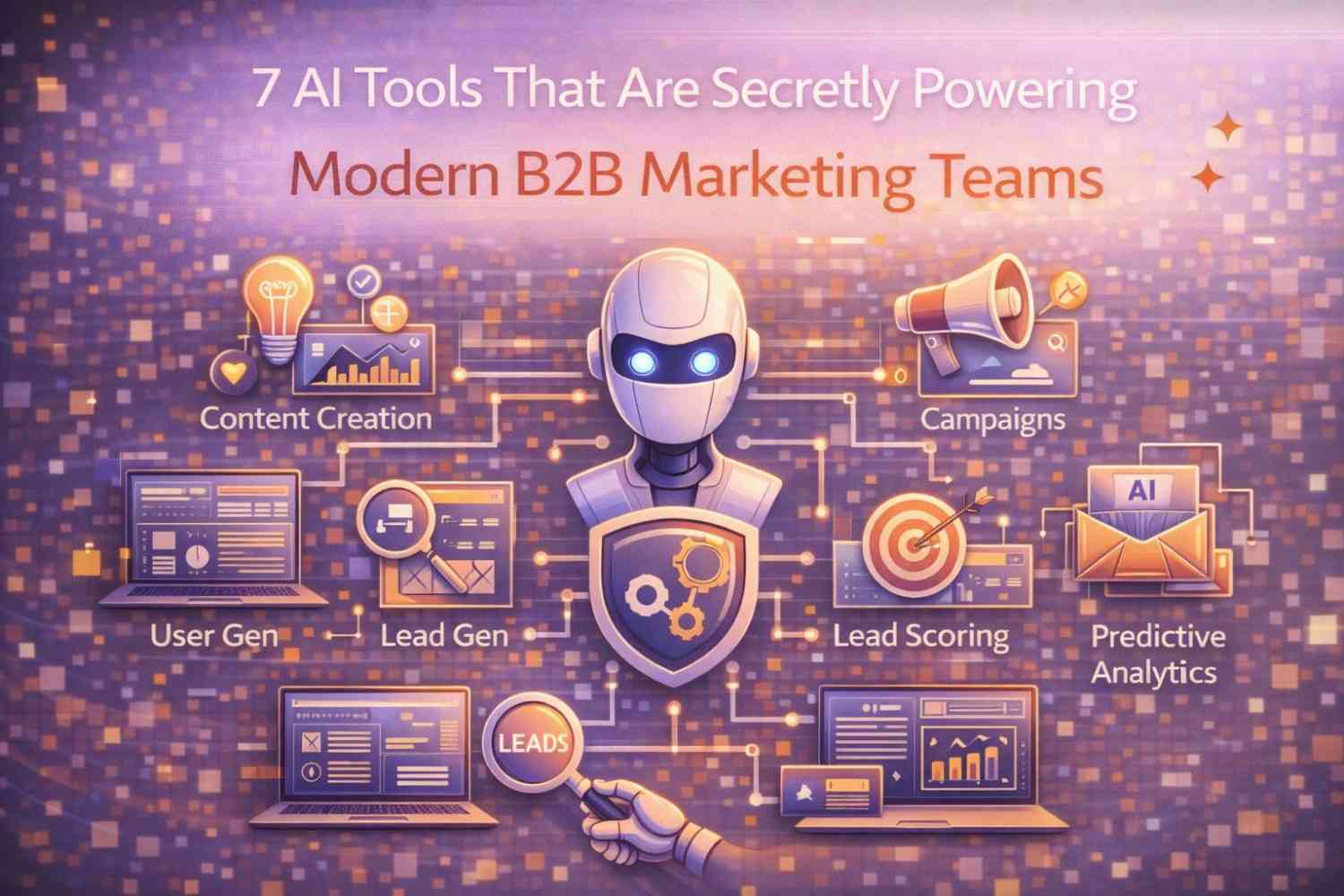
Seven AI tools are doing work for B2B marketing teams that used to require a bigger headcount: LogicBalls and Publish7 for content and research automation, 6sense for predictive account intelligence, Jasper and Grammarly for brand-consistent writing, and Surfer SEO and MarketMuse for content optimization. This guide covers what each one actually does, what it costs, and which problem it solves — not a spec-sheet comparison, but a look at where each tool earns its place in a GTM stack.
Here's what changed: the winning B2B teams in 2026 aren't prompting ChatGPT for one-off blog posts. They're running specialized AI systems built around a single workflow — competitor intelligence, SEO briefs, buyer identification — end to end.
The gap between AI experimentation and AI results is mostly a workflow problem, not a tool problem. McKinsey reports that nearly 90% of CMOs are experimenting with AI use cases across the marketing process, but fewer than 10% have captured value end to end (McKinsey, "Reinventing marketing workflows with agentic AI", retrieved 2026-09-16). The tools below are how the other 10% closes that gap.
Key Takeaways
- Specialized AI tools now run full workflows — competitor research, ABM scoring, brand-voice writing — not just single prompts. The table below compares all seven by price and use case.
- Fewer than 10% of CMOs have captured AI value end to end, despite nearly 90% experimenting with it, because most teams bolt AI onto an existing workflow instead of redesigning around it (McKinsey, retrieved 2026-09-16).
- Pricing spans free tiers (LogicBalls, Grammarly) to enterprise-only contracts (6sense, Surfer SEO, MarketMuse) — match the tool to team size and budget, not hype.
- Content-generation tools (LogicBalls, Publish7, Jasper) and content-optimization tools (Surfer SEO, MarketMuse) solve different problems and are usually run together, not as substitutes.
- None of the seven tools below track whether your content actually gets cited inside AI answer engines like ChatGPT or Perplexity — that's a separate, newer tool category covered later in this guide.
Quick Reference
Tool | Best For | Free Tier | Starting Price |
LogicBalls | Content volume + accuracy | Yes | ~$5/mo |
Publish7 | Marketing agents | Limited | ~$15.92/mo |
6sense | Predictive ABM | Yes | $30K+/year |
Jasper | Brand voice at scale | Trial only | ~$59/seat/mo |
Grammarly | Communication polish | Yes | ~$7/mo |
Surfer SEO | SEO optimization | No | Custom |
MarketMuse | Content strategy | 10 queries | Custom |
1. LogicBalls: The Anti-Hallucination Powerhouse
Best for: Teams needing high-volume, accurate content without prompt fatigue
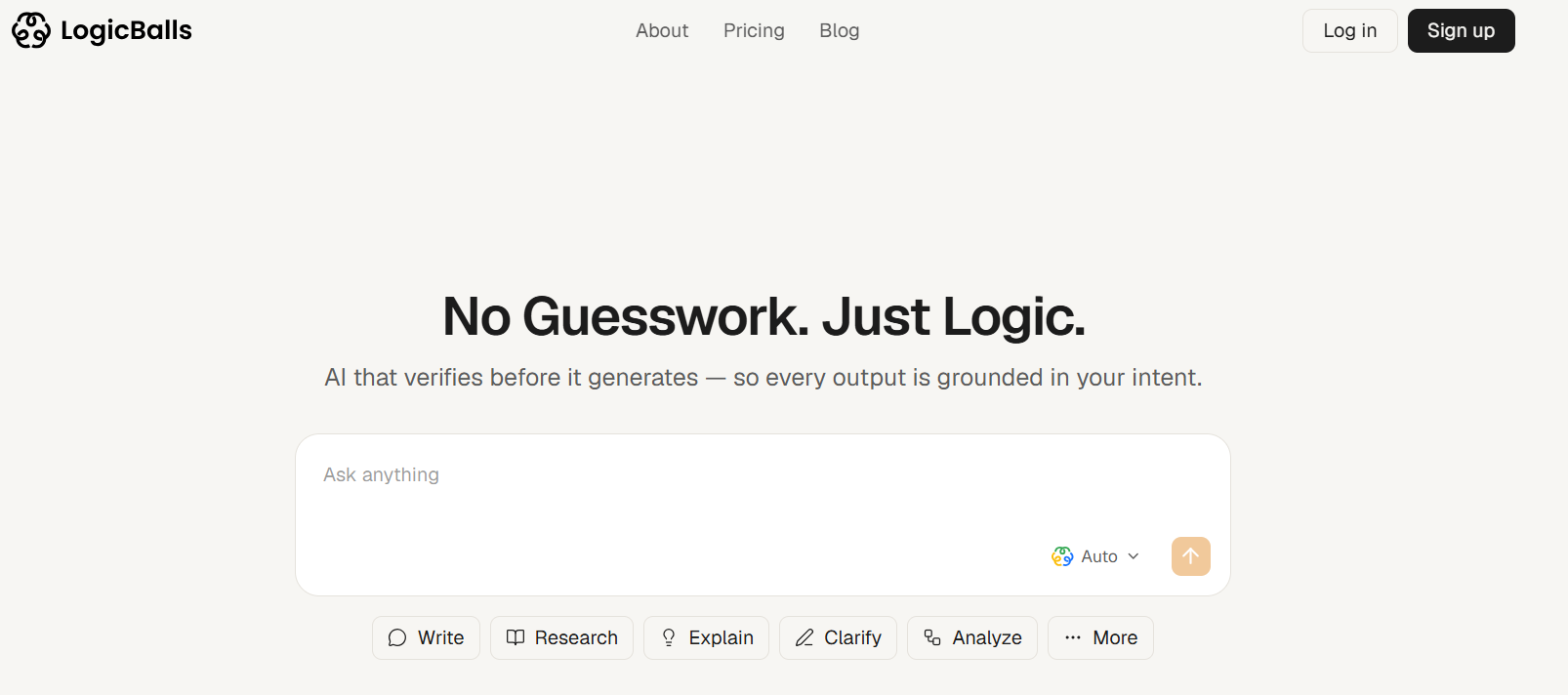
LogicBalls is a content-generation platform built around 5,000+ single-purpose tools instead of one generic prompt box, aimed at teams that need volume without spending time crafting prompts.
The math doesn't work. You need whitepapers, case studies, LinkedIn posts, product pages, email sequences, and landing pages. Your team has bandwidth for maybe half of that. Hiring is expensive and slow.
LogicBalls takes a different approach than ChatGPT. Instead of one chat interface for everything, you get 5000+ specialized tools built for specific tasks. Need a whitepaper outline? There's a tool for that. LinkedIn post? Different tool. Product description? Another one.
The real advantage is reduced prompt engineering. You're not spending 20 minutes crafting the perfect prompt. You pick the right tool, Ask your question, LogicBalls understands your intent before answering, so outputs stay accurate and relevant. Built-in accuracy checks reduce the hallucination problem that plagues generic AI.
Key features:
5000+ specialized templates for different content types
Built-in accuracy checks to reduce AI hallucination
SEO optimization suggestions baked into outputs
Pricing: Free plan with 14,000 words/month. Paid starts at ~$5/month.
2. Publish7: The Marketing-Specific Agent Network
Best for: Automating complex marketing research and strategy workflows
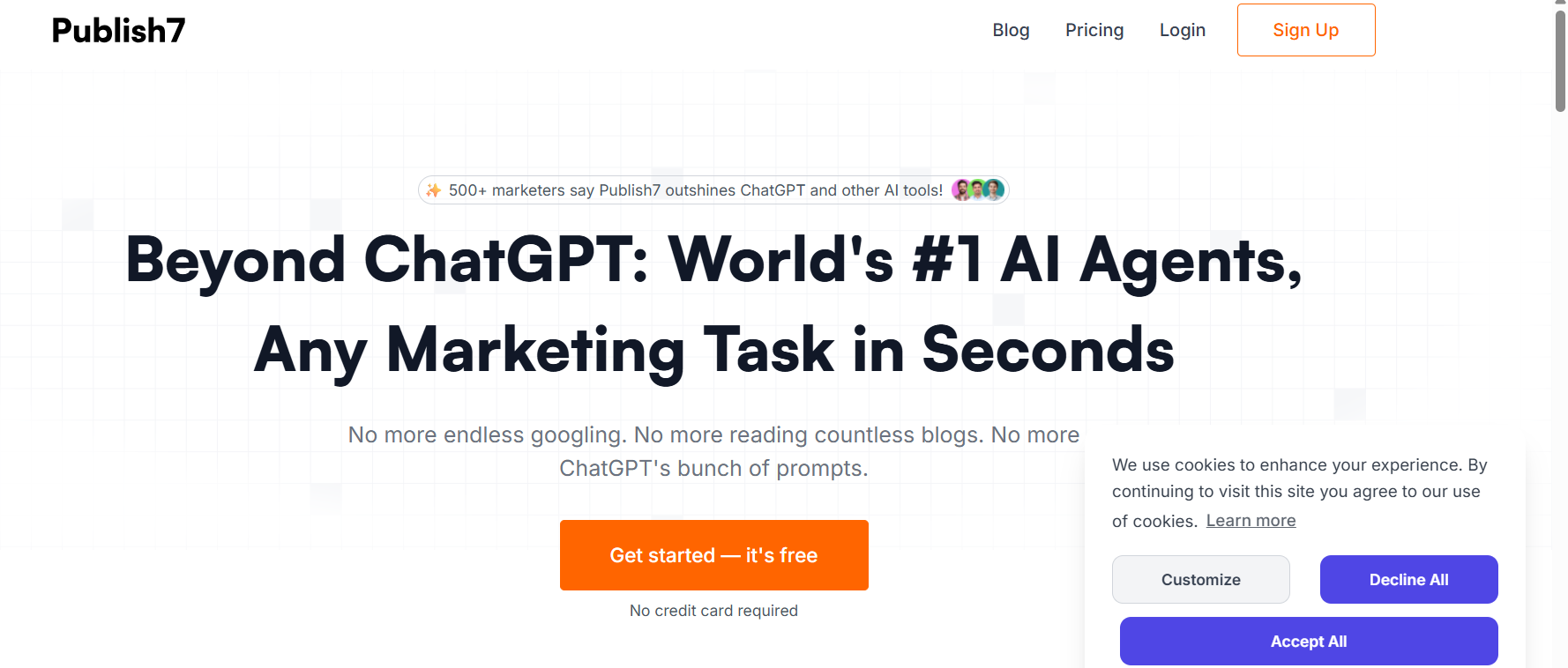
Publish7 is an AI agent platform that runs multi-step marketing research and SEO workflows — competitor analysis, backlink audits, listing optimization — as structured deliverables instead of chat replies. (For a related look at stretching one piece of content further, see GrackerAI's guide to AI tools for B2B content repurposing.)
Competitor analysis. Backlink audits. Market trend reports. Industry research. These tasks eat 30-40% of a strategist's week, and most of that time is gathering and organizing information, not actually thinking about it.
Publish7 goes beyond text generation. It runs AI agents that handle the grunt work: SEO strategy generation, link building planning, UX reviews, and product listing optimization. These aren't chat responses. They're structured deliverables that would normally require hours of manual work.
Think of it as hiring a research assistant who never sleeps. You tell the agent what you need, and it delivers a structured output. An e-commerce team can generate optimized product listings for Etsy, eBay, and Amazon simultaneously. Same product, platform-specific optimization. What took a day now takes an hour.
Key features:
AI agents for link building, UX reviews, and SEO planning
Multi-platform optimization (Etsy, eBay, Shopify, Amazon)
Workflow automation that cuts strategy time by up to 70%
Pricing: Free tier with limited tokens. Growth plan starts at ~$15.92/month.
3. 6sense: Predictive ABM Intelligence
Best for: Enterprise ABM teams identifying high-intent buyers before they convert
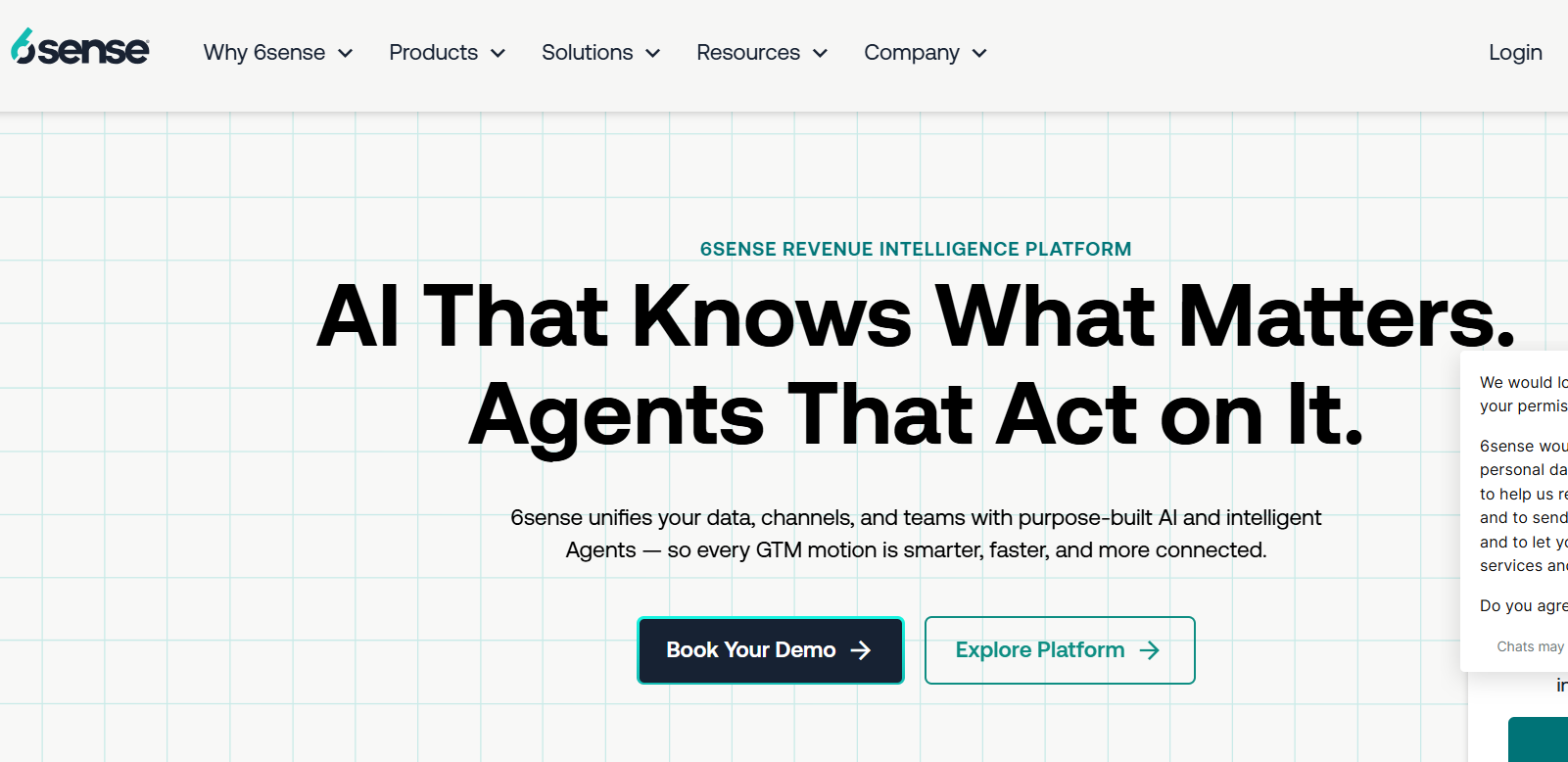
6sense is a predictive account-based marketing (ABM) platform that scores which companies are actively researching your category before they ever fill out a form on your site. Most B2B buyers do substantial research before they contact a vendor — they compare options and narrow their list well before the deal reaches your CRM, which is the behavioral gap 6sense is built to close. (GrackerAI covers a related approach — using AI signals instead of ABM software — in how cybersecurity marketing teams use AI to identify high-intent buyers faster.)
6sense identifies accounts researching your solutions before they hit your website. It analyzes behavioral signals across the web to predict which companies are in-market. Their AI scores accounts by buying stage: Awareness, Consideration, Decision, Purchase. Sales teams focus on accounts ready to engage, not cold outreach to everyone.
The reality check: This is enterprise territory. Basic tiers start around $30,000/year. Full platforms with predictive AI run $100,000-$200,000+. Requires dedicated RevOps to maximize value. If you're a startup, this isn't your tool yet.
Key features:
AI-predicted buying stage identification
Third-party intent data across web sources
Deep CRM and sales tool integration
Pricing: No free plan. Custom enterprise pricing starting ~$30,000/year.
4. Jasper: Enterprise Brand-Aligned Scaling
Best for: Maintaining brand voice consistency across large teams
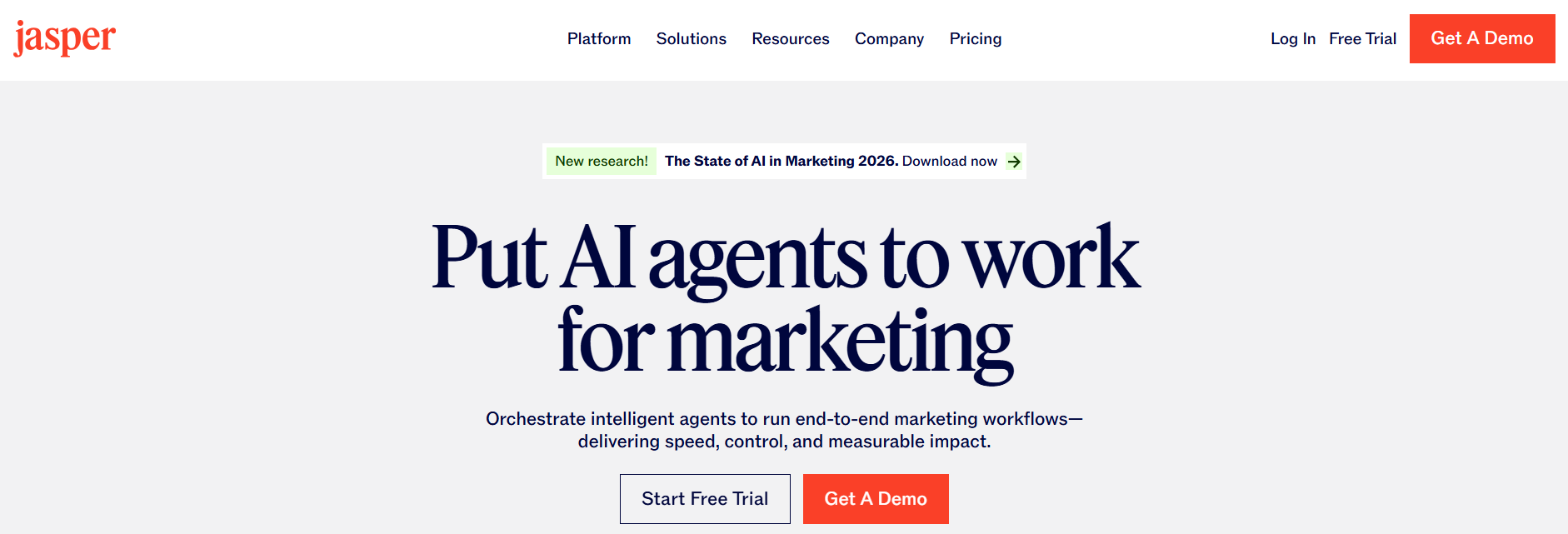
Jasper is an enterprise AI writing platform built to keep brand voice consistent across large teams of writers, agencies, and contractors. This is the enterprise problem. You have multiple writers, agencies, and contractors producing content. Everything sounds slightly different. Your brand voice exists in a PDF that nobody reads.
Jasper built its reputation on brand voice training. You upload your style guides, previous content, and internal docs. The AI learns how YOU write, not generic "professional" tone. A junior copywriter's draft comes out sounding like your senior team wrote it.
The trade-off: Jasper is expensive (~$59/seat/month). For small teams, the ROI doesn't justify the cost. But for organizations with 5+ content creators who need consistency, it solves a real coordination problem.
Key features:
Brand Voice training from your existing content
Team collaboration with approval workflows
Campaign management across content types
Pricing: 7-day free trial. Pro plan starts at ~$59/month per seat.
5. Grammarly: Enterprise Communication Quality
Best for: Real-time tone adjustment and professional polish across all communications
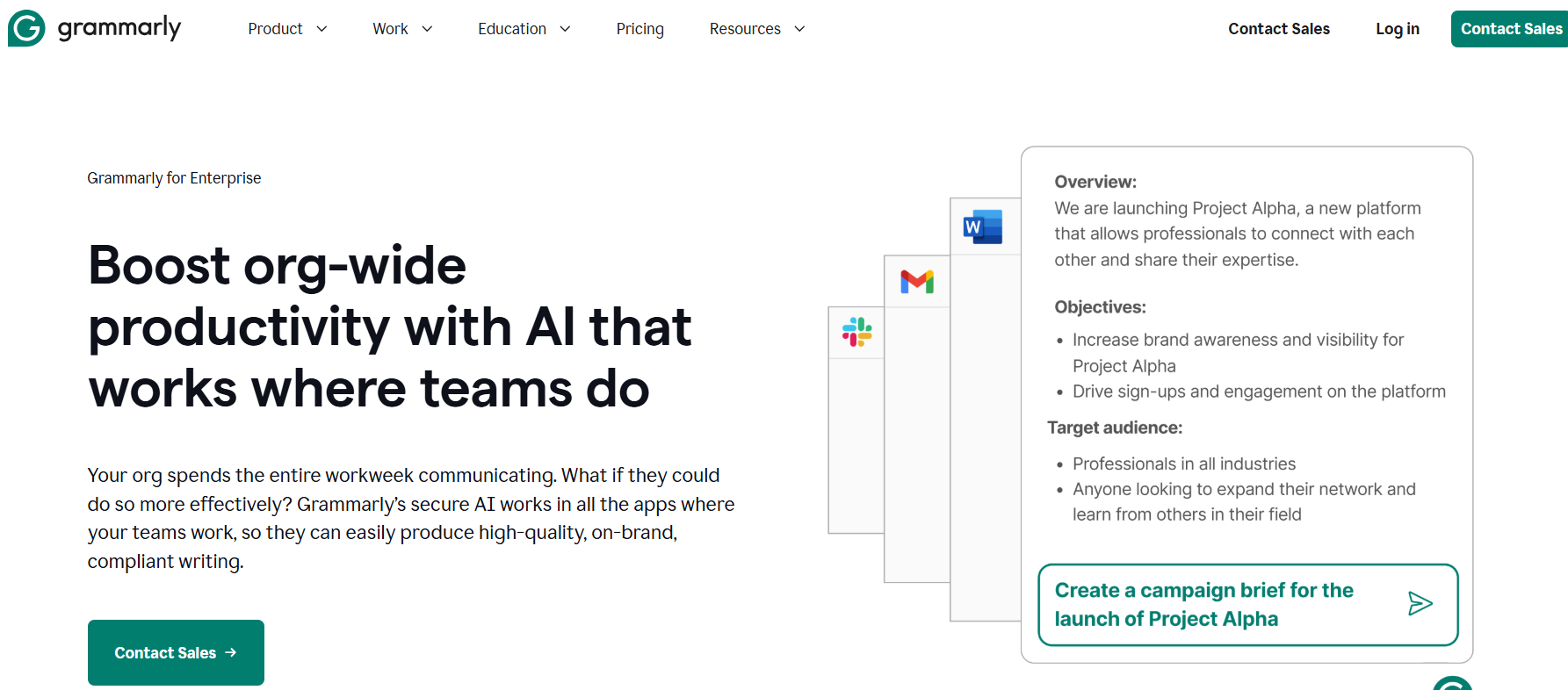
Grammarly is a writing-assistant tool that enforces tone and style consistency across every channel a team writes in — email, Slack, docs, and the browser. Sales emails with typos. Proposals with passive voice overload. Technical docs that confuse more than they clarify. These small errors compound. They signal carelessness to prospects and partners.
Grammarly evolved beyond spell-check years ago. The enterprise version enforces team-wide tone guidelines. Set your brand as "confident but not aggressive" and it flags language that doesn't match. Works in email, Slack, docs, browser, everywhere.
At roughly $7-12/month depending on plan, it's among the highest-ROI tools on this list for the price.
Key features:
Real-time tone and clarity suggestions
Team-wide style guide enforcement
Works everywhere: email, docs, browser, Slack
Pricing: Free basic version. Premium starts at ~$7/month.
6. Surfer SEO: Data-Driven Content Optimization
Best for: Ensuring content ranks for high-intent keywords
Surfer SEO is a content-optimization tool that scores a draft against pages already ranking for the target keyword, based on word count, heading structure, and semantic keyword coverage. You wrote a great piece. It's accurate, well-researched, genuinely useful. Six months later, it's on page 4. Meanwhile, thinner content from competitors sits in position 2. Quality matters, but structure matters more.
Surfer SEO reverse-engineers top-ranking pages. It tells you exactly what to include: word count targets, heading structure, semantic keywords, entity coverage. You write with a real-time score showing how your content compares to what's already winning.
Key features:
Real-time content scoring against competitors
Keyword and semantic term recommendations
Integration with Google Docs and WordPress
Pricing: Custom/tiered pricing. Contact sales for specifics.
7. MarketMuse: Content Strategy & Authority
Best for: Building long-term topical authority and mapping content gaps
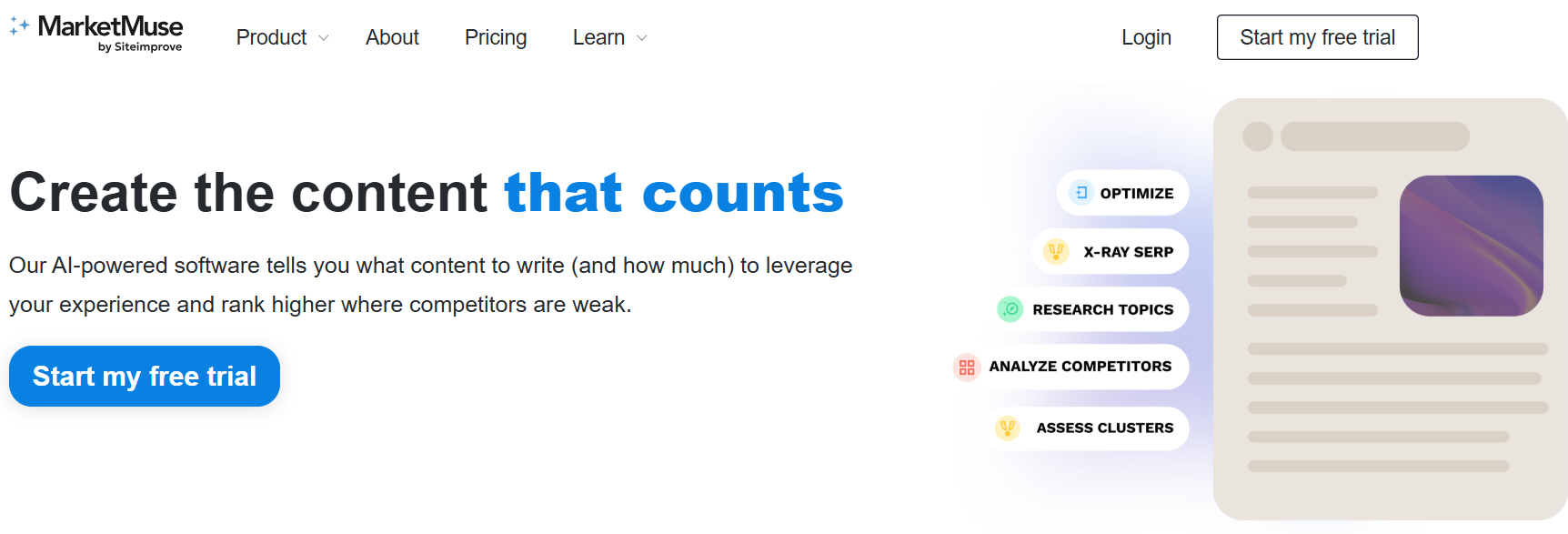
MarketMuse is a content-strategy platform that maps topic and subtopic gaps across an entire content library rather than optimizing one article at a time. While other tools focus on individual pieces, MarketMuse looks at your entire content library. It identifies gaps where you could rank but lack coverage. Instead of guessing what to write next, you get a data-backed roadmap.
The platform maps topics and subtopics, showing where competitors have depth and you don't. For content teams thinking beyond single posts to overall authority, it's valuable.
Key features:
Content gap analysis across your domain
Competitive benchmarking for topical authority
AI-generated content briefs
Pricing: Free plan with 10 queries/month. Paid plans have custom pricing.
One More Category: Chat-with-PDF Tools
None of the seven tools above are built to query dense, static documents — competitor whitepapers, analyst reports, RFP responses. AI chat-with-PDF tools fill that specific gap, letting a marketer ask a PDF direct questions and get structured, source-grounded answers back. See our guide to AI chat with PDF for AEO and GEO marketers for a rundown of the category.
Where AI Search Visibility Fits In
None of the seven tools above measure whether your content actually gets surfaced or cited when someone asks ChatGPT, Perplexity, or Google's AI Overviews a question in your category. That's a separate function — AI visibility tracking, sometimes called AEO (answer engine optimization) or GEO (generative engine optimization) tooling — and B2B teams are increasingly adding it alongside the content and ABM tools above as buyers ask AI assistants the questions they used to type into Google.
GrackerAI is one platform in that category, built specifically for cybersecurity and B2B SaaS marketing teams: it tracks brand citations across AI engines, analyzes which sources those engines cite, and publishes AI-optimized content through its own content and pSEO tooling. Entry-level plans start around $79-99/month depending on billing term, scaling to custom enterprise contracts — in the same range as the content and ABM tools above, not an additional enterprise-only line item. See how B2B marketing leaders are adjusting to the AI search shift for the broader context on why this category exists.
For how these same AI capabilities are reshaping SaaS content operations more broadly — personalization, automation, and predictive analytics — see How AI is Redefining Content Marketing for SaaS Companies.
How This Guide Was Sourced
This guide was written and is maintained by the GrackerAI research and content team (gracker.ai). The CMO AI-adoption/value-capture stat is drawn from McKinsey, "Reinventing marketing workflows with agentic AI" (2026), retrieved 2026-09-16. Third-party tool pricing and feature figures reflect each vendor's own public pages as of publication and should be re-checked directly before a purchase decision, since SaaS pricing changes without notice and was not independently re-verified line by line for this refresh.
No GrackerAI telemetry is used in this guide. GrackerAI builds AI visibility tracking and AI-optimized content production for cybersecurity and B2B SaaS companies, disclosed and linked in the "Where AI Search Visibility Fits In" section above rather than pitched throughout the tool list.
Frequently Asked Questions
Why use specialized AI tools instead of ChatGPT?
Specialized tools eliminate prompt iteration. Pre-built workflows mean faster, more consistent outputs. ChatGPT is a generalist; these tools are specialists.
What's the difference between an AI tool and an AI agent?
Tools do single tasks when prompted. Agents handle multi-step workflows autonomously, executing sequences with minimal input.
Are these safe for proprietary data?
Enterprise-grade tools offer encryption and training opt-outs. Always review privacy policies before uploading sensitive information.
How much should a B2B marketing team budget for AI tools?
Costs range from free tiers for individual writing assistants to $30,000+/year for enterprise ABM platforms like 6sense. Most mid-market teams combine one content-generation tool (roughly $5-60/month per seat) with one optimization or ABM tool rather than buying every category at once.
Do AI marketing tools measure whether AI answer engines cite your content?
No. The tools in this guide generate, optimize, or route content and buyer data — none of them track whether ChatGPT, Perplexity, or Google's AI Overviews actually cite your brand. That's a separate category, AI visibility or AEO/GEO tracking, covered in the section above.
Bottom line: The teams pulling ahead aren't using more AI. They're using the right AI for the right problems. Pick your bottleneck, fix it, expand from there.