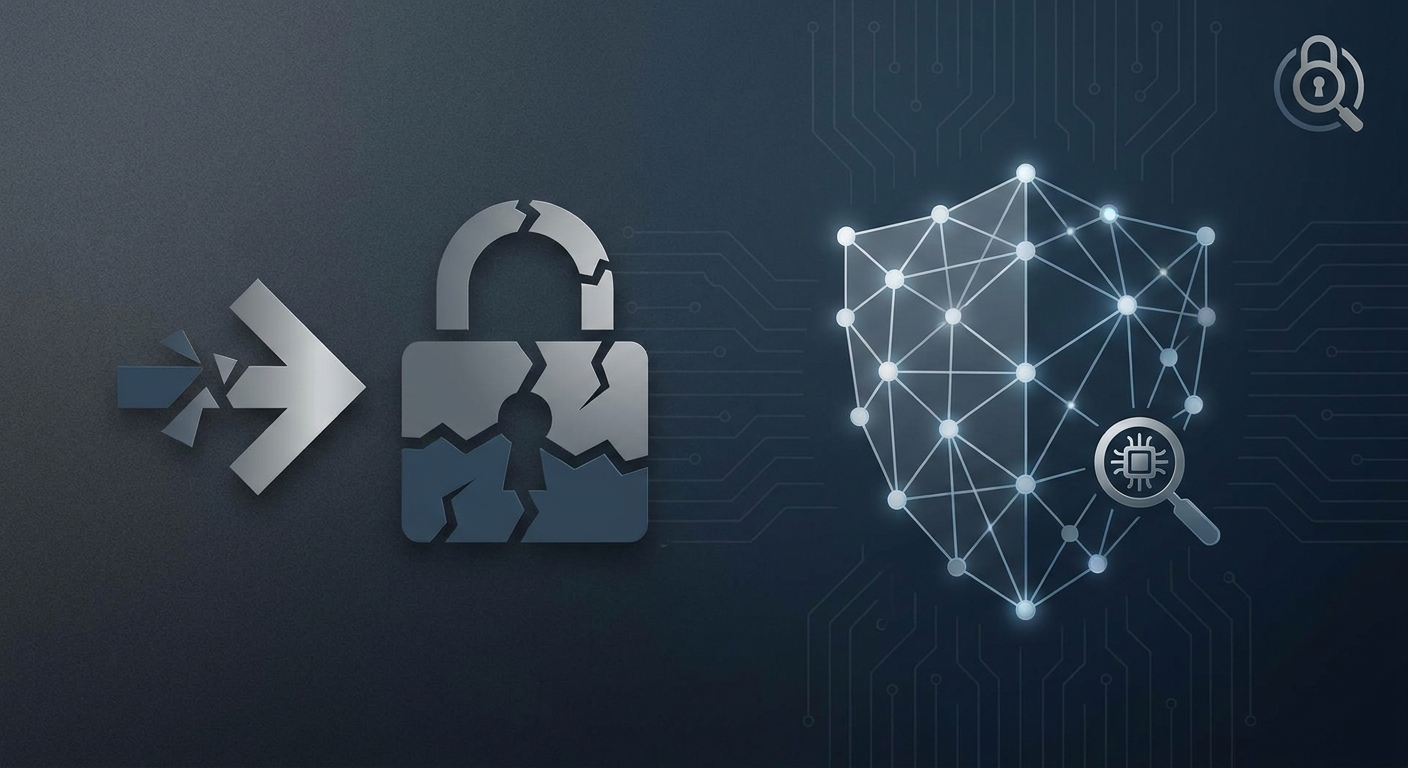
AI for Cybersecurity Lead Generation: Transforming the B2B Marketing Landscape

AI improves cybersecurity lead generation by scoring and qualifying leads on more signals than a human team can track manually, personalizing content at the individual-prospect level, and predicting which accounts are actually ready to buy. For B2B cybersecurity marketers, that matters because the category has unusually long sales cycles, highly technical buyers, and a threat landscape that changes faster than most marketing content can keep up with.
This guide covers where AI actually moves the needle in cybersecurity lead generation, the strategies to put it to work, and the tradeoffs marketers need to manage along the way.
The Cybersecurity Marketing Challenge
Cybersecurity marketers face a harder version of the standard B2B problem. Five factors make traditional lead generation methods less effective here than in most other categories:
- Rapidly evolving threat landscape
- Technical complexity of products and services
- Diverse and sophisticated target audience
- Long and complex sales cycles
- High-stakes decision-making process
Each of these pushes toward the same conclusion: generic lead-gen playbooks built for simpler B2B categories underperform in security, and a more adaptive, data-driven approach is needed. GrackerAI's own cybersecurity lead generation resources go deeper on what that looks like in practice.
How AI Enhances Cybersecurity Lead Generation
AI helps cybersecurity marketers close the gap between how technical their buyers are and how manual most lead-gen processes still are. Five applications do most of the work.
1. Intelligent Lead Scoring and Qualification
AI algorithms score and qualify leads more accurately than manual rules by weighing more signals at once, including:
- Company size and industry
- Technology stack
- Online behavior and engagement
- Content consumption patterns
- Social media activity
This lets sales teams focus effort on the accounts most likely to convert instead of working every inbound lead equally.
2. Personalized Content Creation and Distribution
AI-powered content tools can generate relevant, timely content addressing specific cybersecurity concerns, tailor it to different stages of the buyer's journey, and personalize it based on individual prospect profiles and behavior. That level of personalization increases engagement and conversion because prospects receive information that's directly relevant to their environment, not a generic pitch.
3. Predictive Analytics for Lead Nurturing
AI analyzes historical data and current trends to predict which leads are most likely to convert, the optimal timing for follow-ups, and the most effective channels for communication. That prediction is what lets marketers build nurture campaigns that guide leads through the funnel proactively instead of reactively. For a closer look at the modeling and team-building work behind that kind of scoring system, see how B2B SaaS teams use AI for predictive analytics and lead generation.
4. Chatbots and Conversational AI
AI-powered chatbots on websites and social platforms provide instant responses to prospect queries, qualify leads through intelligent conversations, schedule demos or meetings, and offer personalized content recommendations. Immediate response matters disproportionately in security, where a slow first response often means the prospect has already engaged a competitor — see speed-to-lead for inbound for the specific response-time rules and routing tactics that close that gap.
5. Enhanced Account-Based Marketing (ABM)
AI supercharges ABM by identifying high-value target accounts from multiple data points, personalizing outreach at scale, predicting the best time and channel for engagement, and analyzing account engagement across touchpoints. Competitor visibility matters here too — tracking how competitors show up in AI-generated answers for the same buyer queries is a newer input into which accounts and messages to prioritize.
Key Strategies for Marketers to Improve the Lead Funnel With AI
Putting AI to work in a cybersecurity lead funnel comes down to a handful of concrete moves:
- Implement AI-Driven Lead Scoring: Develop a robust lead scoring model that incorporates AI to accurately identify and prioritize high-potential leads.
- Leverage Predictive Analytics: Use AI to forecast lead behavior, allowing for proactive engagement and more effective resource allocation.
- Personalize at Scale: Utilize AI content generation tools to create personalized content that resonates with specific segments of your target audience.
- Optimize Multi-Channel Engagement: Employ AI to determine the most effective channels for each lead and orchestrate a seamless multi-channel experience — organic search remains one of the highest-leverage channels in that mix; see how to use SEO for cybersecurity lead generation for the tactics.
- Enhance Customer Insights: Use AI-powered analytics to gain deeper insights into customer behavior, preferences, and pain points, informing both marketing and product strategies.
- Automate Routine Tasks: Implement AI-driven automation for routine tasks like email follow-ups, freeing your team to focus on high-value activities such as account strategy and content quality.
- Keep Learning and Optimizing: Refine lead generation strategies continuously based on real-time data and outcomes rather than a fixed annual plan.
AI adoption in B2B marketing broadly is no longer optional or experimental: 95% of B2B marketers report their organizations now use AI-powered marketing applications, per Content Marketing Institute's 16th annual B2B Content Marketing Benchmarks survey (Content Marketing Institute, fielded June–August 2025, n=1,015 B2B marketers, retrieved 2026-09-16). Cybersecurity marketing teams that haven't adopted at least lead scoring and content personalization are now behind the category norm, not ahead of a trend.
For teams building out the full stack, GrackerAI's guides on how cybersecurity marketing teams use AI to identify high-intent buyers faster and AI tools for cybersecurity marketing cover specific tool selection in more depth than fits here. It's also worth being precise about vocabulary: demand generation and lead generation are not the same discipline, and conflating them is a common reason cybersecurity funnels underperform. For the tactical automation layer underneath all of this -- lead scoring, dynamic call tracking, and paid ads optimization -- see Future-Proofing Cybersecurity Marketing with AI and Automation.
Challenges and Considerations
AI is not a drop-in fix. Marketers adopting it need to manage several real tradeoffs:
- Data privacy and security concerns — especially sensitive in a category whose entire pitch is trustworthy data handling.
- Integration with existing marketing technology stacks, which for many security vendors is a patchwork of point tools.
- The need for high-quality, diverse data sets, without which lead scoring and personalization both degrade.
- Balancing automation with the human touch, particularly at the technical-validation stage where buyers expect a real engineer, not a bot.
- Ongoing training and adaptation of AI models as threat terminology and buyer behavior shift.
Frequently Asked Questions
Does AI actually improve lead quality in cybersecurity marketing, or just lead volume?
Quality, when implemented correctly. AI lead scoring works by weighting more signals (technology stack, content consumption, engagement patterns) than manual rules can track, which concentrates sales effort on higher-fit accounts rather than simply generating more inbound volume.
What's the biggest risk of using AI for cybersecurity lead generation?
Over-automating the technical validation stage. Cybersecurity buyers expect to talk to someone who can answer deep technical questions before they'll trust a vendor; a chatbot or AI-personalized email sequence can get a prospect to that conversation faster, but it can't replace it.
How is AI-driven ABM different from traditional ABM in cybersecurity?
Traditional ABM relies on firmographic data and manual account research. AI-driven ABM adds behavioral and engagement signals across more touchpoints, predicts timing and channel for outreach, and increasingly includes how a target account's buyers see competitors represented in AI-generated answers, not just in traditional search.
Do smaller cybersecurity vendors need the same AI lead-gen stack as enterprise vendors?
No — the priority order should scale down. Lead scoring and content personalization deliver value at almost any size; predictive analytics and multi-channel orchestration tools generally need enough lead volume and historical data to be worth the investment, which smaller vendors often don't have yet. On the organic side, smaller and less-established vendors often need a different playbook entirely — see the underdog's guide to security SEO.
How does AI lead scoring handle the long sales cycles typical in cybersecurity?
By re-scoring continuously rather than once at intake. Because AI models can reprocess engagement and firmographic signals on an ongoing basis, a lead's score shifts as new activity comes in over a multi-month cycle, instead of staying fixed to whatever score it got on day one.
Conclusion
AI has moved from experimental to standard in cybersecurity lead generation: it's how leading teams score, personalize, and nurture leads through what is still one of B2B's longest and most technical sales cycles. The tools do the heavy lifting on data volume and pattern-matching; marketers still own the strategy, the technical credibility, and the judgment about when a human — not a model — needs to be the one talking to the prospect. Companies that get that split right are the ones converting AI adoption into pipeline, not just into more automated noise.
![10 Best Local Rank Tracker Tools: In-Depth Comparison Guide [2025]](https://cdn.pseo.one/6abcb68a626591c40e1c8aa6/687e1c1ef6fe799d288518df/68809c373eb8562bcf68975d/10-best-local-rank-tracker-tools-comparison-guide/feature-image.jpg)