

People Also Ask (PAA) is a Google results feature showing related questions that expand to reveal a short answer from a web page, with a link to the source.
What is People Also Ask (PAA)?
People Also Ask (PAA) is a Google search results feature that shows a cluster of questions related to the user’s query. Clicking a question reveals a short answer extracted from a web page, with a source link, and often loads more questions. Google’s documentation calls it “related questions” and notes site owners cannot control what appears.
PAA became a familiar part of Google results in the mid-2010s and is one of the most common SERP features on informational queries. For SEO teams it has served two purposes: a way to earn extra visibility on a results page, and a free source of real questions people ask about a topic.
How it works
- Question selection. Google’s systems choose questions related to the original query. You cannot pick or submit them.
- Answer extraction. When a question is expanded, Google shows a featured-snippet style answer: a paragraph, list, table or video, with the source URL.
- Source pattern. Ahrefs’ research found that PAA answers usually come from pages ranking in the top results for that question itself, and that the same source tends to appear for a given question across different searches.
- Infinite expansion. Opening one question loads more, so PAA can reveal a long chain of follow-up questions.
From SEO to AEO and GEO
PAA is one of the clearest bridges between classic SEO and answer engines. It already showed Google answering questions directly with extracted passages, which is the foundation AI answers built on.
| Aspect | PAA (classic SERP) | AI Overviews and AI Mode |
|---|---|---|
| Format | List of related questions with snippets | Generated answer combining sources |
| Sources | One page per question | Several pages per answer |
| Follow-ups | User clicks next question | Model runs fan-out or user asks follow-ups |
What carries over: answer-first writing, question-shaped headings and concise, self-contained passages win both PAA and AI citations. What changed: AI systems combine answers to many related questions into one response, so the set of PAA questions around a topic approximates the sub-queries an AI engine might research. Covering that set well matters more than winning any single box.
What to do about it
- Harvest questions. For each priority keyword, record PAA questions in a spreadsheet, expanding a few levels deep. Several SEO tools export them.
- Cluster by intent. Group questions into definitions, comparisons, pricing, setup and troubleshooting.
- Answer on the right page. Add the strongest questions as H2 or H3 headings on the relevant page, with a 40 to 60 word answer directly below.
- Use formats Google extracts. Short paragraphs for definitions, numbered lists for steps, tables for comparisons.
- Feed your prompt set. Turn PAA questions into prompts you test in ChatGPT, Perplexity and AI Mode.
Common mistakes
- Stuffing pages with every PAA question. Answer only the questions that fit the page’s intent.
- Burying answers. Long preambles before the answer reduce extraction chances.
- Expecting big click volume. Treat PAA as visibility and research, not a major traffic source.
Related terms
- Featured Snippet
- SERP Features
- Query Fan-Out
- AI Overviews
- Search Intent
- Guide: Answer engine optimization guide
Sources
- Visual elements gallery of Google Search, Google Search Central
- How to Rank in ‘People Also Ask’ Boxes, Ahrefs
- Featured snippets and your website, Google Search Central
Frequently asked questions
How do I get into People Also Ask?
There is no markup to request it. Answers usually come from pages that rank for the question itself. Use the question, or close wording, as a heading and answer it directly in the next 40 to 60 words, with a list or table where it fits. Strengthening rankings for that question is the main lever.
Does PAA drive traffic?
Some, but typically little per question. An Ahrefs analysis estimated that only a small share of searches showing PAA lead to a click on a PAA answer. Its main value for most B2B teams is research: it reveals the follow-up questions buyers ask, which you can answer on your pages.
Is PAA still relevant with AI Overviews?
Yes. PAA still appears on many results pages, and its questions mirror the sub-questions AI systems research when they fan a query out. Answering PAA questions clearly helps you compete both for the box and for citations in AI answers on related prompts.
Guides that cover People Also Ask (PAA)
- AEO for SEO managers
AEO for SEO Managers: Adding AI Search to Your Stack and Reporting
How SEO managers add AEO: turn GSC queries into monitored prompts, run prompt research, fix AI crawler access, analyze citations and report GEO metrics.
-
 scrunch ai alternatives
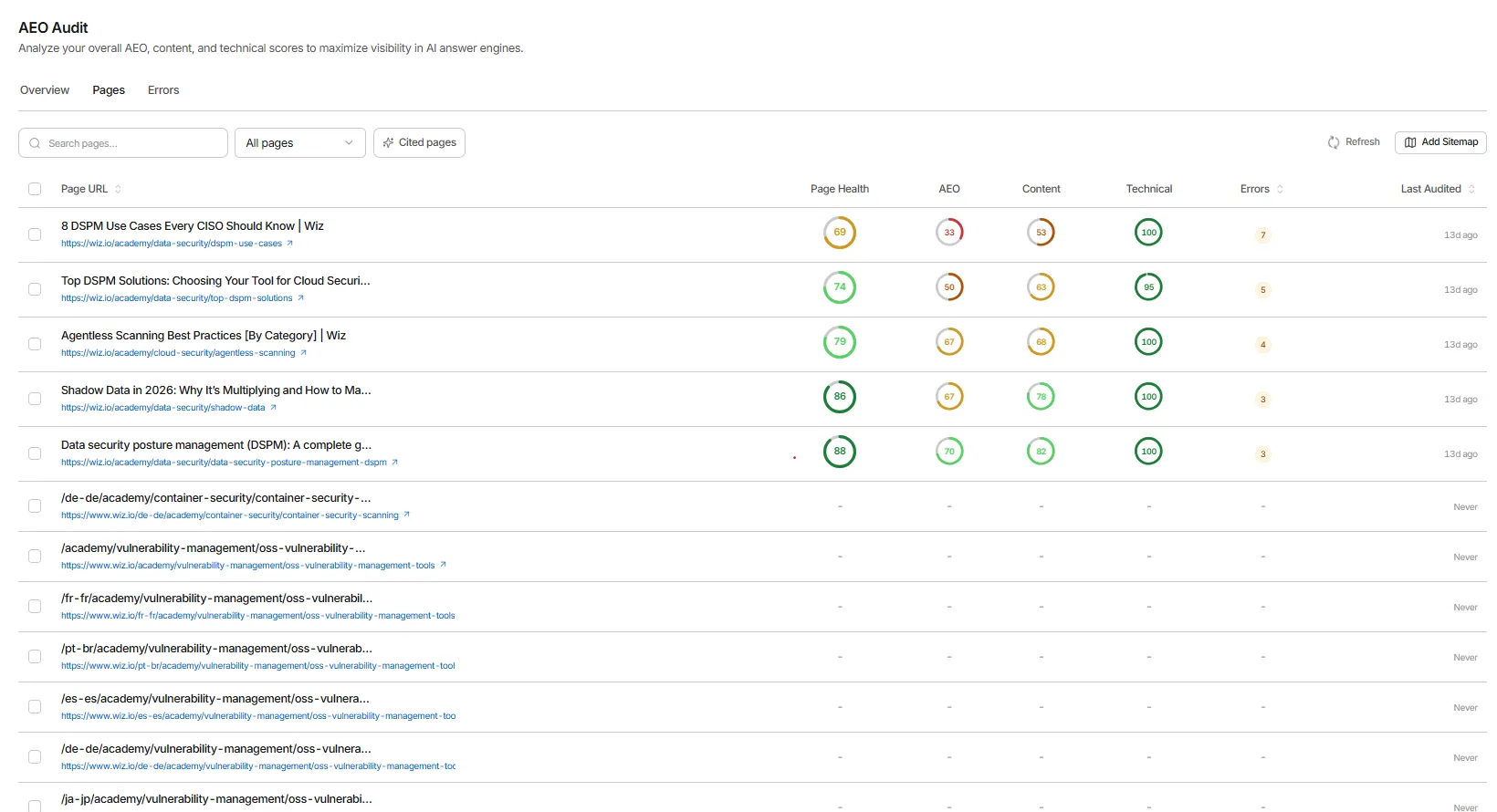
Best Scrunch AI Alternatives for AI Search Visibility and Customer Experience
Scrunch AI starts at $250/mo and bundles monitoring, personas and an Agent Experience Platform. Compare 8 alternatives on cost per prompt and work out which three fit the part of Scrunch you actually use.
-
 se ranking alternatives
Best SE Ranking Alternatives for AI Search Visibility and AEO Tracking
SE Ranking charges $218/mo for AI tracking once you add the $89 AI Search add-on to the $129 Core plan. Compare 8 alternatives on cost per tracked prompt, engine coverage, and which three you should actually demo.
-
 search intent
How to Turn Search Intent into High-Performing Content Using AI
Stop guessing what your audience wants. Learn how to align search intent with AI-driven insights to create content that ranks higher and converts better.







