The Comprehensive Guide to Growth Hacking for Future Success

Abhimanyu Singh · Engineering Manager & AI Builder
· Updated September 7, 2026
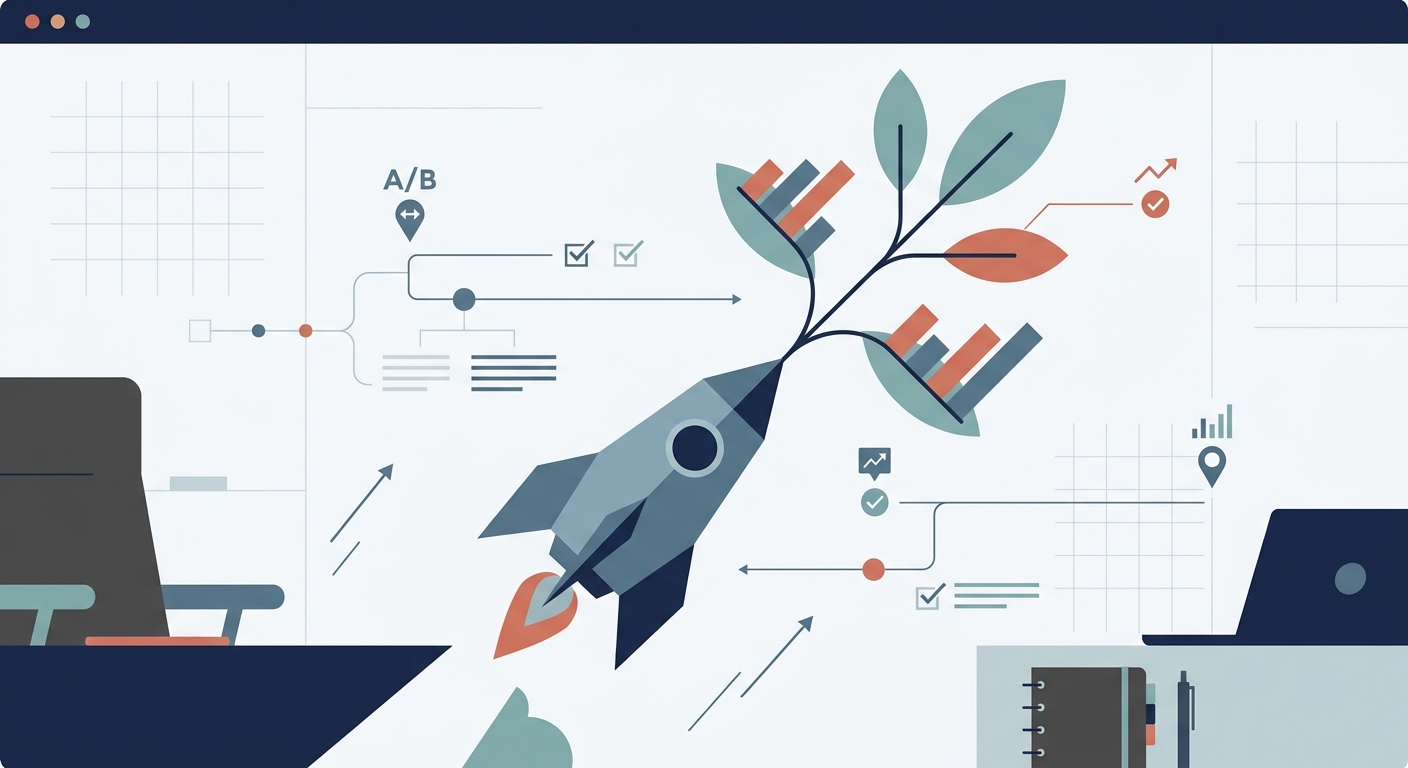
Growth hacking in 2026 isn’t about finding a magic button or gaming an algorithm. If you’re still hunting for viral loopholes or spamming referral codes to pump up your user counts, you’re just wasting your breath.
Growth has grown up. It’s no longer a playground for “hacks”—it’s a cold, hard, scientific discipline. The only metric that actually pays the bills is sustainable revenue. If your team isn’t churning out 5-10 experiments every single week, you aren’t just losing your edge. You’re becoming a relic. Real growth is a high-velocity machine, not a roll of the dice. Forget shortcuts. It’s time to build an engine that compounds value through relentless, data-backed iteration.
Why the “Hack” is Dead
The term was coined by Sean Ellis to describe a smart, fast-paced approach to product and marketing. But somewhere along the way, the industry turned it into a synonym for “cheap tricks.”
Those days are toast. Consumers today are too smart to fall for clickbait, and acquisition costs are through the roof. If you’re still relying on “shortcut” mentality, you’re just building a leaky bucket that churns out customers as fast as you can pull them in.
Modern growth is about institutionalizing the hustle. We’re moving past the chaotic “move fast and break things” phase. Welcome to the era of “move fast and optimize everything.” It’s about treating the entire user journey as one, cohesive growth methodology.
The 2026 Framework: Fixing the Leaks
The AARRR model—Acquisition, Activation, Retention, Referral, and Revenue—is still the gold standard, but most teams are doing it backward. They obsess over the top of the funnel. They pour money into ads, screaming for attention, while their product bleeds users out the bottom.
graph TD
    A[Acquisition] --> B[Activation]
    B --> C{Retention}
    C --> D[Referral]
    D --> E[Revenue]

    style C fill:#f9f,stroke:#333,stroke-width:4px
    subgraph Growth Focus
    C
    end
If you focus on AARRR Pirate Metrics, you’ll quickly see that the middle is where the magic (and the money) happens. The widest part of your funnel should be Retention. Stop fighting for every single sign-up and start building an ecosystem where your current users do the heavy lifting for you. When you nail retention, your users become your best acquisition channel. It’s that simple.
The Pillars of Modern Growth
1. AI-Driven Personalization
Manual A/B testing is fine if you’re a hobbyist, but in 2026, it’s a bottleneck. The variables are just too high: device types, intent signals, time of day, past behavior. You can’t guess what a user wants. You have to know. Using AI-driven strategy planning allows you to move from guessing to predicting. AI anticipates the user’s next move and serves them exactly what they need, often before they’ve even realized they need it.
2. Product-Led Growth (PLG)
The old wall between the “Product Team” and the “Marketing Team”? Tear it down. In a Product-Led Growth model, your product is the marketing. If your tool needs a 45-minute sales demo just to show a hint of value, you’ve already lost. Your competitors are out there offering a frictionless, value-first experience. PLG forces you to build a better tool, not just a better landing page.
3. Community-Led Growth (CLG)
Paid ads are a tax on your business. Relying on big tech platforms for your traffic is a strategic liability. You need to own your audience. Community-Led Growth is the antidote to rising CAC. When users interact with your brand and each other, you create a high-trust, low-cost engine for growth. It’s not just a marketing channel; it’s a living, breathing feedback loop that tells you exactly what to build next.
The Experimentation Engine
A high-performance growth team is built on “T-shaped” talent. You need people who know the deep, technical weeds—data engineering, behavioral psychology—but who also understand how the whole funnel clicks together.
To hit that 5-10 experiment-per-week cadence, you have to kill the bureaucracy.
graph LR
    A[Hypothesis Generation] --> B[AI-Assisted Implementation]
    C[Data Analysis] --> D[Learning]
    D --> E[Iteration]
    E --> A
    B --> C
The loop is ruthless. You generate a hypothesis based on hard data. You use AI to ship the experiment. You analyze the output. And—this is the part most people forget—you document the learning. Even a “failed” experiment is a win if it stops you from wasting resources on a dead end later.
The “Unchurning” Playbook
“Unchurning” is the secret weapon of the best growth teams. We don’t wait for a “cancel” email to figure out what went wrong. We use predictive AI to spot the “leaky bucket” behavior before it happens.
If your data shows that users who don’t finish their profile in 72 hours are 80% more likely to ghost you, that’s not just a stat—that’s a mandate. You trigger an automated, personalized sequence to get them back on track. Plug the leaks, and your Lifetime Value (LTV) climbs without you spending a dime on new ads.
Your Tech Stack: The Nervous System
Your tools shouldn’t be a pile of disconnected apps. They need to be an integrated nervous system.
- Predictive Analytics: Don’t just look at what happened yesterday. Look at what’s going to happen tomorrow.
- AI-Powered CRMs: Stop segmenting by static demographics. Segment by behavioral intent.
- Automated Experiment Trackers: Keep your 5-10 weekly tests in one centralized dashboard.
The goal here is data democratization. If your designer doesn’t know the conversion impact of the button they just moved, your stack is broken.
Frequently Asked Questions
Is growth hacking dead in 2026?
Growth hacking as a collection of “viral tricks” is dead. It has matured into a rigorous scientific discipline—a systematic way to build, test, and scale businesses that prioritizes sustainable growth over short-term spikes.
What is the difference between traditional marketing and growth hacking?
Traditional marketing often focuses on top-of-funnel awareness and brand perception. Growth hacking focuses on the entire funnel, utilizes rapid, data-driven experimentation, and is deeply integrated into the product development lifecycle.
What is the most important skill for a growth hacker today?
Data literacy is the baseline, but the most important skill is the ability to bridge the gap between engineering and marketing. A modern growth hacker must be able to speak the language of code as fluently as the language of user psychology.
How do I start a growth hacking culture in a traditional company?
Start small. Pick a single, high-leverage metric—like “activation rate”—and run a two-week, cross-functional sprint dedicated solely to moving that needle. Success breeds culture. Once the team sees the impact of systematic testing, the buy-in for a full-scale growth engine will follow naturally.
Related Articles
-
 cybersecurity content audit
 How to Audit Cybersecurity Content for Accuracy and Originality
Cybersecurity content with incorrect facts destroys confidence fast. Here's a practical audit framework for correctness and originality that preserves the credibility of your security publications.
-

10 Examples of SaaS Companies with Exceptional Marketing
Explore 10 SaaS marketing examples with actionable tactics. Learn innovative strategies from top companies to elevate your own campaigns.
-
How to Find the Right B2B Prospects for Your SaaS Product
Stop wasting sales outreach on leads that're not a good fit. Learn ways to find, check, and work with the right B2B prospects for your SaaS product.
-
 online reputation management
 The Importance of SEO in Online Reputation Management
Discover how SEO influences your digital brand. Learn actionable strategies to suppress negative search results and build a positive online reputation today.