How AI Is Improving the Way We Understand Search Intent

Nikita Shekhawat · Junior SEO Specialist
· Updated September 22, 2026
Introduction
Search intent has always been at the core of effective SEO. Every query reflects a need, a question, or a goal. The challenge has never been recognizing that intent exists. The challenge has been understanding it accurately.
Traditional SEO methods often rely on keywords as a proxy for intent. While this approach provides direction, it does not always capture the full picture. As search behavior becomes more complex, businesses need better ways to interpret what users actually want. This is where AI is making a meaningful difference.
What Is Search Intent in SEO
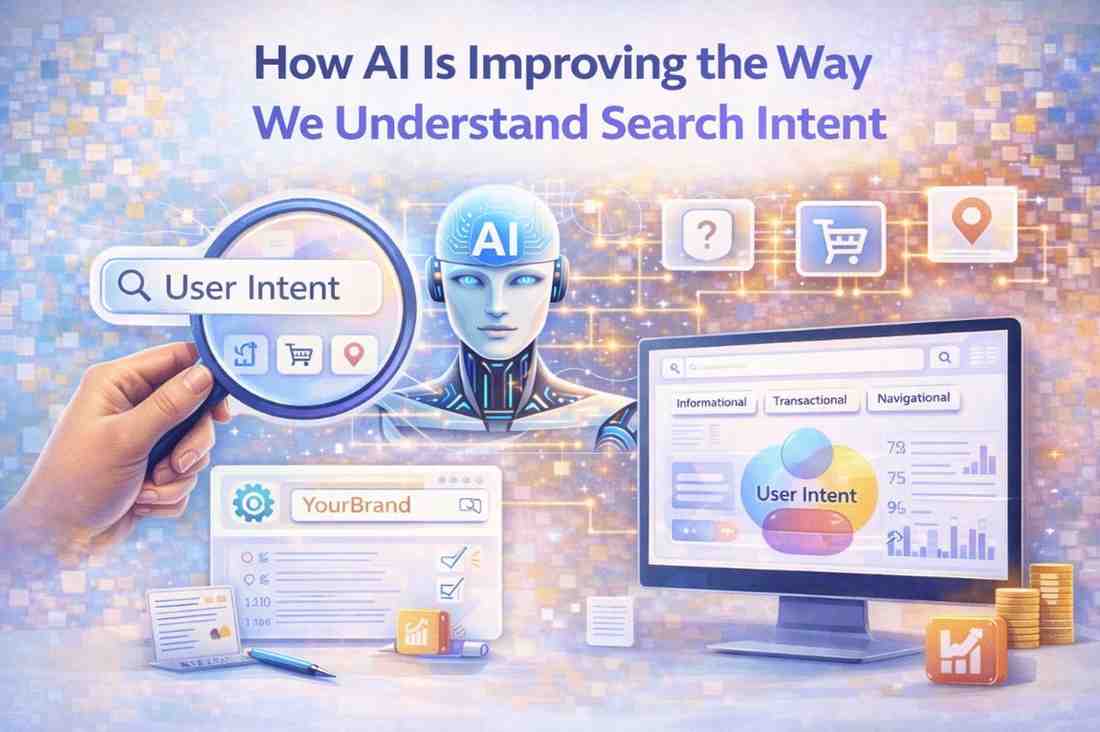
Search intent refers to the reason behind a user’s query. It explains why someone searches and what they expect to find. Most queries fall into a few categories. Informational intent focuses on learning. Navigational intent looks for a specific site. Transactional intent signals readiness to take action. Commercial intent often involves comparing options. For a deeper walkthrough of each of these four intent types with real-world examples, see our complete guide to using keyword intent to drive quality traffic.
Understanding these distinctions is essential. When content aligns with intent, it performs better. Users stay longer, engage more, and are more likely to convert.
However, traditional intent analysis has its limits. It often depends on surface-level keyword interpretation. This can lead to mismatches between content and user expectations. As queries become more conversational, these gaps become more noticeable.
The Role of AI in Understanding Search Intent
AI introduces a deeper layer of analysis. It processes large amounts of data and identifies patterns that are not immediately visible. Instead of focusing only on keywords, it evaluates context, relationships, and behavior.
This shift allows SEO strategies to move beyond simple keyword targeting. It creates a more accurate understanding of what users are trying to accomplish, and it is the same shift behind answer engine optimization for B2B SaaS: content built to satisfy an inferred intent rather than just match a keyword string.
AI also adapts in real time. As user behavior changes, it updates its understanding of intent. This makes it possible to respond to trends more quickly and effectively.
How AI Improves Intent Classification
One of the key benefits of AI is its ability to classify intent more accurately. Similar queries can have different meanings depending on context. AI can distinguish these nuances by analyzing patterns across multiple signals.
It also handles complex queries more effectively. Users are now searching in full sentences and asking detailed questions. AI can interpret these queries and identify the underlying intent.
In some cases, a single query may reflect multiple intentions. AI can recognize this overlap and help create content that addresses different aspects of a user’s need. This leads to more comprehensive and useful content.
Impact of AI on Keyword and Content Strategy
AI is shifting the focus from keywords to topics. Instead of targeting isolated phrases, businesses are building content around broader themes. This approach reflects how users actually search and explore information.
Content strategy becomes more aligned with the user journey. Early-stage content answers questions and builds awareness. Later-stage content supports decision-making and action.
AI also improves content depth. By identifying gaps and related topics, it helps create more complete and relevant content. This strengthens authority and improves performance over time.
AI and User Behavior Insights
User behavior provides valuable signals about intent. Metrics such as time on page, click patterns, and engagement reveal how users interact with content.
AI analyzes these signals at scale. It identifies trends and patterns that can inform strategy. For example, it can highlight which topics lead to deeper engagement or which pages need improvement.
It also helps predict user needs. By understanding behavior patterns, AI can anticipate what users are likely to search for next. This creates opportunities to deliver content that meets those needs proactively.
Personalization is another outcome. Search results can be tailored based on user context, making them more relevant and useful.
Practical Applications of AI for Intent Optimization
AI can be applied in several practical ways. In keyword research, it helps identify queries that reflect clear intent. This allows businesses to focus on high-value opportunities.
For existing content, AI can suggest improvements. It can highlight areas where content does not fully match intent and recommend adjustments. For a workflow that turns an intent classification into an actual content brief and draft, see how to turn search intent into high-performing content using AI.
It also supports conversion optimization. By aligning content with user goals, it creates smoother paths from search to action. This improves both engagement and results.
The same intent signals matter beyond classic search results. When a buyer asks ChatGPT or Perplexity a question instead of typing it into Google, the AI answer engine is still resolving intent before it decides what to cite — see is your content strategy ready for the age of AI search for how that changes what “matching intent” requires.
Common Mistakes to Avoid
One common mistake is focusing too heavily on keywords while ignoring intent. This can lead to content that ranks but does not satisfy users.
Another issue is misinterpreting AI insights. Data must be understood in context. Without careful analysis, it can lead to incorrect conclusions.
Generic content is also a problem. Content that lacks a clear purpose or depth will struggle to perform. User experience signals should not be overlooked either, as they provide important feedback on intent alignment.
Best Practices for Leveraging AI in Intent-Based SEO
A user-first approach remains essential. Content should always address real needs and provide clear value.
AI should support strategy, not replace it. Human expertise is needed to interpret insights and make informed decisions.
Continuous analysis is important. Search behavior evolves, and strategies must adapt. Building content around genuine user needs ensures long-term relevance.
Staying informed about changes in search and AI capabilities helps maintain a strong position.
Conclusion
AI is improving the way search intent is understood by adding depth, accuracy, and adaptability. It allows businesses to move beyond surface-level analysis and focus on what users truly want.
As search continues to evolve, this shift becomes more important. By combining AI insights with thoughtful strategy, businesses can create content that is more relevant, engaging, and effective.
Related Articles
-
 cybersecurity content audit
 How to Audit Cybersecurity Content for Accuracy and Originality
Cybersecurity content with incorrect facts destroys confidence fast. Here's a practical audit framework for correctness and originality that preserves the credibility of your security publications.
-

10 Examples of SaaS Companies with Exceptional Marketing
Explore 10 SaaS marketing examples with actionable tactics. Learn innovative strategies from top companies to elevate your own campaigns.
-

How to Find the Right B2B Prospects for Your SaaS Product
Stop wasting sales outreach on leads that're not a good fit. Learn ways to find, check, and work with the right B2B prospects for your SaaS product.
-
 online reputation management
 The Importance of SEO in Online Reputation Management
Discover how SEO influences your digital brand. Learn actionable strategies to suppress negative search results and build a positive online reputation today.