Google Search Console Launches Recommendations: A Deep Dive

Google Search Console, a vital tool for webmasters and SEO professionals, has recently launched a new feature: Recommendations. This addition promises to revolutionize how website owners optimize their online presence. In this article, we'll explore the intricacies of this new feature, its implications for SEO, and how to leverage it effectively.
Understanding Google Search Console Recommendations
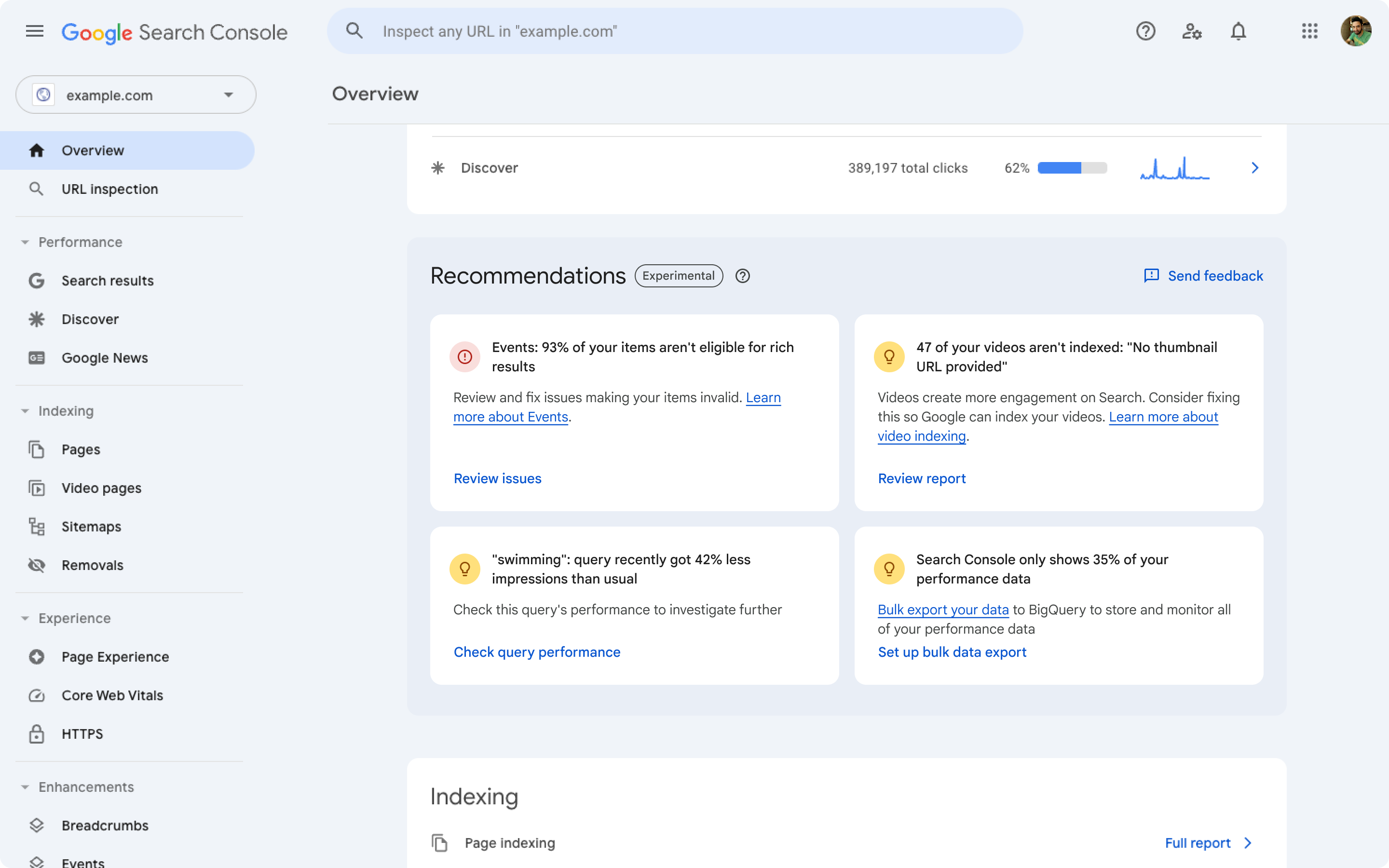
Google Search Console Recommendations is an AI-driven feature designed to provide personalized, actionable insights to improve a website's performance in search results. Unlike general best practices, these recommendations are tailored to each specific website, based on its current performance and potential for improvement. The kinds of recommendations would look like this:
- Issues (something that could be fixed)
- Opportunities (something that could improve your traffic)
- Configuration (something that could make your work easier)
Key Components of the Recommendations Feature
- Performance Analysis: The system continuously analyzes your website's performance in search results, considering factors such as click-through rates, impressions, and average position.
- Content Evaluation: It assesses your website's content, looking at factors like relevance, freshness, and comprehensiveness.
- Technical SEO Audit: The feature conducts ongoing technical audits, checking for issues related to site speed, mobile-friendliness, and indexability.
- User Experience Assessment: It evaluates user experience metrics, including Core Web Vitals and other UX signals.
- Competitive Analysis: The system compares your site's performance against competitors in your niche.
Types of Recommendations
Recommendations are categorized into several key areas:
- Content Optimization:
- Suggestions for improving existing content
- Ideas for new content to target underserved keywords
- Recommendations for updating outdated content
- Technical SEO Improvements:
- Fixes for crawl errors
- Suggestions for improving site speed
- Recommendations for enhancing mobile usability
- User Experience Enhancements:
- Tips for improving Core Web Vitals
- Suggestions for better internal linking
- Recommendations for enhancing site navigation
- Structured Data Opportunities:
- Identification of pages that could benefit from structured data
- Suggestions for implementing new types of schema markup
- Security and HTTPS:
- Recommendations for improving site security
- Alerts for potential security vulnerabilities
How to Access and Implement Recommendations
- Accessing Recommendations:
- Log into Google Search Console
- Navigate to the 'Overview' tab in the left sidebar
- View your personalized recommendations, sorted by priority
- Understanding Priority Levels:
- High Priority: Critical issues that significantly impact performance
- Medium Priority: Important optimizations with moderate impact
- Low Priority: Suggestions for minor improvements
- Implementing Recommendations:
- Click on each recommendation for detailed information
- Follow the step-by-step guidance provided
- Use the 'Mark as Fixed' button once you've implemented a change
- Tracking Progress:
- Monitor the 'Impact' metric associated with each recommendation
- Observe changes in your site's performance over time
- Review new recommendations as they appear
Best Practices for Utilizing Recommendations
- Prioritize Effectively: Focus on high-priority recommendations first, as these will likely have the most significant impact.
- Combine with Other Data: Integrate insights from Recommendations with data from other Search Console reports and third-party tools for a comprehensive optimization strategy.
- Regular Check-ins: Make it a habit to review new recommendations weekly or bi-weekly, as they are dynamically updated.
- Test and Measure: After implementing a recommendation, closely monitor its impact on your site's performance.
- Customize Implementation: While following the recommendations, ensure that changes align with your overall brand and content strategy.
Potential Challenges and Considerations
- Resource Allocation: Implementing recommendations may require significant time and resources. Plan accordingly.
- Over-optimization Risk: Be cautious not to over-optimize based on recommendations alone. Maintain a balance with user experience and brand identity.
- False Positives: Occasionally, recommendations may not be perfectly suited to your specific situation. Use your judgment and industry knowledge.
- Continuous Learning: As the feature is AI-driven, it will likely evolve. Stay updated on changes and new types of recommendations.
Conclusion
Google Search Console's Recommendations feature represents a significant leap forward in personalized SEO guidance. By providing tailored, actionable insights, it empowers website owners to make data-driven decisions for improving their search performance. However, it's crucial to approach these recommendations strategically, combining them with human expertise and a comprehensive understanding of your website's goals and audience. As this feature continues to evolve, it will undoubtedly become an indispensable tool in the arsenal of SEO professionals and webmasters alike. Embracing and effectively utilizing these recommendations can lead to substantial improvements in search visibility, user experience, and ultimately, the success of your online presence.
Recommendations arrived alongside other Search Console upgrades worth tracking, including Query Groups, which clusters near-duplicate queries by AI-detected intent inside the Insights report, and an hour-by-hour comparison mode that lets you check whether a traffic spike is a one-off blip or the start of a trend. Between the three, Search Console is quietly becoming less of a raw-data export and more of an analysis surface in its own right.
The same season also brought a policy-side update worth tracking alongside these reporting upgrades: Google's August 2025 Spam Update targeted thin and manipulative content rather than reporting, a useful reminder that algorithmic and policy-based changes now arrive on parallel tracks.
![10 Best Local Rank Tracker Tools: In-Depth Comparison Guide [2025]](https://cdn.pseo.one/6abcb68a626591c40e1c8aa6/687e1c1ef6fe799d288518df/68809c373eb8562bcf68975d/10-best-local-rank-tracker-tools-comparison-guide/feature-image.jpg)