Understanding the Legality of Growth Hacking

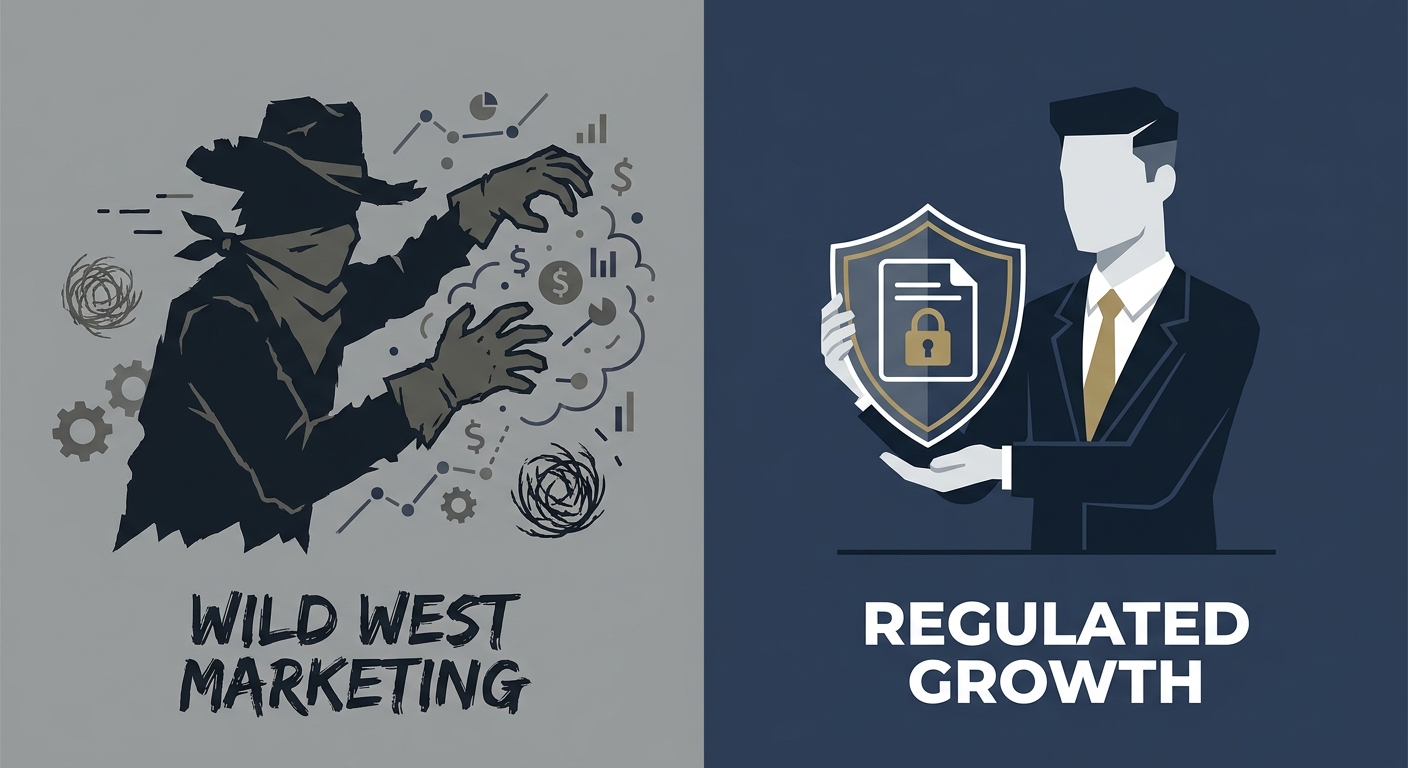
The "Wild West" era of digital marketing is officially dead. Remember the early 2010s? The "move fast and break things" mantra was the gospel. Well, that mentality just walked into a brick wall named 2026.
Let’s be blunt: if your growth strategy depends on scraping third-party databases, buying email lists, or running "black-hat" automation that treats user consent like a suggestion, you aren't a growth hacker. You’re a liability waiting to happen.
In 2026, the law doesn't care if you’re a "sophisticated marketer" or a basement-dwelling spammer. Both are under the same microscope. You’re navigating a 2026 Privacy Landscape where a single slip-up can vaporize years of brand equity. It’s not just about getting caught; it’s about whether your business can survive the fallout.
Defining Growth Hacking in 2026: From "Loopholes" to "Data-Driven Experimentation"
The industry finally grew up. We’ve moved past the era of "hacks"—those short-lived, gimmicky tricks meant to exploit platform bugs—and into the age of Privacy-Led Growth. Today, growth hacking is about one thing: rigorous, data-driven experimentation that actually respects the person on the other end of the screen.
The line between aggressive optimization and regulatory non-compliance used to be a blurry, grey smudge. Now? It’s a neon, bright line.
Teams used to view data privacy as a hurdle—something to jump over or crawl under. Now, it’s the foundation. If you’re still hiding in the shadows, waiting for your next "exploit" to work, you’re playing a losing game. It’s time to adopt a Sustainable Growth Framework that values transparency and long-term retention over cheap, high-risk acquisition spikes.
What Does the 2026 Legal Landscape Actually Look Like?
We’re living in the "Omnibus" shift. State-level privacy laws have coalesced into a massive, tangled web of regulation. The old distinction between a "marketer" and a "hacker" has evaporated. If you collect, process, or leverage data to grow, you’re a data controller. Period. You own the entire lifecycle of that information, and you’re on the hook for every byte.
Elite teams have stopped playing defense. They aren't waiting for a subpoena to start caring about compliance. They’ve realized that you can no longer "ask for forgiveness later." The fines are too heavy, and the platform algorithms are too smart. By aligning your tactics with the 2026 Privacy Landscape, you’re not just avoiding a courtroom—you’re building a machine that thrives while everyone else is getting banned.
Are You Falling for Automated Non-Compliance?
The most dangerous weapon in a growth hacker's arsenal today is also their biggest legal trap: AI.
Autonomous agents are everywhere. But many teams are inadvertently automating their way into a lawsuit. If your AI tools are scraping social media or crawling the web for leads, they’re likely bypassing "Privacy by Design" standards. They’re harvesting data without consent.
"Speed to lead" is just a vanity metric if it comes at the cost of your legal status. If your automated outreach relies on data that wasn't ethically sourced, you’re feeding a system that will eventually trigger a permanent shadowban or a regulatory audit. Is that lead really worth the cost of your company’s future?
How Can You Pivot from "Growth at All Costs" to "Privacy-Led Growth"?
The most successful companies in 2026 have turned data privacy into a competitive moat. When you prioritize transparency, you build trust. And trust? That’s the ultimate conversion multiplier.
As noted in the Harvard Business Review, Data Privacy Is a Growth Strategy. It forces you to build actual relationships with your audience instead of treating them like commodities to be mined.
When you treat user data with respect, people are actually willing to share it. This creates a flywheel of high-quality, first-party data that outperforms any scraped list you could buy. It’s the difference between cold-calling a stranger and hosting a dinner party for a friend. One gets the door slammed in its face; the other builds a long-term connection.
The 3 Pillars of Legal Growth
If you want to scale without looking over your shoulder, anchor your operations in these three non-negotiable pillars:
Pillar 1: Explicit Consent "Implied" permission is a relic. In 2026, you need a clear, affirmative "yes." Whether it’s a double opt-in or a granular prompt, the user must understand exactly what they’re signing up for. If they didn't explicitly agree to your specific use case, you don't have permission. Full stop.
Pillar 2: Transparent Data Usage The value exchange must be crystal clear. Why are you collecting this? What are you doing with it? If you can’t explain your data policy in plain English to your grandmother, you shouldn't be collecting the data. Transparency isn't just a legal requirement—it’s a branding play.
Pillar 3: Platform Compliance Respecting the Terms of Service (ToS) of LinkedIn, Meta, and Google is the bare minimum for survival. These platforms have become terrifyingly good at sniffing out automated, non-consensual behavior. Play by their rules, and you stay in the game. Try to hack them, and you’ll eventually be shown the exit.
How to Scale Without Violating Terms of Service (ToS)?
Sustainable growth is about working with the ecosystem, not trying to break it. Stop trying to bypass rate limits or scrape protected profiles. Focus on high-value, permission-based outreach.
Leverage AI-Driven Strategy Services that are built with "human-in-the-loop" compliance. This lets you automate the heavy lifting of data synthesis and lead nurturing while keeping every single interaction within legal and platform bounds.
True scaling in 2026 isn't about finding new ways to spam the internet. It’s about optimizing conversion rates, sharpening your offer, and refining your messaging.
The Growth Hacker’s Risk Audit: A Practical Checklist
Before you launch your next campaign, run it through this audit. If you check "No" on any of these, pull the plug immediately. You can review 9 Data Privacy Issues to Avoid to deepen your understanding of these risks.
- Data Provenance: Can I prove where every lead in this database originated? (If no, delete it.)
- Consent Check: Is there a recorded, time-stamped log of the user opting in?
- Value Exchange: Is the benefit to the user clearly stated, or is this just an extraction of their personal information?
- Platform Alignment: Does this outreach method comply with the specific ToS of the platform I am using?
- AI Oversight: Is there a human review process for the content and data being generated by my AI agents?
- Opt-Out Mechanisms: Is it as easy for the user to leave my ecosystem as it was for them to enter it?
Frequently Asked Questions
Is "growth hacking" inherently illegal?
No, growth hacking is a philosophy of experimentation, rapid testing, and data-driven iteration. It is not illegal. However, the methods often associated with the term—such as unauthorized scraping, deceptive automation, and the purchase of non-consensual contact lists—frequently violate privacy laws and platform terms of service. You can be a growth hacker while remaining entirely compliant by focusing on sustainable, permission-based tactics.
What are the biggest legal risks for growth teams in 2026?
The biggest risks today are the convergence of state-level privacy laws and the aggressive enforcement of AI-driven compliance. Companies are being held accountable for the data they process, regardless of whether that data was collected by a human or an automated bot. Automated outreach that lacks explicit consent is the fastest way to trigger a regulatory investigation or a platform-wide ban.
How can I scale my startup without violating data privacy laws?
The key is to pivot toward "Privacy-Led Growth." This means deprioritizing third-party data and focusing on building a high-quality, first-party data asset. By creating a transparent value exchange where users willingly provide information in return for genuine utility, you build a sustainable growth engine that is immune to the shifting sands of global privacy regulations.
Can AI tools be used for growth without risking non-compliance?
Yes, absolutely. AI is a powerful tool for growth, provided it is configured for "Privacy by Design." This means setting strict parameters for data usage, ensuring that AI agents respect platform rate limits, and maintaining a "human-in-the-loop" oversight process. When AI is used to enhance the user experience rather than exploit the user's data, it becomes an asset for compliant, sustainable scaling.
![10 Best Local Rank Tracker Tools: In-Depth Comparison Guide [2025]](https://cdn.pseo.one/6abcb68a626591c40e1c8aa6/687e1c1ef6fe799d288518df/68809c373eb8562bcf68975d/10-best-local-rank-tracker-tools-comparison-guide/feature-image.jpg)