The Mobile-First AI Search Strategy for B2B SaaS Apps

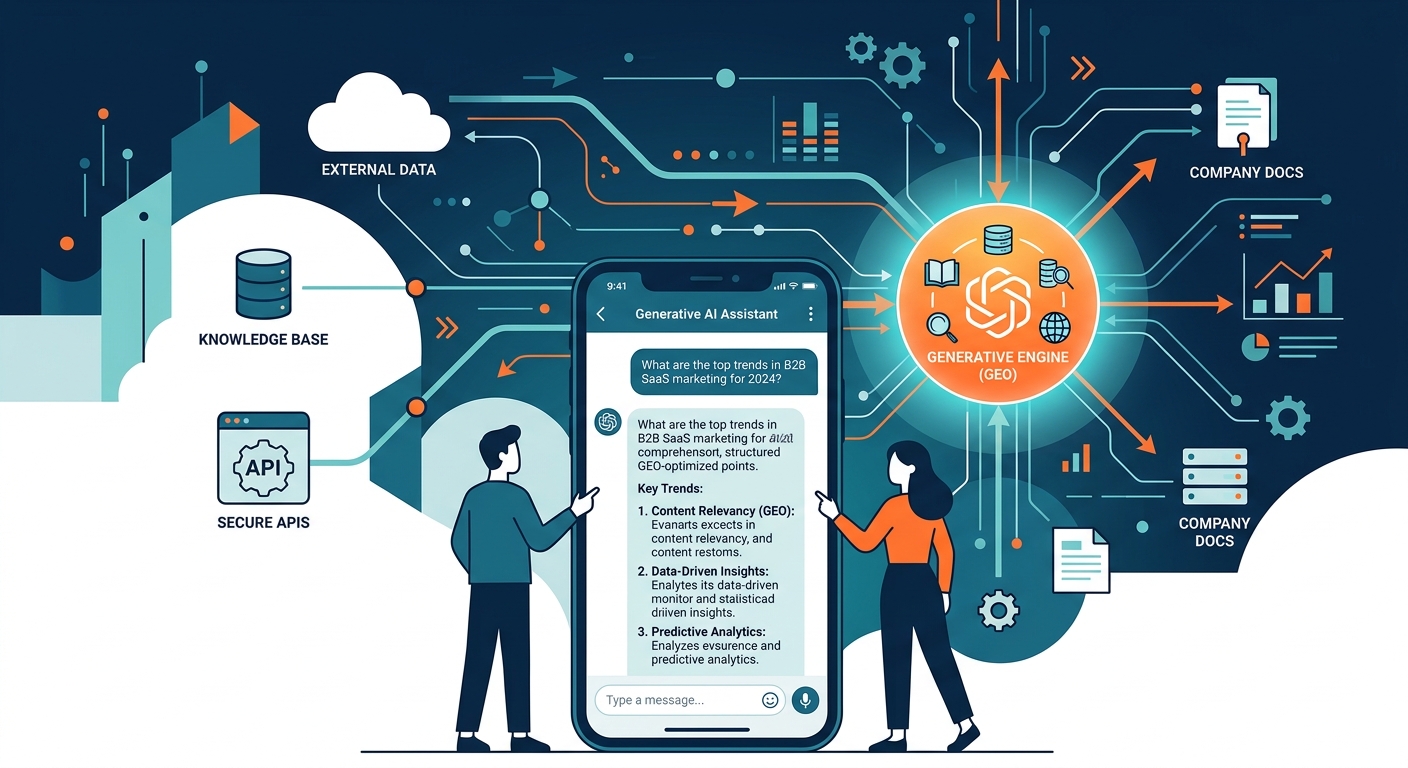
TL;DR
- ✓ Shift your strategy from traditional SEO to Generative Engine Optimization for AI visibility.
- ✓ Prioritize mobile performance to capture executives researching on the go via AI browsers.
- ✓ Focus on becoming a source of truth to earn citations in LLM-generated summaries.
- ✓ Optimize technical structure and schema markup to ensure AI engines can parse content.
The B2B buyer’s journey has shattered. If you’re still obsessing over "blue link" traffic, you’re fighting the last war. The game has moved. Today, decision-makers aren't scrolling through pages of Google results; they’re asking Perplexity, Arc, or ChatGPT to do the heavy lifting for them.
Welcome to the era of Generative Engine Optimization (GEO).
It’s no longer about gaming an algorithm to rank a landing page. It’s about becoming the "source of truth." LLMs act as the new gatekeepers, and if your content isn't structured, fast, and mobile-ready, you’re invisible. You aren't just competing for clicks anymore; you’re competing for citations.
Why the Old SEO Playbook Is Dead
Traditional SEO was built for a static web. You stuffed headers, chased keywords, and prayed for a top-three spot. But when a CTO asks an AI about the best cloud security protocols, they don’t want a list of ten websites to click through. They want an answer. Right now.
This shift from SEO to Generative Engine Optimization (GEO) is a transition from volume to authority. If your blog posts are bloated, fluff-heavy, and take six seconds to load, the AI simply skips you. These models prioritize speed, structured data, and clarity. If you can’t feed the machine exactly what it needs in a format it can parse, you effectively don’t exist.
The Mobile-First Imperative
We like to pretend B2B research happens in deep, focused desktop sessions. The reality? It happens in the margins. It happens during a commute, between meetings, or while waiting for a flight.
Mobile-native AI browsers have turned smartphones into high-powered research assistants. When an executive uses Arc Search or Perplexity on the go, the engine isn't just crawling the web; it’s filtering for speed and information density. If your site is bogged down by tracking scripts or non-responsive tables, the AI perceives this as a "bad experience" and de-prioritizes your content. A mobile-first strategy isn't just design; it’s technical survival. Verifying that experience actually renders correctly for a prospect in another region, not just assuming it does, is its own discipline -- see how B2B SaaS marketing teams use mobile data to test geo-based campaigns for the field-testing side of the problem.
AEO vs. SEO: Casting a Net vs. Being the Lighthouse
The difference between SEO and AEO (Answer Engine Optimization) is simple: SEO is about traffic; AEO is about being the authority — see AEO vs SEO: Why B2B SaaS Companies Need Both in 2026 for how the two disciplines actually split the work rather than compete for budget.
| Feature | SEO (Traditional) | AEO (Answer-First) |
|---|---|---|
| Primary Goal | Click-throughs to URL | Citations in AI responses |
| Success Metric | Keyword ranking / Traffic | Share of voice in AI summaries |
| Content Style | Long-form, keyword-dense | Modular, data-rich, concise |
| Technical Focus | Backlinks and page speed | Schema markup and semantic clusters |
| User Intent | Discovery through navigation | Immediate problem resolution |
Stop writing "10 Ways to Improve Your Workflow" and start defining the specific pain points your software solves. Give the LLM the factual nugget it can lift directly into its response.
Optimizing for Citations: The Technical Foundation
LLMs don't "read" your site like a human. They parse data structures.
Structured Data & Schema: This is the AI's native language. If you aren't using rigorous Schema.org markup for your products and FAQ blocks, you’re leaving the door open for competitors. See Schema Markup for AEO: What B2B SaaS Companies Get Wrong for the specific entity and Organization properties that matter most. If this sounds like a headache, professional SEO services are the bridge between your current technical debt and AI-readiness.
Semantic Authority: Build topic clusters. Don't just write one post; create a web of interconnected content that covers a problem from every angle. When you link semantically, you signal to the AI that you are the comprehensive authority on the topic. AEO for B2B SaaS: 8 Proven Answer Engine Optimization Strategies walks through this clustering approach alongside the seven other tactics that drive AI visibility.
Concise Content Design: AI agents hate fluff. They love bullet points, comparison tables, and summaries. Follow a SaaS content marketing guide that prioritizes modularity. If your content is structured so a 50-word excerpt provides a complete answer, you are infinitely more likely to be cited.
Building "Agentic" Readiness
We’re entering the age of "Agentic" search. Users are moving from "Find me a project management tool" to "Find me a tool that integrates with Slack and costs under $20 per user."
To be the app the agent recommends, your API documentation needs to be indexed. Your feature lists should be structured so an AI agent can "read" your capabilities directly. If an agent can verify your feature set via a structured data feed, it’s going to recommend you over the competitor who forces the agent to guess based on marketing jargon.
New KPIs for the AI Era
Forget last-click attribution. In an AI-first world, the "last click" might never happen. The user gets their answer from the summary and goes straight to your login page.
Track "Brand Awareness in AI." How often are you mentioned alongside your core category keywords? Are you appearing in the citations for "best enterprise CRM"? Use Google's AI Overview Guidelines as your north star for quality and factual accuracy.
Case Study: Winning in Perplexity
Consider a mid-market SaaS platform that recently overhauled its schema. By turning their comparison pages into machine-readable tables and adding granular JSON-LD to their product pages, they saw a 40% jump in AI-driven citations in just 90 days.
When a user asked for "best cybersecurity tools for small teams," they went from the third page of Google to the second cited source in Perplexity. No backlinks, no link-building hacks. Just clean, accessible data. By joining the Perplexity Publisher Program, they gained the insights needed to iterate on their "answer-first" strategy in real-time.
Future-Proofing: Your 2026 AI Tech Stack
You need a new toolkit. You need AI-mention monitoring to track sentiment in conversational outputs, schema validation tools to ensure your data is error-free, and mobile-performance diagnostics that mimic how an AI browser crawls your site.
The "Mobile AI Agent" Checklist:
- Speed: Do your core pages load in under 1.5 seconds on mobile?
- Structure: Are your value props defined in bulleted schema?
- Depth: Is your documentation indexed and crawlable?
- Accuracy: Is your data objective, or is it marketing fluff that LLMs ignore?
Frequently Asked Questions
How do I measure my brand's visibility in AI search engines?
Focus on "Share of Voice" within conversational outputs. Use monitoring tools to track how often your brand name appears in AI responses for your top 50 industry keywords, and measure the sentiment of those mentions.
Does mobile optimization still matter if most B2B buyers use desktop?
Yes. LLMs use mobile-optimized crawling as a proxy for "clean, fast, and accessible" data. If your site performs well on mobile, the AI assumes it provides a better user experience for everyone, which boosts your visibility on desktop search as well.
What is the primary difference between AEO and SEO?
SEO is focused on driving traffic through links to your website. AEO (Answer Engine Optimization) is focused on providing the "source of truth" that an AI engine uses to answer a user's question directly, often resulting in "zero-click" authority.
How can my SaaS app appear more frequently in ChatGPT or Perplexity answers?
Prioritize high-authority, structured schema markup that clearly defines your features, pricing, and use cases. Provide direct, factual answers to industry-specific pain points in a modular format (tables, lists, short summaries) that AI can easily parse.
Is AI search going to replace traditional B2B marketing entirely?
No. AI search shifts the discovery phase, making it faster and more efficient. However, the consideration phase—where buyers evaluate trust, culture, and long-term partnership—still requires human-led content, case studies, and relationship building. AI will help you get found, but your brand will still need to close the deal.

![10 Best Local Rank Tracker Tools: In-Depth Comparison Guide [2025]](https://cdn.pseo.one/6abcb68a626591c40e1c8aa6/687e1c1ef6fe799d288518df/68809c373eb8562bcf68975d/10-best-local-rank-tracker-tools-comparison-guide/feature-image.jpg)