Why You Should Monitor Brand Mentions in AI Search Results

TL;DR
- AI summaries have replaced traditional links as the new search battleground.
- Failing to appear in AI summaries makes your brand invisible to users.
- AI models default to competitors when your brand footprint is fragmented.
- GEO (Generative Engine Optimization) requires structured, machine-readable content.
- Monitoring brand mentions is now essential to ensure authoritative AI indexing.
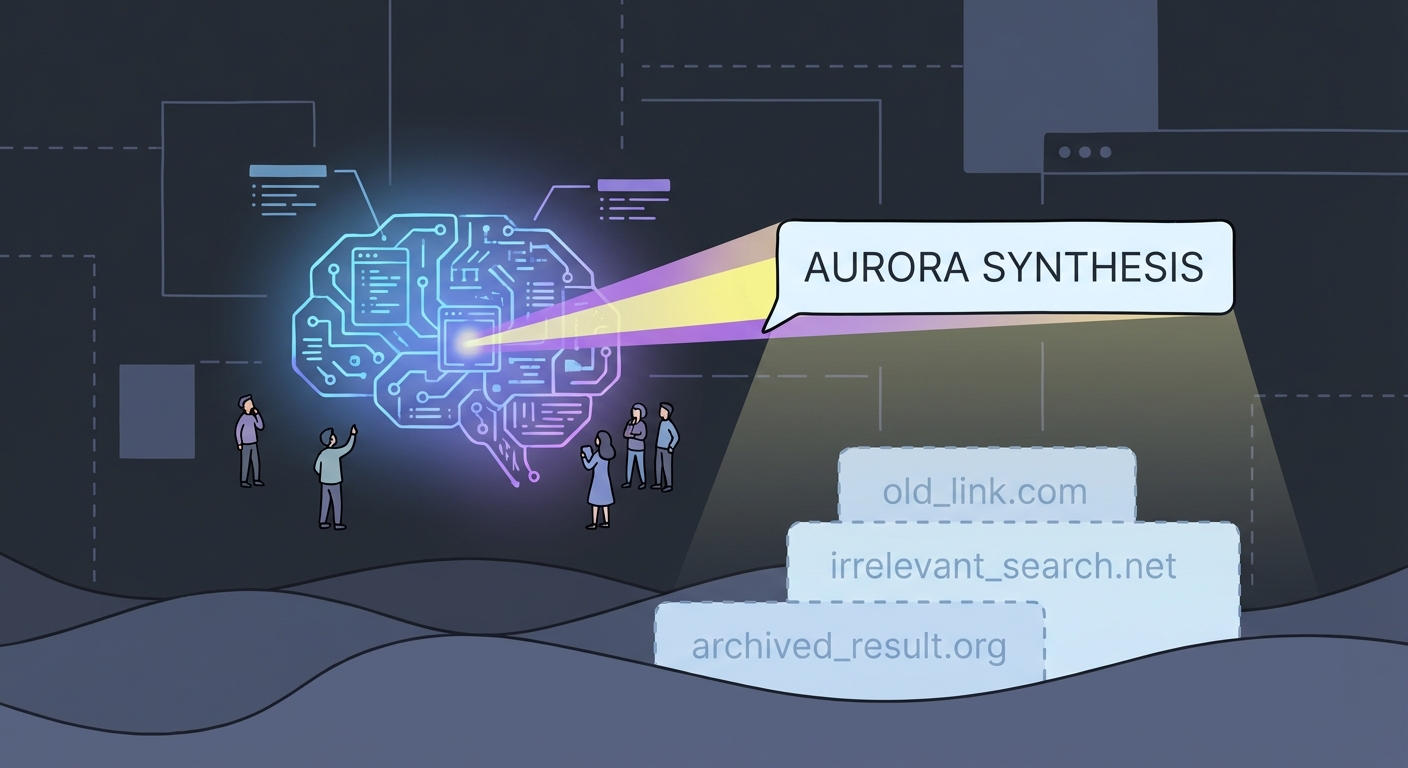
If you’re still obsessing over your position among the "10 blue links," you’re fighting a war that ended two years ago. That ship has sailed. The new battleground? The AI-generated summary. This is a "zero-click" world where the engine acts as an all-knowing curator. It synthesizes information, picks the winners, and effectively scrubs everyone else from the conversation.
If your brand isn’t being cited in these AI summaries, you aren’t just losing a few clicks—you’re being written out of the narrative entirely. Monitoring brand mentions isn’t some fluffy PR exercise anymore. It’s the bedrock of Generative Engine Optimization (GEO). If you want your business to exist in the age of AI, you need to be part of the synthesis.
The "Zero-Click" Reality: If You Aren't in the Summary, You Don't Exist
The shift is absolute. We’ve moved from a search paradigm where users navigated to your website to find answers, to an extraction paradigm where LLMs digest the entire web to serve you a pre-packaged response. According to Google's AI Overviews Impact Study, the landscape of search visibility has fractured. When a user asks a complex question, they don't want to play detective across five different blogs. They want the answer now.
If your brand is a ghost in these summaries, you are invisible to the user’s decision-making process. The AI is the ultimate gatekeeper. If it hasn't indexed your brand as a primary authority in your niche, it’ll just look right past you. This is the "Zero-Click" reality: the user gets their answer, the AI gets the credit, and the brands that didn’t feed the model the right data get nothing. It’s brutal, but it’s the new normal.
Why Your Brand Disappears: The "Gap-Filling" Risk
Ever wonder why an AI spotlights a competitor while ignoring your superior product? It usually comes down to "gap-filling." When an LLM hits a query, it’s programmed to predict the most authoritative, consensus-based response. If your digital footprint is fragmented, thin, or lacks clear semantic markers, the model simply can’t "see" you.
When the AI hits a gap in its understanding of your brand, it doesn't leave the space blank. It fills it with the next most accessible data point—which is usually your competitor. If your rivals have a more robust, consistent, and semantically connected web presence, the AI defaults to their messaging. You aren’t being intentionally excluded; you’re being out-indexed because your content isn’t structured for machine synthesis. Stop writing for the human eye alone. Start providing clear, crawlable "chunks" of information that the model can confidently package as a definitive answer.
The Visibility Gap: Closing the Distance Between Perception and Reality
There’s a massive "Visibility Gap" between who you think you are and how the AI perceives your brand. You might be the industry leader, but if you aren’t being referenced in the right contexts—on high-authority sites, industry forums, or alongside key industry terms—the AI’s vector-based architecture views you as peripheral.
To close this gap, you need to understand the "AI Information Extraction Process." It’s a journey from the source to the summary.
This flow is your GEO blueprint. You need your brand mentioned on high-authority domains that LLMs prioritize. This feeds the vector indexing process, turning your brand into a "node" that the AI draws upon when it’s building a summary.
Co-Citations: The New Backlinks
In the old days of SEO, we obsessed over backlinks. While link equity still carries weight, AI models prioritize "consensus" over raw popularity. Enter the co-citation: the new gold standard for authority.
When your brand is mentioned alongside industry titans or within deep, contextual analysis on reputable third-party sites, you are effectively "training" the AI to pair your brand with those specific topics. As noted in Generative Engine Optimization (GEO) Explained, the goal is to build a semantic map where the AI understands that when a user asks about "X," your brand is a natural, authoritative answer. By building these co-citations, you’re teaching the model that your brand is a core component of the industry’s knowledge base.
The Feedback Loop: Monitoring and Influencing Sentiment
Monitoring isn't just about counting mentions; it’s about analyzing the sentiment and context to refine your content strategy. If you aren't auditing how the AI views your reputation, you’re flying blind.
This loop is your lifeline. If you discover your brand is being linked to a negative context on review sites or forums, the AI will pick that up and potentially filter you out of "best of" summaries. You have to manage this sentiment proactively. If you want to learn more about how to navigate these signals, How to Build Authority in the Age of AI provides a deep dive into the trust signals that AI engines crave.
Is Your Brand Being "Erased"? The Audit Checklist
Time for a gut check. Conduct a proactive audit right now. Search your core brand terms and primary product categories across Gemini, ChatGPT, and Perplexity.
- The Summary Check: Does the AI mention your brand in its summary? If not, why? Is it highlighting a competitor instead?
- Contextual Hijacking: Does the AI describe your brand accurately, or is it hallucinating features or misrepresenting your value proposition?
- Structured Data Audit: Are you using Schema markup to explicitly tell the AI who you are, what you offer, and who your competitors are?
- Third-Party Validation: Search for your brand alongside your primary keywords. Who is talking about you? Are those sources considered "authoritative" by the AI?
If you find that your brand is consistently absent, you have a structural problem. Navigating this shift requires a new approach to search architecture—balancing traditional SEO with a broader ecosystem approach that ensures your brand is the "obvious" answer for any query in your sector. When you are ready to move beyond basic rankings and build a presence that commands the AI, Gracker.ai's SEO Strategy Services can help you architect that transition. As discussed in The Importance of Brand Sentiment in LLMs, your brand's reputation is now a quantifiable signal that directly dictates your visibility.
Frequently Asked Questions
Why does my brand rank #1 on Google but not appear in AI Overviews?
Search ranking is about index relevance—how well your page matches a query. AI synthesis is about semantic authority and consensus. You can have the most relevant page, but if the AI hasn't aggregated enough "consensus" (mentions and co-citations) to trust your brand as a definitive authority, it will favor sources that have more third-party validation.
How can I influence what an AI says about my brand?
You influence the AI by "training" it through high-authority, consistent third-party mentions and structured data. By ensuring your brand identity is clearly defined on your own site through Schema and amplified across reputable industry platforms, you provide the signals the AI needs to confidently include you in its summaries.
Are backlinks still important for AI search, or is it all about brand mentions?
Backlink equity remains a signal for trust, but "brand mentions" (especially co-citations) are the primary mechanism for AI semantic mapping. While a backlink might help your page rank in the classic index, being mentioned in the right context across the web is what gets you into the AI summary.
What is the difference between traditional brand monitoring and AI search monitoring?
Traditional monitoring is reactive—listening for mentions to address PR issues. AI search monitoring is proactive—it is about shaping the AI’s understanding of your expertise. It involves auditing how the model synthesizes your brand and adjusting your PR and content strategy to fill the "visibility gaps" that limit your reach.
![10 Best Local Rank Tracker Tools: In-Depth Comparison Guide [2025]](https://cdn.pseo.one/6abcb68a626591c40e1c8aa6/687e1c1ef6fe799d288518df/68809c373eb8562bcf68975d/10-best-local-rank-tracker-tools-comparison-guide/feature-image.jpg)