AI Knowledge Management Trends in EdTech Market

The way information gets organized and retrieved is changing faster than most people realize. When you search for something on ChatGPT, Perplexity, or Google's AI Overview, you're not getting results ranked by clicks anymore. You're getting answers synthesized from sources that AI has decided are authoritative. How information is structured matters more than it ever has.
That's the exact mechanism worth understanding in detail: how AI engines decide which sources count as authoritative determines whether an edtech platform's own content ever surfaces in those synthesized answers.
For students, this isn't abstract. The tools you use to study, research, and write are all being shaped by how AI reads and prioritizes knowledge. Understanding what's driving these changes gives you an edge in how you learn and how you present what you know.
How AI Is Changing The Knowledge Landscape
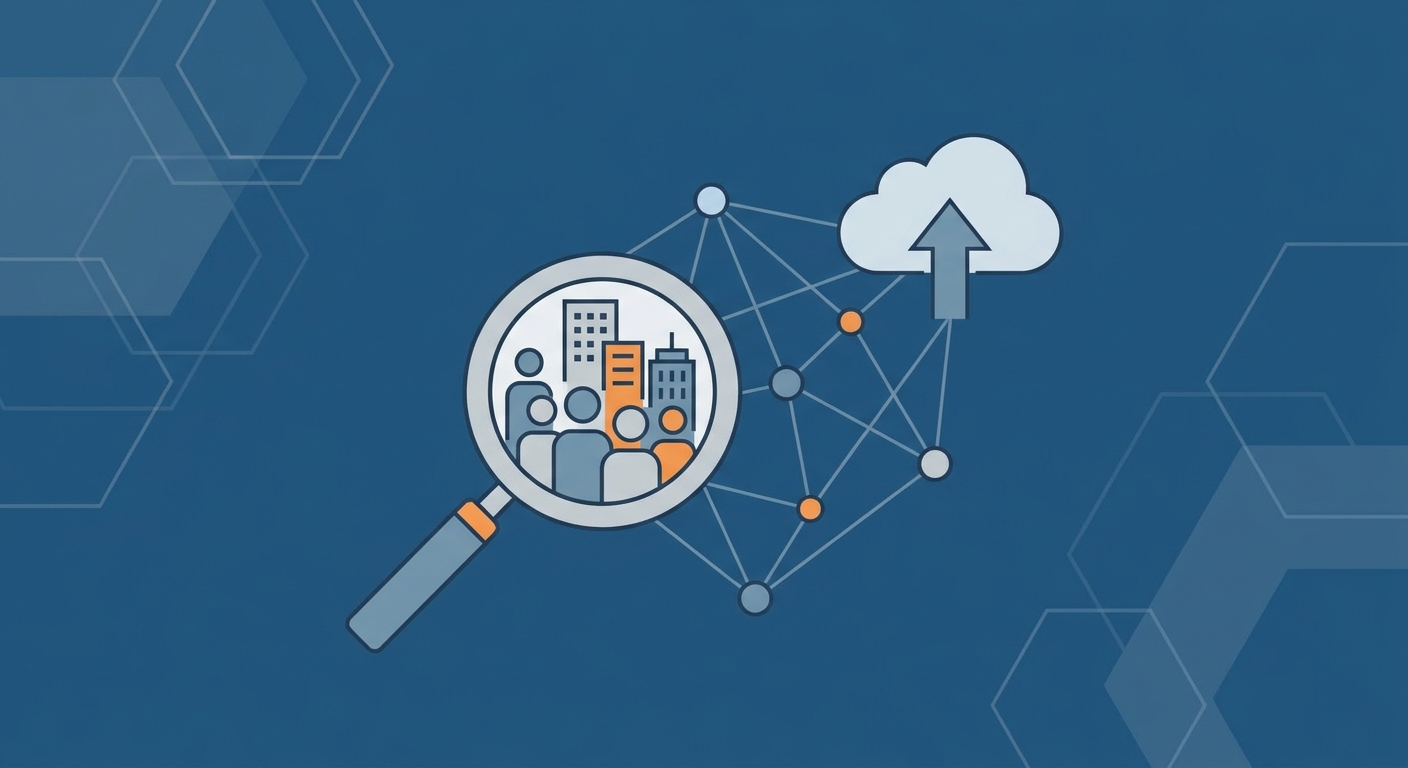
Knowledge used to be stored in documents. Now it lives in graphs - interconnected structures where concepts link to each other and AI systems can trace relationships between ideas rather than just matching keywords.
Educational platforms that have adapted to this - Coursera, Khan Academy, and others building structured content hierarchies - are more visible to AI search than platforms still operating on static PDFs and page-scroll content. This shift affects which resources students find first, which answers get served by AI tools, and which educational institutions get cited in AI-generated responses.
Writing Well In An AI-Saturated Environment
Students who study AI, technology, or knowledge management at college level often encounter a paradox: their field moves faster than their coursework. The material they study this semester may already be outdated by the time they write about it.
That puts extra pressure on the quality of written output. Staying current while producing well-structured written work is a real challenge - especially when source authority and information density matter more than ever in AI-evaluated content. Some people looking for writing assistance search “PapersOwl will do my essay” and get help from professionals who understand how to produce well-researched, current content. Having a strong reference point for what a draft looks like in a fast-moving field is genuinely useful. The quality of argument structure you're exposed to shapes your own writing over time.
AI knowledge management is itself a subject where written clarity matters a great deal. The students who can explain these systems precisely are the ones who'll stand out.
Semantic Search And Why Structure Matters
Traditional search matched your query to pages containing those words. Semantic search understands context. When you ask an AI tool a question, it's looking for the most structurally coherent answer - not just the page with the most keyword density.
For students doing research, this means the quality of your sources matters more than ever. A well-structured knowledge base - where concepts are clearly defined, relationships between ideas are explicit, and information is organized hierarchically - gets cited by AI systems more readily than unstructured content. Knowing how to evaluate source quality in this new context is a practical research skill. The same structural principles - explicit relationships between concepts, clear hierarchy - are what semantic search and knowledge graphs are built around on the B2B SaaS side of this same shift.
Marketers and platform builders working in education face the same challenge at scale. Keyword density no longer determines visibility in AI-generated answers. What matters now is AI Visibility Score - how often a brand, institution, or resource gets cited in AI responses. Tracking that metric requires different tools and a different content strategy than traditional SEO. The organizations that understand this are pulling ahead of those still optimizing for 2020-era search. On the production side, how EdTech companies apply AI to content creation and marketing automation covers the workflow changes - briefs, personalization, and governance - that go along with that shift.
The same principle applies to your own writing. Logically structured arguments that move clearly from claim to evidence to conclusion are easier for both human readers and AI systems to follow. That's not a coincidence - clear structure is clear thinking, and both humans and machines reward it.
What Zero-Click Content Means For Students
Zero-click content is information structured to answer a question directly - without the user needing to click through to a full document. Featured snippets, AI overview answers, and direct response formats are all zero-click patterns.
For students researching a topic, this means more answers surface before you even reach a primary source. That's efficient. It also means you need to go deeper to find content that hasn't already been summarized by a machine - original studies, primary documents, expert interviews, and datasets are still the foundation of any strong argument.
The students who understand this dynamic use AI-generated summaries as a starting point and primary sources as the actual substance of their research.
How Educational Platforms Are Adapting
Here's what the leading educational platforms are doing to stay visible and useful in an AI-first search environment:
Building structured knowledge graphs that AI can navigate relationally, not just textually
Publishing content in formats that AI systems can parse directly - including schema markup, structured data, and organized topic hierarchies
Creating content clusters where related topics link to each other, creating context that AI rewards
Using programmatic SEO portals to automatically generate thousands of pages optimized for specific user queries - each page answering one question precisely rather than covering everything loosely
Using LLMs.txt standards to communicate to AI bots which content is authoritative and how it should be used
Prioritizing depth over volume - one comprehensive, well-cited resource outperforms ten shallow pages
The same pattern is playing out on the corporate side of the same platforms — how AI is transforming B2B SaaS education platforms and employee development covers the adaptive-learning and workforce-training version of this shift, where the "student" is an employee and the knowledge base is internal rather than public.
The Role Of Retrieval-Augmented Generation
Retrieval-Augmented Generation (RAG) is the technical system behind how most AI tools pull information in real time. Instead of relying solely on training data, RAG systems query live knowledge bases and retrieve current information to include in responses.
For students, this matters because RAG-powered tools - including many of the study aids and research assistants now built into learning platforms - are only as good as the knowledge bases they can access. Understanding what RAG is and how it works gives you a clearer picture of why AI tools sometimes get things wrong and how to verify what they tell you.
For organizations building educational content, RAG raises a strategic question: is your content structured in a way that AI bots can actually retrieve and use? Content formatted according to AI-readable standards - clear headings, defined entities, explicit relationships between topics - gets pulled into RAG responses far more consistently than content that's well-written but structurally flat. Businesses that optimize their knowledge bases for RAG retrieval are essentially pushing their content into the answers that AI systems serve to users.
Personal Knowledge Management
Students managing large research projects increasingly need their own knowledge management systems. Tools like Obsidian, Notion, and Roam Research allow you to build personal knowledge graphs - connecting notes, sources, and ideas in the same relational way that AI systems organize information.
Students who build these systems during their degree leave with more than a collection of notes. They leave with a structured knowledge base that continues to grow and become more valuable over time.
What This Means For Your Studies Right Now
The shift toward AI-structured knowledge isn't something happening to education from the outside. It's already inside the tools you use every day - your search results, your study apps, the AI writing assistants built into your institution's platforms.
The students who understand how these systems work are better equipped to evaluate what they're being served, find what the AI summaries are leaving out, and produce written work that holds up in an environment where AI is both a research tool and a standard of comparison.
Learn how the systems work. Use them critically. Build your own knowledge structures deliberately. That combination is what turns the AI shift from a distraction into an advantage.
![10 Best Local Rank Tracker Tools: In-Depth Comparison Guide [2025]](https://cdn.pseo.one/6abcb68a626591c40e1c8aa6/687e1c1ef6fe799d288518df/68809c373eb8562bcf68975d/10-best-local-rank-tracker-tools-comparison-guide/feature-image.jpg)