The Hidden Stakeholders in Security Purchases: Unveiling the Key Players Beyond the CISO

TL;DR
- Ten groups beyond the CISO decide a security purchase — CFO, CTO, legal, HR, board, IT operations, risk, procurement, end users and external advisors — and each one applies a different test, so market to all ten or your champion stalls.
Security purchases rarely close on CISO approval alone. A technically strong, competitively priced product can still stall for months if the deal team never engages the other stakeholders — CFOs, legal counsel, IT operations, procurement, HR, the board — who each hold veto power at a different stage of the decision. In years of cybersecurity marketing, the stalled deals rarely trace back to the product itself; they trace back to a stakeholder nobody on the deal ever addressed.
This guide maps the ten stakeholder groups that shape enterprise security purchases beyond the CISO, what each one actually evaluates, and how to build content that speaks to all of them without diluting the message. For the CISO side of this relationship specifically, see GrackerAI's guide to identifying and influencing cybersecurity buying decisions.
Understanding the Evolving Landscape of Security Purchases
Security purchases now touch every corner of an organization — daily operations, financial planning, legal compliance, employee workflows. Each of those impacts creates a stakeholder with a real stake in the decision.
This isn't just a sales observation; it shows up in how the standards themselves are structured. NIST added GOVERN as a standalone function in Cybersecurity Framework 2.0 specifically to formalize cross-functional ownership of security — elevating activities like "setting risk tolerances, defining roles and responsibilities, and establishing policies" that previously sat buried inside the Identify function (NIST Cybersecurity Framework FAQs, retrieved 2026-09-18). The framework that defines U.S. cybersecurity practice now treats governance as an organization-wide responsibility by design, not an IT problem with other departments copied in.
When a company implements a new security solution, it changes how employees work, affects operational costs, and shifts regulatory exposure. Marketing that speaks only to the technical buyer misses the stakeholders who control budget, sign off on risk, and decide whether the deal happens at all. Selling security also isn't the same motion as selling general B2B SaaS — see GrackerAI's breakdown of why selling security is a different game than selling SaaS for how that shows up in practice.
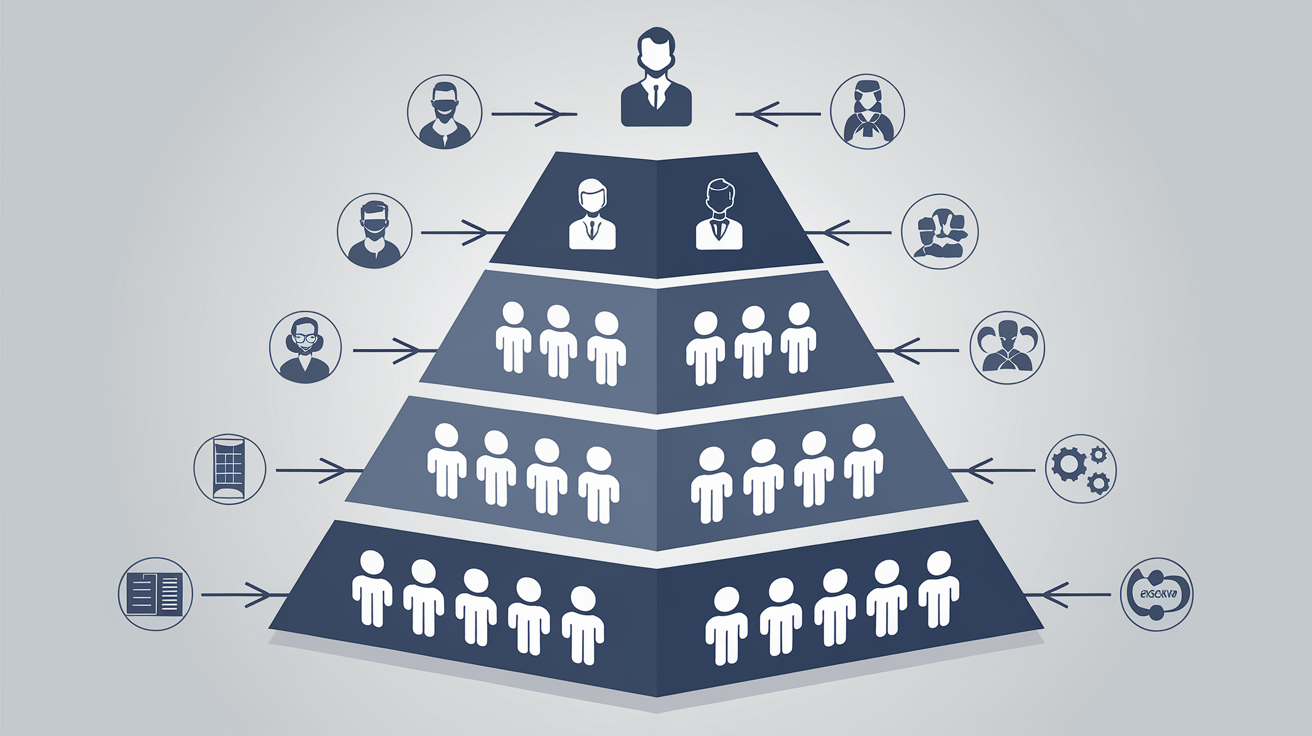
Organizational hierarchy clear structure
Organizational hierarchy clear structure
The Traditional View: Why Looking Beyond the CISO Matters
CISO-only marketing worked when security was a purely technical purchase. It doesn't anymore — breaches now carry board-level and regulatory consequences, which pulls the decision into departments that have nothing to do with IT.
The CISO usually still has to sell the solution internally, even after they're convinced. Giving them stakeholder-specific resources — a CFO-ready ROI case, a legal-ready compliance summary — doesn't just support the sale; it equips your champion to build the internal consensus that actually closes the deal.
The Hidden Stakeholders: Understanding Their Roles and Motivations
1. The Financial Gatekeeper: Chief Financial Officer (CFO)
The CFO evaluates security purchases as capital allocation decisions, not technical ones. As cybersecurity budgets have grown, CFOs now actively model ROI, total cost of ownership, and risk exposure before signing off — they're not just approving a line item.
CFOs think in financial terms:
- Return on investment (ROI) calculations
- Total cost of ownership (TCO)
- Budget allocation and planning
- Risk management from a financial perspective
Engage CFOs with clear financial metrics and a business case built from real breach-cost data and your own product's cost model — vague risk language doesn't survive a finance review.
2. The Technical Architect: Chief Technology Officer (CTO)
While the CISO sets security strategy, the CTO evaluates how a solution fits the broader technical ecosystem — compatibility, scalability, and technical debt are the CTO's lens, not risk.
Their primary concerns:
- Compatibility with existing systems
- Scalability for future growth
- Impact on system performance
- Technical resource requirements
Show CTOs real integration scenarios and performance metrics. A solution that solves security but adds unplanned technical debt gets vetoed at this desk, not the CISO's.
3. The Risk Assessor: Legal Counsel
Legal counsel now shapes security purchases directly, driven by regulatory exposure and contractual liability rather than an after-the-fact compliance sign-off.
Their focus areas:
- Compliance with industry regulations
- Data privacy requirements
- Contractual obligations
- Liability protection
Content for legal stakeholders should lead with compliance capabilities and risk mitigation, and stay current — regulatory requirements in this space shift often enough that a stale compliance claim gets caught.
4. The People Factor: Human Resources (HR) Department
HR's role has expanded well past running security awareness training. HR now weighs in on:
- Employee privacy protection
- Security awareness programs
- Access management policies
- Insider threat prevention
Marketing to HR has to address both the employee experience and the security requirement — show how the solution protects employee data without adding friction to how people work.
5. The Strategic Overseer: Board of Directors
Board members now take a direct interest in cybersecurity, driven by high-profile breaches and the regulatory and reputational fallout that follows them.
Board-level concerns:
- Corporate governance
- Reputation management
- Strategic risk assessment
- Shareholder value protection
Board-level materials should stay at the strategic altitude — business outcomes and risk posture, not technical specifications.
6. The Implementation Team: IT Operations
IT Operations gets left out of marketing plans more often than any other stakeholder here, despite controlling whether implementation actually succeeds.
Their interests:
- Ease of deployment
- Maintenance requirements
- Integration with existing workflows
- Resource allocation
Give IT Operations real implementation detail and documentation — this group evaluates on operational burden, not feature lists.
7. The Risk Management Team
Risk management evaluates a security solution against the organization's full risk landscape, not just the threat it's designed to address.
Their focus:
- Threat landscape analysis
- Risk quantification
- Control effectiveness
- Incident response capabilities
Give this team current, well-sourced threat and vulnerability data they can incorporate directly into their own risk models — generic claims don't hold up against a quantitative risk process.
8. The Deal Makers: Procurement Team
Procurement teams influence not just the buying process but often the vendor shortlist itself.
Their priorities:
- Vendor stability and reputation
- Contract terms and conditions
- Pricing models and transparency
- Vendor relationship management
Procurement needs clear pricing structures and verifiable vendor credentials — company stability, customer references, and transparent terms move procurement faster than any product feature does. For a look at how AI is reshaping vendor evaluation itself, see GrackerAI's coverage of AI-driven procurement in SaaS sales.
9. The Ultimate Users: End User Community
End users decide whether a security solution actually works, through adoption and day-to-day compliance rather than sign-off.
Their needs:
- Minimal disruption to workflows
- Intuitive interfaces
- Clear value proposition
- Adequate training and support
Marketing materials should show how the solution helps productivity, not just security — user testimonials and ease-of-use metrics carry more weight here than technical specs. GrackerAI's piece on educating buyers under the zero-trust paradigm has more on framing security content for non-technical audiences.
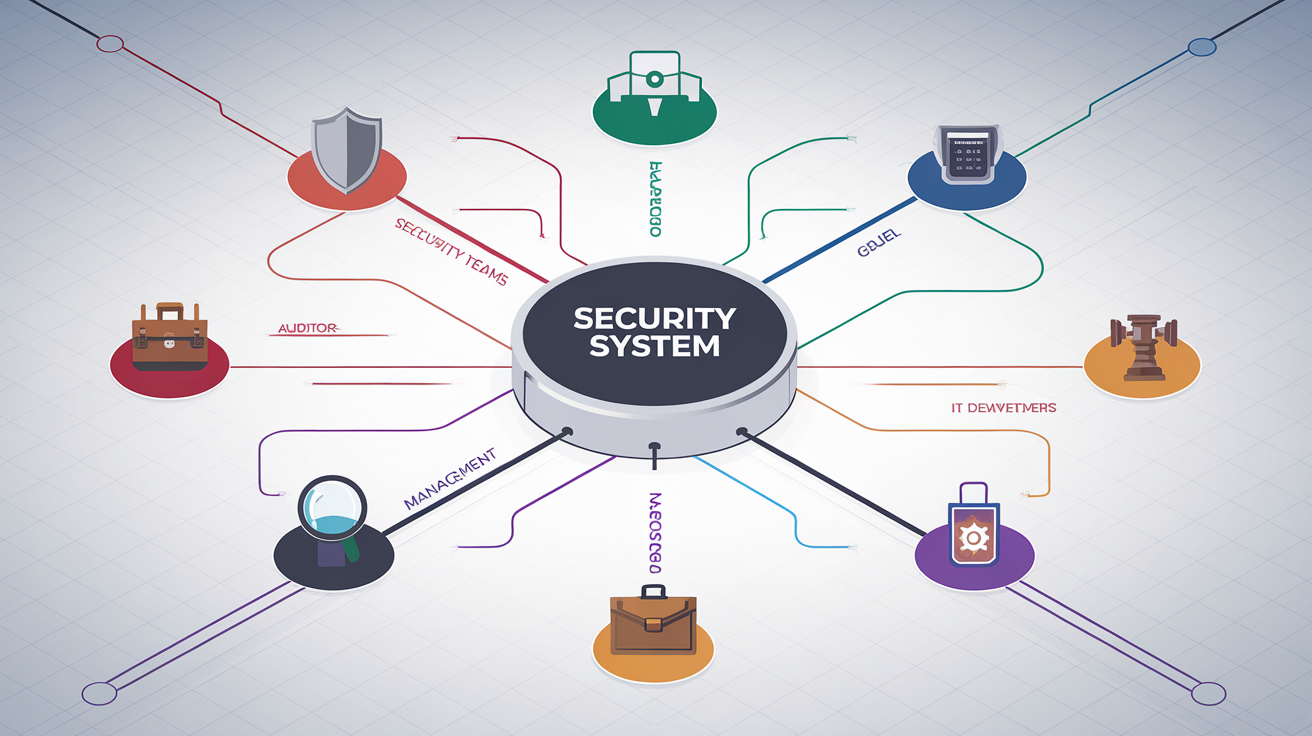
Explore dynamic interactions between key stakeholders
Explore dynamic interactions between key stakeholders
10. The External Influencers: Consultants and MSPs
Consultants and MSPs shape purchase decisions through the recommendations and implementation support they provide to clients.
Their focus:
- Solution effectiveness
- Implementation complexity
- Support requirements
- Client satisfaction
Build partner-specific materials that help consultants and MSPs position the solution accurately and confidently to their own clients.
Building a Multi-Stakeholder Marketing Strategy
Understanding and Mapping Stakeholder Priorities
Effective multi-stakeholder marketing starts with mapping how stakeholder priorities intersect — and where they conflict. Build a stakeholder map that captures:
- Primary concerns for each stakeholder
- Areas of overlapping interest
- Potential points of conflict
- Communication preferences
Revisit the map whenever a regulatory change, high-profile breach, or budget cycle shifts what a given stakeholder cares about — a map built once and never updated goes stale fast.
Creating Stakeholder-Specific Content
Develop targeted content that addresses each stakeholder's unique concerns while maintaining a consistent overall message. Consider creating:
- Technical whitepapers for CISOs and IT teams
- ROI calculators for CFOs
- Compliance guides for legal teams
- Implementation roadmaps for IT Operations
- Executive summaries for board members
Increasingly, this stakeholder-specific content also has to be findable inside AI answer engines, not just search results — buying-committee members research vendors in tools like ChatGPT and Perplexity well before a sales call. Tracking whether that content actually gets surfaced and cited is a distinct discipline (answer engine optimization / generative engine optimization); it's the core of what GrackerAI, which publishes this guide, tracks for cybersecurity and B2B SaaS vendors.
Facilitating Internal Consensus
Help your CISO champion build internal consensus with resources built for cross-functional buy-in:
- Cross-functional ROI analyses
- Implementation impact assessments
- Stakeholder communication templates
- Case studies showing successful multi-stakeholder deployments
Measuring Success and Adjusting Your Approach
Track the effectiveness of a multi-stakeholder strategy the same way you'd track any funnel — by stakeholder group, not in aggregate:
- Engagement rates by stakeholder group
- Content consumption patterns
- Sales cycle length
- Stakeholder feedback
- Win/loss analysis
A shortening sales cycle and fewer late-stage stalls are the clearest signal the strategy is working — both point directly at stakeholders getting what they need earlier in the process.
Looking Ahead: The Future of Security Purchase Decisions
Broader stakeholder involvement in security purchases is a durable trend, not a temporary shift. Stay ahead of it by:
- Monitoring emerging stakeholder groups
- Tracking changes in decision-making processes
- Adapting to new regulatory requirements
- Evolving your marketing strategy accordingly
Practical Steps for Implementation
- Start by mapping your current stakeholder engagement
- Identify gaps in your marketing materials
- Develop stakeholder-specific content strategies
- Set up a way to monitor the regulatory changes, breach trends, and industry shifts that affect each stakeholder group's priorities
- Create feedback loops to measure effectiveness
- Continuously refine your approach based on results
Conclusion: Embracing the Complexity
Multi-stakeholder marketing isn't a workaround for a complicated buying process — it's what an accurate model of that process actually requires. Organizations that address each stakeholder's real concerns close deals faster than those still pitching to the CISO alone.
Treat the stakeholders in this guide as ten distinct audiences, not ten objections to overcome. The vendor that equips a CFO, a legal team, and IT Operations with what each one actually needs isn't just selling a security product — it's making the internal case easier for everyone who has to sign off on it.
Frequently Asked Questions
Who are the hidden stakeholders in security purchases, and why do they matter?
Security purchases involve stakeholders well beyond the CISO: the CFO and finance team (budget and ROI), IT and operations (integration and maintenance), legal and compliance (regulatory exposure), end users (adoption), and the board (strategic risk and governance). Each group can stall or kill a deal at a different stage, so a strategy that only targets the CISO is missing the people who actually have to say yes.
How do finance teams shape security purchase decisions?
Finance teams evaluate security purchases on financial impact, not technical merit — implementation costs, ongoing maintenance, ROI from prevented breaches, and how the purchase affects capital and operating budgets. A business case with clear cost data and a defensible ROI model moves faster through finance than one built on security claims alone.
What strategies help marketing teams engage multiple stakeholders at once?
Build stakeholder-specific content — an ROI calculator for finance, a compliance guide for legal, an implementation roadmap for IT — while keeping a consistent core message across all of it. Map each stakeholder's priorities up front, then coordinate delivery so no single group is working from outdated or contradictory information.
How do legal teams influence security purchase decisions?
Legal counsel evaluates a security purchase against regulatory compliance, contractual obligations, vendor agreements, and liability exposure. Because those requirements change, content aimed at legal stakeholders needs to stay current — an outdated compliance claim gets flagged immediately by a team whose job is verifying it.
Why are IT and operations teams essential stakeholders in security purchases?
IT and operations evaluate what a security purchase actually costs to run: system compatibility, integration effort, performance impact, deployment complexity, and ongoing maintenance. Their sign-off depends on realistic documentation and support resources, not feature claims — this group has to live with the implementation long after the deal closes.
What defines effective security leadership in purchase decisions?
Effective security leadership means orchestrating input from every stakeholder group — finance, legal, IT, the board — into one aligned decision, rather than pushing a technical recommendation through on its own. The strongest security leaders treat internal consensus-building as part of the job, not a side effect of it.
![10 Best Local Rank Tracker Tools: In-Depth Comparison Guide [2025]](https://cdn.pseo.one/6abcb68a626591c40e1c8aa6/687e1c1ef6fe799d288518df/68809c373eb8562bcf68975d/10-best-local-rank-tracker-tools-comparison-guide/feature-image.jpg)