How to Implement Programmatic SEO to Drive Sustainable SaaS Growth

David Brown · Head of B2B Marketing at SSOJet
· Updated September 22, 2026
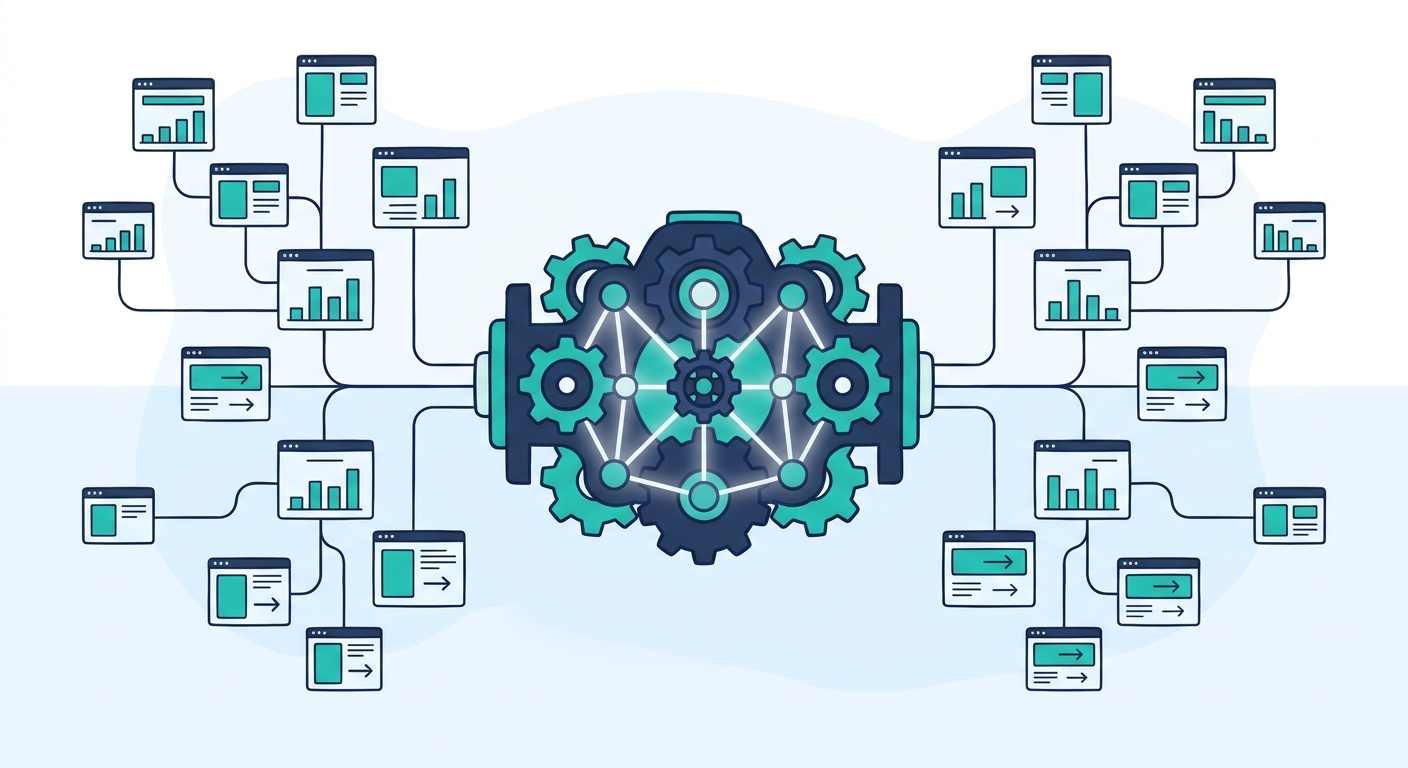
Implementing programmatic SEO (pSEO) in 2026 isn’t about spamming the index with thousands of low-effort landing pages to trick an algorithm. That game is dead. Today, it’s about building a scalable engine that maps your proprietary data to the specific, high-intent questions your customers are actually typing into search bars.
To win, you have to pivot. Stop chasing “volume” and start building for “intent.” You aren’t just creating pages; you’re building high-value assets for both the human user and the AI models that now dominate the search landscape.
Why pSEO is the New Foundation for SaaS “Content Moats”
In the current search climate, a “content moat” isn’t built by out-blogging your competitors. It’s built by owning every single variation of a user’s pain point.
Traditional content creation is a linear, exhausting slog. One writer, one article, one keyword. If you want to cover 1,000 long-tail queries, you’re looking at a massive budget and months of waiting. It’s unsustainable.
Programmatic SEO tears down that bottleneck. By shifting to a data-driven model, you stop treating content as a “writing project” and start treating it as a database problem. When you scale intent, you capture users at the very bottom of the funnel—the moment they search for a specific integration, an industry-specific use case, or a feature comparison—long before your competitors have even finished their first draft.
graph TD
    subgraph Traditional_Model [Manual Content Creation]
        A[Topic Research] --> B[Writing]
        B --> C[Publishing]
        C --> D[1 Page = 1 Keyword]
    end

    subgraph Data_Driven_pSEO [Data-Driven pSEO Flywheel]
        E[(Proprietary Data Layer)] --> F[Template Engine]
        F --> G[Automated Page Generation]
        G --> H[High-Intent Landing Pages]
        H --> I[User Interaction/Feedback]
        I --> E
    end

    Traditional_Model -->|Shift to Scale| Data_Driven_pSEO
    style Data_Driven_pSEO fill:#f9f9f9,stroke:#333,stroke-width:2px
The Math of Compounding Traffic
Let’s talk numbers. The economic argument for pSEO is brutal. In a manual workflow, your cost-per-page is fixed. If it costs $300 to research, write, and polish one high-quality page, targeting 1,000 keywords will drain $300,000 from your budget.
With programmatic systems, you front-load the investment into architecture—the data layer, the template, and the integration. Once that system is humming, the marginal cost of generating the 1,000th page is effectively zero.
But remember: traffic is a vanity metric if it doesn’t convert. We advocate for “Pipeline-Mapped SEO.” Every page you generate should be tied to a business outcome, whether that’s an integration installation or a trial sign-up. If you want to see how this translates into actual growth, check out these SaaS Growth Case Studies to see how mapping content to revenue shifts the focus from vanity clicks to real customers.
Is pSEO Still Safe in the Age of Generative AI?
The “thin content” penalty keeps every SEO lead up at night. Google has become increasingly aggressive about penalizing pages that offer zero unique value. According to Google’s Search Essentials, content must be created to help people, not just to rank.
The difference between a successful pSEO project and a de-indexed site is “Template Fatigue.” If every page on your site uses the same boilerplate text with only the city name or integration name swapped out, you’re asking to be penalized. In 2026, you must inject unique data points into your templates. Whether it’s a proprietary cost-savings calculator, dynamic social proof, or unique expert commentary, your pages must offer something that cannot be found elsewhere.
The 2026 Playbook: How to Build Your pSEO Engine
Step 1: Identifying High-Intent “Core-to-Integration” Queries
Stop guessing. Mine your CRM and your sales call transcripts for recurring “X vs Y” questions or “Does your tool integrate with Z?” queries. Map these to a matrix of “Use Case” + “Industry.” If you’re a project management SaaS, don’t just target “project management software.” Go after “project management software for small law firms” or “project management software for creative agencies.”
Step 2: The Data Layer: Organizing Your Source of Truth
Your database is your most valuable asset. Using Airtable Templates allows even non-technical teams to maintain a clean, structured “source of truth.” This database should contain more than just keywords. It should include unique specs, pricing tiers, integration benefits, and any proprietary data that makes your page more authoritative than a generic aggregator site.
Step 3: Deployment via No-Code Systems
You no longer need a ten-person engineering squad to ship thousands of pages. By using Whalesync to sync your Airtable base directly to a platform like Webflow, you can update your entire site’s content architecture in minutes. This democratization of pSEO means your marketing team can move as fast as the search landscape evolves. Whichever platform you deploy on, the hosting layer underneath still determines whether thousands of programmatically generated pages actually stay fast and crawlable at scale — see why fast, secure hosting matters for AI-generated programmatic SEO.
GEO Optimization: Designing for AI Overviews
Generative Engine Optimization (GEO) is the new frontier. AI search models crave structured data that they can easily digest and summarize. Your page layout should be designed to be “scraped” by an LLM.
graph TD
    A[Page Header: H1 + Core Value Prop] --> B[AI Summary Block: Concise Answer to Query]
    B --> C[Data Table: Comparison/Specs/Features]
    C --> D[Unique Value Add: Proprietary Calculation/Expert Insight]
    D --> E[CTA: Primary Conversion Button]
    style B fill:#e1f5fe,stroke:#01579b
    style C fill:#fff3e0,stroke:#e65100
Start every page with a “Summary-First” header that answers the user’s intent in 50 words or less. Follow this with a clean data table, and always include a “Unique Value Add”—a section that provides a proprietary insight that the AI can’t just lift from a competitor’s page.
Avoiding the “Thin Content” Penalty
To stay safe, follow the “Triple-U” checklist: Unique Data, User-Generated Content, and Utility.
If your page provides a dynamic calculator, real-time user reviews, or expert-verified commentary that changes based on the user’s industry, you are providing genuine value. If you need help structuring this to ensure you aren’t just adding to the noise, GrackerAI’s AEO and GEO platform tracks which of these pages actually earn citations in AI answers, so you can see what unique value is working before you scale the template.
Frequently Asked Questions
Is programmatic SEO considered spam by Google in 2026?
No. Programmatic SEO is considered spam only when it is used to mass-produce low-value content. If your pSEO strategy delivers data-rich, unique, and highly relevant answers to specific user queries, it is viewed as a high-quality resource that benefits the search ecosystem.
How can I prevent my programmatic pages from being flagged as thin content?
Avoid boilerplate text. Ensure every page includes unique data sets, dynamic user-generated content like reviews or testimonials, and expert-verified sections that provide depth beyond what a basic template can offer. Proprietary data is your best defense against the thin-content penalty.
Do I need a developer to implement programmatic SEO?
Not anymore. The rise of no-code stacks—specifically Airtable for data management, Whalesync for data syncing, and Webflow or Framer for frontend display—has made it possible for marketing teams to launch and manage complex programmatic systems without writing a single line of code.
How does pSEO differ from Answer Engine Optimization (AEO)?
Programmatic SEO is the method of scaling your content production to cover thousands of keywords efficiently. AEO is the optimization strategy that ensures the content generated by your pSEO system is structured, summarized, and formatted in a way that AI search models like ChatGPT or Perplexity can easily ingest and cite as an authoritative answer.
Is this different for product-led growth (PLG) SaaS?
The core engine is the same, but PLG companies can seed pages with in-product usage data instead of only market research. See how to apply programmatic SEO for PLG SaaS for the PLG-specific version of this playbook.
Related Articles
-
 cybersecurity content audit
 How to Audit Cybersecurity Content for Accuracy and Originality
Cybersecurity content with incorrect facts destroys confidence fast. Here's a practical audit framework for correctness and originality that preserves the credibility of your security publications.
-

10 Examples of SaaS Companies with Exceptional Marketing
Explore 10 SaaS marketing examples with actionable tactics. Learn innovative strategies from top companies to elevate your own campaigns.
-

How to Find the Right B2B Prospects for Your SaaS Product
Stop wasting sales outreach on leads that're not a good fit. Learn ways to find, check, and work with the right B2B prospects for your SaaS product.
-
 online reputation management
 The Importance of SEO in Online Reputation Management
Discover how SEO influences your digital brand. Learn actionable strategies to suppress negative search results and build a positive online reputation today.