Why Social Commerce is Essential for Retail Media Success

TL;DR
- This article explores the accelerating rise of social commerce, highlighting key platforms like TikTok Shop, Instagram, and Facebook. It details how shifting consumer discovery habits, the booming creator economy, and influencer effectiveness are driving this growth, especially among younger demographics. Brands can leverage these insights to create seamless shopping experiences and optimize their marketing strategies for future success.
The Rise of Social Commerce in 2026
Social commerce integrates ecommerce functionality into social media platforms, allowing consumers to browse, discover, and purchase products without leaving apps like TikTok, Instagram, and Facebook. This model benefits both consumers and brands by offering a frictionless path from discovery to checkout and providing marketers with access to engaged audiences and transparent attribution. EMARKETER Editors, Emmy Liederman
Several factors are accelerating brand investment in social commerce:
- Shifting discovery behavior: According to Salsify, 73% of US Gen Zers say social media is their main source for learning about new products.
- Creator economy growth: Social media creator revenue will increase 16.2% this year to $20.6 billion, EMARKETER forecasts.
- Influencer effectiveness: 58% of consumers over 18 have purchased products because of an influencer endorsement, per the National Advertising Division of BBB National Programs.
Key Social Commerce Platforms
Facebook leads in total US social buyers, but TikTok Shop is growing fastest and will surpass major retailers in ecommerce sales by 2026, EMARKETER forecasts.
- TikTok Shop: Will reach $23.41 billion in US ecommerce sales in 2026, a 48% increase year-over-year, per EMARKETER.
- Facebook: Maintains the largest social buyer base through Facebook Marketplace and Facebook Shops, which enable businesses to create digital storefronts with in-app checkout.
- Instagram Shopping: Allows brands to tag products in posts, stories, and Reels. Reels video views for luxury brands grew 234% in Q2 2025, according to EMARKETER Industry KPIs, as some brands shift content distribution from TikTok.
Demographics Driving Adoption
Younger consumers drive social commerce adoption, though the gap with older generations is narrowing. One-third of adults ages 18 to 34 have made a purchase on social media, compared with 23% of 35- to 54-year-olds and 13% of adults between 55 and 65, according to a September 2025 survey by Bizrate Insights for EMARKETER. 73% of US Gen Zers say social media is their main source for learning about new products, per Salsify.
Beauty, cosmetics, and apparel perform particularly well on social commerce platforms.
TikTok Shop's Impact
TikTok Shop officially launched in September 2023 and is the fastest-growing social commerce platform in the US. During Black Friday and Cyber Monday 2025, TikTok Shop generated over $500 million in sales across four days.
TikTok's US operations are now majority-owned by American investors: Oracle, Silver Lake, and MGX hold a combined 50% stake, with ByteDance retaining 19.9%.
Challenges in Social Commerce
Consumer trust remains a significant barrier to social commerce adoption. 26% of consumers don't trust influencer marketing, more than double the 11% who distrust advertising overall, per the National Advertising Division. 64% of consumers distrust influencers who don't disclose their relationship with brands.
Influencer Marketing Effectiveness
58% of consumers over 18 have purchased products because of an influencer endorsement, per the National Advertising Division. Influencer marketing has evolved into a full-funnel performance channel, with platforms like Later processing $2.4 billion in annualized gross merchandise value through creator-led commerce.
Budget Allocation for Social Commerce
Marketers should treat social commerce as a distinct channel requiring dedicated investment. Prioritize TikTok Shop and Instagram if targeting Gen Z or millennials. Invest in creator partnerships as a performance channel and demand attribution capabilities from platform partners.
Social Commerce as a New Storefront
Social commerce is not just an advertising channel but a fully fledged storefront. Platforms like TikTok Shop and Meta Shopping offer brands the opportunity to create immersive, shoppable experiences. Retail media marketers must think of social as a direct-to-consumer channel where discovery, engagement, and purchase occur in one seamless flow.
Shoppable Media and Ad Formats
To capitalize on platform-integrated shopping, marketers must embrace and optimize commerce-enabled ad formats. Features like TikTok’s Product Catalog campaigns and Meta’s shopping ads are designed to drive conversions directly within social feeds.
Omnichannel Measurement Solutions
Retail media marketers need tools that go beyond media mix modeling to connect social activity to sales across channels. These solutions include:
- Incrementality testing across channels
- Data clean rooms
- Attribution solutions, such as Amazon Attribution
Cross-Channel Insights
Insights from social platforms can refine broader commerce strategies, allowing marketers to:
- Enhance audience targeting
- Fine-tune product strategies
- Optimize creative
UGC Impact on Revenue and Engagement
Emplifi’s data shows that UGC is a critical component of a brand’s social media strategy, delivering a 63% year-over-year growth in revenue and contributing more than $8 billion annually to social commerce revenue. Brands leveraging UGC on their website generated three times more repeat site visits compared to sites that failed to use such content.

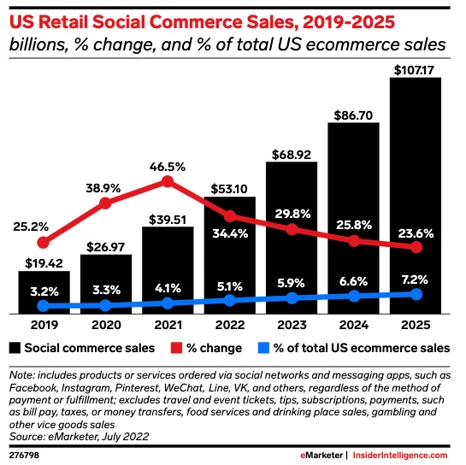
EMARKETER forecasts social commerce will continue to skyrocket over the next three years, driven by an increase in spend by online shoppers—a trend that’s expected to nearly double by 2027.
UGC Outperforms Traditional Advertising
Emplifi’s data shows that, on average, UGC generates nearly four times higher engagement rates compared to Instagram ads. The travel industry sees the highest engagement rate from UGC at 17%, followed by accommodation (16%) and fashion (12%).
Social Commerce and the Creator Economy
Deloitte’s new State of Social research finds consumers are increasingly willing to buy products and services directly through social platforms. In fact, 72% are now willing to buy directly within social media platforms and 60% of consumers responded that they want more opportunities to discover and purchase products on social media.
Socially mature brands achieved an average revenue increase of 10.2% as a direct result of social strategies—and are 8 times as likely to have exceeded revenue goals by 25% or more in B2C lines of business, according to Deloitte's State of Social report.
Key Areas for Effective Social Commerce
To strategically reach consumers where they are, there are three key areas that help enable social commerce: Content, Community, and Experience.
- Content: Maintaining cohesive brand positioning and messaging for consumers.
- Community: Tapping into communities and existing networks.
- Experience: Creating a seamless customer experience.
Content Creators' Role
Deloitte’s 2023 Creator Economy in 3D research found that 35% of Gen Z consumers look to content creators to guide their purchase decisions. In the 2023 Creator Economy in 3D study, 47% of respondents said that when engaging with a creator endorsement of a brand, they will take action by visiting the brand’s website.
Social Shopping Trends
Individual creators and “micro-influencers” are on the rise, connecting directly with consumers on social platforms, building trust and engaging with their communities daily. 45% of surveyors (Gen Z) bought from a creator last year.
AI is changing the game for e-commerce, with companies investing in tools that allow customers to experience products before purchase.
Platform Strategies: TikTok, Meta, YouTube, and Google
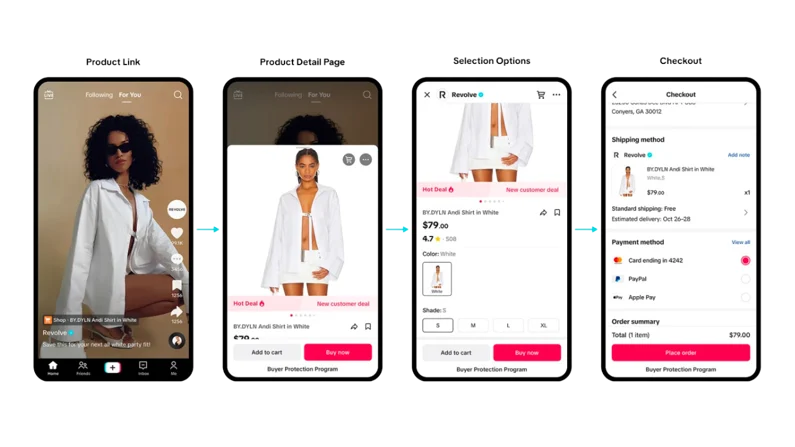
- TikTok: Introduced a comprehensive e-commerce product in the U.S., capitalizing on its youth-oriented user base. More than 80% of users say that content on the channel influenced their buying choices.
- Meta: Focusing on advertising to power its commerce ambitions and enhancing ad performance.

- YouTube: Shifted its e-commerce strategy, discontinuing its product tagging feature in favor of expanding its affiliate program to all creators.
- Google: Introduced "Perspectives," a feature that will display YouTube videos from influencers alongside conventional search results.

Retailer Initiatives: Amazon, Boots, and Walmart
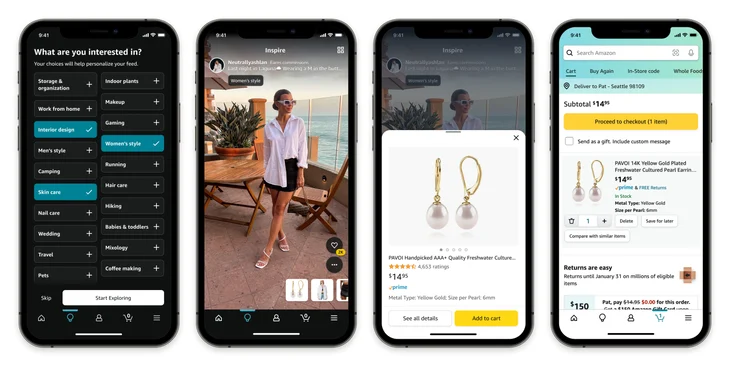
- Amazon: Launched “Inspire” for US users – a feed of shoppable videos and photos accessible directly from the app home screen and populated with influencer content.
- Boots: Targeting a wider audience with multichannel campaign, promoting the advantages of its loyalty card.
- Walmart: Introducing shoppable content with the launch of the Walmart Creator platform.

Automate Your Marketing with GrackerAI
As social commerce evolves, staying ahead requires efficient content creation and strategic marketing. GrackerAI automates your marketing with daily news, SEO-optimized blogs, AI copilot, and newsletters.
Ready to transform your marketing strategy? Start your FREE trial with GrackerAI today!