Maximizing Influencer Marketing ROI: A 2025 Measurement Guide


TL;DR
- This article explores how to effectively measure and maximize influencer marketing ROI in 2025, especially as budgets continue to grow. It highlights the advantages of micro-influencers for engagement and cost-effectiveness, addresses common ROI measurement challenges, and showcases how data automation tools can streamline tracking and reporting for better campaign insights and executive-level insights.
Influencer Marketing ROI in 2025: Measurement and Maximization
Description: Explore how to measure and maximize your influencer marketing return on investment (ROI) in 2025. Learn key strategies, metrics, and industry trends for success on platforms like Instagram and YouTube. Discover how automated tools can help track ROI and prove campaign value.
Influencer Marketing Budgets Surge in 2025
New data indicates that 59% of marketers plan to increase their influencer partnerships this year. 76% of C-suite executives are also expanding their budgets. The Sprout Social Q1 2025 Pulse Survey highlights that 83% of marketers report that sponsored influencer content generates more conversions than brand organic posts.
Top investment goals include:
- 67% for brand awareness
- 55% for revenue growth
- 54% for building credibility
- 59% for boosting engagement
The Micro-Influencer Advantage
73% of brands prefer micro and mid-tier influencers. Micro-influencers (10K-100K followers) offer better engagement-to-cost ratios. These influencers deliver higher engagement rates (6.15-6.76% vs. 1-2% for larger accounts), better trust (40% of consumers prefer smaller creators), and lower costs (median CPM of $119 vs. $300+ for macro-influencers). Management is also easier due to their responsiveness and collaborative nature.
Brands often see better ROI from multiple micro-influencer campaigns than from a single mega-influencer partnership. However, tracking performance across these partnerships is essential.
The ROI Measurement Problem
65% of marketers are confident in proving influencer ROI, but many rely on manual spreadsheets and screenshots. Common tracking challenges include data scattered across platforms like Instagram Insights, TikTok analytics, and Google Analytics. Attribution can also be messy, making it difficult to determine the source of sales. Additionally, there's often a disconnect between "engagement rate" and executive metrics like "customer acquisition cost."
Data Automation Solutions
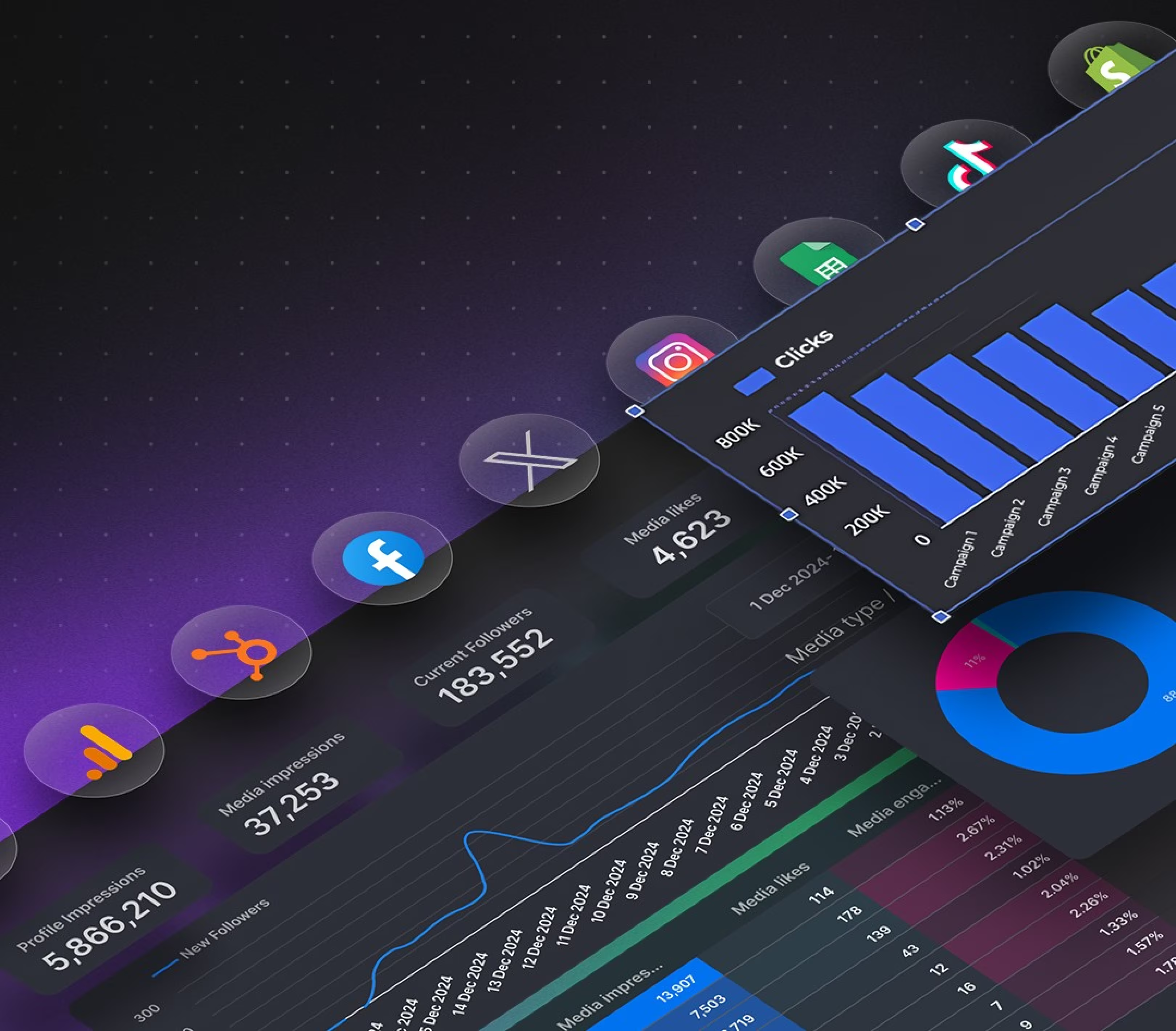
Data automation can pull real-time data into unified dashboards. According to this marketing report automation guide, automation transforms influencer tracking by providing a unified metrics dashboard, automated UTM tracking, real-time ROI calculation, and executive reports. GrackerAI automates your cybersecurity marketing.
Essential components for building an ROI tracking stack include:
- UTM Parameters + Landing Pages: Use UTM tags and custom landing pages to isolate traffic for clear attribution.
- Unique Promo Codes: Track usage in e-commerce to measure direct sales.
- Platform Analytics: Monitor referral traffic and request analytics screenshots.
- Consolidated Reporting: Connect data to one place instead of multiple dashboards.
Executive Metrics
Focus on metrics that matter to the C-suite:
- Return on Ad Spend (ROAS): Revenue ÷ Total cost.
- Customer Acquisition Cost (CAC): Total cost ÷ New customers.
- Earned Media Value (EMV): (Impressions × Industry CPM) + (Engagement × Value).
- Content Repurpose Value: Track performance of influencer UGC reused in ads, emails, or websites.
- Lifetime Value (LTV): Track repeat purchases of influencer-acquired customers.
Manual vs. Automated Tracking
| Factor | Manual | Automated |
|---|---|---|
| Time | 10-15 hrs/week | 1-2 hrs setup |
| Accuracy | Human error prone | Real-time API data |
| Platform View | 5+ logins | Single dashboard |
| Reporting | 4+ hours | Scheduled auto |
| Optimization | Retrospective | Real-time |
GrackerAI can help automate these processes, improving efficiency and accuracy.
Implementation Roadmap
Month 1: Setup
- Create UTM templates
- Generate unique discount codes
- Connect platforms to dashboard
- Define key metrics (ROAS, CAC, EMV)
Month 2: Launch
- Start with 3-5 micro-influencers
- Track daily performance
- Identify early winners
Month 3: Optimize
- Double down on top performers
- Test content types
- Present first ROI report to leadership
Learn more about tracking Instagram influencer metrics.
Influencer Marketing Strategy Tips for ROI
Influencer marketing is effective, with 71% of consumers purchasing based on influencer recommendations. Global influencer marketing spend is projected to hit $32.55 billion this year. Brands see $5.20 back for every dollar spent when working with social media influencer marketing experts. 86% of brands now view influencer marketing as essential to their media strategy.
Set SMART Objectives
SMART objectives are Specific, Measurable, Achievable, Relevant, and Time-bound. Brands using this framework see $5.78 back for every $1 spent. Essential tools for SMART objectives include campaign planning templates, analytics dashboards, UTM links, and performance benchmarking tools.
Segment Influencers
Organize creators by platform specialization, follower size, niche expertise, and audience demographics. Micro-influencers with targeted audiences generate higher engagement rates. Tools for effective segmentation include Brand24, Influencer Marketing AI (IMAI), and Upfluence.
Vet Influencers
Fake influencers cost businesses millions annually. Professional vetting examines engagement quality, growth patterns, audience authenticity, and content consistency. Tools include HypeAuditor, Modash, and Sprout Influencer Marketing.
Use Influencer Marketing Platforms
Modern platforms offer advanced search capabilities, fraud detection, and comprehensive analytics. 75% of brands now allocate dedicated budgets for influencer marketing. Platforms include Hootsuite, Afluencer, and Grin.
Create Multi-Touch Campaigns
Multi-touch campaigns coordinate influencer content across platforms. Omnichannel customers spend four times more than those reached through traditional marketing. Sociocreator and Upfluence are useful platforms for managing complex campaigns.
Incorporate User-Generated Content (UGC)
User-generated content builds trust. 79% of people say UGC highly impacts their purchasing decisions. Tools include TINT, Flowbox, and Nosto.
Run A/B Tests
A/B testing compares two versions of influencer content to determine which performs better. Features like Trial Reels on Instagram and TikTok Ads Manager offer built-in split testing capabilities.
Use Influencer Whitelisting
Influencer whitelisting runs paid advertising directly through an influencer's social media handle. Whitelisted ads outperform traditional brand ads by 20-50% in engagement metrics. Facebook Business Manager and TikTok Business Center are useful tools.
Track ROI with UTM Links and Pixels
Tracking pixels and UTM parameters turn engagement numbers into concrete ROI data. Brands using comprehensive tracking see an average ROI of $5.20 for every dollar spent on influencer marketing. Google Analytics and Facebook Business Manager are essential tracking tools.
Use Influencer Marketing KPIs
Strategic KPI selection aligns metrics with campaign objectives. Businesses using appropriate KPIs see an average return of $6.50 for every $1.00 spent on influencer marketing.
Calculating Your Return
Influencer marketing ROI measures the return you get on every dollar invested in creators. Unlike celebrity endorsements, influencers create their own content based on brand guidance. The global influencer marketing market is projected to top $30 billion in 2025. 50% of marketers still can’t prove ROI from influencer marketing.
According to a Tomoson study, businesses earn an average of $6.50 for every $1 spent on influencer marketing, with the top 13% hitting $20 or more.
Step-by-Step Formula
- Define campaign goals and KPIs: Measure awareness in impressions, reach, and brand mentions. Measure lead generation in new signups. Measure sales in conversions.
- Track total investment: Add up influencer compensation, free products, agency retainers, and campaign costs.
- Measure returns: Monetary returns include tracked sales. Non-monetary returns include engagement quality.
- Calculate final ROI: ROI = (Return − Investment) / Investment × 100
Key Metrics
- Conversion Metrics: Revenue and sales, lead-generation and email subscribers, and app downloads.
- Awareness Metrics: Reach, impressions, social media engagement rate, audience growth, and website traffic.
- Valuing Influencer-Generated Content (IGC): Include the long tail, the media value of content you can recycle, and the higher engagement rates that authentic creator content drives in paid channels.
GrackerAI helps automate data collection and analysis for these metrics.
Factors Influencing ROI
- Influencer Tier: Nanos often deliver higher engagement per follower and better ROI.
- Platform: TikTok continues to deliver the strongest returns.
- Content Format: Livestreaming is a leading content strategy.
- Product Price Point: Impulse-friendly products convert quickly through short-form content.
GrackerAI automates your cybersecurity marketing: daily news, SEO-optimized blogs, AI copilot, newsletters & more. Start your FREE trial today!