Boosting Revenue with Marketing Attribution: Gorgias & Gurobi


TL;DR
- This article details how Gorgias achieved a 30% boost in tech partner revenue by implementing data-driven strategies with Crossbeam. It covers their simplified referral exchange process, including account mapping reports and pre-written email templates, and their use of Slack Connect for seamless collaboration. The insights highlight how automation and clear playbooks can significantly enhance partnership influence and drive substantial revenue growth.
Increasing Tech Partner Revenue with Data-Driven Strategies
Gorgias, an e-commerce customer service platform, increased partner-influenced revenue by 30% using data-driven strategies and Crossbeam. Their approach focuses on simplicity and ease of collaboration. Chris Lavoie, Senior Technology Partner Manager at Gorgias, emphasizes removing ambiguity and extra steps to ensure partner and internal team buy-in.
Within eight months, Crossbeam influenced 30% of Gorgias's revenue growth from tech partnerships, leading to an increase in their partnerships headcount. Partnerships now account for nearly 50% of Gorgias’s revenue.
Implementing a Referral Exchange Process
Gorgias uses a two-step referral exchange process to build trust and add value early in new partnerships.
Step 1 – Account Mapping Reports in Crossbeam
The Account Mapping Matrix in Crossbeam provides a single view of potential opportunities. Gorgias and its partners review this matrix and use filters based on data from their HubSpot CRM to run detailed reports.
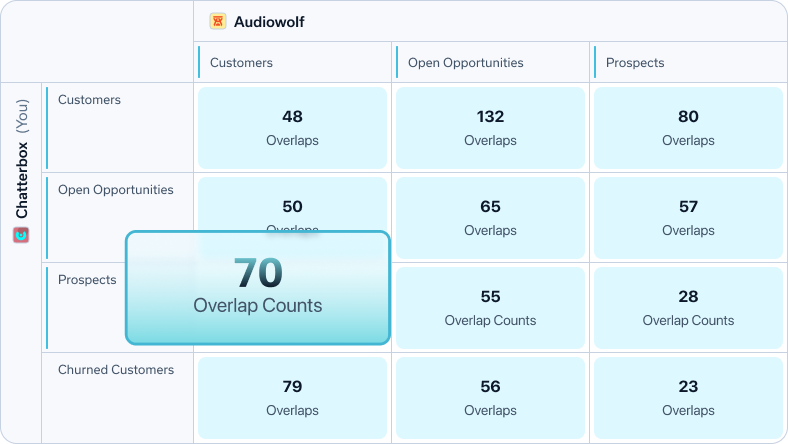
Filters on populations and overlaps help refine lists of strategic accounts. Gorgias enriches its customer database to quickly narrow down target accounts based on criteria like gross merchandise value (GMV), Instagram followers, Shopify Plus, location, and industry.
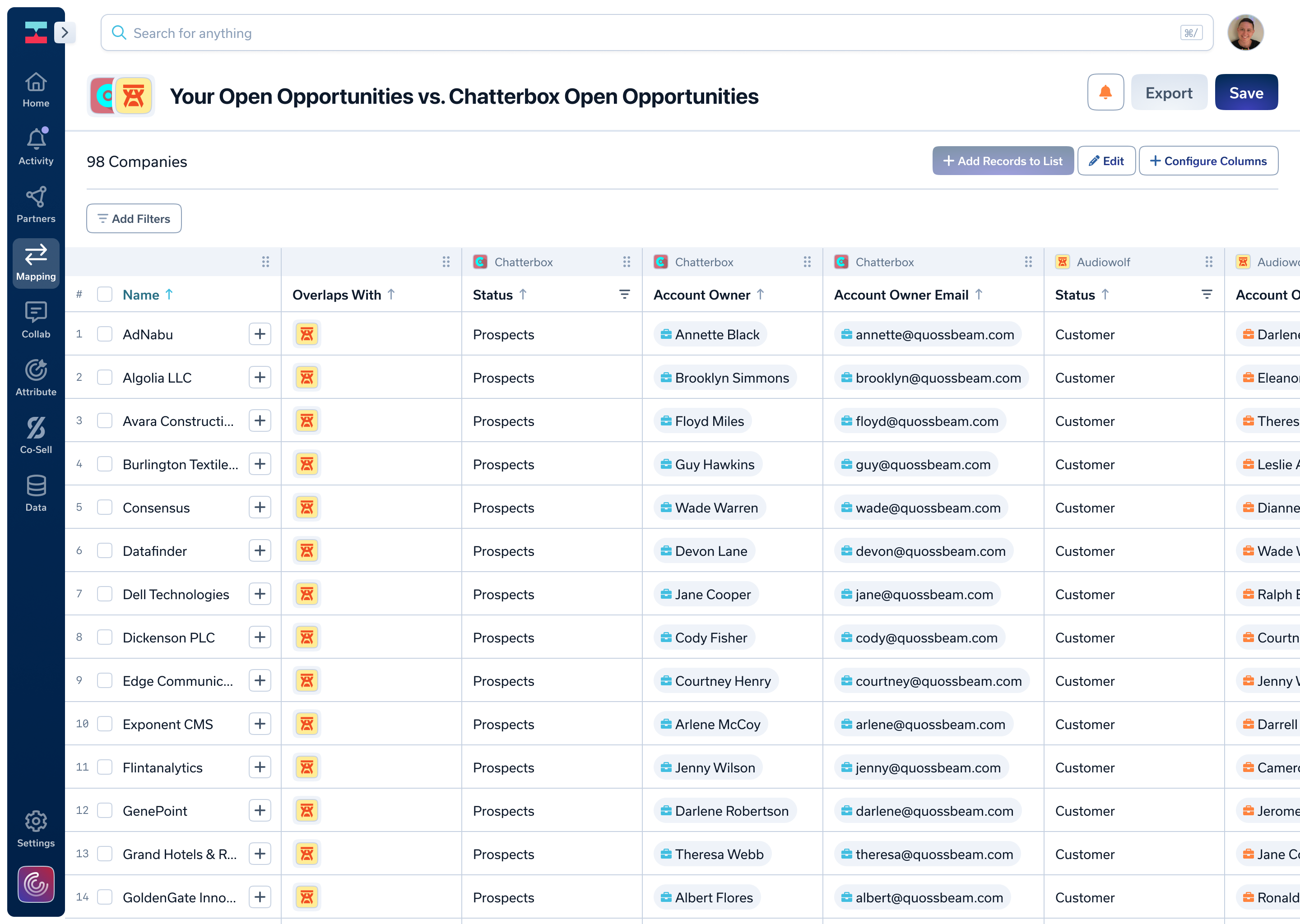
Step 2 – Pre-Written Email Templates
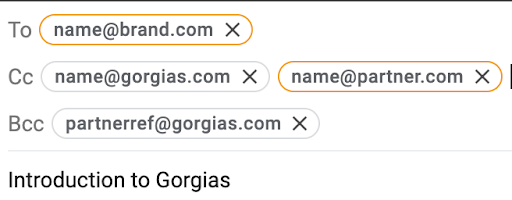
Gorgias provides partners with two email templates to facilitate warm introductions:
- Email Template #1: Gauges interest in the integration, including a description of Gorgias, use cases, a special offer, and a call-to-action.
- Email Template #2: Facilitates the actual introduction, removing friction for partners.
Sharing Overlaps via Slack Connect
Gorgias uses Crossbeam for Slack Connect channels to streamline collaboration with select partners. Automated notifications alert partners and account executives to new overlaps in specific Crossbeam reports. Account Executive Mentions in Slack have increased activity and made AEs more proactive.
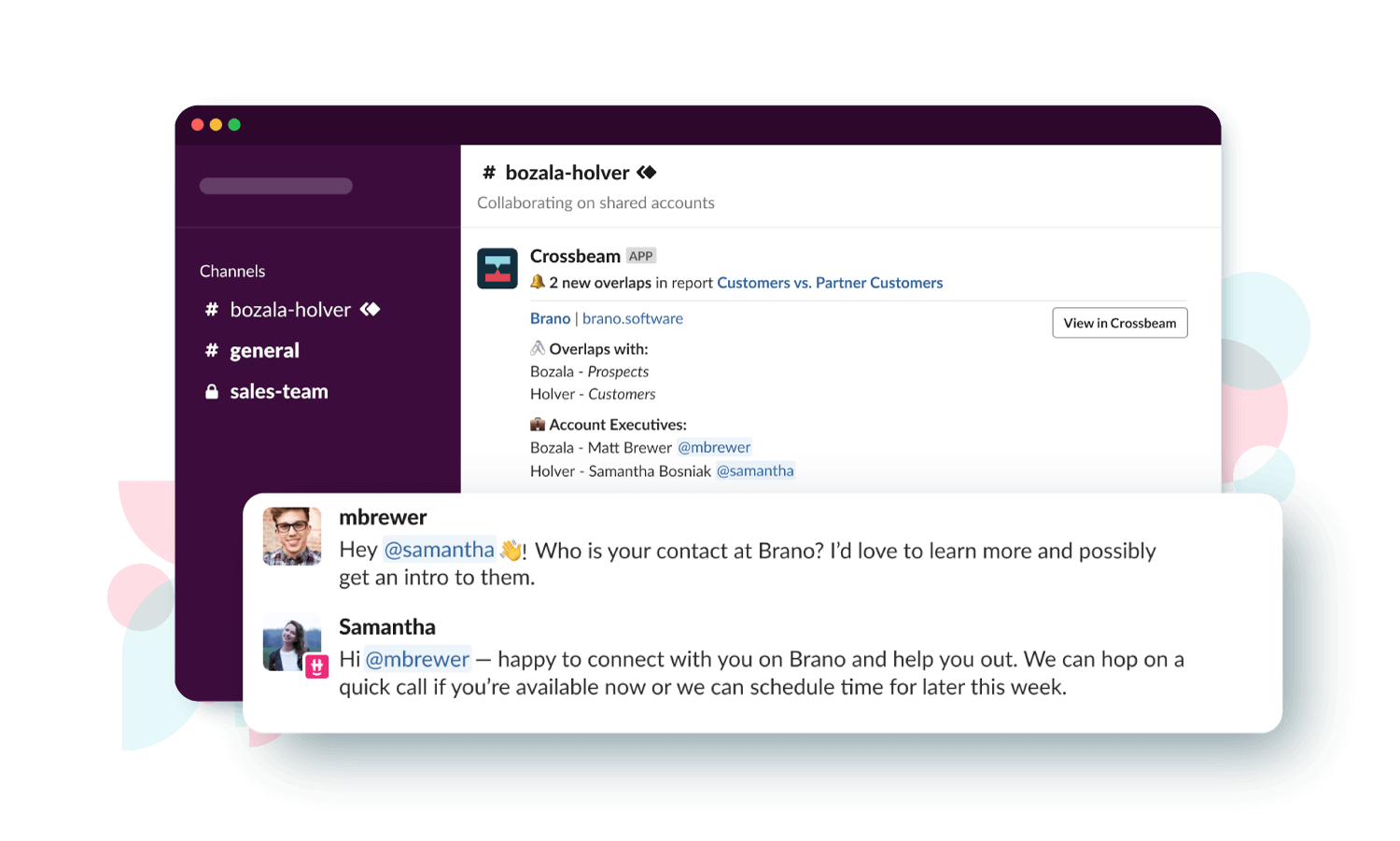
Channel setup includes:
- Naming the channel consistently: “Crossbeam<>Gorgias and \[Partner Name\]”
- Subscribing the channel to notifications for the “Gorgias, please intro partner to” and “Partner, please intro Gorgias to” reports.
- Inviting relevant team members and setting expectations with a pinned message that includes a link to a Google Doc with email copy templates.
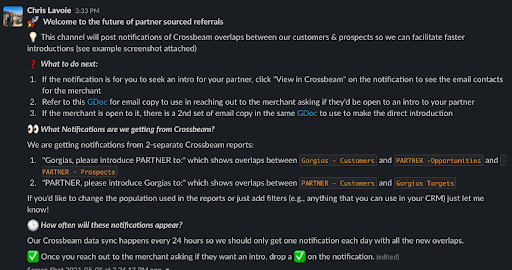
Lavoie dedicates two hours weekly to review notifications and send emails, focusing on accounts with a high probability of agreeing to introductions.
Partner Influence Channel for High-Value Deals
Gorgias uses a "Partner Influence Channel" in Slack to alert reps when partners can help with high-value deals, increasing sales team engagement. The close rate for non-partner-influenced deals is typically around 30-40%.
A Crossbeam report compares partner customer populations with Gorgias's open opportunities in the Advanced or Enterprise pricing tiers. The internal Slack channel, "Crossbeam Partner Influence," includes sales reps, business development reps, and partner managers.
Automated notifications in the channel show which sales reps are tied to a deal and which partners overlap, making it easy to identify potential influencers. Lavoie provides pre-written Slack messages and email templates for reps to contact partners directly.
Automating Attribution
Gorgias tracks partner-sourced and partner-influenced deals using properties on the "Deal" record in HubSpot. Fields include Business Development Owner, Account Executive, Deal Source, and Partner Influence.
Partner activities are tracked manually or automated by forwarding email exchanges to an email alias. Zapier captures the attribution and automatically marks the relevant partner in the Partner Influence field in HubSpot.
Crossbeam Playbooks for Internal Teams and Partners
Gorgias created a step-by-step Crossbeam playbook tailored to their partnership management. This playbook is unique to their business and covers various aspects of using Crossbeam.
The six-page Crossbeam Playbook covers:
- What is Crossbeam & Why Should I Care to Use it?
- Top Crossbeam Use Cases
- Account Management & Rules of Engagement (Security)
- Inviting & Attracting Partners to Connect
- Crossbeam Populations
- Crossbeam Reports
- Crossbeam Threads
- Slack Command for Instant Account Info
- Slack Channel Notifications for Easy Referrals
- Email Copy Templates
Gorgias also created a public-facing version for partners, highlighting it in their monthly partner newsletter.
Finding Joint Customers for Case Studies
Gorgias and its partners use the Account Mapping Matrix in Crossbeam to identify mutual customers using an integration for joint case studies.
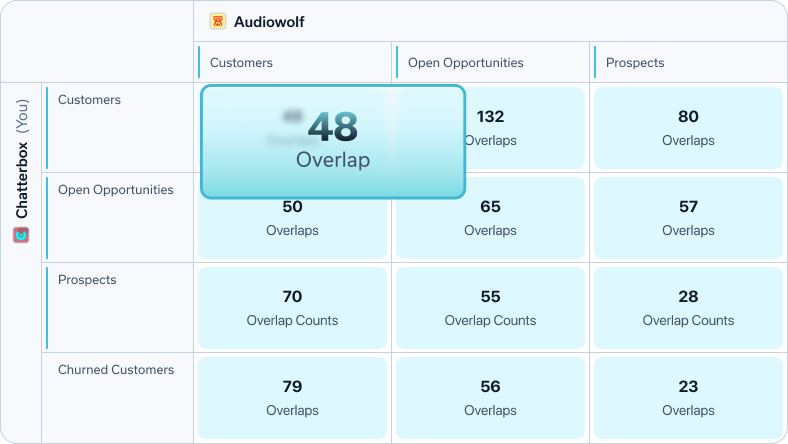
They narrow down overlaps to a list of top five customers using filters and then select the best candidate for a case study. The process includes research, framing, and drafting content.
Optimizing Marketing ROI Through Attribution
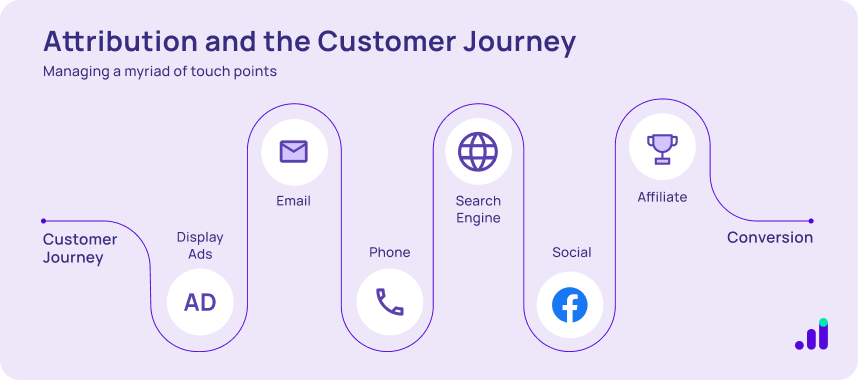
Marketing attribution is key to understanding which marketing efforts drive conversions across various channels. EasyInsights defines marketing attribution channels as the various touchpoints through which potential customers interact with a brand during their journey to conversion. These channels include:
- Paid Media: PPC ads, display ads, and social media ads.
- Owned Media: Company website, blog, email marketing campaigns, and social media profiles.
- Earned Media: Organic visibility gained through SEO, public relations, social media shares, and word-of-mouth recommendations.
- Shared Media: Interactions and engagements on social platforms, including user-generated content, social media mentions, and community-driven discussions.
Improving ROI Through Attribution: A Step-by-Step Approach
Step 1: Analyze Attribution Data
Start by setting clear goals and KPIs, such as increasing overall sales, improving lead generation, or increasing customer engagement. Establish KPIs like conversion rates, cost per acquisition (CPA), return on ad spend (ROAS), and customer lifetime value (LTV).
Step 2: Choose the Right Attribution Model
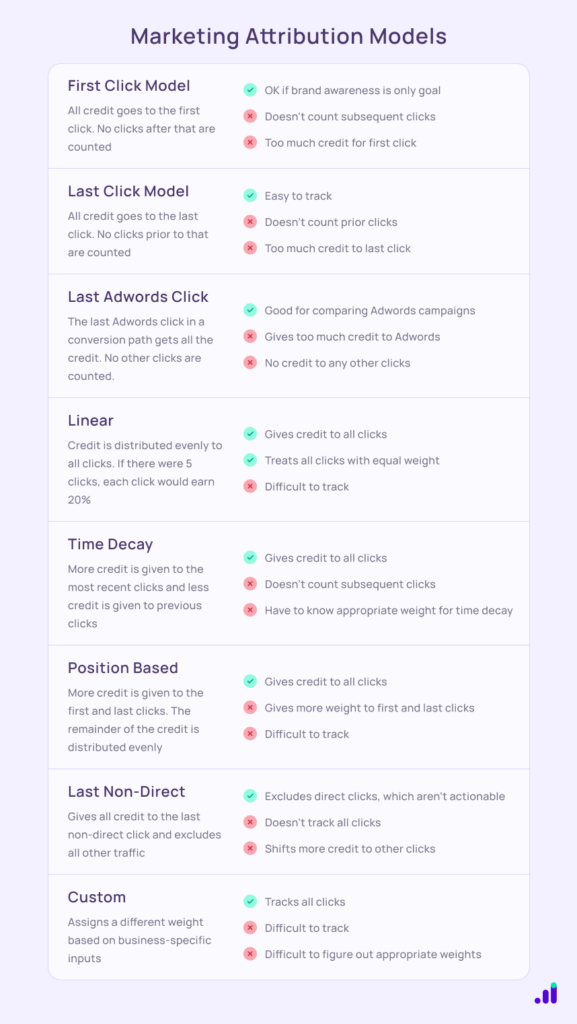
Selecting a suitable attribution model helps accurately assess marketing efforts.
- First Interaction Attribution: Assigns 100% of the credit to the first touchpoint.
- Last Interaction Attribution: Gives all the credit to the final touchpoint before conversion.
- Multi-Touch Attribution Models: Distribute credit across multiple touchpoints, offering a comprehensive view of the customer journey. These models help identify key touchpoints and optimize the channel mix.
Step 3: Align Marketing and Sales Teams
Aligning marketing and sales teams ensures they work towards common goals and leverage attribution data to optimize ROI. Integrated CRM systems, shared goals, and a lead scoring system are essential.
Step 4: Test and Refine
Ongoing testing and refinement are crucial for accurate insights. Strategies include A/B testing, multivariate testing, and regular reviews and updates.
Enhancing ROI with GrackerAI
GrackerAI provides a robust solution for cybersecurity marketing, automating daily news updates, SEO-optimized blogs, AI copilot assistance, and newsletters. By implementing GrackerAI's tools, businesses can streamline their marketing efforts, improve ROI, and gain a competitive edge in the cybersecurity landscape.
GrackerAI: Automate Your Cybersecurity Marketing
Ready to revolutionize your cybersecurity marketing efforts? GrackerAI automates your cybersecurity marketing: daily news, SEO-optimized blogs, AI copilot, newsletters & more. Start your FREE trial today! Contact us to learn more.