What Is Growth Hacking?

TL;DR
- Growth hacking has evolved from viral tricks into a data-driven engineering discipline.
- Success requires integrating product development with marketing to create compounding loops.
- Traditional marketing is linear, while growth hacking is iterative and circular.
- Focus on optimizing the entire user journey rather than just acquiring traffic.
- The goal is lowering CAC by building value-driven, product-led growth engines.
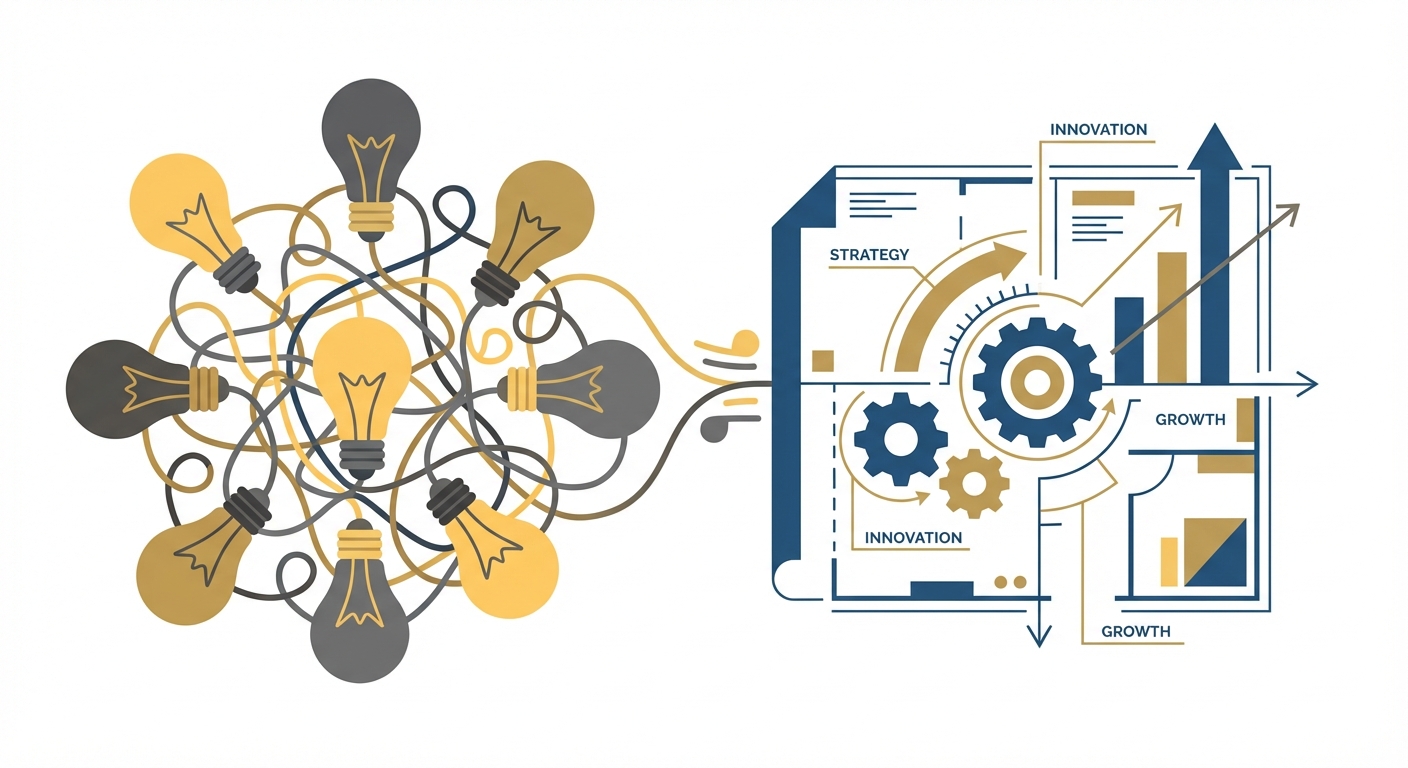
Let’s be honest: the term "growth hacking" has a bit of a reputation problem. For years, it conjured images of kids in hoodies hunting for "viral buttons" or trying to trick algorithms. That version of the industry is dead. In 2026, if you’re still looking for a magic bullet or a secret code to instant scale, you’re already behind.
Growth hacking today isn't about hacks. It’s about engineering. It’s the cold, hard, data-driven discipline of building sustainable systems that pull new users in and keep them hooked. If your marketing team is still busy planning quarterly campaigns while your product team iterates in a vacuum, you aren’t just behind—you’re losing. You’re losing to the companies that have finally realized that marketing and product development are two sides of the same coin.
Sean Ellis coined the term back in 2010, and his original definition, Growth Hacking Defined, was born out of necessity. Startups didn't have the massive ad budgets of the corporate giants, so they had to be smarter, faster, and more creative. Today, that "necessity" has become the standard operating procedure for every B2B SaaS company that actually wants to survive. If you’re ready to stop guessing and start building, our Growth Hacking Strategy Guide breaks down the workflows that actually move the needle.
Defining Growth Hacking in 2026
At its heart, growth hacking is just the messy, beautiful intersection of engineering, data, and human psychology. It’s the art of mapping out the entire user journey—from that first, skeptical click on an ad to the moment they become a die-hard, paying advocate—and then obsessively optimizing every single micro-moment in between.
The most successful people in this space aren't "marketers" anymore. They’re growth engineers. They don’t just buy ads; they build product-led growth engines. As the Reforge Growth Series points out, the winners aren't the ones who rely on one channel. They’re the ones who build systems where the product itself generates value, which in turn brings in more users. That is the difference between a fleeting traffic spike and a compounding growth loop that actually lowers your Customer Acquisition Cost (CAC) over time.
Growth Hacking vs. Traditional Marketing
People get this wrong all the time. They think growth hacking is just "marketing with a smaller budget." That’s nonsense. The real difference is philosophical.
Traditional marketing is linear. You build a plan, you dump money into a channel, you cross your fingers, and you hope for a result. It’s a silo. Growth hacking, meanwhile, is circular. It’s iterative. It assumes you don't have the answers, so it uses high-frequency testing to find them.
In a traditional setup, marketing teams are often kept at arm's length from the product. In a growth engineering model, the growth team sits right in the middle of engineering and product. They aren't just writing blog posts; they’re getting their hands dirty with the UX, testing new pricing models, and baking referral mechanisms directly into the software.
The Frameworks That Actually Work
If you want to stop guessing, you need a map. Most people start with the AARRR Funnel—or "Pirate Metrics." It’s a classic for a reason. It breaks the journey into Acquisition, Activation, Retention, Referral, and Revenue. It’s the best way to figure out exactly where your business is bleeding.
But here’s the kicker: the industry is moving past funnels. Funnels are finite. They need constant, expensive input to keep the output flowing. Loops, on the other hand, are self-sustaining.
When you master the loop, you stop chasing one-off leads and start building a machine. When you’re staring at a list of fifty ideas, how do you pick the right one? Use the ICE framework. Rate every experiment based on Impact (how much does this move the needle?), Confidence (how sure are you?), and Ease (how fast can you ship it?). Then? Ship the high-ICE tests, look at the data, and do it again.
The 2026 "AI-Driven" Growth Stack
Let’s be real: if you’re still doing manual A/B testing, you’re moving at a snail’s pace. In 2026, the edge belongs to teams using AI agents to run hundreds of micro-experiments across email flows and landing pages simultaneously.
We’ve also entered a privacy-first world. Third-party cookies are practically ghosts. If your strategy relies on invasive tracking, you’re already toast. The new gold standard is zero-party data—the information customers give you voluntarily because the experience is actually worth it. Your stack needs to tie CRM data directly into AI analytics so you can spot a churn risk before the customer even thinks about canceling.
Building a B2B SaaS Growth Engine
B2B SaaS is a different beast. You aren't going to "hack" a $50,000 enterprise contract with a viral giveaway. The stakes are too high and the buyers are too skeptical. But you can use Product-Led Growth (PLG). By offering a free tier or a sandboxed environment, you let the product do the selling. You let them feel the value before they ever have to talk to a human in a suit.
If your team is stuck in that "no man's land" between building cool features and actually driving revenue, that’s where we come in. We help B2B SaaS companies bridge that gap and implement these complex, automated loops at scale. You can check out our B2B SaaS Growth Services if you’re ready to move from manual effort to a system that works while you sleep. For the fuller B2B playbook -- proof amplification, reverse demos, AI-integrated outreach, and community-led growth -- see B2B growth hacking strategies for business development. For a broader look at freemium/premium pricing tradeoffs and the CAC/LTV metrics that sit underneath the growth engine, see Unlocking Growth: Strategies for Rapid Business Expansion.
The Danger Zone: When Growth Hacking Goes Wrong
The biggest trap? Vanity metrics. A million sign-ups feel great, right? Not if your churn rate is 90%. If you optimize for acquisition but your product is essentially a leaky bucket, you’re just spending money to lose customers faster.
A "hack" is only a win if it leads to long-term retention. If you don't have product-market fit, growth hacking won't save you. It’ll just act as a megaphone for your product’s flaws.
Conclusion: Build a Culture, Not a Checklist
Growth hacking isn't a shortcut. It’s a culture of scientific inquiry. It requires the humility to admit when you’re wrong and the discipline to measure everything. It means accepting that your most "creative" ideas might flop—and realizing that the flop is just as valuable as the win because it taught you something.
Stop looking for shortcuts. Build the system. Feed the loop. Let the data do the talking.
Frequently Asked Questions
What is the difference between growth hacking and traditional marketing?
Traditional marketing is often campaign-based, linear, and siloed from product development. Growth hacking is a cross-functional, iterative process that focuses on the entire user lifecycle, using high-frequency experimentation to drive sustainable, compounding growth.
Is growth hacking only for early-stage startups?
While it began in the startup ecosystem, "Growth Engineering" is now a standard practice for enterprise companies. Large organizations use these methodologies to maintain competitive agility, optimize user journeys, and prevent stagnation.
What is the AARRR funnel and why does it matter?
The AARRR (Pirate) funnel tracks Acquisition, Activation, Retention, Referral, and Revenue. It matters because it allows teams to pinpoint exactly where they are losing users, ensuring that optimization efforts are focused on the most impactful part of the user journey.
Are growth hacks still effective in 2026?
"Spammy" short-term tricks are largely ineffective today. Modern growth hacking focuses on long-term, systemic loops—such as product-led growth and AI-enabled personalization—that provide genuine value to the user while scaling the business.
How do I start growth hacking for B2B SaaS?
Start by mapping your current user data to the AARRR funnel to find your biggest bottleneck. Once identified, use the ICE framework to prioritize small, high-confidence experiments. Focus on building product-led loops that prove the value of your solution before asking for a commitment.
![10 Best Local Rank Tracker Tools: In-Depth Comparison Guide [2025]](https://cdn.pseo.one/6abcb68a626591c40e1c8aa6/687e1c1ef6fe799d288518df/68809c373eb8562bcf68975d/10-best-local-rank-tracker-tools-comparison-guide/feature-image.jpg)