How to Get Cited by ChatGPT and Gemini: A Guide to AI Search Citation Tracking

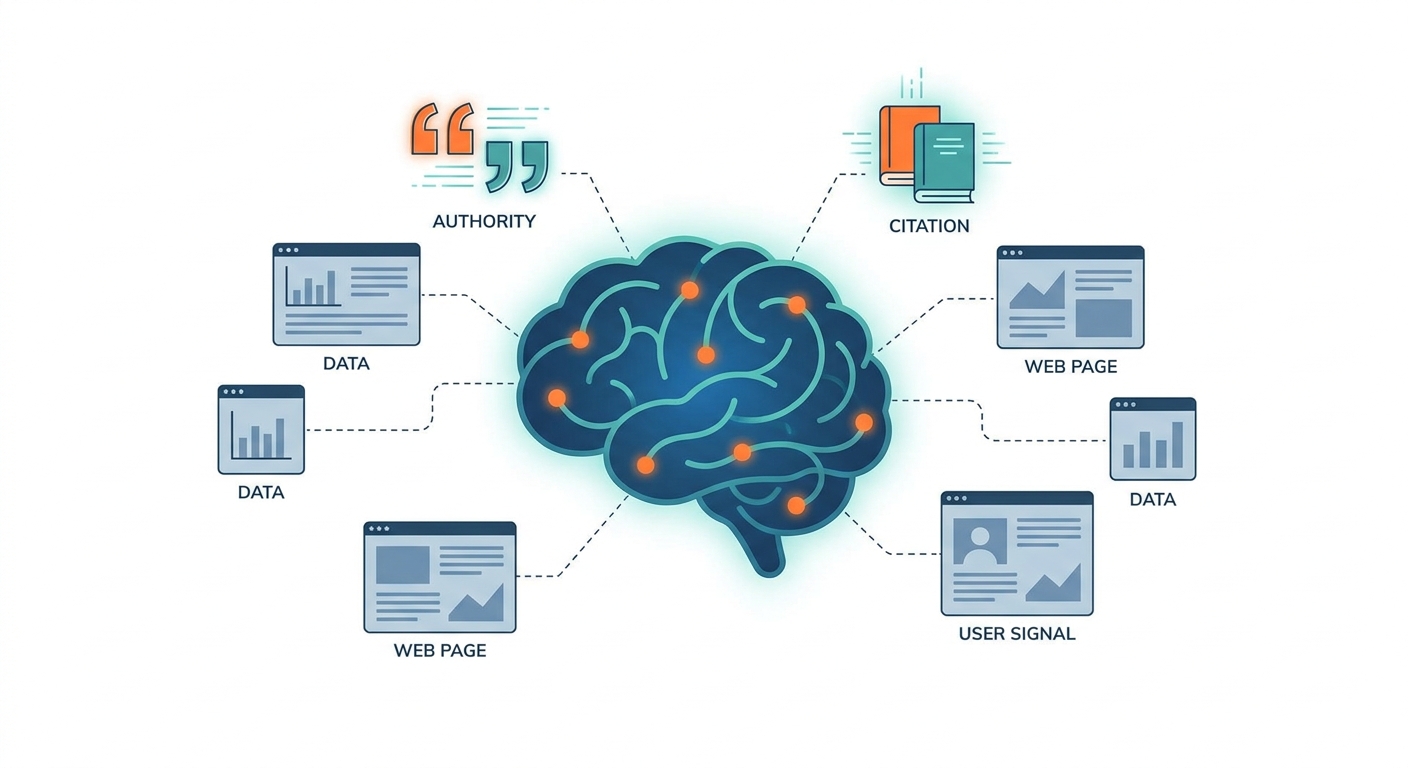
Stop thinking of your website as a destination for human eyes. That era is over. If you want to survive the current search climate, you need to start treating your site like a structured data warehouse for AI models.
Forget about chasing keyword rankings for a second. The new metric that actually matters is "Citation Rate"—the frequency with which your URLs show up as authoritative sources in AI-generated answers. This is the heart of Generative Engine Optimization (GEO). Your goal isn't to trick a user into clicking a link anymore; it’s to provide the exact, extractable data an LLM needs to answer a query with confidence.
Why Is Your Organic Traffic Dropping? The Reality of Zero-Click Search
If your analytics dashboard looks like a cliff, you aren't crazy, and you aren't alone. We’re watching a massive structural shift in how information moves. According to data from SparkToro on the rise of zero-click searches, informational search traffic has cratered by 50–60%. Why? Because users are choosing the direct answer provided by an AI over the "ten blue links" of the past.
It’s the "Zero-Click" reality. When someone asks, "How do I optimize for local search?", they want an immediate answer. They don't want to hunt through a blog post. As we discuss in our strategic guide on the future of search, the game has changed. It’s no longer about winning the click; it’s about winning the citation. If you aren't in the AI’s answer, you’re invisible.
For hands-on workflows covering keyword research, prompt structuring, and review steps built specifically around ChatGPT, see Using ChatGPT for AI Search Visibility: Practical Workflows.
What Is Generative Engine Optimization (GEO) and How Does It Differ From SEO?
Generative Engine Optimization (GEO) is the craft of building content specifically for Large Language Models (LLMs) like ChatGPT, Gemini, and Perplexity. Traditional SEO? That’s about gaming ranking signals to sit at the top of a list. GEO is about making your content the "source of truth" for an AI’s answer.
As outlined in the foundational research on what is Generative Engine Optimization?, the difference is simple: SEO is for search rankings; GEO is for answer extraction. An AI agent doesn't "rank" your site. It "retrieves" your facts to synthesize a response. If your content is vague, buried in fluff, or lacks a machine-readable structure, the AI will skip you and go to a competitor who knows how to be read.
How Do AI Models Actually "Read" Your Content?
To win, you have to understand Retrieval-Augmented Generation (RAG). An AI doesn't "browse" your site like a human. It performs a high-speed retrieval of indexed data, weighs that data for relevance and authority, and then uses internal logic to build a narrative.
This is why your site architecture is now your most important asset. The AI’s retrieval system is looking for clean, concise, structured data. Bury your key points under layers of "content marketing" prose and messy HTML, and the "Contextual Extraction" phase will fail. You’ll be left out of the citation list entirely.
For a closer look at exactly what "clean, structured" looks like in practice — headers, bullet formatting, and the entity consistency that closes the citation loop — see the anatomy of AI-recommended content.
What Are the Technical Pillars of AI Citation?
Why Is JSON-LD Schema the Backbone of AI Trust?
Schema markup is the metadata of the internet. It’s the language that tells a bot exactly what it’s looking at. By implementing FAQPage, Article, and Organization schemas, you’re handing the AI a map. When an agent scans your page, it uses this schema to verify facts, identify the author, and map out entity relationships. Without it, you're asking the AI to guess. And in a world of high-velocity data, an AI will never bet on a guess.
The "Conclusion-First" Rule: Writing for Extractability
AI models are obsessed with density. They want the answer, and they want it now. The "Conclusion-First" rule is simple: start every H2 section with a 40–60 word executive summary. By putting the core answer at the very top, you make it trivial for the model to grab that paragraph as a direct answer. If you write like a novelist—saving the "climax" for the end—the AI will likely skip your content because it can't find the value fast enough.
Why Authority Signals Trump Backlinks in 2026
Backlinks were the currency of the web for two decades. In the age of AI, "Entity Authority" is king. AI models rely on Google's E-E-A-T guidelines to decide whether to trust a source. An AI wants to know: Who wrote this? What are their credentials? Is this site actually an entity in this space? If you’re an expert, make sure your bio is structured, your site has a clear Organization schema, and your content contains original, verifiable data that simply isn't found elsewhere.
Platform-Specific Tactics: How to Win Citations
How to Optimize for ChatGPT
ChatGPT’s browsing tool functions by querying the web index. To win here, focus on high-quality, long-form content that answers "how-to" and "what-is" questions directly. The more your content mirrors the structure of a direct answer, the more likely the browsing tool will feed your URL into the chat window.
How to Optimize for Gemini
Gemini is tied directly to Google’s Knowledge Graph. To get cited here, you have to be recognized as an entity. This means your brand, your leadership team, and your core topics must be consistently linked across the web. If Gemini recognizes your brand as an authority on a specific industry topic through your Google Business Profile and connected social entities, it becomes significantly more likely to prioritize your content. That same entity-consistency principle is what keeps a hyper-local business visible too - see AI visibility for marinas for how a highly local, amenity-driven business applies it in practice.
How to Optimize for Perplexity
Perplexity is the most citation-heavy of the major models. It displays its sources at the top of every response. It favors sites that are highly specific and authoritative. If you want to appear in the Perplexity source bar, you must provide data-rich content—think charts, research studies, and original statistics. Perplexity wants to cite sources that provide evidence, not just opinions.
How Can You Measure Your AI Visibility Score?
Measuring "AI Visibility" requires a total shift in mindset. Stop tracking "Rank #1 for Keyword X." Start tracking "How many times did my domain appear in an AI response for Topic Y?" You need to monitor your "Mention Frequency." While Search Console is still fine for standard traffic, you should leverage tools like our AI Visibility Audit Tool to benchmark how easily your content is being extracted by AI crawlers.
What Is Your 90-Day GEO Implementation Plan?
Phase 1 (Days 1-30): Conduct a structural audit. Ensure all critical pages have proper JSON-LD schema markup. Validate that your site speed is optimized for bot crawling; if your site is slow, crawlers will time out before they even read your content.
Phase 2 (Days 31-60): Apply the "Conclusion-First" rule to your top 50 performing pages. Rewrite your headers and initial paragraphs to be more direct. Kill the jargon. If a human—or an AI—can't understand the core message in five seconds, rewrite it.
Phase 3 (Days 61-90): Build entity authority. Publish original research, seek out expert interviews, and ensure your author credentials are clear and linked to external, verified profiles. Monitor your AI citation frequency and refine your strategy based on which topics are actually gaining traction in AI summaries.
Frequently Asked Questions
What is the primary difference between traditional SEO and GEO?
Traditional SEO focuses on ranking in a list to drive traffic to your site (clicks). GEO focuses on providing the best, most extractable answer so that the AI cites your site as a source within its own interface (citations).
How do I track if my brand is being cited by ChatGPT or Gemini?
You track it by monitoring your "Citation Rate." This involves using tools that query these models frequently for your target topics and analyzing how often your URL is returned as a source in the generated output.
Do I need backlinks to get cited by AI models, or is authority enough?
Backlinks are still helpful for general domain authority, but AI models increasingly prioritize "Entity Authority." If your content is original, well-structured, and written by a verified expert, you can often earn citations even without a massive backlink profile.
Which specific schema markup is most critical for AI citation?
FAQPage is arguably the most critical for capturing direct answers, followed by Article schema for long-form content and Organization schema to establish your brand's legitimacy and entity status with the engine.
Is it possible to stop my content from being "summarized" away by AI?
You can technically block AI bots via robots.txt or Meta tags, but this effectively removes you from the future of search. Instead of blocking, focus on making your content so valuable that the AI must cite you as the primary source to satisfy the user's query.
![10 Best Local Rank Tracker Tools: In-Depth Comparison Guide [2025]](https://cdn.pseo.one/6abcb68a626591c40e1c8aa6/687e1c1ef6fe799d288518df/68809c373eb8562bcf68975d/10-best-local-rank-tracker-tools-comparison-guide/feature-image.jpg)