AI Strategic Visibility: Enterprise Guide to AI Search Presence

TL;DR
- Traditional SEO is evolving into Generative Engine Optimization (GEO).
- Success now requires earning citations within AI-generated search summaries.
- Siloed marketing departments must integrate to build machine-readable authority.
- Retrieval-Augmented Generation (RAG) models prioritize high-authority, semantic data.
- Brand visibility depends on becoming the primary source of truth for AI.
The era of chasing "blue links" is dead. Let’s be honest: that game ended the second the search engines stopped sending people to websites and started answering questions themselves.
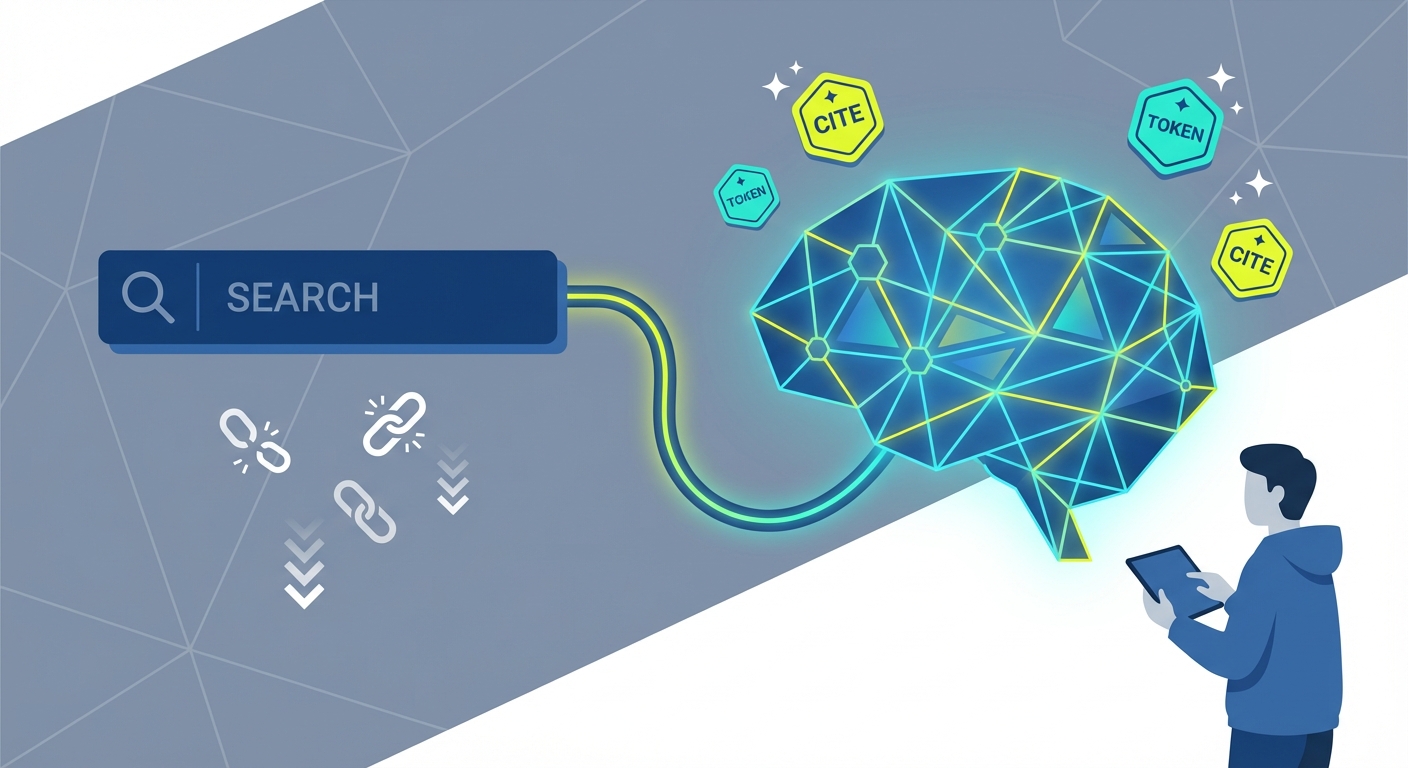
For the enterprise, the old KPIs are obsolete. Driving raw traffic? That’s a vanity metric now. The new gold standard isn't a click—it’s a citation. You need to be the source Google, Perplexity, and ChatGPT use to build their summaries. This is the shift from Search Engine Optimization (SEO) to Generative Engine Optimization (GEO).
If your brand isn’t being recommended, synthesized, or cited by the Large Language Models (LLMs) that now mediate the customer journey, you’re invisible. Not just "hard to find"—you’ve effectively ceased to exist for a massive segment of high-intent buyers. Success today requires a clean break from legacy SEO tactics. It’s time to prioritize machine-readable authority and semantic entity dominance.
The Great Shift—From Search to Answer Engines
The internet has evolved. It’s no longer a digital card catalog of documents; it’s a living synthesis of knowledge. If your CMO or Head of Digital Strategy is staring at a dashboard built for the "blue link" era, they’re staring at a ghost town. Traditional SEO chased keywords. GEO chases meaning.
In the enterprise, the war for visibility is being lost in the breakroom. Why? Because PR handles sentiment, SEO handles crawling, and Content handles lead-gen. They don’t talk. They don’t share data. They operate like strangers in the same building.
To win in the age of AI, you have to break those silos. You need a singular architecture of "Answer-First" content. If you aren't the primary source of truth for your industry’s key entities, an AI model will happily pull that information from your competitor. And it will give them the credit, too.
How Do LLMs and RAG Actually Perceive Your Brand?
To influence an AI, you have to peek under the hood. Most modern search experiences rely on Retrieval-Augmented Generation (RAG). Think of it as a super-powered research assistant. It doesn’t just "know" things—it retrieves high-authority data, synthesizes it, and presents it as a fact.
Citations are the new backlinks. When an LLM pulls from your white paper or product page, it’s a massive signal of trust. It carries more weight in the generative ecosystem than a thousand directory links ever could.
Why Is Your Brand Missing from AI Overviews?
The "zero-click" reality isn't a threat; it’s the new normal. Users want answers, not landing pages. When your brand is missing from these AI Overviews—as detailed in Google's Guide to AI Overviews—it’s rarely a glitch. It’s a failure of authority.
LLMs are biased toward trust. If your digital footprint is fragmented, messy, or lacking in structured data, the AI views your domain as a gamble. It won't take the risk. The interface is the destination. If you aren't the primary authority being cited, you’re being replaced by the "average" of your competitors' content.
The Three Pillars of Enterprise AI Strategic Visibility
Pillar 1: Technical Foundation (The Machine Language)
You can’t expect an LLM to understand your brand if you don't speak its language. Schema markup isn't just for rich snippets anymore; it’s the connective tissue for AI. By using the standards found at Schema.org - The Language of AI, you provide the structured context an AI needs to parse your brand’s entities, services, and claims. Without this, you’re just asking the machine to guess. And machines aren't great at guessing.
Pillar 2: Content Authority (The E-E-A-T for AI)
Generic, keyword-stuffed content is now a liability. LLMs are trained on massive datasets—they have a very high threshold for "noise." To be cited, your content needs to be razor-sharp. This is where the Content Authority Framework becomes your best friend. Move away from keyword chasing. Focus on semantic entity optimization—the "who, what, where, and why" of your brand. Make it statistically impossible for an AI to ignore you as the definitive authority.
Pillar 3: PR & Brand Reputation (The Social Proof)
AI models look at the world’s consensus on your brand. They don't just look at your site; they look at what everyone else says about you. High-authority mentions in reputable news, verified third-party reviews, and participation in programs like Perplexity’s Publisher Program create the "social proof" that builds reliability. If you aren't managing your reputation across the web, your authority score will stay flat. No amount of technical SEO can fix a bad reputation.
The 90-Day Implementation Roadmap for Enterprises
Transformation doesn't happen overnight, but it has to be methodical. You can't just throw money at this; you need a plan.
Days 1–30: The Audit Phase. You can't improve what you don't measure. Enterprises need to conduct Enterprise SEO Audits that specifically target AI Share of Voice. Benchmark how often you’re cited compared to your competitors. Where is your data fractured? Where are you losing the "truth" war?
Days 31–60: Technical Remediation. Time to fix the foundation. Deploy site-wide Schema markup. Resolve the crawlability issues that stop LLMs from reaching your core data. Clean up your brand’s entity graph. If the machine can't read it, it doesn't exist.
Days 61–90: Content Pivot. Finally, shift your architecture. Move to "Answer-First" content. Create assets that directly solve the high-intent queries your buyers are typing into AI assistants. Focus on the "Why" and "How." Position your brand as the definitive solution.
The "Negative" Viewpoint: Managing AI Hallucinations
What happens when the AI gets it wrong? Hallucinations are a reality. They can wreck your reputation faster than a bad PR cycle. If an LLM misrepresents your pricing or features, you can't just hit "delete."
Proactive management requires a "Repair vs. Prevent" cycle. Monitor the outputs. If you see an error, counteract it by publishing high-authority, structured content that sets the record straight. Flood the zone with verified data. Re-train the model's understanding of your brand by being the loudest, most consistent source of truth.
How to Choose an AI Visibility Platform
The tools of yesterday are failing today’s enterprise. Stop obsessing over "ranking positions" and "backlink counts." Those metrics are relics.
When you’re evaluating a platform to help you win, look for:
- Citation Tracking: Can you see exactly where and how often you’re cited in LLM outputs?
- LLM Sentiment Analysis: Do you know how you’re being mentioned, and in what context?
- RAG-Readiness: Can the platform audit your domain for the specific data structures LLMs use to ingest info?
Enterprise AI visibility is a shift from keyword-based content to authority-based content. At Gracker.ai, we help enterprises bridge this gap. We align content architecture with the requirements of modern AI ingestion engines, ensuring your brand isn't just surviving the shift—but leading it.
Frequently Asked Questions
How is AI search visibility different from traditional SEO?
Traditional SEO is about driving a user to click a blue link on a search engine results page. AI search visibility is about ensuring your brand is the factual, cited source within an AI-generated summary, effectively becoming the "answer" rather than just a destination.
Can I track my brand’s presence in ChatGPT or Perplexity?
While traditional tracking tools struggle here, enterprises are moving toward "AI Share of Voice" metrics. These metrics quantify how often your brand is recommended or cited in response to industry-specific queries, providing a clearer picture of your actual brand influence in the generative ecosystem.
Does backlink building still matter for AI search?
The volume of backlinks matters less than ever. What matters is the authority behind the link. LLMs are programmed to prioritize verifiable, high-trust sources. A single citation from a high-authority industry publication or a structured data-backed mention is worth more than hundreds of low-quality links.
What is the role of Schema markup in AI visibility?
Schema acts as the "connective tissue" between your website and the LLM. It translates your content into a machine-readable format, allowing the AI to accurately parse your data and confidently cite you as a factual source in its summaries.
How do we get started with an AI-first content strategy?
Start with a comprehensive audit. You need to understand your current technical health and your AI Share of Voice. Once you have a baseline, pivot your content architecture to prioritize direct, entity-rich answers to the questions your customers are asking AI search engines.