AI Visibility Score: What It Is and How to Improve It

TL;DR
- AI Visibility Score measures your brand's presence in AI-generated search summaries.
- Traditional SEO is shifting from link-based traffic to AI-driven authority and trust.
- Citation share and sentiment are the new metrics for modern search success.
- Being cited by LLMs transfers authority and shapes user perception instantly.
For years, we’ve been obsessed with the "ten blue links." We spent countless hours tweaking meta tags and fighting for that top spot on page one. But let’s be honest: that game is over.
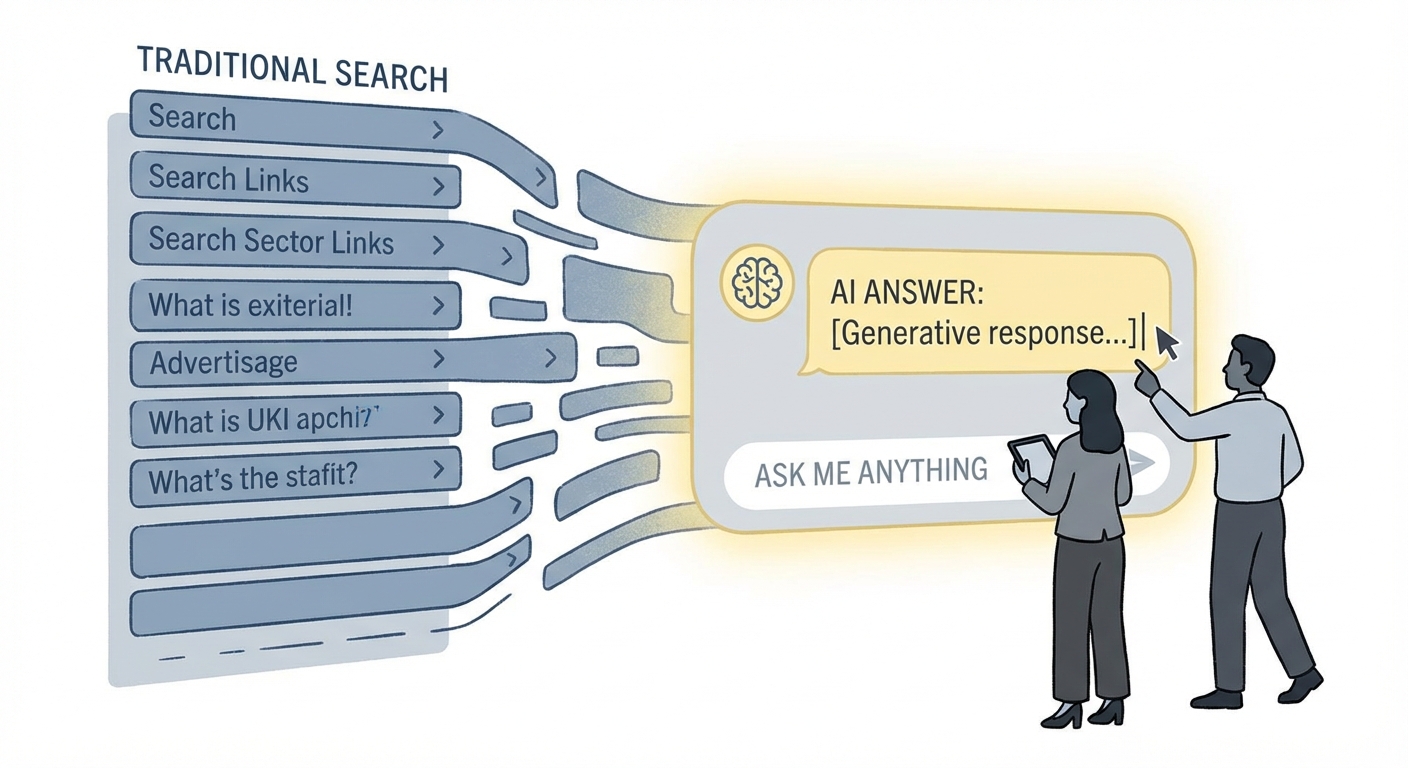
In 2026, the battleground isn't a list of search results. It’s the "Answer Engine"—that sleek, AI-generated summary sitting right at the top of the page. It doesn't just list websites; it synthesizes information from dozens of sources to give the user a definitive, authoritative answer.
If you aren't in that box, you’re invisible. Period.
This is where the AI Visibility Score comes in. It’s the new currency of search. It measures how often—and how favorably—your brand shows up in these AI summaries. It’s replacing outdated metrics like Click-Through Rate (CTR) with a focus on "Citation Share" and "Trust Depth." If ChatGPT, Perplexity, or Gemini don’t cite you as a source of truth, you’re basically a ghost to the modern researcher.
Why "Blue Link" SEO is Officially Dead
For two decades, SEO was basically a sport: game the algorithm, get the link, get the click. But that paradigm is crumbling. Users are lazy, and honestly? They’re smart. They’d rather have the AI do the heavy lifting of synthesis, comparison, and analysis than click through five different blogs to find one answer.
According to recent 2026 AI SEO predictions from Search Engine Land, the traditional SERP is turning into a knowledge-delivery platform. In this world, the "source of truth" is the only entity that matters.
We’re moving away from the era of "traffic at any cost." Now, a presence in an AI response acts as a pre-qualified endorsement. When an AI cites your data, your white paper, or your methodology, it isn't just sending a visitor your way. It’s transferring authority. If your brand is absent from these summaries, you’re missing the chance to shape the user's perception before they even decide which website to visit. You’re losing the argument before it even starts.
What is an AI Visibility Score, Anyway?
Think of your AI Visibility Score as a simple math problem: Frequency of Citation × Sentiment/Trust Score = AI Visibility Score.
It’s a way to quantify your brand’s "share of voice" within the natural language answers LLMs provide. In a "zero-click" reality, where the AI gives the answer directly on the screen, brand recall is the only conversion that counts. Being mentioned in a summary is infinitely more valuable than a website click that leads to a high bounce rate.
As outlined in this deep dive on AI Visibility Score definitions, this score isn't just about vanity. It’s about becoming a foundational entity in the model’s reasoning process. Measuring this requires looking beyond Google Search Console and getting into the weeds of how LLMs actually interpret your domain’s expertise.
How Do AI Models "Read" Your Website?
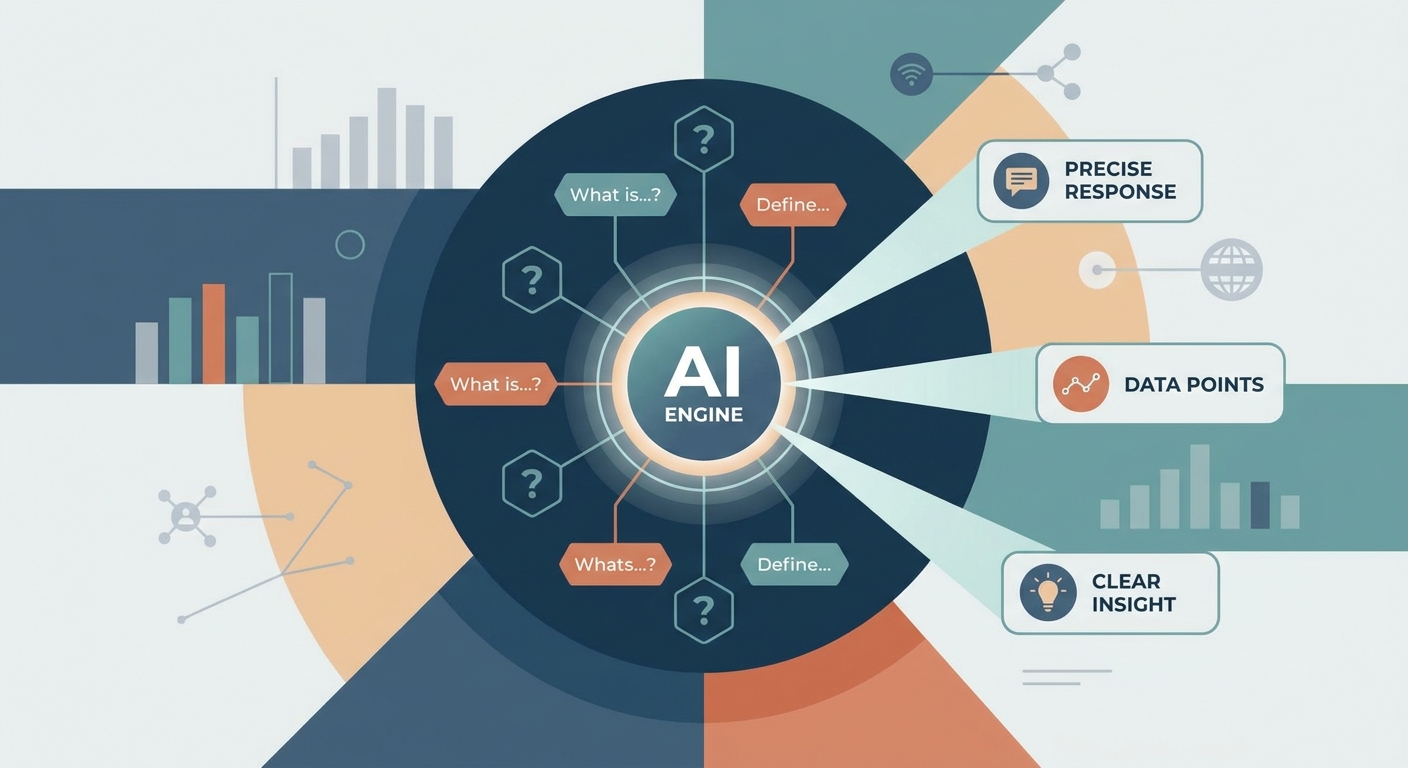
Here’s the thing: LLMs don't "surf" the web like we do. They ingest and index entities. When a user asks a question, the model starts a reasoning phase. It crawls its training data and indexed web pages, performs "Entity Extraction" to filter out the noise, and looks for the most credible sources to back up its response.
This anatomy of a citation is everything. The LLM is looking for two things: semantic relevance (does your content actually answer the question?) and entity authority (are you a known, trusted source?). This authority is bolstered by structured data and consistent, high-quality mentions across the web. If your site is full of fluff, the model will skip you for a competitor who provides a "fact-dense" and structured response. It’s that simple.
Why Does AI Visibility Drive B2B Pipeline Velocity?
In the B2B world, the research phase is the longest, most painful part of the buyer's journey. When a prospective buyer uses an AI tool to compare vendors or research a complex solution, being cited as a trusted entity early in that conversation is a massive accelerator.
By appearing in the AI’s summary, you aren't just one of many blue links; you are presented as a primary resource or a recommended solution. This transition from "Vendor Discovery" to "Trusted Entity" happens in seconds. It cuts through the noise that usually plagues the early stages of a sales cycle. If your brand is consistently linked to the right solutions in the AI’s reasoning, the leads that do eventually click through to your site are significantly warmer.
For those looking to streamline their approach, focusing on AI-driven content strategy services can help align your brand’s messaging with the way these models prioritize authority.
The 2026 Audit Framework: How to Measure Your Presence
You can't fix what you don't measure. An effective 2026 audit framework follows a simple three-step process:
- Identify your "Entity" footprint: Use tools to map out how your brand is defined in search knowledge graphs. Are you a "SaaS provider" or a "thought leader"? Ensure your structured data explicitly defines your entity.
- Monitor brand mentions across LLMs: You cannot rely on traditional trackers. You need to test queries across ChatGPT, Perplexity, and Gemini to see if your brand is actually cited.
- Analyze sentiment: It is not enough to be mentioned; you must be mentioned in a positive, authoritative context. If the AI is citing you as a "high-cost" or "outdated" option, your visibility score will suffer, even if your citation frequency is high.
How Can You Improve Your AI Visibility Score?
Improving your score requires a fundamental shift in how you produce content. The era of writing for word count is dead. We are now in the era of "Fact-Density."
- Optimize for Fact-Density: AI models are hungry for facts. Strip away the corporate fluff and focus on providing data-backed, definitive answers. If you make a claim, back it with a statistic.
- Strengthen your Knowledge Graph: Use Schema Markup (JSON-LD) to explicitly tell search engines who you are, what you do, and who you serve. The more "connected" your entity is, the more likely the AI is to trust your content as a source.
- The Content Conciseness Rule: AI models prefer digestible chunks. Use clear headings, bulleted lists for technical specs, and concise summaries at the top of your pages. For further tactical guidance, you can explore how to optimize for AI search engines to understand the technical nuances of schema and entity indexing.
For those ready to dive deeper into the mechanics of this shift, our library of SEO guides offers a comprehensive look at how to adapt your existing content assets for this new, AI-first landscape.
The Contrary Viewpoint: Why Long-Form Content Still Matters
Wait, if AI prefers "concise" content, is long-form dead? No. That’s a dangerous oversimplification.
While the AI might pull a single, concise sentence for its summary, it is evaluating the depth and breadth of your entire domain to assign you an "Authority Score." If you only publish thin, "answer-focused" snippets, you’ll never build the domain authority needed to be considered a "source of truth."
AI models are designed to find comprehensive hubs of knowledge. They look for deep-dive white papers, original research, and interconnected topical clusters. Think of your long-form content as the "training data" that proves you are an expert, and your concise answers as the "citations" that emerge from that expertise. You need both to survive in 2026.
Future-Proofing Your Brand for the Answer Engine Era
The shift to Generative Engine Optimization (GEO) is the most significant change in search since the SERP was born. We are moving away from the "search and click" model toward a "query and answer" model.
Brands that win in this era will be those that prioritize entity authority, embrace fact-dense content, and strategically position themselves as the "source of truth" for their niche.
Start auditing your entity presence today. Identify where your brand is missing from the conversation, strengthen your structured data, and ensure your content is structured for machine consumption. The next wave of traffic won't just be about clicks; it will be about being the brand the AI trusts enough to recommend.
Frequently Asked Questions
How is an AI Visibility Score different from standard SEO rankings?
Standard SEO measures blue-link positioning; AI Visibility Score measures how frequently and favorably your brand is cited within the natural language answers provided by AI models.
Can I track my AI Visibility Score for free?
While some basic tracking is possible through brand monitoring tools, specialized AI tracking requires tools that analyze LLM responses, which are currently moving towards paid, enterprise-grade solutions.
Does having a high SEO rank guarantee a high AI Visibility Score?
Not necessarily. AI models prioritize semantic relevance, entity authority, and concise, factual information. A site might rank #1 for a keyword but be ignored by an AI if the content is too dense or lacks clear, authoritative answers.
What is the most important factor in improving my score?
The most critical factor is "Entity Authority." You must ensure your brand is clearly defined in your structured data and that your content provides definitive, concise answers to the specific questions your target audience asks AI models.