The Truth About What Drives Online Sales

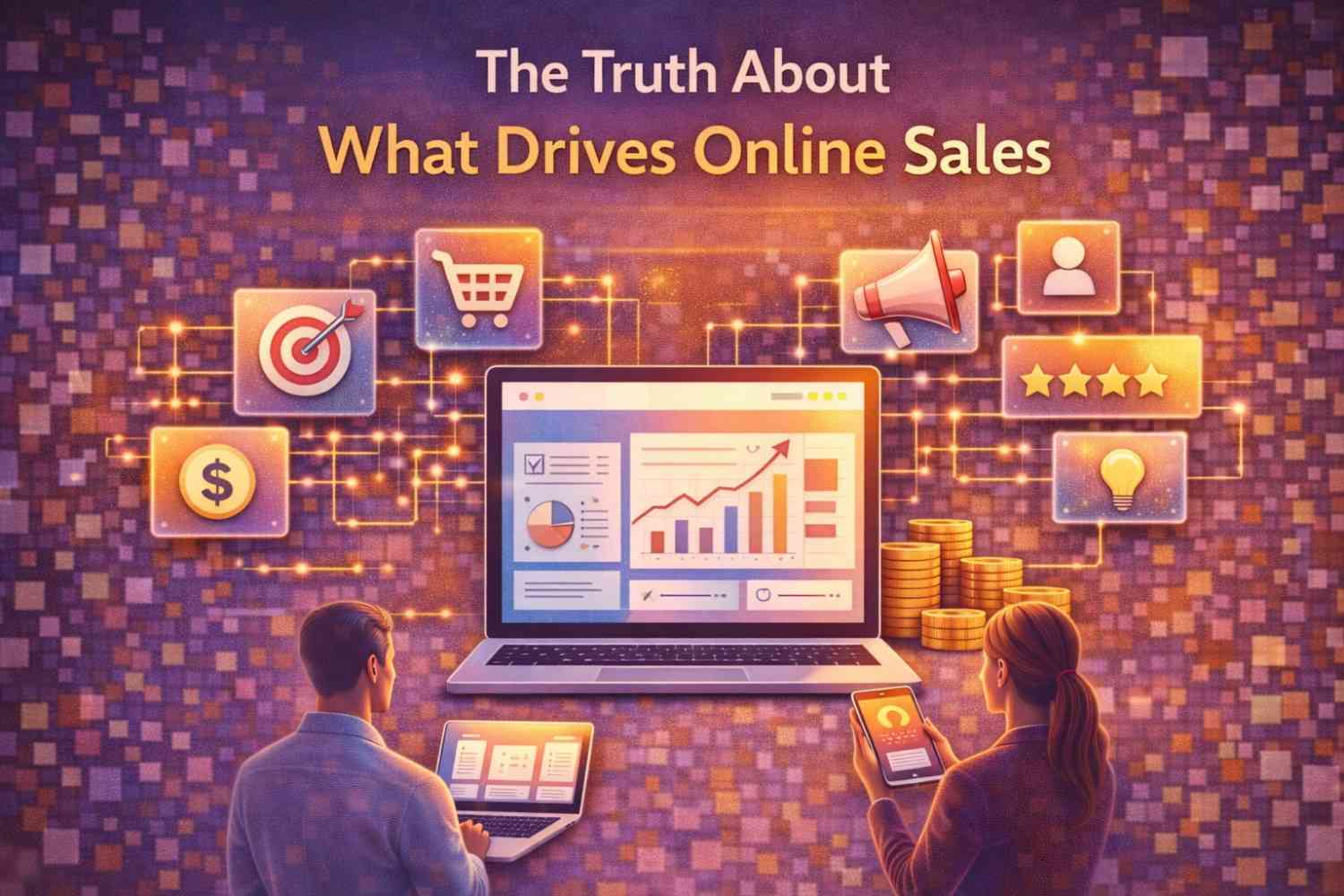
The race towards easy, hyper-personalised shopping experiences is faster than ever before. However, significant economic challenges, including mounting consumer debt, reduced disposable income and elevated interest rates, will continue to influence how and when people choose to spend their money. For anyone trying to build a successful online company, this hesitation can be the driving factor between success and failure.
From search engine optimisation and AI-driven supply chains to developing realistic buyer personas to understand exactly who your customer base is and what they want, for example more sustainable business practices or ethical product sourcing, taking a proactive and practical approach to building an active, trustworthy and customer-guided online presence is a fantastic and realistic way to boost online sales.

Search Engine Optimisation (SEO)
The holy grail of online marketing and sales is ensuring your brand ranks as close to the top of Google when potential customers are searching for products or services you specialise in. Not only does it drive more traffic to your site, but it doesn’t cost you each time someone new visits your website. One of the biggest advantages of optimising your SEO is driving massive traffic and online sales with very little marketing expense.
By using e-commerce search engine optimisation tactics, you can pinpoint the most relevant and vital keywords that rank highest in Google search results, and cater directly to your target audience and potential customers. The better you target these terms, the higher you rank, which gives your business more visibility and increases the trustworthiness of your brand in the eyes of consumers. If you want the editorial-content side of that ranking equation, see Editorial SEO: The Secret to Higher Rankings.
Develop Buyer Personas
A realistic buyer persona describes a specific group of potential customers you want your tailored marketing strategies to reach. The most important aspect of building this persona is knowing exactly who you want to sell to, so you can appeal to them directly. You can use customer interviews or surveys to establish the main types of customers you want and design your website to meet those needs.
It is not possible to have all the information you need to build a perfect customer description, but it will make it significantly easier for you to predict and appeal to visitors on your website and other sales channels. That same data-driven mindset extends to scaling content and landing pages — see The Data-Driven Approach to Unlocking Organic Growth.
AI-Driven Supply Chains
The rise in global conflicts and extreme weather conditions due to climate change underscores an urgent need for retailers across all industries to modernise their supply chains by utilising demand forecasting, digital twins, supplier tracing, and preventive maintenance to reduce volatility and support sustainable business practices.
Building resilient supply chains will reduce the risk of profit loss from unexpected events and provide retailers with a reliable, accurate baseline for recording carbon emissions across the value chain. According to a Publicis Sapient global consumer survey, more than half of global consumers claimed they trust companies that reveal their sourcing and production methods, favouring those that pursue sustainable and ethical avenues.

Trust
Customer reviews, testimonials, and case studies are incredibly important for building a positive, trustworthy company image. That same user-generated proof — reviews, testimonials, real customer stories — is also what AI answer engines look for when deciding which brands to cite; see how to leverage user-generated content for AI search rankings. But even with positive word of mouth, some customers may still opt to skip purchasing from you if they don’t feel like their payment information is properly protected. The internet is a dangerous place, and it is becoming increasingly common for card and identity information to be stolen, so it is no surprise that more people are hesitant to purchase from new, unknown websites.
You can easily mitigate these fears by adding visible, secure measures such as Norton Secured or the Better Business Bureau (BBB), along with a brief description of how each protects customer information.
Furthermore, while it may seem obvious, you should ensure you are honest about your products, services, and who you are as a brand. This transparency and honesty are crucial for building trust and respect with potential customers and driving your online sales. It may feel easy to stretch the truth online, but it can be even easier to see through the lies with a little research.
Social Media Marketing
Social media marketing is more than just making posts or having social media accounts. It is about building an active internet presence to make the best impression possible on potential customers. Many people choose to reach out to brands via their social media pages, primarily because it feels more accessible and convenient for quick, simple questions they may have.
On the flip side, customers may also message you to express their dissatisfaction with your service or product. In this case, you will need to ensure these concerns are responded to quickly and efficiently. This will show the customer in question and any other potential customers that you are listening and ready to help. You don't need to be active on every platform in existence. Simply choose the platforms that you feel most comfortable using and that make sense for your business.

Consent
According to Ashlea Atigolo, co-founder of INATIGO and managing partner of Consult Venture Partners, customer consent is a massive component of customer trust. With the growing use of data, generative and agentic AI, it is imperative to pair automation with accountability, showing consumers when AI is being actively used and how their data is being used or stored. For a closer look at the legal and trust implications of that accountability gap, see Ethical AI in SaaS: What Legal Lessons Teach Us About Accountability and Trust.
Consent is evolving from a legal checkbox to a crucial part of the entire shopping experience, influencing how people will engage with your company. Brands need to strive for consistency, empathy and transparency to maximise customer retention and drive online sales.
![10 Best Local Rank Tracker Tools: In-Depth Comparison Guide [2025]](https://cdn.pseo.one/6abcb68a626591c40e1c8aa6/687e1c1ef6fe799d288518df/68809c373eb8562bcf68975d/10-best-local-rank-tracker-tools-comparison-guide/feature-image.jpg)