The Hidden Cost of Bad SERP Data: How Scraping Quality Shapes SEO Strategy

Most SEO teams treat rank tracking like a utility, something that runs in the background, spits out numbers, and feeds dashboards nobody questions.
The trouble shows up months later, when a campaign built around those numbers underperforms, and nobody can pin down why.
The keywords looked winnable, the traffic projections lined up, but the conversions never materialized.
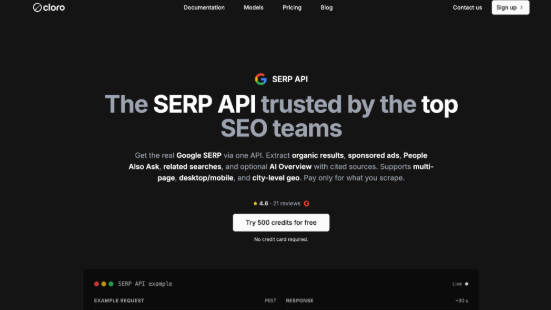
More often than not, the data underneath the strategy was wrong before anyone read it, which is why teams shipping serious organic growth tend to invest early in a reliable SERP scraping API instead of stitching together whatever free tools they can find.
Why SERP Scrapers Sit at the Foundation of SEO
A SERP scraper sits underneath almost every serious SEO workflow.
Rank trackers use one.
Competitive analysis tools use one.
Content gap audits, featured snippet research, and local visibility reports all depend on what gets pulled from Google in the first place. If you are assembling a broader programmatic SEO pipeline on top of this data, see the five tool layers a data-driven programmatic SEO strategy needs for how the orchestration layer above the scraper should be structured.
When the source data is stale, geographically off, or missing half the page, every downstream decision inherits the same flaws.
Google doesn't serve one page of results.
It serves millions of variations depending on location, device, language, search history, and the specific data center handling the request.
A user in Manchester sees different listings than a user in Manhattan, even on the exact same query.
Search results in Warsaw won't match what someone in Berlin sees, and mobile AI Overviews behave differently than their desktop counterparts.
A scraper that ignores these variables hands back a result that technically exists somewhere, but doesn't reflect what your actual customers see.
Where Cheap Scraping Setups Quietly Break Strategy
Here's where the problems usually show up:
Wrong location targeting, like defaulting to a US data center when ranking for a Polish e-commerce keyword
Stale cached pages that miss SERP feature changes for days
Missing rich results like FAQ blocks, video carousels, and the Local Pack
Inconsistent device emulation, so mobile-first markets get desktop data
Blocked or throttled requests that silently swap in old data instead of failing loudly
Each one creates a specific kind of strategic damage.
Targeting the wrong location means you optimize against competitors who don't actually rank where your users search.
Missing the Local Pack for a "near me" query means you misjudge how much real estate organic results occupy on the page.
If three map listings, an AI summary, and a sponsored carousel push the first blue link below the fold, ranking number one organically is worth far less than your tracker suggests.
The Technical Side Has Gotten Harder
Pulling clean SERP data has gotten harder, not easier.
Google now uses sophisticated bot detection, behavioral fingerprinting, and CAPTCHA challenges that filter out anything that looks automated.
Cheap proxies get burned within hours.
Residential IP pools degrade as Google flags them.
Headless browsers without proper fingerprint randomization stand out instantly.
This is why purpose-built scraping infrastructure from providers like cloro.dev matters more than most teams realize, because the difference between data you can trust and data that quietly rots is mostly invisible until your rankings stop matching reality.
Quality scraping infrastructure handles things most teams never think about.
It rotates residential proxies across the geography you actually care about.
It parses SERP features as structured fields instead of dumping raw HTML and hoping a regex catches the changes.
It re-runs failed requests instead of returning blanks.
It stays updated as Google rolls out new SERP elements, which happens far more often than the SEO press covers.
How Bad Data Compounds Downstream
Bad data has a compounding effect that quiet metrics never reveal.
A keyword research project built on inaccurate search volume estimates leads to a content calendar full of low-intent topics.
A competitive audit built on the wrong location tells you a domain dominates a niche when it barely registers in your real market.
A backlink prospecting list scraped from outdated SERPs hands you contact targets for pages that no longer rank, which means wasted outreach, wasted hours, and no movement on the scoreboard.
The AI Overview Problem
There's also the AI Overview problem, which has shifted what "ranking" even means.
Google's generative results now occupy positions zero through several, depending on the query, and they cite source pages selectively.
A scraper that doesn't capture AI Overview citations gives you a clean-looking position one with no context, and organic clicks for that query have dropped forty percent because the answer is already on the SERP.
The position didn't change.
The world around it did.
Broad core updates create the same kind of confusion from the opposite direction — rankings move and teams can't tell if it's a data problem or a real algorithm shift. See how the August 2024 Core Update affected SEO strategy for how to tell the difference and what to actually check first.
Input Quality Is the Quiet Lever
What separates teams shipping a working SEO strategy from teams that flail is rarely cleverness.
It's the input quality.
Decisions are downstream of data, and data is downstream of whatever pulls it. That principle scales beyond SEO tooling too -- see building reliable data pipelines in an AI-driven world for how the same input-quality problem shows up across AI-driven products generally, not just rank trackers.
If the SERP scraper feeding your rank tracker, your content tool, and your competitive intel is cutting corners, those tools inherit the corner-cutting, whether they admit it or not.
Questions Worth Asking Before Your Next Planning Cycle
Worth checking before your next quarterly review:
Where do your tools physically scrape from, and does that match your target market?
How often does the scraper refresh, and how does it handle blocked requests?
Which SERP features does it parse, and which does it silently ignore?
Can you reproduce a result manually from the same location and see if it matches?
The teams getting outsized organic growth in 2026 aren't running smarter strategies than their competitors.
They're running the same strategies on better information.
SERP data quality is one of the least glamorous levers in SEO and one of the highest-leverage ones once you stop assuming it's solved.
![10 Best Local Rank Tracker Tools: In-Depth Comparison Guide [2025]](https://cdn.pseo.one/6abcb68a626591c40e1c8aa6/687e1c1ef6fe799d288518df/68809c373eb8562bcf68975d/10-best-local-rank-tracker-tools-comparison-guide/feature-image.jpg)