Copilot Rank Tracking: How to Monitor Microsoft Copilot Citations

TL;DR
- ✓ Traditional rank tracking is obsolete in the era of generative AI synthesis.
- ✓ Success is now measured by your Share-of-Model within AI-generated search responses.
- ✓ Bing index authority is the fundamental gatekeeper for securing Copilot citations.
- ✓ Brands must shift focus from static keyword rankings to building deep topical authority.
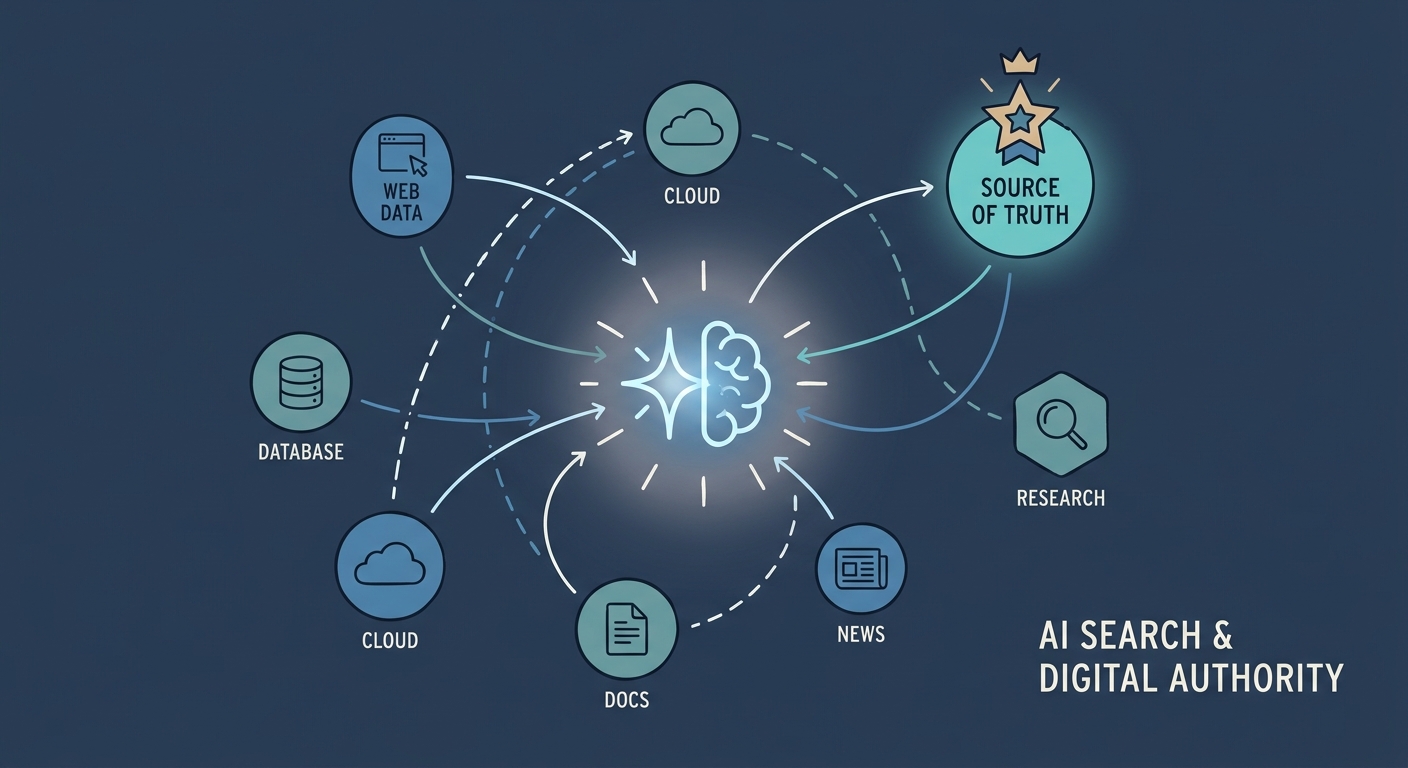
Copilot rank tracking is the new game in town. It’s no longer about chasing the #1 spot on a static list of blue links. It’s about being the "source of truth" that Microsoft’s AI picks to build its answer. In a world where the search query often ends with the AI's response, you aren't just competing for a click—you’re competing for relevance, authority, and presence within the synthesis itself. Microsoft reported over 30 million paid Microsoft 365 Copilot seats and "average weekly engagement on par with Outlook and Teams" as of its FY26 Q4 earnings call (Microsoft Investor Relations, FY26 Q4 earnings call, retrieved 2026-09-18, call held July 29, 2026). At that scale, ignoring Copilot citations isn't just an oversight; it’s a failure to show up where your customers are actually looking.
Why Traditional Rank Tracking is Dead
For twenty years, SEOs lived and died by the SERP. We obsessed over keywords, tracked position 1 through 10, and built entire strategies around the "click." That world is gone.
The era of synthesis has arrived. When a user asks a question today, they often walk away with the answer provided right there in the chat window. They don't need to click your link to get what they came for. We’ve shifted from "Blue Link" SEO to "Synthesis" SEO. In this new reality, your success isn't measured by where you sit on a page; it’s measured by how often the AI pulls your content to build its summary.
If you’re still staring at traditional rank trackers, you’re looking at a map of a city that’s already been leveled. Those tools scrape static lists. They are fundamentally blind to generative AI. If you think you’re winning because you rank high on Bing, you might be missing the fact that the AI is ignoring you entirely in favor of a competitor who has better entity authority. You’re measuring the foundation while the skyscraper above you is being built by someone else.
How Does Copilot Citation Actually Work?
Copilot isn't a search engine in the classic sense. It’s a sophisticated layer sitting on top of the Bing ecosystem. When someone fires off a question, Copilot triggers a retrieval process. It scans the Bing index, identifies high-authority sources, and uses a Large Language Model (LLM) to craft a response.
This is a "Bing-First" reality. If your site isn't indexed, crawled, and deemed authoritative by Bing’s core algorithms, you aren't even in the running. The pipeline is rigid: Bing must recognize your entities, crawl your pages, and trust your topical authority. If you don't pass that gatekeeper, you’ll never see a citation.
What is 'Share-of-Model' and Why Should You Care?
Total mentions? That’s vanity. It’s a nice number for a slide deck, but it doesn't tell you if you’re winning. Instead, the industry is moving toward "Share-of-Model" (SoM).
SoM measures your brand’s presence in AI responses relative to your direct competitors for high-value queries. Think of it like this: if you’re getting mentioned in 10% of AI responses for your core category, but your competitor is hitting 40%, you are losing the mindshare battle. According to recent industry analysis on AI search trends, this is the new standard for dominance. Even if your organic traffic stays flat, a dropping SoM means you’re being filtered out as noise. You aren't just losing clicks; you're losing the right to be part of the conversation.
Bing itself has started shipping a version of this metric natively. Bing Webmaster Tools' AI visibility insights now include a Citation Share figure, "the percentage of citations attributed to your site out of all citations shown" for a given query, which Microsoft explicitly frames as an observational metric rather than a ranking system (Bing Search Blog, "New AI Visibility Insights in Bing Webmaster Tools," June 2026, retrieved 2026-09-18). The same release added Intents (classifying queries as informational, commercial, navigational, or research) and Topics (grouping related queries into thematic clusters), which is useful directionally but only covers Bing's own surfaces — it won't tell you how you're doing in ChatGPT or Perplexity on the same prompts.
How Can You Conduct a 'Why We Lost' Citation Audit?
When your citations dip, don't panic. Audit.
Start by identifying the "Source Profile." When a user asks about your niche, who does Copilot cite? Is it you? A review site like G2? A competitor’s blog? Often, the content isn't the problem—the entity authority is. AI models are obsessed with trust. They want sources with deep, interconnected data.
If you’re constantly losing to third-party aggregators, check your schema. Are your entities clearly defined? Is your site architecture easy for an AI to digest? If you’re struggling to connect the dots, sometimes you need an outside set of eyes. There are professional SEO audit services that specialize in identifying these technical gaps, ensuring the AI sees you as the primary source rather than an afterthought.
The Bing-Copilot Correlation Study: Is Traditional SEO Obsolete?
There is a dangerous myth floating around that AI-search is some mysterious, black-box entity that ignores traditional web signals. That is completely false. Per the Bing Webmaster Guidelines, the old rules—content quality, relevance, and technical health—are still the bedrock.
We’ve observed a near-perfect correlation between Bing organic visibility and Copilot citation frequency. If you stop optimizing for Bing, you will stop being cited by Copilot. Period. The strategy isn't to abandon traditional SEO; it’s to evolve it. Build "Answer-Ready" content. Create pages that get straight to the point, use schema, and provide clear, authoritative data. By winning in Bing, you are effectively "pre-training" the Copilot model to trust you.
What Should You Look for in a Copilot Rank Tracking Tool?
Don't just buy the first tool that promises "AI tracking." You need something that understands how LLMs actually work.
Look for cross-engine coverage. Your brand might perform differently in ChatGPT than it does in Copilot or Perplexity. You need a tool that shows you granular source attribution—exactly which page is getting cited and why. Finally, get something with volatility alerts. AI models update their weights constantly. You don't want to wait for a monthly report to find out you've lost your status; you want to know the moment the citation patterns shift.
At minimum, evaluate a Copilot rank tracker against these criteria:
- Cross-engine breakdown, not a blended score. A single "AI visibility" number hides whether you're actually losing ground in Copilot specifically or just in one other engine.
- Source-level attribution. Which exact URL got cited, not just "you were mentioned."
- Share-of-Model reporting. Your appearance rate relative to named competitors on the same prompts, not just a raw mention count.
- Volatility alerts. Weekly or bi-weekly change notifications, since Bing's index and Copilot's source weights shift continuously.
- A path from gap to content. A report that only tells you what's wrong still leaves the fix as manual work.
Our comparisons of the top LLM tracking tools for 2026 and how to choose an AI visibility provider go deeper on evaluating tools against these criteria across engines beyond Copilot. If Perplexity is also a priority surface for your brand, see our Perplexity rank tracking guide for how its citation mechanics differ from Copilot's Bing-first pipeline.
How Can You Map Citations to Pipeline Revenue?
The ultimate goal is revenue, not just "visibility." This is what we call the "Pipeline Attribution Framework." You should be tagging traffic that comes from AI citations separately from your standard organic traffic.
If you see a surge in leads for a specific query, check your source attribution. Which page triggered the citation? Once you know, double down on that strategy. Use your AI-driven content strategy to refine those topics and formats. Turning AI reach into actual qualified leads is what separates a "marketing hobbyist" from a revenue-generating pro.
Conclusion: Mastering the New Era of AEO
Shifting from traditional rank tracking to Copilot citation monitoring is a fundamental change in philosophy. We are moving away from optimizing for clicks and toward optimizing for influence.
By keeping a pulse on your share-of-model, auditing your source authority, and keeping your Bing presence rock-solid, you can cement your brand as an authoritative voice in this new conversational era. The data is sitting right there. The only question left is: are you ready to start measuring it?
Platforms built for this, including GrackerAI, track Copilot citations as one of 4 AI engines covered on the Scale plan ($499/month, $399/month billed annually) — Starter covers 3 engines, Scale adds Microsoft Copilot for 4 total, and Enterprise expands to 10, adding Google AI Overviews, Gemini, DeepSeek, Grok, Claude, and Brave Leo. The platform then turns the gaps that audit surfaces into citation-ready content instead of leaving that as separate manual work. Start with a free AI visibility score or book a demo to see where your own Copilot citation gaps are.
Frequently Asked Questions
Is Copilot rank tracking the same as traditional SEO?
Not even close. Traditional SEO is about getting a user to click a link on a list. Copilot rank tracking is about getting an AI to synthesize your content and cite you as the authoritative source within a chat interface.
How often should I monitor my Copilot citations?
Models update their source weights constantly. Weekly or bi-weekly monitoring is the sweet spot to catch volatility and adjust your strategy before you lose your competitive edge.
Can I improve my Copilot rankings without paying for a tracker?
Sure. You can improve your Bing organic visibility and tighten up your entity authority. However, without a tracker, you’re flying blind—you’ll have no way to know if your changes are actually impacting your citation patterns. And a tracker is only as good as the data feeding it — see the hidden cost of bad SERP data for how scraping shortcuts quietly corrupt the numbers a tracker reports.
What is 'Share-of-Model' and why does it matter?
Share-of-Model (SoM) is the percentage of AI responses that feature your brand. It’s the single most accurate way to measure your brand’s health in an AI-first search world. It’s not about how many times you’re mentioned; it’s about how often you’re chosen over your competitors.
![10 Best Local Rank Tracker Tools: In-Depth Comparison Guide [2025]](https://cdn.pseo.one/6abcb68a626591c40e1c8aa6/687e1c1ef6fe799d288518df/68809c373eb8562bcf68975d/10-best-local-rank-tracker-tools-comparison-guide/feature-image.jpg)