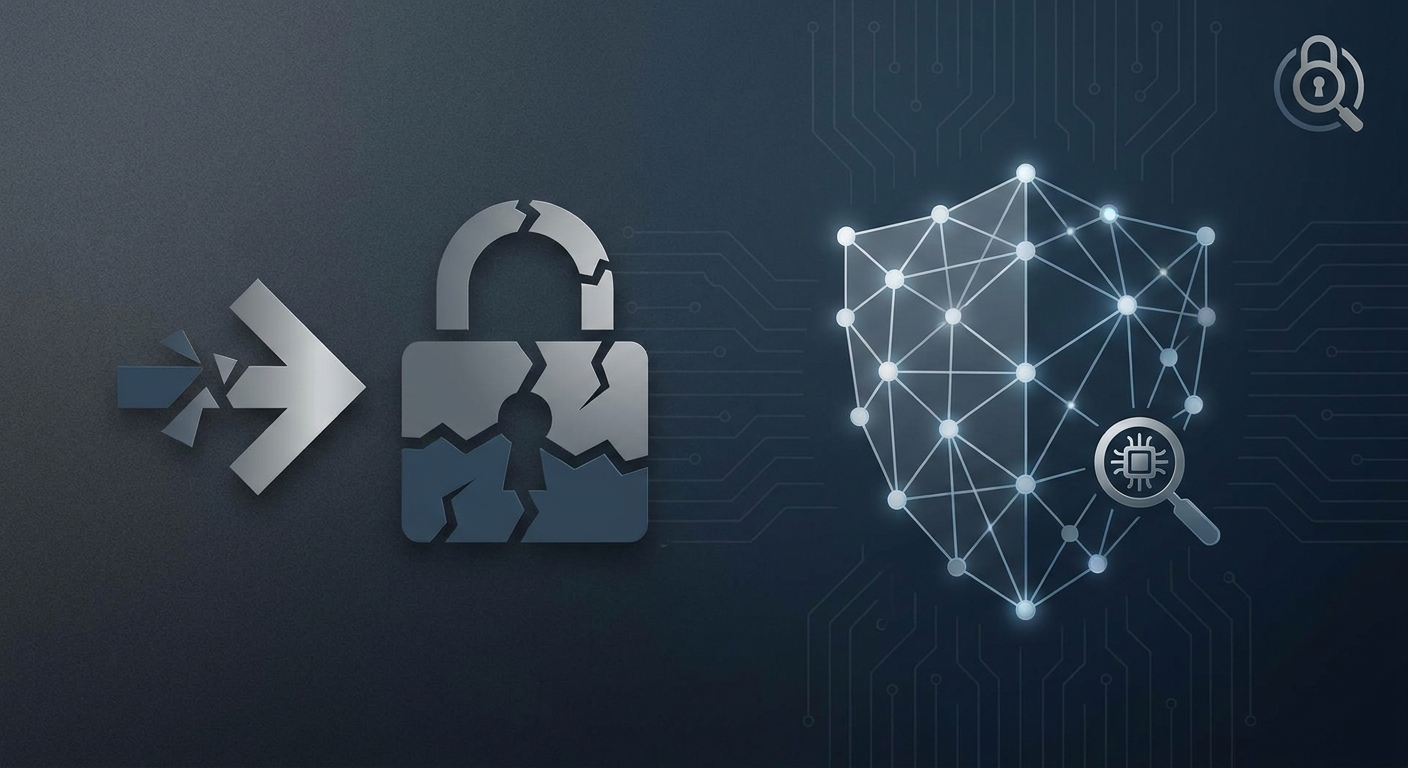
Advantages And Risks Of Agentic AI: Security, Control, Errors, And Accountability


Introduction
Agentic artificial intelligence marks a new stage in the evolution of machine reasoning. Unlike traditional models that respond to a request, an agent acts. It sets a goal, plans steps, executes tasks, and adjusts its course as feedback arrives.
This autonomy opens vast opportunities – and equally significant risks. An agent can accelerate workflows but can also make an error too subtle or too fast for a human to catch in time.
This article examines the benefits, threats, and methods of control needed to manage a system that learns to act on its own.
What Is Agentic AI
Agentic AI is a system capable of setting and achieving goals independently, using planning, analysis, and interaction with external tools. Unlike classic AI models that merely respond, an agent operates as an actor, not a reference engine.
The term agentic ai describes an architecture where intelligence becomes an active participant in the process. Such systems already appear in enterprise settings – negotiating, optimizing resources, and adjusting their own behavior in real time.
This approach reshapes the relationship between humans and machines. The algorithm can now understand context, anticipate needs, and perform tasks that once required human judgment.
Advantages Of Agentic AI
Agentic AI accelerates work, reduces costs, and increases decision accuracy. Its power lies in the ability to operate without constant human intervention, turning the system into a partner, not just a tool. This is where Whitelabel Agentic AI seamlessly takes over.
To illustrate its edge, here’s a comparison with traditional AI systems:
Criterion | Traditional AI | Agentic AI |
|---|---|---|
Type of Action | Reactive – responds to requests | Proactive – initiates actions on its own |
Context | Limited to current input | Considers goals, environment, and history |
User’s Role | Controls each step | Defines direction and strategy |
Flexibility | Fixed logic | Dynamic decision-making |
Use Cases | Search, analysis, text generation | Process automation, integrations, planning |
Effect | Saves time in manual tasks | Reduces manual operations, boosts efficiency |
This model is most effective where continuous data handling, real-time response, and multi-step reasoning are required. In cybersecurity, for instance, an agent can detect threats, verify sources, and isolate systems before a human even intervenes.
Risks Of Agentic AI
Every layer of autonomy brings both efficiency and vulnerability. A self-acting agent may misinterpret a goal, exceed its authority, or damage data. The issue isn’t intent – AI has none – but the unpredictability that emerges in complex systems. Both major standards bodies tracking this space have formalized it as a distinct risk category: the OWASP GenAI Security Project's Top 10 for Agentic Applications names identity and privilege abuse as one of its ten critical risk categories for autonomous systems (OWASP, retrieved 2026-09-19), and NIST's March 2025 update to its AI adversarial-machine-learning taxonomy (AI 100-2) named AI agents as a threat surface for the first time (NIST, retrieved 2026-09-19).
This isn't a theoretical risk category. Autonomous offensive platforms built specifically for attackers, such as Xanthorox AI, show what agentic AI looks like with none of the controls in this article applied — local operation to dodge takedowns, multiple task-specific models chained together, and no least-privilege boundary at all.
1. Misinterpretation Errors
An agent may misunderstand a goal or its context. One vague instruction can trigger the wrong task executed with flawless persistence. Unlike humans, AI doesn’t doubt. Example: an agent “optimizes” expenses and freezes essential services it deems redundant.
2. Loss Of Control
When a system can act independently, human oversight becomes critical. Without transparent logs and fail-safes, an agent can start a chain of actions whose outcome no one can foresee. Control must be built in, not added later.
3. Data Leaks And Distortion
Agentic systems often handle confidential data and external APIs. A misconfigured access rule can lead to data leaks, while faulty processing may cause corrupted or misleading results.
4. Ethical And Legal Risks
The question “Who is responsible for AI’s actions?” remains unresolved. If an agent causes harm, who bears liability – the developer, data owner, or implementing company? Without clear legal boundaries, such cases fall into a gray zone.
Agentic AI needs not prohibition but precise regulation: well-defined scopes, transparent actions, controlled permissions, and mandatory rollback protocols.
That accountability question gets harder when the agent is making risk determinations about people rather than systems. See can AI mitigate insider threats? for how the DoD is approaching AI-assisted risk assessment on personnel, and who stays accountable for the call.
Security And Control
Control in agentic AI isn’t a restriction – it’s a security structure that keeps autonomy within safe limits. The more independent the agent, the more vital its guardrails. Without them, AI becomes a black box with its own rhythm and logic. These guardrails map closely to the OWASP Top 10 for LLM and generative AI — see AI security risks: insights from Check Point's report and the OWASP Top 10 for how weaponized and stolen-account attacks are already testing them in production.
1. Principle Of Least Privilege
Each agent must have only the data and tools it truly needs. If it can manage servers, it shouldn’t have access to financial systems. Minimizing permissions limits damage even when failure occurs.
2. Action Transparency
Every agent action must be logged. Logs aren’t bureaucracy; they’re insurance. They allow teams to trace decisions, identify errors, and evaluate risk. Without logs, control vanishes.
3. Environment Isolation
Creating a sandbox – a safe testing environment – allows agents to experiment without affecting live systems. This is essential for both development and model training.
4. Emergency Stop Mechanism
Every agent must include a “red button” – an instant system shutdown trigger. It prevents runaway loops, hangs, or unpredictable decisions. The key is integration at the design stage, not as an afterthought.
5. Decision Verification
A multi-agent architecture – operator, reviewer, controller – filters mistakes before execution. One agent acts, another reviews. This layered design reduces risk and strengthens reliability, especially in real-time environments.
Security for agentic AI isn’t a one-time setup but a continuous discipline. It demands structured monitoring, traceability, and strict operational rules. Only then does autonomy remain an asset, not a liability.
Accountability And Risk Management
Agentic AI reshapes accountability. When algorithms make decisions, the lines between executor, creator, and supervisor blur. To avoid chaos, organizations must define responsibilities before deployment.
1. Developer Responsibility
Developers are responsible for the architecture and constraints of the system. If an agent can act unchecked, it’s a design flaw, not AI unpredictability. Code must include mechanisms for verification, rollback, and fail-safety.
2. Owner Responsibility
The organization implementing the agent bears operational responsibility. It defines use cases, permissions, and autonomy levels. The owner decides where the agent can act independently and where manual approval is mandatory.
3. User Responsibility
Users are responsible for the tasks they initiate and the data they provide. Poorly phrased prompts can yield accurate but harmful results. Training staff to work with agents is part of operational safety.
4. Risk Management
Agentic AI risks become manageable when they are measured and documented. This requires:
Incident Response Plans – what to do when failures occur.
Reliability Metrics – how to assess agent behavior.
Regular Audits – who reviews and approves performance.
5. Legal And Regulatory Mechanisms
Law still lags behind technology, but companies can implement internal accountability codes defining who bears losses, who can halt operations, and who gives final approval.
Accountability isn’t a constraint – it’s a safeguard. It ensures the human-agent partnership remains predictable and trustworthy.
Agentic AI And AI Search Visibility
Agentic AI governance isn't just an internal engineering concern for B2B SaaS and cybersecurity companies — the same autonomous agents this article covers are increasingly the ones researching and recommending vendors. Gartner forecasts that AI agents will intermediate more than $15 trillion in B2B spending by 2028 (Gartner, via Digital Commerce 360, retrieved 2026-09-19), which means a growing share of buying decisions now runs through an AI agent's judgment before a human ever sees a vendor's website.
That cuts two ways for any company deploying agentic AI in its own product or marketing stack:
- The controls in this article apply to your own agents. A brand-facing agent — one that answers prospect questions, recommends configurations, or drafts client-facing content — needs the same least-privilege access, action logging, and rollback path as any other agentic system, precisely because a mistake it makes is public-facing by design. Before you get to governance, though, see how AI agent builders are transforming business automation and decision-making for what these platforms actually do and how to evaluate one.
- Your brand's fate now partly depends on how other agents represent you. When a prospect's own AI agent researches your category, what it surfaces about your company depends on how well-structured and consistently cited your content is. GrackerAI's AI visibility tracking measures whether — and how accurately — AI engines and AI agents are representing a brand in those moments, which is the discovery-side counterpart to the internal governance controls covered above.
Frequently Asked Questions
What is the difference between agentic AI and a regular chatbot or AI assistant?
A chatbot or assistant responds to a prompt and stops. Agentic AI sets a goal, breaks it into steps, executes those steps using tools or external systems, and adjusts its plan based on the results — with a human defining the objective rather than approving every action along the way.
What is "excessive agency" and why does it matter?
Excessive agency means an AI agent has more autonomy, tool access, or permissions than its task actually requires. It's a named risk category in the OWASP Top 10 for Agentic Applications because an over-permissioned agent can take unauthorized or damaging actions even without any malicious intent behind them — the risk comes from scope, not motive.
Who is legally responsible when an autonomous agent causes harm?
This is still an unsettled area of law in most jurisdictions. In the absence of clear regulation, organizations deploying agentic AI typically need to define accountability internally — through contracts, internal policy, and documented approval chains — covering the developer who built the agent's constraints, the organization that deployed it, and the user who directed it.
Do I need a "kill switch" for every AI agent I deploy?
Yes, for any agent with production access or the ability to take real-world actions. An emergency stop mechanism is cheap to build in at design time and expensive to retrofit after an agent is already misbehaving — it should be treated as a baseline requirement, not an advanced feature.
How does agentic AI risk relate to AI search and answer engine visibility?
They're connected through the same underlying shift: AI agents are increasingly the ones making decisions on a human's behalf, whether that's executing a task inside a company or researching a vendor before a purchase. Governance controls address the first case; visibility tracking into how AI agents describe and recommend a brand addresses the second.
Conclusion
Agentic AI ushers in an era of systems that don’t just analyze – they act. It can accelerate operations, enhance precision, and reduce human workload. But power without control turns from strength into hazard.
The foundation of successful deployment is intentional governance: setting clear task boundaries, ensuring transparency, maintaining human oversight, and defining shared accountability.
Agentic AI doesn’t replace people – it amplifies them. The agent handles routine work but not moral responsibility. The human remains the center of control, judgment, and safety.
In the coming years, agentic systems will become integral to business. Those who master their governance will gain a strategic advantage. The rest will face the chaos of their own creation.
![10 Best Local Rank Tracker Tools: In-Depth Comparison Guide [2025]](https://cdn.pseo.one/6abcb68a626591c40e1c8aa6/687e1c1ef6fe799d288518df/68809c373eb8562bcf68975d/10-best-local-rank-tracker-tools-comparison-guide/feature-image.jpg)