The Competitive Growth Hack: Leveraging Industry Rivals

TL;DR
- Shift from passive attraction to active competitive displacement strategies.
- Target 'Zombie Subscriptions' by solving specific frustrations with current providers.
- Leverage the BIC Framework to monitor competitor support failures.
- Focus on high-intent users already sold on your product category.
- Convert rival dissatisfaction into lower-cost, high-ROI customer acquisitions.
The "blue ocean"? Forget it. For 99% of industries, that dream is dead.
In 2026, you aren’t walking into an open field; you are stepping into a cage match. Here is the uncomfortable truth about scaling in a saturated economy: "New" users are a myth. Almost everyone you want to sell to is already paying someone else.
To grow now, generating awareness isn't enough. You need to master Competitive Displacement. You need to win them over, one dissatisfaction at a time.
This isn't about petty brand wars on X (formerly Twitter). It’s about systematically finding where your rivals are dropping the ball and catching it before the ink on the cancellation email is dry. Traditional marketing screams into the void, hoping someone hears. Displacement marketing listens for the whisper of frustration.
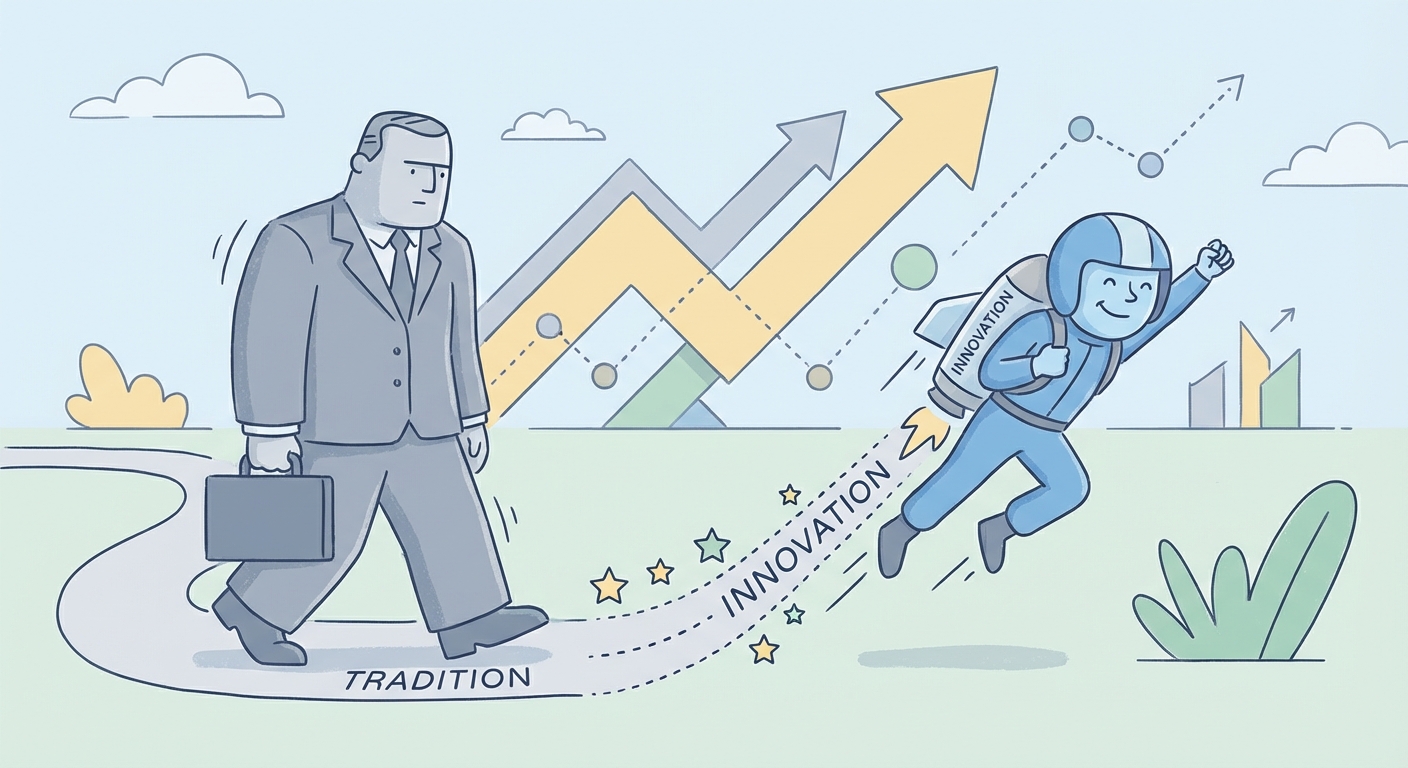
But before we get into the tactics of rival interception, get this straight: this requires a shift in mindset. You have to move from passive attraction to the active art of growth hacking.
Why Competitive Displacement is the New Acquisition
Let’s look at the math. The numbers don’t care about your brand feelings.
Acquiring a "net new" lead—someone who has never used a tool like yours—is painfully expensive. You have to educate them on the problem, agitate the pain, and then sell the solution. It’s a heavy lift.
Contrast that with the "Zombie Subscription" market.
These are users currently paying for a competitor. They are problem-aware. They know they need the software. But they are unhappy. They’re dealing with bugs, slow support, or surprise price hikes. They stay because switching feels like too much work.
The economic logic is straightforward, even without a single industry-wide benchmark to cite: a displacement prospect is already sold on the category, just not the provider, which is a shorter and cheaper path than educating someone from zero on why they need a tool like yours at all.
Your competitor’s failures are your best content strategy. When you position your product not just as "better," but as the specific antidote to their current headache, you win. For a deeper look at why stealing deals is the highest ROI activity you can do, check out this displacement guide on the economics of the switch.
Phase 1: The "BIC" Listening Framework
Most companies suck at "social listening." They listen for mentions of their own brand (Vanity) or their industry (Noise).
The real money is in the "C" of the BIC Framework: Competitor Listening.
Think of this as the "Epson vs. HP" strategy. Don't monitor the competitor's main marketing handle. That’s useless. Monitor their support handles. Set up streams for terms like @[Competitor]Support combined with keywords like "fail," "broken," "waiting," or "DM."
When a user tweets, "Hey @BigCorp, I've been on hold for 45 minutes, this is ridiculous," that isn't a complaint. That is a lead.
The Ethical Interception
Don't be the creep sliding into DMs saying, "Buy us instead." That’s spam. Slide in with a life raft.
- Bad: "Check out our tool, it's faster."
- Good: "Ouch, 45 minutes is brutal. If you need to get that report done today, we have a free lite version. No credit card needed. Might save your afternoon."
You aren't selling; you are saving them from a bad day. To do this at scale, you can't rely on hitting refresh manually. You need the right stack. Check out our guide on tools for competitive analysis to automate this dragnet.
Phase 2: The "Broken Backlink" Heist (SEO Strategy)
Competitors get lazy. They delete old blog posts, retire features, or change URL structures without setting up redirects.
This creates "link rot"—dead 404 pages that still have high-authority backlinks pointing to them from heavy hitters like Forbes, TechCrunch, or industry blogs.
This is your shot at a Broken Backlink Heist.
The Process:
- Scan: Use an SEO tool to crawl your competitor's domain. You are hunting for 404 errors.
- Identify: Find a dead page with significant backlinks. Maybe they wrote a "2023 Industry Report" that is now offline.
- Create: Write a better, live, updated version of that resource on your site.
- Outreach: Email the site owners linking to the dead page. "Hey, I was reading your article and noticed the link to [Competitor's Report] is broken. I actually just published a 2026 update on the same topic. You might want to swap it out so your readers don't hit a dead end."
It’s the evolution of the classic Skyscraper Technique, but you're targeting dead assets. You do the webmaster a favor by fixing their broken site, and in return, you steal the authority your competitor threw in the trash.
Phase 3: Content Infiltration & Comparison Hubs
A single "Us vs. Them" blog post is cute, but it’s not a strategy. To truly displace a rival, you need Comparison Hubs.
Sophisticated buyers search for nuance. They aren't just typing "CRM software." They are typing "[Competitor] alternative for real estate agents" or "[Competitor] pricing hidden fees." You need to capture this intent with Programmatic SEO, creating tailored landing pages for every variation.
Start by identifying the seed keywords your competitors dominate to map out your attack plan. Once you have the keywords, you need the copy. Don't guess what people hate about your rival—let them tell you.
Go to G2 Competitor Reviews or Capterra. Filter their reviews by 1 and 2 stars. Copy the exact phrases users type.
- User Review: "Their dashboard looks like it was built in 1999 and it crashes when I export PDF."
- Your New H1: "Modern Dashboards That Never Crash on PDF Export."
Mirror their pain back to them using their own vocabulary.
Phase 4: Product-Led Wedges (The "Trojan Horse")
Content is good; tools are better. A whitepaper might convert at 2%. A useful tool converts at 30%+.
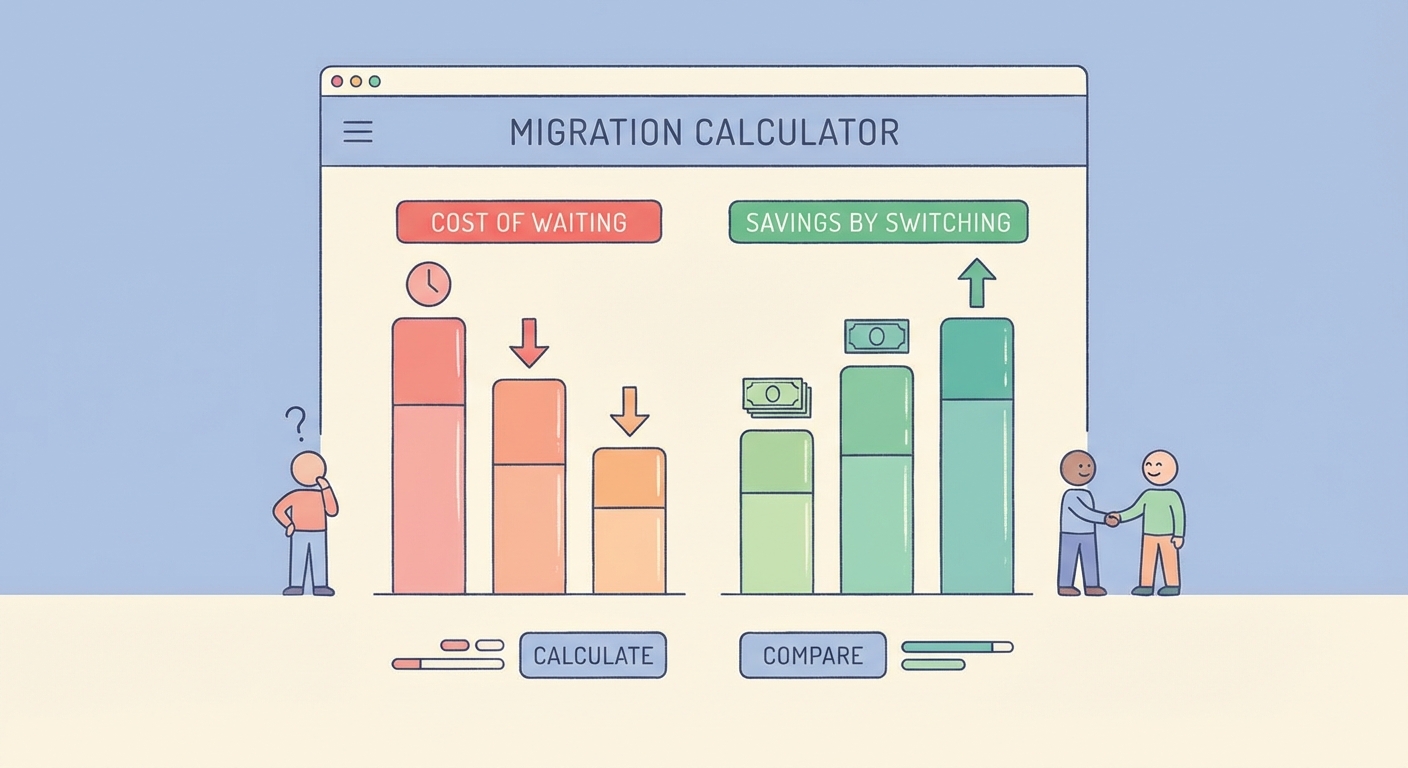
Instead of writing a 2,000-word article on why you are cheaper, build a "Competitor Price Calculator." Let the user plug in their current plan, their number of seats, and see—in bright red numbers—exactly how much money they are burning.
The "Free Forever" Trap
The market is shifting back to Freemium. A 14-day free trial is a wall; it forces a decision before the habit is formed.
A "Free Forever" plan (even if limited) is a trap. It allows a user to start using your tool for a side project, slowly migrating data over, until they are fully dependent on your ecosystem. By the time they hit the paywall, they have already switched mentally.
Dynamic Targeting
You can get even more aggressive. Tools like BuiltWith allow you to detect competitor software on a lead's site before you even reach out. If you know a visitor is using HubSpot, your landing page shouldn't say "Best Marketing Tool." It should say, "The HubSpot Alternative That Doesn't Cost a Fortune."
Mastering these technical displacement strategies requires a specific set of skills, blending marketing psychology with product engineering. For a guide on the capabilities required, read our breakdown on what growth hacking is and how to master it.
Ethical "Poaching": Where is the Line?
Aggressive does not mean unethical. But there is a fine line between displacement and defamation.
The Golden Rule of Rival Leverage is simple: "Don't bash. Bridge." (Hat tip to Brooke B. Sellas).
Never lie about a competitor. Never say they are "terrible" without proof. Simply highlight the gap between what they promise and what they deliver.
- Legal: Bidding on a competitor's brand name in Google Ads (e.g., bidding on "Salesforce" so your ad shows up).
- Illegal: Using their trademarked name in your ad copy text (e.g., "We are better than Salesforce").
Position your tactics as a rescue mission. You are saving customers from bad support, clunky interfaces, and unfair pricing. When you frame it as advocacy for the user, "poaching" becomes "liberating."
Phase 5: Winning the Recommendation Inside AI Answers
Every phase above assumes the battle happens on a results page you both compete for. Increasingly, it happens inside an AI model's answer, where only a handful of brands get named at all. G2's research found that half of B2B software buyers now start their vendor research inside an AI chatbot instead of a search engine (G2, retrieved 2026-09).
That changes what displacement looks like. Instead of only out-ranking a rival, you're competing to be the source an AI model trusts enough to cite. Understanding how AI engines decide which brands to name is the newest phase of competitive intelligence, run with the same rigor as the phases above: know where you stand today, then work the gap. That displacement mindset is one piece of a broader B2B motion -- see B2B growth hacking strategies for business development for how it fits alongside proof amplification, reverse demos, and AI-integrated outreach.
Conclusion: Speed is the Ultimate Hack
In 2026, the winner isn't the company with the most features. It's the company that solves the frustration fastest.
Your competitors are giving you a roadmap to their churned customers every single day through support tickets, bad reviews, and broken links. The only question is: are you watching closely enough to intercept them?
Don't just read this. Audit your top three competitors today. Find the one-star reviews. Find the broken links. Launch one displacement campaign this week.
The market isn't waiting for you to be polite.
FAQ Section
Q1: Is bidding on competitor brand keywords illegal? Answer: Generally, no. It is a standard PPC strategy to bid on competitor terms. However, you strictly cannot use their trademarked name in your actual ad copy text. That infringes on trademark laws. Keep the brand name in the keywords, not the ad.
Q2: How do I find my competitor's unhappy customers? Answer: Use social listening tools to monitor their support handles or track "sentiment keywords" like "[Competitor Name] + sucks/broken/slow." You can also filter reviews on G2 or Trustpilot by 1-star ratings to see recent complaints.
Q3: What is a "Displacement Campaign"? Answer: It's a marketing campaign specifically designed to convince a competitor's current customers to switch to you. Unlike brand awareness (which targets strangers), displacement targets users who already know the category but hate their current provider.
Q4: How does the "Broken Backlink" strategy work? Answer: Find a 404 (dead) page on a competitor's website that still has other sites linking to it. Create a working version of that content on your site, then email the linking websites suggesting they replace the dead link with your live one.
Q5: Why is "Free Forever" better than a Free Trial for displacement? Answer: A time-limited trial forces a purchase decision before a habit has formed. A "Free Forever" tier, even a limited one, lets a user migrate data from a competitor at their own pace until they are dependent on your ecosystem before they ever see a paywall. There is no single industry-wide retention multiplier to cite here — the mechanism, not a specific ratio, is the reason it works.
![10 Best Local Rank Tracker Tools: In-Depth Comparison Guide [2025]](https://cdn.pseo.one/6abcb68a626591c40e1c8aa6/687e1c1ef6fe799d288518df/68809c373eb8562bcf68975d/10-best-local-rank-tracker-tools-comparison-guide/feature-image.jpg)