Discovering the Five P's of Brand Positioning

Govind Kumar · Co-founder/CPO
Why positioning is the heart of your marketing strategy
Ever feel like you’re just screaming into a void while your competitors somehow always get the “yes”? Honestly, it’s usually because their positioning is tight while yours is just… there.
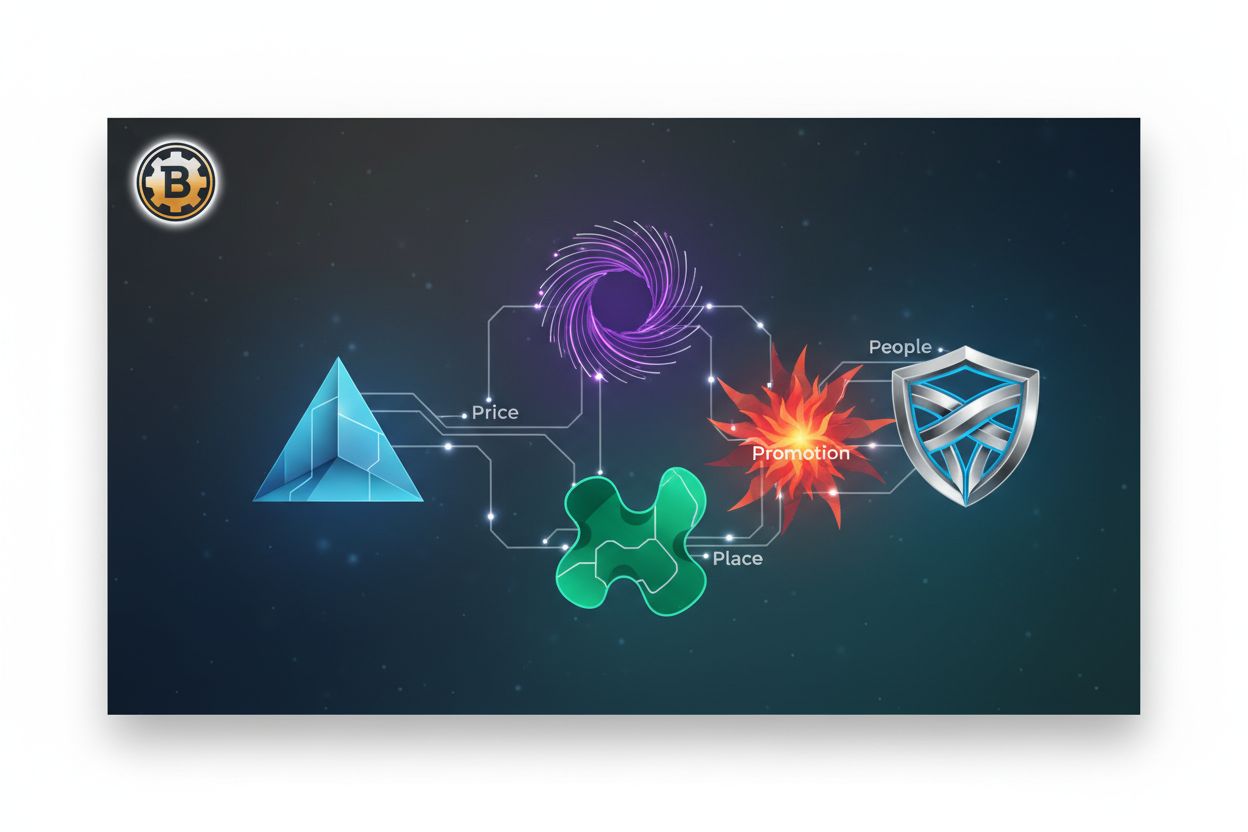
We grew up on the traditional marketing mix—the old school 4 Ps: product, price, place, and promotion. (The 4Ps of Marketing Aren’t Dead They Just Changed Names) But man, things changed. Today, we’re moving away from that old model toward a new framework that actually fits the digital age. We call these the Five Ps of Brand Positioning: Purpose, Promise, Personality, Proof, and Place.
In retail, it’s the difference between a generic shirt and a brand that promises ethical sourcing. In healthcare, it’s moving from “we treat sickness” to “we empower wellness.” A 2023 report by Zeno Group shows consumers are 4x more likely to purchase from brands with a strong purpose. (Unveiling The 2020 Zeno Strength of Purpose Study - Zeno Group) If you’re just competing on price, you’re already losing the race to the bottom.
Especially with ai making it easy to churn out “meh” content, a human-centric brand position is your only real moat.

Good positioning isn’t just fluffy marketing talk—it’s about math. When your message is clear, your CAC (Customer Acquisition Cost) drops because you aren’t wasting ads on people who don’t care.
- Finance: A bank focusing on “financial freedom for freelancers” converts better than one saying “we have accounts.”
- SaaS: Positioning as “the tool for busy moms” beats “general task manager” every time.
By narrowing your focus, you actually expand your profit. It’s weird but it works. Next, let’s look at how we actually build this out starting with the first P.
Breaking down the Five P’s
So, you got your big idea, but why should anyone actually care? If you can’t answer that in ten seconds, you’re basically just background noise in a very crowded room.
1. Purpose
The first P is Purpose. This is your north star—it’s the reason you aren’t just selling a commodity. It’s funny because companies often get stuck in the “what” (we make software) and forget the “why” (we give people their weekends back). When your purpose is clear, your marketing basically writes itself because you’re solving a human problem, not just pushing a sku.
2. Promise
Then you have the Promise. This is the specific value you’re swearing to deliver every single time. If you’re a healthcare provider, your promise might be “no waiting rooms,” which is way more powerful than “quality care.”
According to a 2022 report by Razorfish, 82% of consumers say they buy from brands that stand for a greater mission or purpose.
3. Personality
Now, how do you actually talk to people? That’s your Personality. If you’re a fintech app for gen z, you probably shouldn’t sound like a 1950s banker. Your brand voice on social media needs to feel like a real person—sometimes messy, always authentic. It’s what makes people stop scrolling.
4. Proof
But talk is cheap, right? That’s where Proof comes in. In a world of fake news and ai-generated fluff, people want receipts. This is where you use your first-party data. Don’t just say “we’re the best”; show a chart of how 90% of your users saved money in their first month. Real data is the ultimate “trust me” signal.
5. Place
Finally, there’s Place. Now, don’t get confused—this isn’t just the old-school “physical shelf space” definition. In our new model, Place has evolved into a digital omnichannel presence. It’s about being where your customers are hanging out, whether that’s a niche discord server or a LinkedIn feed. It’s not about being everywhere; it’s about being in the right digital spaces.
- Retail: A sustainable clothing brand uses “Proof” by showing the exact factory where a shirt was made.
- SaaS: A project management tool uses “Personality” by sending “you’re doing great” notifications instead of boring alerts.
- Finance: A credit union finds its “Place” by hosting webinars for first-time homebuyers on YouTube.
Anyway, once you’ve got these bits figured out, you need to make sure you aren’t just guessing. Next, we’ll look at how to weave these five Ps into your actual marketing funnel.
Integrating positioning into your digital marketing funnel
So, you’ve got your positioning all figured out, but now comes the hard part—actually making it show up in your marketing. It’s one thing to say you’re “different,” but it’s another thing entirely to prove it when someone’s just scrolling through their inbox at 8 AM.
If your funnel doesn’t scream your brand’s purpose at every stage, you’re basically just paying for expensive clicks that don’t go anywhere. You gotta weave those Five Ps into everything from your top-of-funnel blogs to your “please don’t leave” cart abandonment emails.
The biggest mistake I see is brands being “cool” on social media but then turning into a boring textbook the second you land on their website. Consistency is the whole game here.
- Top of Funnel (Awareness): Stop writing generic “how-to” guides. If your positioning is about “security for the little guy,” your seo blogs should tackle threats that specifically hurt small businesses, not enterprise-level stuff.
- Middle of Funnel (Consideration): This is where your Proof lives. Use webinars or newsletters to show real results.
- Bottom of Funnel (Conversion): Your checkout page should still feel like you. Don’t let a generic “Buy Now” button ruin the vibe you’ve built up.

Honestly, keeping this stuff consistent is a total nightmare when you’re trying to scale. This is where niche tools can help solve the consistency problem. For example, in the cybersecurity crowd, teams use grackerai to automate the heavy lifting. It takes a specific brand voice and pumps it into newsletters and seo-optimized blogs so the message doesn’t get watered down.
It’s not just about “writing content”—it’s about making sure the content actually sounds like you and sticks to your positioning without you having to micromanage every single word. According to a 2023 report by Demand Metric, consistent brand presentation across all platforms can increase revenue by up to 23%. That’s a lot of money to leave on the table just because your blogs feel “off.”
Anyway, once you’ve got the funnel flowing, you need to know if people actually care about what you’re saying. Next, we’re gonna talk about how to measure if your positioning is actually hitting the mark or just falling flat.
Measuring success and iterating
So you built the perfect brand strategy, but how do you know if it’s actually doing anything besides looking pretty in a slide deck? Honestly, if you aren’t tracking how people feel about you, you’re just driving with your eyes closed.
Tracking “vibes” sounds impossible, but it’s really just about looking at the right data points. I usually start with sentiment analysis to see if the way people talk about us matches our Purpose.
- Cohort Analysis: Look at your long-term users. Are the people who joined because of your new “mission-driven” messaging sticking around longer than the ones who just wanted a discount?
- A/B Testing: Try two different ad hooks—one focused on price and one on your brand Personality. If the personality one has a higher LTV, you know your positioning is hitting home.
- Brand Search Volume: If more people are googling your specific name instead of generic terms like “best running shoes,” your positioning is working.
A 2023 study by Sprout Social found that 64% of consumers want brands to connect with them, and you can’t measure that connection just by looking at clicks. You need to see if they’re actually engaging with your story.

Also, don’t sleep on voice search optimization. People talk to Alexa differently than they type into Google; they use more natural, “human” phrasing. If your brand doesn’t sound like a real person, you’re going to get left behind in those voice results.
Positioning isn’t a “set it and forget it” thing—it’s a living part of your business. At the end of the day, these Five Ps are the heart of your strategy because they turn a cold product into something people actually want to be a part of. Keep testing, keep listening, and don’t be afraid to get a little messy with your data until it tells a clear story. If you can nail the “why” behind what you do, the “how” usually takes care of itself.
Related Articles
-
 product-led growth
 Product-Led Growth (PLG) in SaaS: A Comprehensive Guide
Learn how to implement Product-Led Growth (PLG) in your SaaS business. Drive customer acquisition, retention, and revenue using your product as the primary engine.
-
 Product Lifecycle Management
 Mastering Product Lifecycle Management for Brand Success
Learn how Product Lifecycle Management enhances brand strategy, marketing, and customer journey.
-
 AI predictive analytics
 AI-Driven Predictive Analytics for GTM Strategy: A Comprehensive Guide
Discover how AI-driven predictive analytics is revolutionizing Go-To-Market strategies, enhancing brand positioning, product marketing, and customer acquisition.
-
 generative AI
 Unlocking Creativity: How Generative AI is Revolutionizing Content Creation
Explore how generative AI is transforming content creation across various marketing disciplines. Learn about tools, strategies, and the impact on brand positioning, SEO, and customer engagement.