Top Growth Hacking Tactics for Digital Marketing Success

Abhimanyu Singh · Engineering Manager & AI Builder
· Updated September 22, 2026
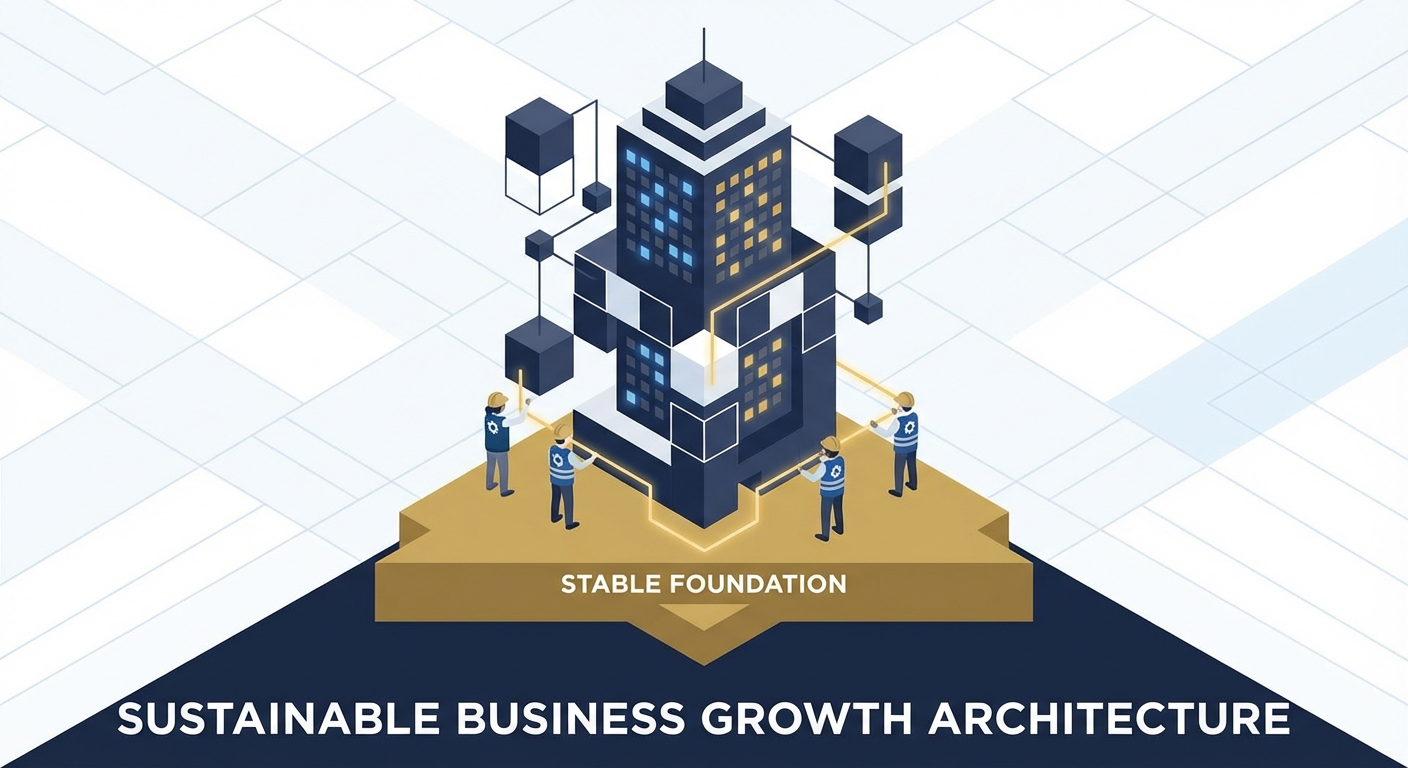
The “growth hack”—that desperate, late-night hunt for a magic button to turn a basement startup into a unicorn—is dead. Bury it.
In 2026, growth isn’t about finding a back-door loophole in an algorithm. It’s about building a fortress. It’s about architecture that compounds while you sleep. If you’re still wasting time on mass-automated DMs or buying links from sketchy farms, you aren’t “hacking” anything. You’re just digging your own digital grave.
Real growth today happens at the intersection of three things: AI that actually helps people, a brutal commitment to owning your own data, and a community that would actually miss you if you disappeared tomorrow.
Is “Growth Hacking” Even a Real Thing Anymore?
People love to call growth hacking “get rich quick” for marketers. But strip away the hype, and the core philosophy—run fast, test everything, analyze the hell out of the data—is more important than ever.
We’re just moving from “Growth Hacking” to “Growth Marketing.”
The mindset stays the same: write a hypothesis, run a lean test, check the numbers, and iterate. The difference? Sustainability. We’ve moved from exploiting platform bugs to building defensible systems. If your entire business model depends on a single social media algorithm, you don’t have a strategy. You have a dependency. By shifting focus toward data-driven marketing services, you stop chasing fleeting trends and start building an asset base that belongs to you, not some billionaire’s platform.
From SEO to GEO: The New Rules of Search
For a decade, we were obsessed with “blue links.” We stuffed keywords into meta tags like we were playing a game of digital chess, hoping to trick Google into liking us.
That game is over. Welcome to the age of Generative Engine Optimization (GEO).
Users don’t want a list of ten websites to click through anymore. They want an answer. They want a synthesized, direct response from an AI interface like ChatGPT or Gemini. If you want to win, your content has to stop being a “page” and start being an “answer.”
The goal is to be the primary source the AI cites. You get there by providing high-density, context-rich information that hits the user’s intent square in the jaw. Structure your content to be modular. Use clear headings, bulleted summaries, and semantic data that makes it effortless for an LLM to digest and attribute back to your site.
graph LR
    subgraph Traditional_SEO
    K[Keyword] --> P[Page Link/Rank]
    end

    subgraph GEO
    Q[User Question/Intent] --> C[Contextual Snippet/Data]
    C --> A[AI Citation/Answer]
    end
First-Party Data: The Only Gold That Matters
The “cookieless” future isn’t some scary thing coming down the road—it’s here. When you rely on third-party tracking, you’re building your house on rented land. One privacy update from Apple or Google, and your visibility vanishes into thin air.
This is why first-party data—info you collect directly from your audience—is the new gold standard.
Think of it as a value exchange. Why should a user hand over their email? They won’t do it for a generic newsletter. They’ll do it for a tool, a personalized assessment, or a gated resource that actually fixes their problem. By setting up preference centers and interactive quizzes, you gather zero-party data that lets you segment your audience with surgical precision. If you’re looking to sharpen your capture strategy, digging into AI content optimization tools can help you align your outreach with the specific intent signals you’ve gathered. Effective campaign strategies for business growth covers this same first-party-data-as-currency shift in more depth, alongside GEO and hyper-personalization.
Stop Broadcasting, Start Building a Community
Social media reach is a lie. You can spend months building an audience on Instagram, only for a shadow-ban or an algorithm update to slash your reach by 80% overnight.
The smartest brands in 2026? They stopped treating social media as a destination. They use it as a funnel to pull people into owned spaces: newsletters, Slack communities, or private Discord servers.
Think about a fitness brand that spent years chasing viral reels. They were slaves to the algorithm. By shifting to a private, member-only community, they transformed “followers” into “participants.” They stopped broadcasting and started facilitating real human connection. When you own the channel, you own the relationship. You don’t have to pay a “tax” to a platform just to reach the people who already like you.
The Myth of Personalization
We’ve hit a wall of “personalization fatigue.” According to Gen Z Personalization Trends, users are hyper-aware of when they’re being targeted by a generic template masked as “personal.”
If 76% of consumers bail when personalization feels fake, it means your “Dear [Name]” emails are actively hurting your brand.
True personalization isn’t about slapping a name on a subject line. It’s about relevance. It’s about understanding where the user is in their journey. Are they just learning, or are they ready to buy? Using AI to scale content is fine, but only if that AI is trained on your brand’s actual voice and your customer’s history. If you’re struggling to bridge the gap between “automated” and “authentic,” you need to audit your workflows. Make sure every AI-generated touchpoint is grounded in real customer insights, not just empty data points.
The Rise of “Lo-Fi” Authenticity
The era of the “perfect” ad—high-budget lighting, scripted dialogue, fake smiles—is cratering. Consumers have developed a sixth sense for corporate polish. They hate it.
The rise of The State of Influencer Marketing 2026 shows a massive shift toward micro-influencers. These creators don’t have millions of followers, but they have something better: trust. That kind of earned trust is the same currency behind what actually drives online sales.
Lo-fi, raw, “shot-on-a-phone” content performs better because it feels like a recommendation from a friend, not a pitch from a corporation. When you work with creators who value raw storytelling, you aren’t just buying ad space. You’re borrowing their credibility. Don’t script them. Give them the core value proposition and let them speak in their own voice. That’s how you bypass the “ad-blindness” that kills most campaigns.
What to Delete from Your Strategy Today
If you’re still using 2020-era tactics, you’re actively sabotaging yourself. Purge these immediately:
- Aggressive Link Farming: Google’s E-E-A-T Guidelines are clear: authority is earned through expertise, not by buying links from low-quality sites.
- Broad-Reach Automated DMs: Nothing kills a reputation faster than a bot sliding into DMs with a canned sales pitch. It’s spam. It’s a relic. It’s pathetic.
- Keyword Stuffing: Modern AI search engines can detect semantic intent. Trying to rank by repeating a phrase ten times doesn’t signal relevance; it signals incompetence.
Building a “Test-and-Learn” Engine
Growth isn’t a project. It’s a cycle. You have to institutionalize the “test-and-learn” loop. If you aren’t failing at least 30% of your experiments, you aren’t experimenting enough. Your goal is to shrink the time between having a wild idea and getting a result.
graph TD
    H[Hypothesis Generation] --> E[Execution/Experiment]
    E --> M[Measure Data]
    M --> L[Learn & Analyze]
    L --> P{Pivot or Iterate?}
    P -->|Pivot| H
    P -->|Iterate| E
Build this loop into your weekly operations. Eliminate the guesswork. Even a failed test gives you data on what not to do, which is often just as valuable as a win.
Frequently Asked Questions
Is growth hacking still relevant in 2026, or is it just “marketing”?
Growth hacking has evolved into a disciplined mindset of rapid experimentation and data loops. While the “hacks” of the early 2010s are dead, the philosophy of using data to find the path of least resistance to growth is the foundation of every high-performing marketing team today.
What is the biggest difference between SEO and GEO?
SEO focuses on ranking for keywords to drive traffic to a landing page. GEO (Generative Engine Optimization) focuses on structuring your content so that AI search assistants can synthesize your data and cite your brand as the definitive, trustworthy answer to the user’s question.
How do I start growth hacking if I have a limited budget?
Focus on high-leverage, low-cost activities: build a proprietary community (like a newsletter or private group), partner with micro-influencers who share your values, and prioritize zero-party data collection through free, high-value tools or educational assessments.
What are the most common growth marketing mistakes in 2026?
The biggest mistakes are treating AI as a “set-it-and-forget-it” replacement for human strategy, ignoring the necessity of first-party data, and failing to prioritize the user’s trust over short-term vanity metrics like clicks.
Final Thoughts: The Future is Yours to Build
Growth is a process, not a destination. In 2026, the winners will be the brands that stop chasing the algorithm and start building proprietary assets. Whether it’s the data you own, the community you’ve cultivated, or the trust you’ve earned through honest storytelling—these are the only things that will save you when the next seismic shift hits.
Stop looking for the hack. Start building the system.
Related Articles
-
 cybersecurity content audit
 How to Audit Cybersecurity Content for Accuracy and Originality
Cybersecurity content with incorrect facts destroys confidence fast. Here's a practical audit framework for correctness and originality that preserves the credibility of your security publications.
-

10 Examples of SaaS Companies with Exceptional Marketing
Explore 10 SaaS marketing examples with actionable tactics. Learn innovative strategies from top companies to elevate your own campaigns.
-

How to Find the Right B2B Prospects for Your SaaS Product
Stop wasting sales outreach on leads that're not a good fit. Learn ways to find, check, and work with the right B2B prospects for your SaaS product.
-
 online reputation management
 The Importance of SEO in Online Reputation Management
Discover how SEO influences your digital brand. Learn actionable strategies to suppress negative search results and build a positive online reputation today.