How SaaS Companies Can Win Over Operations Teams With Smarter Content


Selling software to operations teams is not like selling to marketers or sales departments. These buyers think differently. They evaluate differently. And they consume content differently.
I have spent years watching SaaS companies struggle to connect with operations professionals. The pattern is always the same. They create content that works beautifully for other audiences but falls completely flat with warehouse managers, logistics coordinators, and supply chain directors.
The disconnect runs deep. Operations teams live in a world of tangible processes, physical goods, and real consequences. A missed shipment means an angry customer. A system failure means workers are standing idle. Content that walks through exactly how a system avoids that scenario is what earns this audience's attention — see how AI is transforming predictive maintenance in industrial operations for an example of that kind of concrete, outcomes-first framing. These professionals do not have patience for fluffy thought leadership or abstract value propositions.
So how do you create content that actually resonates with this audience? Let me share what actually works.
Understanding the Operations Mindset
Operations professionals are problem solvers by nature. They spend their days putting out fires, optimizing workflows, and keeping complex systems running smoothly. This shapes how they approach vendor content.
When an operations director reads your blog post, they are asking specific questions. Will this actually work in my environment? What could go wrong during implementation? How long until we see results? They want proof, not promises.
This audience also tends to be deeply skeptical of anything that sounds too good to be true. They have been burned before by vendors who oversold and underdelivered. Your content needs to acknowledge this reality rather than pretend it does not exist.
The best operations content feels like a conversation with someone who truly understands the daily grind. It speaks to specific frustrations. It offers concrete solutions. It respects the reader's intelligence and experience.

Start With Problems, Not Products
Here is where most SaaS content strategies go wrong. They lead with features and capabilities instead of the pain points that keep operations managers awake at night.
Flip the script entirely. Your content should open with a specific challenge that your target reader faces regularly. Describe it in their language, using the terms they actually use. Show that you understand the nuances and complications involved.
Only after establishing this connection should you introduce potential solutions. And even then, frame everything around outcomes rather than technical specifications. Operations teams care about results: faster processing times, fewer errors, lower costs, happier customers.
This approach requires genuine research into your target audience. You cannot fake familiarity. Spend time talking to actual operations professionals. Visit their workplaces if possible. Read their trade publications. Join their online communities and just listen for a while.
The investment pays dividends. When your content demonstrates real understanding, readers notice immediately. They lean in instead of clicking away.
Create Content That Solves Immediate Problems
Operations teams are constantly searching for answers to specific questions. How do I reduce picking errors? What is the best way to handle returns during peak season? How can I improve communication between my warehouse and carriers?
This creates a massive opportunity for SaaS companies willing to provide genuinely helpful content. Tutorial articles, troubleshooting guides, and process templates can attract highly qualified traffic while building trust with your target audience.
The key is specificity. A generic post about "improving warehouse efficiency" will disappear into the noise. But a detailed guide on "reducing mis-ships when processing more than 500 orders daily" speaks directly to a defined audience with a defined problem.
Do not gate everything behind forms. Operations professionals are often researching solutions during brief breaks between meetings or while monitoring processes. They will not fill out a lengthy form just to access basic information. Save your lead capture for truly premium content that justifies the exchange.
Showcase Real Implementation Stories
Case studies matter enormously for operations buyers, but most case studies miss the mark. They focus too heavily on happy outcomes without addressing the messy middle.
Operations professionals want to know what actually happened during implementation. What challenges emerged? How were they overcome? What would the team do differently next time? This level of honesty builds credibility far more effectively than polished success stories.
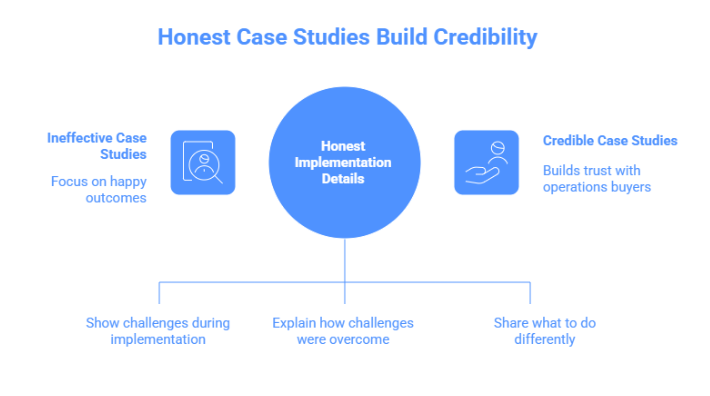
Structure your case studies around the journey, not just the destination. Include specific timelines, resource requirements, and lessons learned. Quote operations staff at multiple levels, not just executives who approved the purchase.
Video testimonials work particularly well with this audience. Seeing an actual operations manager explain how they solved a problem similar to yours carries tremendous weight. It feels authentic in a way that written testimonials cannot quite match.
Address Integration Concerns Head On
Nothing kills an operations software deal faster than integration anxiety. These teams run complex technology stacks with multiple systems that must communicate seamlessly. Any new addition creates potential points of failure.
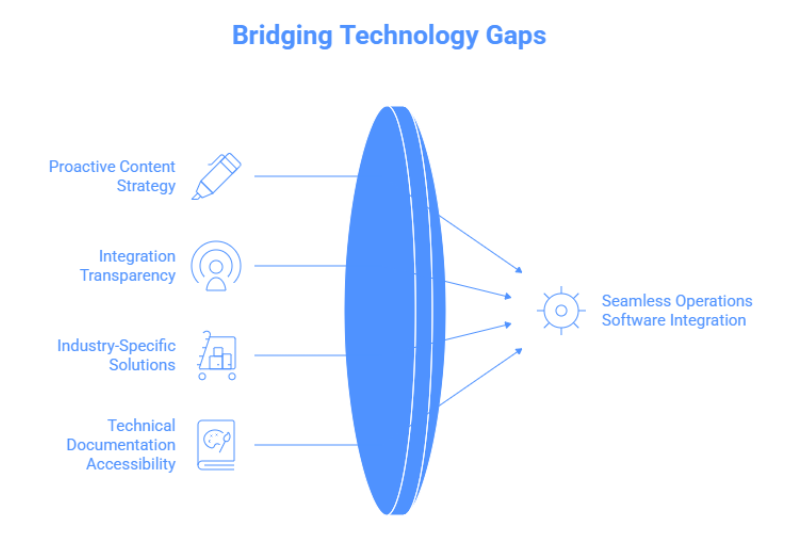
Your content strategy should proactively address these concerns. Create detailed content about how your solution works with common systems in your target industries. Be transparent about what integrations exist, what requires custom development, and what limitations remain.
This challenge is common in operations-led sectors such as supply chain and logistics, where solutions may rely on third-party EDI providers to connect retailers, warehouses, and carriers. Content that explains these connection points clearly demonstrates that you understand how modern operations technology ecosystems actually function. Asset tracking and inventory-visibility vendors face the same integration-anxiety pattern — see how asset tracking software improves visibility and control for what that content looks like when the product itself is the visibility layer.
Technical documentation should be easily accessible, not buried deep in your website. Operations teams often want to share detailed specifications with their IT departments early in the evaluation process. Make this easy for them.
Build Trust Through Technical Depth
Operations audiences can spot surface level content from a mile away. They deal with complex systems daily and expect vendors to match their level of sophistication.
This does not mean drowning readers in jargon or technical specifications. It means demonstrating genuine expertise through the depth and accuracy of your content. Get the details right. Use correct terminology. Acknowledge industry nuances that generalists would miss.
Consider creating content specifically for different technical levels within operations organizations. A warehouse supervisor has different information needs than a supply chain analyst or an IT integration specialist. Serving each audience with targeted content shows that you understand the buying committee involved in operations purchases.
White papers and detailed guides remain valuable for this audience, despite declining effectiveness in other markets. Operations professionals still appreciate comprehensive resources they can reference during evaluation processes and share with colleagues.
Leverage the Power of Comparison Content
Operations teams love comparison content. They want to understand how different approaches stack up against each other. What are the tradeoffs involved? Which option makes sense for their specific situation?
Create honest comparison content that helps readers make informed decisions. Yes, this includes acknowledging where competitors might be stronger or where your solution may not be the right fit. This honesty actually works in your favor with operations audiences who have seen too much vendor spin.
Comparison frameworks work particularly well. Instead of declaring winners and losers, give readers a structured way to evaluate options based on their own priorities. This respects their expertise while positioning your company as a helpful resource rather than just another vendor pushing a product.
Think Beyond Written Content
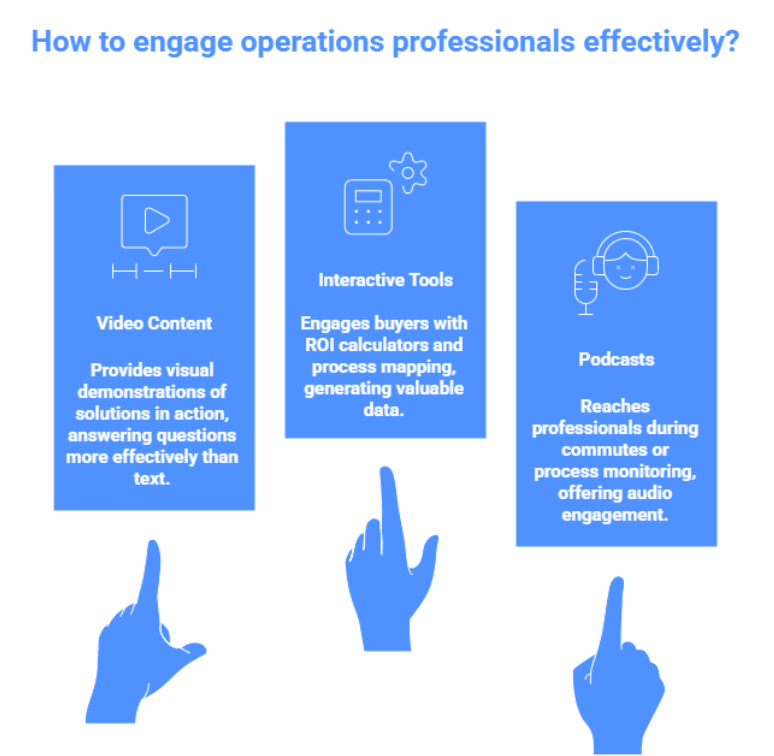
Operations professionals often prefer visual content over long form text. They are accustomed to process diagrams, flowcharts, and visual instructions. Meet them where they are.
Invest in video content showing your solution in action. Screen recordings that walk through specific workflows can answer questions more effectively than paragraphs of description. Webinars that allow for live questions tend to perform well with this audience.
Interactive tools also deserve consideration. ROI calculators, readiness assessments, and process mapping tools can engage operations buyers in ways that passive content cannot. These tools also generate valuable data about prospect needs and priorities.
Podcasts have found an audience in operations circles, particularly among professionals with long commutes or those who spend time monitoring processes. Consider launching a podcast or sponsoring existing shows that reach your target audience.
Maintain Consistency Over Time
Building credibility with operations audiences takes time. These professionals are cautious buyers who want to see sustained commitment before engaging with vendors.
Publish consistently rather than in bursts of activity followed by long silences. Operations teams notice when a company's blog goes dormant or when content quality varies wildly between posts. This inconsistency raises red flags about organizational stability. Maintaining that cadence without sacrificing the technical depth this audience expects is its own operational problem — see overcoming content workflow bottlenecks for B2B SaaS success for how to fix the specific stage that is usually slowing a team down.
Develop ongoing content series that demonstrate deep expertise in specific areas. A monthly feature exploring different aspects of a particular operational challenge can become a go to resource for your target audience. This builds the kind of authority that translates into sales conversations.
Measure What Actually Matters
Standard content marketing metrics can be misleading when targeting operations audiences. Page views and social shares matter less than engagement quality and progression through your funnel.
Track time on page for technical content. Operations professionals who find genuine value will spend considerable time reading and absorbing information. High bounce rates on detailed content suggest a mismatch between expectations and delivery.
Pay attention to content engagement patterns among prospects who eventually become customers. Which pieces consistently appear in successful buyer journeys? Double down on creating more content like your proven performers.

Final Thoughts
Creating content that connects with operations heavy industries requires a fundamental shift in approach. You must move beyond generic SaaS content playbooks and develop genuine understanding of your audience's world.
The investment required is significant. You need subject matter expertise, commitment to technical accuracy, and patience to build trust over time. But the payoff is equally significant: access to loyal customers who value substance over flash and relationships over transactions.
Start by listening more than talking. Spend time understanding the daily realities facing your target audience. Then create content that makes their jobs easier, helps them solve real problems, and treats them as the experts they are.
The SaaS companies that win in operations focused markets are those willing to earn attention through genuine value. They recognize that operations professionals have developed excellent filters for detecting empty marketing speak. They respond by creating content worthy of this discerning audience.
Your content strategy should reflect the same operational excellence your customers pursue in their own work. Be methodical. Be reliable. Be genuinely helpful. The results will follow.

![10 Best Local Rank Tracker Tools: In-Depth Comparison Guide [2025]](https://cdn.pseo.one/6abcb68a626591c40e1c8aa6/687e1c1ef6fe799d288518df/68809c373eb8562bcf68975d/10-best-local-rank-tracker-tools-comparison-guide/feature-image.jpg)