Programmatic SEO Is Dead. Programmatic Content Intelligence Is What Works Now.

TL;DR
- This article covers why traditional programmatic SEO is losing ground and how programmatic content intelligence is stepping up as the new, smarter approach. Learn how to leverage data-driven insights for better content performance, improved targeting, and more effective seo strategies, particularly within the cybersecurity and b2b saas landscapes.
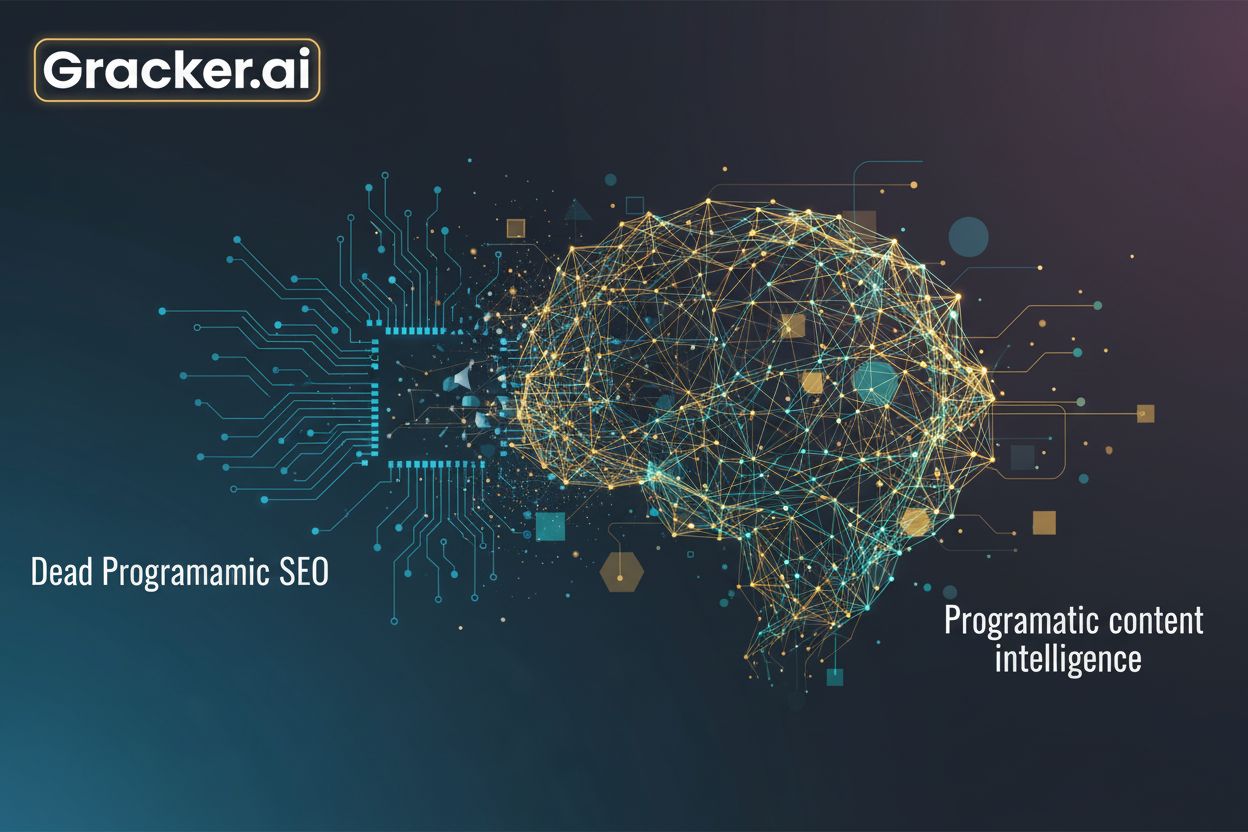
Programmatic content intelligence replaces the template-and-spreadsheet model of programmatic SEO with a data-informed process that starts from user intent instead of keyword volume. Classic programmatic SEO automated publishing — it never automated understanding what the page was for, and that gap is why Google's current spam policies now name mass-produced, low-value pages directly. This post covers why the old model broke, what content intelligence does differently, and how to apply it in B2B SaaS and cybersecurity specifically.
Key Takeaways
- Google's spam policies explicitly define "scaled content abuse" as pages "generated for the primary purpose of manipulating search rankings and not helping users" (Google Search Central, retrieved 2026-09-16) — the exact pattern classic template-driven pSEO produces at scale.
- Content intelligence starts from data about what users need — search trends, support tickets, competitor gaps — rather than from a keyword-pattern template.
- 39% of B2B marketers cite resource constraints as a top content challenge, and 89% now use AI somewhere in content creation, per Content Marketing Institute's most recent B2B research (CMI, retrieved 2026-09-16) — the bottleneck has shifted from "can we publish enough" to "can we publish the right thing."
- For B2B SaaS, content intelligence means mapping content to the specific questions a buyer asks at each stage, not just the keyword volume behind them.
- For cybersecurity specifically, it means translating technical threats into content a non-specialist buyer can act on, without losing accuracy.
On this page: What Went Wrong with Programmatic SEO · Enter Content Intelligence · B2B SaaS Growth · Cybersecurity in Action · FAQ
The Rise and Fall of Programmatic SEO: What Went Wrong?
Programmatic SEO failed at scale because it automated page production without automating page value. The model was straightforward: pick a keyword pattern, build one template, populate it from a spreadsheet, and mass-publish.
That model has four structural weaknesses:
- Automated volume, not automated value. Pages were generated from templates, not from an understanding of what the searcher actually needed.
- Keyword volume as the only signal. The goal was ranking for a pattern, not answering a specific question well.
- Minimal-transformation data reuse. Data got scraped and dropped into a template with little added context — precisely what Google's scaled-content-abuse policy now targets directly.
- Quality as an afterthought. Depth and accuracy took a back seat to publishing speed.
Google's Helpful Content system and subsequent core updates were built to catch exactly this pattern, and the correction has been direct: sites publishing thousands of near-identical, low-value pages have seen sharp ranking losses when their content mix skews heavily programmatic without proportional per-page value. Volume was never the problem on its own — pages that don't answer a distinct user need are.
Enter Programmatic Content Intelligence: A Smarter Approach
Programmatic content intelligence starts from user intent and uses data to inform genuine value creation, not just to populate a template faster. The shift is from "what can we generate at scale" to "what does the data say people actually need, and how do we serve that at scale."
Three practices define the approach:
- Data-driven strategy. Search trends, competitor content gaps, and audience behavior data identify what topics resonate and what questions remain unanswered — not what a keyword tool says has volume. A B2B SaaS company noticing repeated searches for "how to integrate [Product] with [Tool]" has found a real, specific content need, not a generic keyword pattern.
- Intent-first content mapping. The same search term can signal someone looking for information, a solution, a comparison, or a purchase decision. Content intelligence treats those as different content needs, not one page trying to serve all of them.
- Adaptive, segmented content. Rather than one page per keyword, content adapts to who's reading it — different calls-to-action or examples for different segments, built on the same underlying data layer.
The distinction that matters: programmatic SEO scaled publishing. Content intelligence scales relevance, using the same underlying data infrastructure to do it.
Leveraging Content Intelligence for B2B SaaS Growth
Content intelligence gives B2B SaaS teams a way to move past keyword-volume targeting and build content that maps to what a buyer is actually trying to solve.
| Practice | What It Replaces | What It Looks Like |
|---|---|---|
| Find real opportunities | Guessing at topics from keyword volume | Analyzing support tickets, community discussions, and competitor content gaps to find genuinely unmet needs |
| Build for depth | Short, template-driven posts | In-depth guides, comparison pages, and data-backed pieces built around a specific keyword cluster and the questions buyers ask within it |
| Optimize for extraction | Copy alone | Structured data markup and fast page loads, so both search engines and AI answer engines can parse and cite the content |
A marketing-automation company using this approach might identify a specific content gap in a competitor's coverage of AI-driven personalization, then build a genuinely more detailed guide and comparison targeting exactly that gap, rather than publishing a broad "AI personalization" template page.
For a deeper look at what replaces the old pSEO model structurally, see why traditional programmatic SEO is dead and is programmatic SEO still effective in 2026?
Cybersecurity Growth: Content Intelligence in Action
For cybersecurity companies, content intelligence is what turns technical accuracy into content a buyer can actually use — trust in this category is built on both, not either alone.
- Answer the real question. Translate technical threats into plain language without losing accuracy — a concrete walkthrough of how a specific attack works and what stops it, rather than a generic "stay secure" post.
- Make it actionable. A guide should leave the reader able to do something specific — "5 steps to secure your home Wi-Fi network" (change default passwords, enable WPA3, set up a guest network) beats "be secure" every time.
- Simplify without oversimplifying. Break down complex frameworks so a non-specialist buyer can follow the logic, while keeping the technical claims accurate enough that a specialist reader doesn't lose trust in the piece.
See 10 proven SEO strategies for cybersecurity companies for tactics specific to this vertical, and GrackerAI's competitor monitoring for finding the content gaps a competitor analysis surfaces.
Frequently Asked Questions
Is programmatic content intelligence just programmatic SEO with a new name?
No. Programmatic SEO automates publishing a template at scale. Content intelligence automates the research step before publishing — using data to decide what content genuinely serves a specific user need, then building for that need at scale. The output looks different because the input does.
Does Google still allow large-scale, data-driven content?
Yes. Google's spam policies target pages "generated for the primary purpose of manipulating search rankings and not helping users," not scale itself (Google Search Central, retrieved 2026-09-16). Large sites built on unique, current, per-page value continue to rank.
What's the biggest content bottleneck for B2B SaaS teams right now?
Resource constraints, cited by 39% of B2B marketers as a top challenge, alongside difficulty proving content effectiveness (Content Marketing Institute, retrieved 2026-09-16). It's less a production-speed problem now and more a "what to prioritize" problem.
How do I find real content gaps instead of guessing from keyword tools?
Look at what your own audience already tells you: support tickets, sales call objections, community forum questions, and where competitor content falls short on depth or accuracy. Keyword volume tells you a topic exists; it doesn't tell you what's missing from how competitors currently cover it.
Does this approach still use SEO keyword and analytics tools?
Yes, keyword and competitive-gap data is still an input, not a replacement for it. The difference with content intelligence is that data feeds a judgment about user intent and content depth, rather than directly dictating a template to fill in.
Conclusion
Content intelligence is a strategic process of audience insight, data-informed creation, and continuous optimization, not a bigger content-production machine. The teams that move from programmatic SEO to programmatic content intelligence are the ones still ranking after an update, because their pages were built to answer a specific question, not to fill a template slot.

![10 Best Local Rank Tracker Tools: In-Depth Comparison Guide [2025]](https://cdn.pseo.one/6abcb68a626591c40e1c8aa6/687e1c1ef6fe799d288518df/68809c373eb8562bcf68975d/10-best-local-rank-tracker-tools-comparison-guide/feature-image.jpg)