7 Programmatic SEO Tactics to Dominate B2B Search Results in 2026

TL;DR
- ✓ Transition your strategy from traditional search ranking to Answer Engine Optimization for AI models.
- ✓ Build page architectures that prioritize direct answers, comparative data, and entity-rich schema markup.
- ✓ Capture B2B buyers during the early research phase by feeding machines structured, high-consensus data.
- ✓ Replace long-form content with concise, machine-readable formats designed for LLM citation and trust.
Forget the blue links. Stop chasing the algorithm of yesterday. If you’re still obsessing over keyword density and meta tags, you’re fighting the last war. We’ve entered the era of Generative Engine Optimization (GEO), and it’s a whole new ballgame.
Here is the cold, hard truth: 95% of B2B buying decisions happen long before a prospect ever clicks your "Contact Us" button. Buyers are heading straight to Perplexity, Gemini, and ChatGPT to build their "Day One List." If your brand isn’t showing up in those AI windows, you don't exist. You aren't just losing traffic; you’re losing the entire pipeline to the competitors who figured out how to feed the machine exactly what it wants.
1. Why Traditional SEO Is Failing the "Day One List"
For years, we were fed the same gospel: backlinks, meta descriptions, and keyword stuffing. It worked. But today? It’s mostly noise. As the Bain 2025 Buyer Experience Report points out, the B2B buying journey has splintered. Buyers don’t want to read ten blog posts to compare vendors. They want a concise shortlist of the top three providers for their specific use case, delivered by an LLM in seconds.
This has created a "blind spot" of invisible loss. Your GA4 stats might look fine, but your CRM is starving. Why? Because the conversion is happening inside private AI environments that don't pass referral data. As noted in recent Gartner Search Trends research, organic click-through rates are cratering because AI Overviews are eating the SERP’s prime real estate. If you’re building pages for humans to click, you’re building for ghosts. You need to stop aiming for "Search Engine Ranking" and start aiming for "Answer Engine Citation."
2. The Architecture of a GEO-Ready Page
Winning in 2026 requires engineering for machines first, humans second. The long-winded, 2,000-word SEO essay is dead. The new architecture is brutal: Answer first, context second, data third.
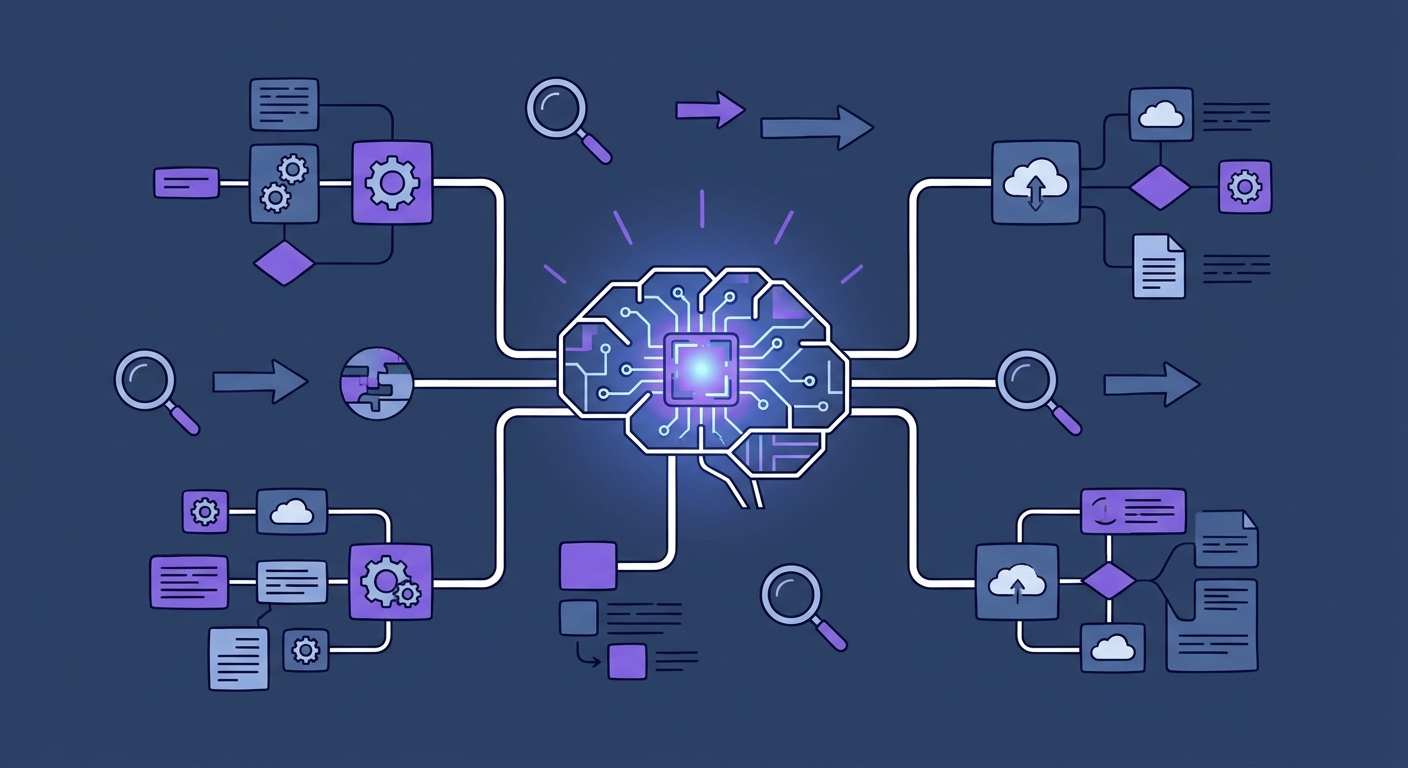
Entity optimization is your secret weapon here. Every page you launch must be hard-wired into your site’s Knowledge Graph. When an LLM scans your page, it shouldn't just see words; it should see a clear, structured relationship between your brand, your product category, and the specific pain point you solve.
3. Tactic 1: Engineering "Citation Signals" for LLM Trust
AI models aren't search engines. They are probability machines. They prioritize consensus. If you want to be cited, you need to be the consistent source of truth across the web. Don't rely on one landing page to do the heavy lifting. Use your programmatic infrastructure to seed the same data points across your technical documentation, case studies, and pricing pages. When an LLM sees the same verified specs across five different sections of your domain, it views your site as the definitive source.
4. Tactic 2: Real-Time Data Velocity (10-Minute Refresh Cycles)
In 2026, "evergreen content" is just a fancy term for "outdated." LLMs are trained to prioritize the freshest data to avoid hallucinations. If your programmatic pages are static, they’re destined for the trash heap. You need an infrastructure that refreshes your pricing, inventory, and specs on 10-minute cycles. By pushing fresh, date-stamped data, you tell the crawlers that you’re the most reliable source of truth. It’s a simple signal, but it’s the difference between being cited and being ignored.
5. Tactic 3: Designing Comparison Tables for AI Scrapers
LLMs love tables. They’re clean, structured, and easy to parse. If you aren't outputting your data in tables, you’re making the AI do the heavy lifting—and it will probably mess it up or pull from a competitor instead. If scaling this feels like a technical nightmare, you might want to look into Programmatic SEO Services to help bridge the gap. Make the AI’s job effortless, and it will reward you with a citation.
6. Tactic 4: The "Answer-First" Content Template
This is non-negotiable. Your value proposition—the direct answer to the user's intent—must sit in the first 50 words.
Don't bury the lead. If the AI has to hunt through fluff to find your value prop, it’ll bounce to the next source. Respect the parser, and it will respect your authority.
7. Tactic 5: Entity-Linking and Semantic Authority
Most programmatic pages are "orphan pages." They lack depth. You need to tie these pages into high-authority pillar content that defines your brand’s semantic footprint. This isn't just about internal links; it’s about building a web of context. For a deep dive into how to map your entity relationships, check out our guide on building a Generative Engine Optimization strategy at the root level. When the AI talks about your industry, it should talk about your brand in the same breath.
8. Tactic 6: The "Citation Audit" Workflow
You can't improve what you don't measure. Every week, run queries in Perplexity, Gemini, and ChatGPT for your core keywords. Are you being cited? If not, why? Look at the source the AI did choose. Was their content tighter? Was their data newer? Start tracking "AI Citation Share" as your primary KPI. It’s the only way to know if your programmatic engine is winning the invisible war for the buyer's mind. Our GEO KPI framework breaks down twelve of these citation and visibility metrics in more depth.
9. Tactic 7: Shifting KPIs from Traffic to AI-Referred Pipeline
Stop obsessing over pageviews. They’re a vanity metric. Your new North Star is "AI-Referred Pipeline." Use UTM parameters and CRM attribution to track the leads coming from chat interfaces. As highlighted in KDD 2024 Research on GEO, the intent behind AI-referred traffic is significantly higher than traditional organic search. When you can prove to your stakeholders that AI-referred traffic closes deals faster, you’ll never have to fight for budget again. For the fuller picture of why this pipeline exists even when nobody clicks, see our guide on capturing value from zero-click AI searches.
10. Conclusion: Winning the Invisible War
Programmatic SEO isn't dead; it’s just growing up. The era of churning out thousands of low-quality pages to game the algorithm is over. The future belongs to those who build systems that provide value, clarity, and authority to the AI agents controlling the B2B buyer's journey. Audit your stack, focus on entity-rich content, and claim your share of the invisible pipeline. The war for the Day One List is on. May the most structured brand win.
Frequently Asked Questions
Is Programmatic SEO still effective in 2026?
Yes, but the goal has shifted from mass-producing low-quality pages to scaling high-trust, data-rich content that AI engines prioritize for citations.
How do I measure success if my traffic is dropping but the AI is growing?
You must move your KPIs away from total pageviews and toward "AI Citation Share" and "Assisted Conversions" identified through CRM attribution to capture the "invisible" pipeline.
What is the primary difference between SEO and GEO?
SEO focuses on ranking blue links on a SERP, whereas GEO optimizes for the content structure and authority signals that lead AI models to recommend your brand in a direct answer.
How can I ensure my programmatic pages get cited by AI?
Focus on "Entity Optimization" by clearly linking your brand to your product category, and provide structured, concise answers that AI models can easily parse.
![10 Best Local Rank Tracker Tools: In-Depth Comparison Guide [2025]](https://cdn.pseo.one/6abcb68a626591c40e1c8aa6/687e1c1ef6fe799d288518df/68809c373eb8562bcf68975d/10-best-local-rank-tracker-tools-comparison-guide/feature-image.jpg)