Search Engine Marketing Intelligence: AI-Powered Insights Guide

TL;DR
- Traditional SEO is evolving into Generative Engine Optimization (GEO) for LLMs.
- Success now requires becoming a high-trust source for AI-synthesized answers.
- Autonomous AI agents are replacing human browsing, requiring machine-readable data.
- Prioritize RAG optimization and entity-based content to maintain brand visibility.
- Digital strategy must shift from keyword density to authority-building for AI.
The "ten blue links" era isn't just dying—it’s dead. For twenty years, search marketing was a rigged game. We played with keyword density, chased backlink velocity, and obsessed over technical hygiene, all to trick an algorithm into liking us.
Those days are over.
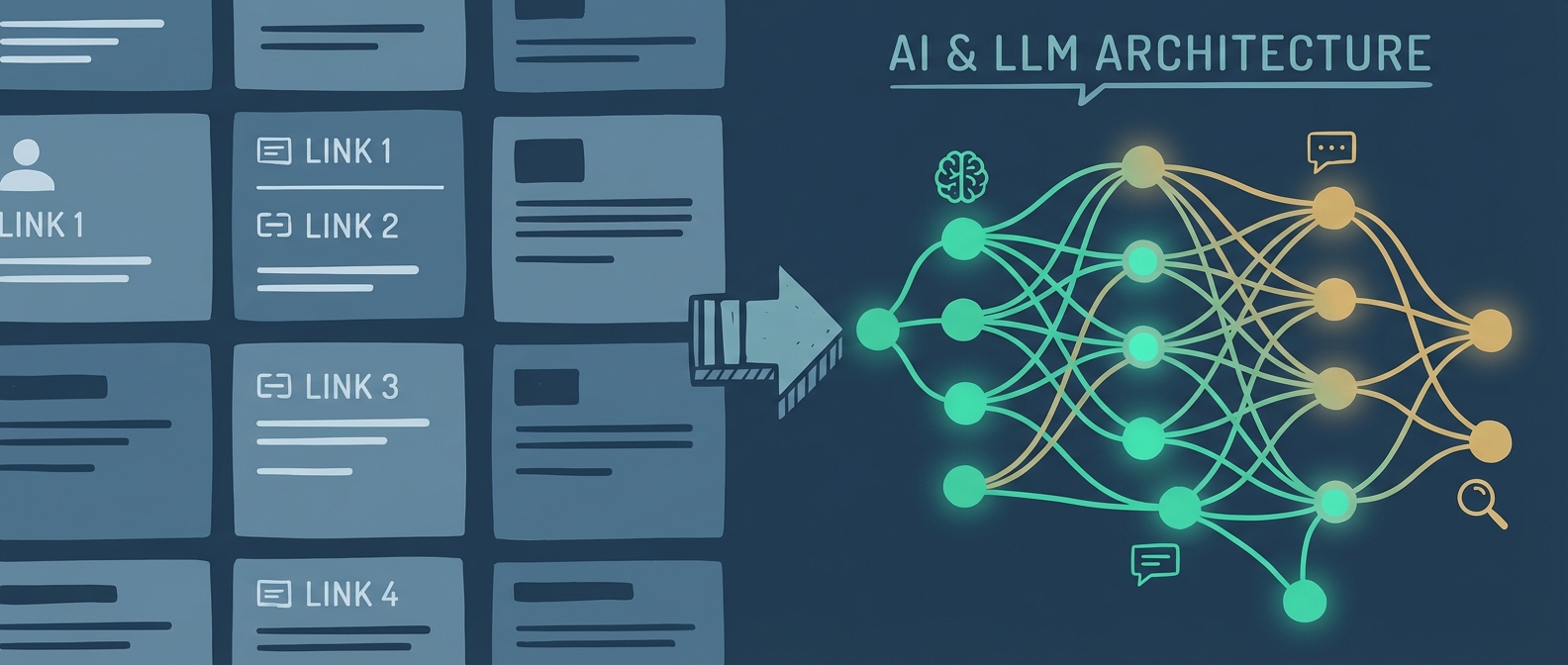
Today, that algorithm has evolved into an answer engine. We aren’t fighting for a spot on a SERP anymore. We’re fighting for citation authority inside the Large Language Models (LLMs) that now mediate the entire consumer journey. If you want to survive 2026, you need to stop thinking about SEO and start thinking about Generative Engine Optimization (GEO). Your brand’s survival now depends on one thing: can you provide synthesized, high-trust answers to complex queries? If the answer is "no," you’re already invisible.
The "Search Everywhere" Landscape
We’ve left the age of Google-centric dominance. We’re living in a fragmented ecosystem where users query ChatGPT, Perplexity, and Claude with the same ease they once used a search bar. This isn’t just a UI update; it’s a total shift in human intent. People aren't looking for a list of links to browse. They want an immediate, verified resolution to a problem.
In this environment, "Search Everywhere" is the only standard that matters. Your brand needs to be the entity that LLMs cite as the authority when they synthesize information about your industry. If you aren't the source, you're the background noise.
How Agentic Commerce Changes the Conversation
The most brutal disruption to the funnel is the rise of the autonomous agent. We are shifting from user-driven browsing—where someone visits your site to compare specs—to agent-driven purchasing. In this model, an AI proxy makes a decision based on your digital footprint.
According to Google’s insights on the future of ads and commerce, the conversion funnel is collapsing. AI agents execute transactions. If your data isn’t structured for machine consumption, you’re being bypassed before a human ever even sees your landing page. You are being filtered out by a lines of code, and you won't even know it happened. Turning that AI-driven traffic into a measurable pipeline, rather than an invisible zero-click dead end, is exactly what GEO visibility tools are built to track.
The Core Pillars of AI-Powered SEM
To thrive in a post-keyword world, you have to restructure your digital house around three pillars: technical RAG optimization, entity-based content, and new-age performance metrics.
1. Technical Foundation: RAG Optimization
Retrieval-Augmented Generation (RAG) is the engine behind modern AI answers. It allows LLMs to pull real-time data from your site to generate accurate responses.
If your site structure is a mess or lacks clear schema markup, the AI is effectively blind to you. You are invisible to the agent. By properly tagging your entities, services, and product attributes, you provide the context the model needs to confidently cite you as the source of truth. Think of it as a roadmap for the bots. If you don't build it, they won't follow it.
2. Content Strategy: From Keywords to Entities
Stop obsessing over long-tail keyword strings. That’s 2015 thinking. Modern strategy is about building "Entity Authority." You need to demonstrate such deep, nuanced expertise on a topic that when an AI model maps the knowledge graph of your industry, your brand sits at the center of the cluster.
You can read more about building this kind of entity-first GEO strategy to understand how to align your editorial efforts with machine-learning requirements. Stop writing for robots; start writing to be the definitive source of truth in your niche.
3. The "Zero-Click" Reality: Redefining Success
If you’re still measuring success based solely on CTR (Click-Through Rate), you are fighting the last war. In the age of AI Overviews, most users will find their answer without ever leaving the search interface.
This is the "Zero-Click" reality. Your new primary KPI is "Share of AI Visibility." How often are you cited? How often are you recommended when an AI synthesizes an answer for your market? Utilizing predictive marketing analytics allows you to track these citations and adjust your strategy based on where the AI is pulling its intelligence. For a full breakdown of what to track and the benchmarks to aim for, see 12 GEO KPIs every brand should measure.
Executing a GEO Strategy
Executing a GEO strategy is a systematic process of ensuring your brand is the "obvious" answer. As outlined in this mastering Generative Engine Optimization guide, the process relies on four distinct steps:
- Entity Mapping: Identify the core concepts and entities your brand should own.
- RAG Data Structuring: Implement schema and structured data that acts as a roadmap for LLMs.
- Citation Building: Optimize your content to answer specific questions, making it the most "citeable" source for the AI.
- Predictive Attribution: Use AI modeling to correlate brand citations with downstream conversion activity.
The AI Visibility Audit: Are You Ready?
To assess if your brand is ready for the 2026 search landscape, CMOs and SEO leads should run through this diagnostic checklist:
- Audit Your Data Silos: Is your product data locked in legacy systems, or is it exposed via APIs that AI agents can crawl?
- Check Schema Integrity: Does your site use current schema markup that explicitly defines your entity relationships?
- Evaluate Answer Coverage: Does your existing content directly answer the "Who, What, Where, and Why" of your category, or is it buried in fluff?
- Assess Dependency: Are you over-reliant on third-party referral traffic, or are you building direct brand recall that AI agents are forced to acknowledge?
- Monitor AI Citations: Do you have a process in place to track how often your brand is mentioned by ChatGPT, Perplexity, or Claude?
For further context on how these trends are evolving, you can review these 15 SEO predictions for 2026, which highlight how the shift toward "Search Everywhere" will impact your long-term organic roadmap.
The Future: Search Everywhere Optimization
Looking toward 2027, the line between "search" and "recommendation" will vanish. We are moving toward a paradigm of "Search Everywhere Optimization," where your brand must be present not just on search engines, but within the recommendation engines of social platforms, vertical AI agents, and personalized assistants.
The brands that win will be those that view their information as a public utility—structured, accurate, and ready to be synthesized by the machines that drive modern commerce.
Frequently Asked Questions
How is AI-powered SEM different from traditional Search Engine Marketing?
Traditional SEM focuses on keyword bidding and ranking for blue links. AI-powered SEM shifts the focus to "Entity Authority"—optimizing your brand's digital existence so that LLMs recognize you as the most authoritative source to cite when a user asks a question.
What is "Generative Engine Optimization" and why does it matter?
Generative Engine Optimization (GEO) is the process of structuring your content and technical data so that AI models can easily ingest, understand, and cite your brand. It matters because it is the only way to remain visible in LLM-based interfaces where the traditional "click" is becoming obsolete.
How can I measure success if my traffic is declining due to AI Overviews?
You must move beyond CTR and focus on "Share of AI Visibility" and "Brand Authority" metrics. By tracking how often your brand is cited by LLMs and how that correlates with brand search volume and direct conversions, you can prove the value of your presence even in a zero-click environment.
Do I still need traditional SEM ads in an AI-dominated search world?
Yes. The most effective strategy is a hybrid model. Use paid search to capture high-intent traffic and maintain immediate visibility, while simultaneously investing in organic entity authority to ensure that when an AI provides a "neutral" recommendation, it cites your brand as the expert.

![10 Best Local Rank Tracker Tools: In-Depth Comparison Guide [2025]](https://cdn.pseo.one/6abcb68a626591c40e1c8aa6/687e1c1ef6fe799d288518df/68809c373eb8562bcf68975d/10-best-local-rank-tracker-tools-comparison-guide/feature-image.jpg)