Effective Campaign Strategies for Business Growth

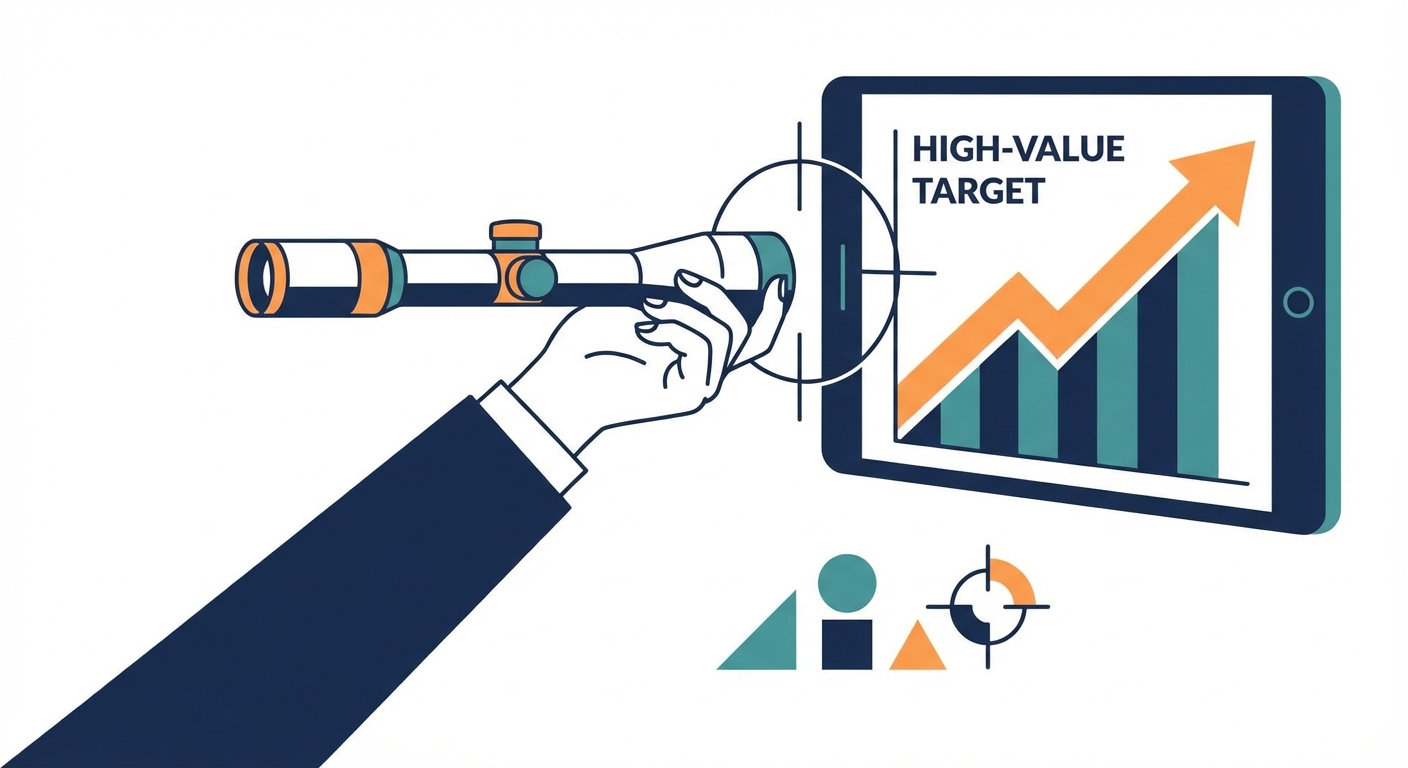
The "growth hacking" era—that frantic, caffeine-fueled sprint for viral spikes and vanity metrics—is dead. Bury it. If you’re still trying to trick algorithms or chase every fleeting trend, you’re not building a business; you’re just burning capital to fill a leaky bucket.
In 2026, growth isn't about volume. It’s about precision. It’s about shifting from high-traffic, low-intent noise to predictable, high-value revenue models. Think of it as moving from a megaphone to a sniper rifle. Modern growth requires a "Human-in-the-Loop" philosophy: let AI handle the heavy lifting, but keep your hands firmly on the steering wheel.
The Anatomy of the Modern Growth Stack
Stop treating marketing like a collection of siloed departments. If your SEO team doesn't talk to your data team, and your content team is ignoring your revenue goals, you’re already losing. You need a "Growth Stack."
This isn't just a pile of software subscriptions. It’s a unified ecosystem where First-Party Data, Generative Engine Optimization (GEO), and hyper-personalization act as one single, breathing organism. For a B2B-specific breakdown of moving from ad hoc growth hacks to a systemized revenue engine, see B2B growth hacking strategies for business development. According to Harvard Business School’s 2026 Business Trends, the companies that actually survive are the ones that stopped treating data as a byproduct and started treating it as their primary competitive advantage. Your stack needs to capture intent the second it happens, nurture it, and turn it into long-term value.
Mastering Generative Engine Optimization (GEO)
Welcome to the age of the Answer Engine. Forget the "blue link" war. That battle is over. Today, users don't want a list of ten websites to click through; they want a summarized, authoritative answer from Gemini or Perplexity. If you aren't the source those models cite, you’re invisible.
Mastering GEO is a shift in mindset. You have to provide semantic clarity—high-density information that AI can actually parse and verify. Check out Google Search Central’s SEO Fundamentals for the basics, but remember: keywords are for 2015. GEO demands you answer the "why" and "how" behind your user's deepest pain points. If your content is vague, the AI will bypass you for a competitor who actually gives a direct, verifiable answer. Be the expert, or be ignored. GrackerAI's guide to generative engine optimization for B2B SaaS covers the fundamentals in more depth, and for teams still running large programmatic SEO footprints, the intersection of pSEO and GEO for SaaS growth covers what changes when both have to work together.
The Sovereignty of First-Party Data
In a world where third-party cookies are being strangled by privacy updates, your first-party data is the only currency that matters. Relying on tracking pixels that get blocked every time a browser updates? That’s a recipe for obsolescence.
You need to build a "Value-First" contract. Give your audience something they actually want—a proprietary industry report, a diagnostic tool, or a newsletter that doesn't suck—in exchange for their data. This is zero-party data: information they tell you because they trust you. By building this direct relationship, you insulate your business from platform algorithm shifts. You stop renting your audience and start owning it.
Achieving Hyper-Personalization at Scale
Generic email blasts are a relic. If you’re still sending "Dear [First Name]" emails to your entire list, you’re effectively telling your customers you don't care. Today’s consumer—especially the Gen Z personalization trends reported by Statista—expects a digital experience that feels bespoke.
Hyper-personalization at scale means using behavioral triggers. If a prospect visits your pricing page three times but doesn't convert, your system should automatically fire a personalized case study that speaks directly to their industry. This is where GrackerAI's AEO and GEO platform changes the game. It allows you to automate these complex, multi-touch journeys without losing the human nuance that actually drives sales.
The Human-in-the-Loop: Why AI Needs a Conductor
There’s a dangerous lie floating around: that AI will eventually replace marketing experts.
Absolute nonsense.
AI is a force multiplier, not a replacement. It can crunch data, segment audiences, and churn out drafts in seconds. But AI lacks a soul. It can’t feel empathy. It doesn't understand the subtle storytelling that turns a cold lead into a brand advocate.
The "Human-in-the-Loop" model is the gold standard for 2026. Use AI for the grunt work—data analysis, keyword clustering, and draft generation—but rely on human strategists to inject the empathy and ethical guardrails. Use AI to stay fast, but use humans to stay relevant.
Building a Sustainable Multi-Channel Funnel
Think of your funnel as a circular flywheel, not a linear path.
This cycle requires a mix of organic authority and smart paid acquisition. But don't lean too heavily on ads. Instead, use micro-influencers—creators with 10k to 50k followers who actually command trust in their niche. Their endorsement acts as social proof in a way that a paid ad never will.
Putting Strategy into Practice: A Case Study Snapshot
I once worked with a client drowning in high Customer Acquisition Costs (CAC). They were fighting for generic, high-competition search terms, bleeding money on every click. We helped them pivot to a hybrid GEO/Personalization strategy. They stopped chasing volume and started chasing intent. They restructured their content to win AI-generated answers for long-tail queries and built a dynamic, data-driven email funnel.
The result? A 40% reduction in CAC in six months. You can see the full breakdown of these proven growth results here. The takeaway? Stop trying to be everything to everyone. Start being the perfect answer to someone.
Measuring Success in 2026
If you’re still obsessing over "likes," "impressions," or "clicks," you’re looking at vanity metrics that don't pay the bills. If you want to know if you're actually growing, look at these three pillars:
- CAC Efficiency: Is your acquisition cost trending downward as your brand authority grows?
- LTV (Lifetime Value): Are you keeping customers longer and increasing their value over time?
- Influence in AI-Driven Search: Are you actually being cited as a subject matter expert by Answer Engines?
These metrics reflect the health of your company, not the popularity of your social media feed. Tracking that third pillar directly is its own discipline — see how to monitor brand mentions in AI search results.
The Long Game of Authority
The best growth strategy is the one that builds an unassailable moat of authority. This takes an experimentation mindset. You have to be willing to test, fail, iterate, and refine. The "quick-fix" mentality is a trap that leads to short-term spikes followed by long-term collapse.
By focusing on your GEO footprint, nurturing your first-party data, and keeping a human hand on the tiller of your AI-driven campaigns, you aren't just growing a business. You’re building an institution.
Frequently Asked Questions
How does GEO differ from traditional SEO in 2026?
SEO is designed to rank your website in a list of blue links to drive clicks. GEO (Generative Engine Optimization) is designed to make your content the authoritative source that AI models like Perplexity or Gemini pull from to construct their direct, summarized answers.
What is the most effective way to start a growth campaign with a small budget?
Prioritize organic authority building over paid ads. Create high-value, niche-specific content that answers the hard questions your customers are asking, and leverage micro-influencers for authentic, trust-based distribution. Capture all incoming traffic into a first-party database to minimize future acquisition costs.
How do I measure the success of a modern growth campaign?
Focus on business-critical outcomes: Customer Acquisition Cost (CAC) reduction, growth in Customer Lifetime Value (LTV), and your presence in AI-generated search summaries. These metrics correlate directly to long-term profitability rather than superficial engagement.
Is AI replacing the need for marketing experts?
No. AI provides the speed, data, and scalability necessary for modern marketing, but human experts are essential for brand storytelling, emotional resonance, and strategic decision-making. The most successful teams use the "Human-in-the-Loop" approach to combine AI speed with human insight.
![10 Best Local Rank Tracker Tools: In-Depth Comparison Guide [2025]](https://cdn.pseo.one/6abcb68a626591c40e1c8aa6/687e1c1ef6fe799d288518df/68809c373eb8562bcf68975d/10-best-local-rank-tracker-tools-comparison-guide/feature-image.jpg)