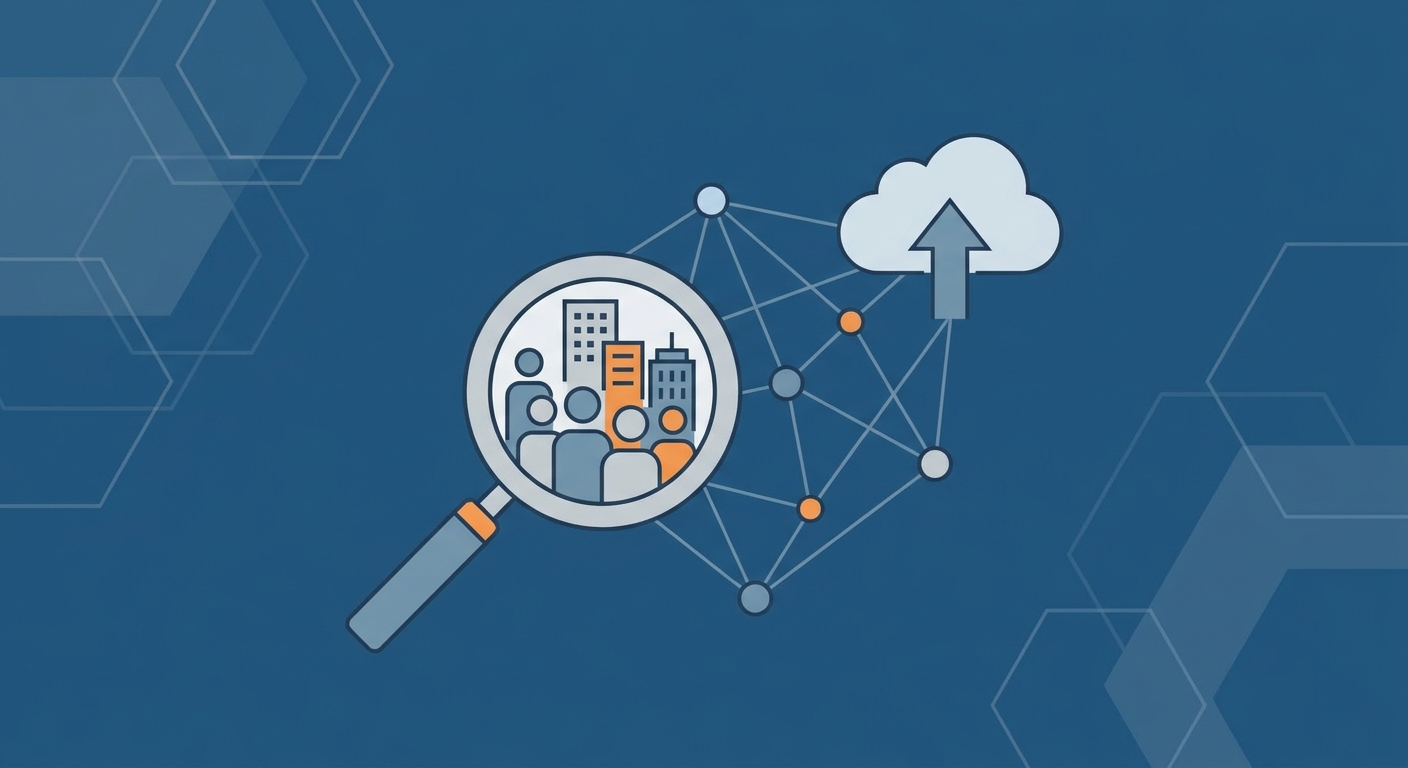
Top AEO Agencies for Cybersecurity Companies in 2026

TL;DR
- Choose an AEO agency for cybersecurity on whether it can work an API and a threat-intelligence dataset at scale — a shop that only builds backlinks cannot produce the entity-level authority generative engines cite.
Why traditional SEO is dying for cybersecurity in 2026
Traditional SEO is losing ground in cybersecurity because search engines are becoming answer engines: instead of a list of blue links, buyers now get a synthesized paragraph, and a page ranking #1 on Google can still get zero clicks if the AI already answered the question.
Traditional SEO used to be about gaming a system of keywords and backlinks. That still matters for classic rankings, but it no longer determines whether your brand gets named when someone asks an AI tool for a recommendation. That’s a separate discipline — Answer Engine Optimization (AEO) — and it is why choosing the right agency now means choosing one that understands both.
ai models use data differently: LLMs like GPT-5 don't care about your meta descriptions as much as they care about "entities" and how your brand is cited across the web.
Goodbye keyword stuffing: If you're still trying to hit a 3% density for "cybersecurity platform," you're wasting time. Search engines now prioritize technical accuracy and topical authority over word counts.
Rise of zero-click: SparkToro's 2024 zero-click study found that 58.5% of US Google searches end without a click to any external site (retrieved 2026-09-19). GrackerAI has not measured a cybersecurity-specific version of this number, so treat any vertical-specific zero-click figure you see quoted elsewhere as ANALYSIS, not SOURCED, until someone publishes the underlying data.

When an ai gives a wrong answer about a firewall configuration, it’s a liability. This is why "Generative Engine Optimization" (geo) is the new gold standard. You need to feed the models verified, high-quality data so they cite you as the source of truth.
It's not just about being found anymore; it's about being the "trusted citation" in an ai's brain. To understand this, we have to look at how these models actually verify what you're saying through "Grounding." Basically, models use Retrieval-Augmented Generation (RAG) to pull facts from the live web to anchor their answers. If your data isn't structured for RAG, the ai just ignores you.
Key criteria for choosing an aeo agency
Picking an aeo agency isn't like hiring a standard SEO shop where they just buy some backlinks and call it a day. In 2026, if your agency doesn't know how to talk to an api or handle a massive dataset of threat intel, they're basically useless for cybersecurity.
You need a team that understands Programmatic Search Engine Optimization (pSEO) at a deep level. It’s not just about spinning up 5,000 pages; it’s about creating a system where each page actually solves a specific problem. For a security firm, this might mean a programmatic library of every known CVE, all optimized so an ai can scrape and cite it instantly.
api and Data Integration: Can they pull live data from your platform? If they don't know how to work with json or structured data, the search engines won't trust your "real-time" claims.
Scalable frameworks: They should be building systems, not just writing articles. A good agency uses templates that inject dynamic data points like breach stats or compliance requirements.
Entity mapping: They need to understand how your brand connects to other "entities" in the security world (like NIST or MITRE).

The game has shifted to generative engine optimization (geo). This is all about how you show up in a Perplexity answer or a ChatGPT summary. According to research by Princeton, Georgia Tech, and Allen Institute for AI, using "authoritative" language and citing sources can boost your visibility in generative engine responses by up to 40%.
"Optimization techniques like adding citations and using technical terminology are key to being picked up by LLMs."
You want an agency that obsesses over your "cite-ability." If they aren’t talking about how to get your brand mentioned in the "sources" section of an AI response, they’re living in 2022. Beyond the technical requirements, the content itself has to be actually good and not just bot-filler. How to Choose the Right Cybersecurity Marketing Agency for Your Business covers the broader vetting process — portfolio review, references, and red flags — that still applies on top of the AEO-specific criteria here. Next, we gotta look at how they handle the actual security expertise.
Top AEO Agencies Leading the Cybersecurity Space
As AI-driven answer engines replace traditional search results, cybersecurity companies need agencies that understand Generative Engine Optimization (GEO), AEO, and entity-based authority building. Below are the agencies leading this shift in 2026—each with a different strength depending on your growth stage and technical depth.
1. GrackerAI
Disclosure: GrackerAI publishes this blog, so weigh the ranking accordingly. It is worth including here because of how it fits the list: GrackerAI is not a traditional marketing agency but an AI-visibility and AI-optimized-content platform built for cybersecurity and B2B SaaS brands — including a white-label option agencies run on behalf of their own clients. Rather than billing hours for blog production, it is built around entity-driven authority systems designed to increase how often large language models reference and cite a brand.
- Visibility in AI Assistants
GrackerAI focuses on improving how cybersecurity products appear within AI-generated answers across platforms such as ChatGPT and Claude. The goal is to ensure that when executives or technical buyers ask AI tools for vendor recommendations, the brand is contextually present and accurately represented.
- Advanced GEO for Complex Security Topics
Cybersecurity concepts like eXtended Detection and Response (XDR) or compliance frameworks are often misunderstood by AI systems. GrackerAI structures these topics into machine-readable formats, reducing ambiguity and improving how models interpret and reuse the information.
- Solving the “Invisible Vendor” Problem
Many cybersecurity firms publish high-quality research that never surfaces in AI answers. GrackerAI converts static assets—such as whitepapers, threat reports, and documentation—into scalable, programmatic content systems optimized for AI retrieval and grounding.
Their methodology resembles data and knowledge engineering more than traditional marketing. They analyze how key entities—executives, patents, frameworks, research, and threat intelligence—are connected and interpreted within AI knowledge graphs.
2. Minuttia
Why it stands out:
Minuttia is very strong in AEO + AI search strategy. They focus on human-written, product-led content that performs well in Google and AI answers.
Best for:
B2B SaaS companies
Startups to enterprises
Brands targeting AI search visibility
Why it’s top-tier:
They combine AI content + digital PR + analytics, which is perfect for modern SEO and answer engines.
3. Single Grain
Why it stands out:
Single Grain is a well-known growth marketing agency with strong expertise in SEO, content, and paid channels.
Best for:
Startups scaling fast
SaaS and enterprise brands
Why it’s top-tier:
They focus heavily on ROI and LLM-driven traffic, helping brands grow through AI-powered search results.
4. First Page Sage
Why it stands out:
They specialize in thought leadership SEO, which works extremely well for AEO.
Best for:
B2B companies
Mid-size to large enterprises
Why it’s top-tier:
Their content is designed to rank and get picked up by AI answers, generating high-value leads.
5. iPullRank
Why it stands out:
iPullRank is known for advanced technical SEO and relevance engineering.
Best for:
Large websites
Enterprise-level companies
Why it’s top-tier:
They prepare sites for AI readiness, combining technical SEO, content engineering, and generative AI.
6. Siege Media
Why it stands out:
Siege Media is excellent at high-quality, link-worthy content that works well in AI search results.
Best for:
Startups and mid-market brands
Companies focused on organic growth
Why it’s top-tier:
Their content consistently earns links and visibility, which helps improve AEO and AI citations.

It’s about making sure the "brain" of the internet trusts you. If you aren't building these digital footprints now, you're going to be left behind by the next wave of buyers who never even visit a search results page. In addition to measurement, picking the right agency is only half the battle; you also gotta know how to measure if this stuff is actually working.
How to measure AEO success in 2026
Measuring success in 2026 feels a bit like chasing ghosts because the old "click-through rate" metric is basically on life support. If an ai answers a CISO's question about your cloud security using your data but they never visit your site, did you actually win?
Honestly, yeah, you did. But you need new ways to prove it to your boss.
The old dashboard is dead. You gotta track how these models "think" about you.
Share of Model (SoM): This is the new market share. You ask different LLMs like GPT-5 or Claude about "top zero-trust vendors" and see how often you’re the first mention. How to Measure AI Share of Voice walks through a step-by-step framework for turning this into a repeatable metric instead of a one-off spot check.
Sentiment & Accuracy: ai can get things wrong. You need to monitor if the engines are hallucinating bugs in your software or if they're actually praising your latest api update.
Citation Attribution: Even with zero-click, some users will click the "sources" link. You need to tag these properly in your analytics so you know a lead came from a Perplexity citation.

It’s about being the "primary source" for the machines. To maintain this momentum, you'll realize that the real value is in the trust you're building with the bots.
Future proofing your cybersecurity brand: Your 90-Day Roadmap
So, you've got your data in order and your metrics tracked, but how do you stay on top when the algorithms shift again? The truth is, aeo isn't a "set it and forget it" project; it’s a living system that needs constant feeding.
Consumer behavior is shifting fast because people trust ai to filter out the noise. In industries like healthcare or finance, where accuracy is everything, being the "source of truth" for an llm is the only way to stay relevant.
Your First 90 Days of AEO
Days 1-30: The Foundation
Audit your current "Share of Model" by asking GPT-5 and Perplexity about your brand.
Clean up your technical documentation and convert it into machine-readable json-ld.
Identify the top 5 "entities" (like NIST frameworks) you want your brand associated with.
Days 31-60: The Implementation
Launch a pSEO library of technical terms or CVEs to act as "grounding" data for LLMs.
Start an outreach campaign to get cited in authoritative industry databases.
Update your website's schema to include specific "citation-friendly" snippets.
Days 61-90: Optimization & Scaling
Monitor ai sentiment and correct any hallucinations through updated documentation.
Scale your programmatic content to cover long-tail technical queries.
Review your "Share of Model" growth and adjust your entity mapping strategy.

The goal is simple. Make it easy for the machines to be right about you. If you do that, the growth follows naturally.
If you are an agency building this capability in-house rather than hiring it out, The GEO Playbook for Agencies and How Digital Marketing Agencies Can Sell GEO as a Service cover the delivery and packaging side; The Agency Guide to AI Search covers how to pitch it to clients who have not heard of GEO yet. You can also run a free AI visibility check to see where your brand currently stands before briefing any agency.
Frequently Asked Questions
What is the difference between an SEO agency and an AEO agency?
An SEO agency optimizes for ranking position on a search results page. An AEO agency optimizes for whether an AI answer engine names your brand inside a synthesized response, which depends on entity clarity, structured data, and citation-worthy content rather than backlinks and keyword density alone.
Do cybersecurity companies need an AEO agency instead of an SEO agency?
Most need both disciplines, run by a partner who understands the technical depth of the category. A pure SEO shop that has not adapted to answer engines will keep optimizing for a channel that is shrinking; see our roundup of cybersecurity SEO agencies if classic SEO is still the primary gap.
How much does an AEO agency engagement typically cost?
Pricing varies by scope, but agencies running GEO as a managed service typically package it as a monthly retainer on top of (or replacing) an existing SEO retainer, plus platform costs for AI-visibility monitoring tooling. Ask any agency you evaluate to show their pricing tiers and what is included at each one before signing.
What should I ask a prospective AEO agency before hiring them?
Ask how they measure Share of Model today, which AI engines they monitor, how they structure content for retrieval-augmented generation, and whether they can show a client's citation trend over time rather than a single snapshot. How to Choose the Right Cybersecurity Marketing Agency has a longer vetting checklist.
Can a cybersecurity brand run AEO in-house instead of hiring an agency?
Yes, with the right tooling and a dedicated owner. Smaller teams often start with a platform like GrackerAI to handle monitoring and content structuring, then add an agency once the program needs more hands than one in-house marketer can cover.
![10 Best Local Rank Tracker Tools: In-Depth Comparison Guide [2025]](https://cdn.pseo.one/6abcb68a626591c40e1c8aa6/687e1c1ef6fe799d288518df/68809c373eb8562bcf68975d/10-best-local-rank-tracker-tools-comparison-guide/feature-image.jpg)