Exploring the Four Stages of Growth Hacking

TL;DR
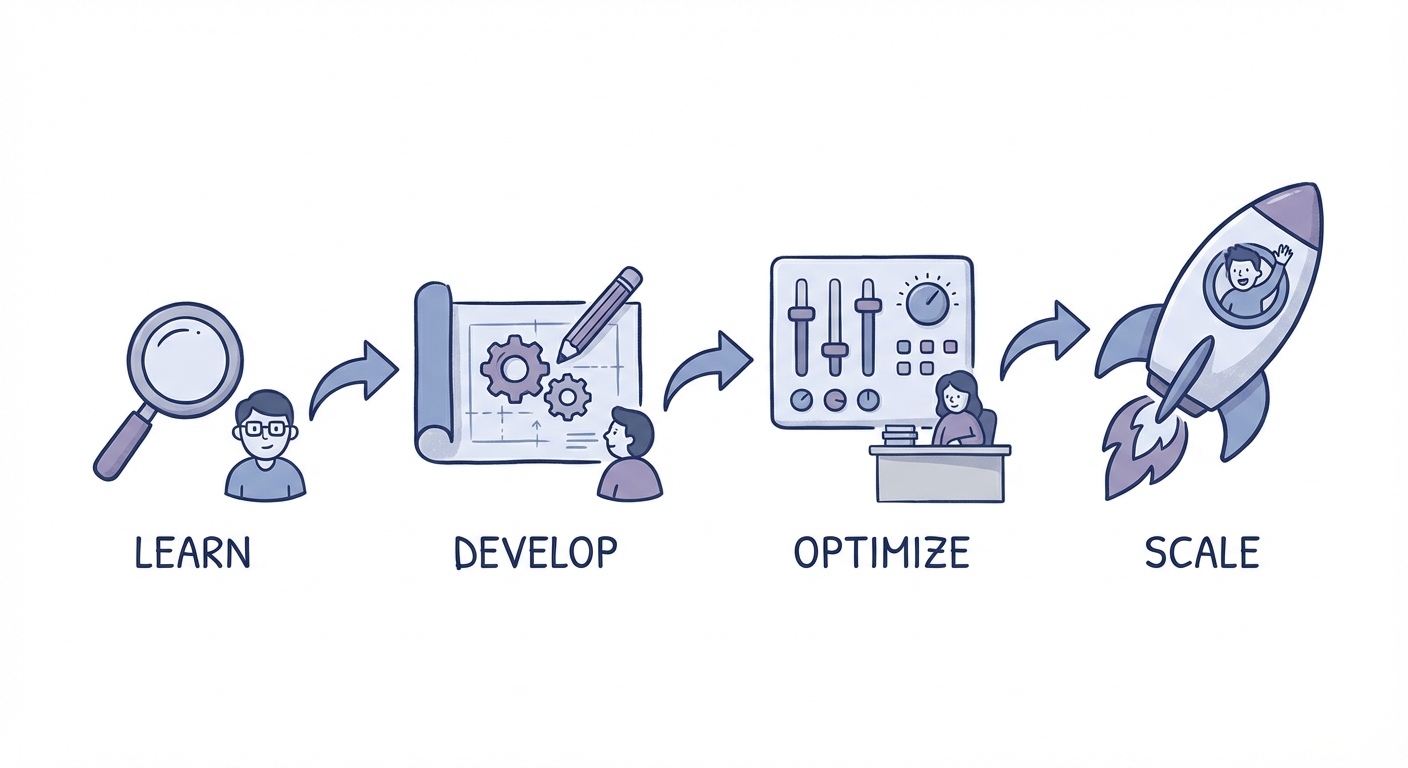
- Explains the Learn-Develop-Optimize-Scale operational growth framework
- Highlights Product-Market Fit as a non-negotiable prerequisite for scaling
- Distinguishes between tactical loops and long-term growth engines
- Provides a 2026 roadmap to navigate rising acquisition costs
- Emphasizes data-driven discipline over temporary viral hacks
"One of the cardinal rules of growth hacking is that you must not move into the high-tempo growth experimentation push until you know your product is must-have."
That’s Sean Ellis, the godfather of growth hacking, dropping a truth bomb that most founders conveniently ignore. They want the hacks. They want the silver bullets. They want the overnight viral loops.
But let's be real. In 2026, with Customer Acquisition Costs (CAC) hitting the stratosphere and AI flooding every channel with noise, "hacking" isn't about clever tricks anymore. It’s about discipline. It's about a rigorous, four-stage grind: Learn, Develop, Optimize, and Scale.
If you clicked this hoping for "10 hacks to explode your traffic," close the tab. This isn't that. This is a blueprint for building a growth engine that doesn't stall out in month three. We’re going to cut through the noise, figure out exactly where your business actually sits, and hand you the keys to the only roadmap that works in today's algorithmic reality.
Why Most "Four Stages" Frameworks Are Garbage (And Which One Works)
Google "stages of growth hacking" and you’ll get a migraine. One expert says it’s "Ideation, Prioritization, Testing, Execution." Another swears by "Foundation, Experimentation, Scaling, Maturity."
It’s a mess of terminology that leaves founders paralyzed.
Let’s simplify it. Most of those models describe tactical loops (what you do on a Tuesday) or business lifecycles (what happens over a decade). We are focusing on the Operational Growth Framework: the actual phases your team needs to survive to build a machine.
Here is the signal amidst the noise:
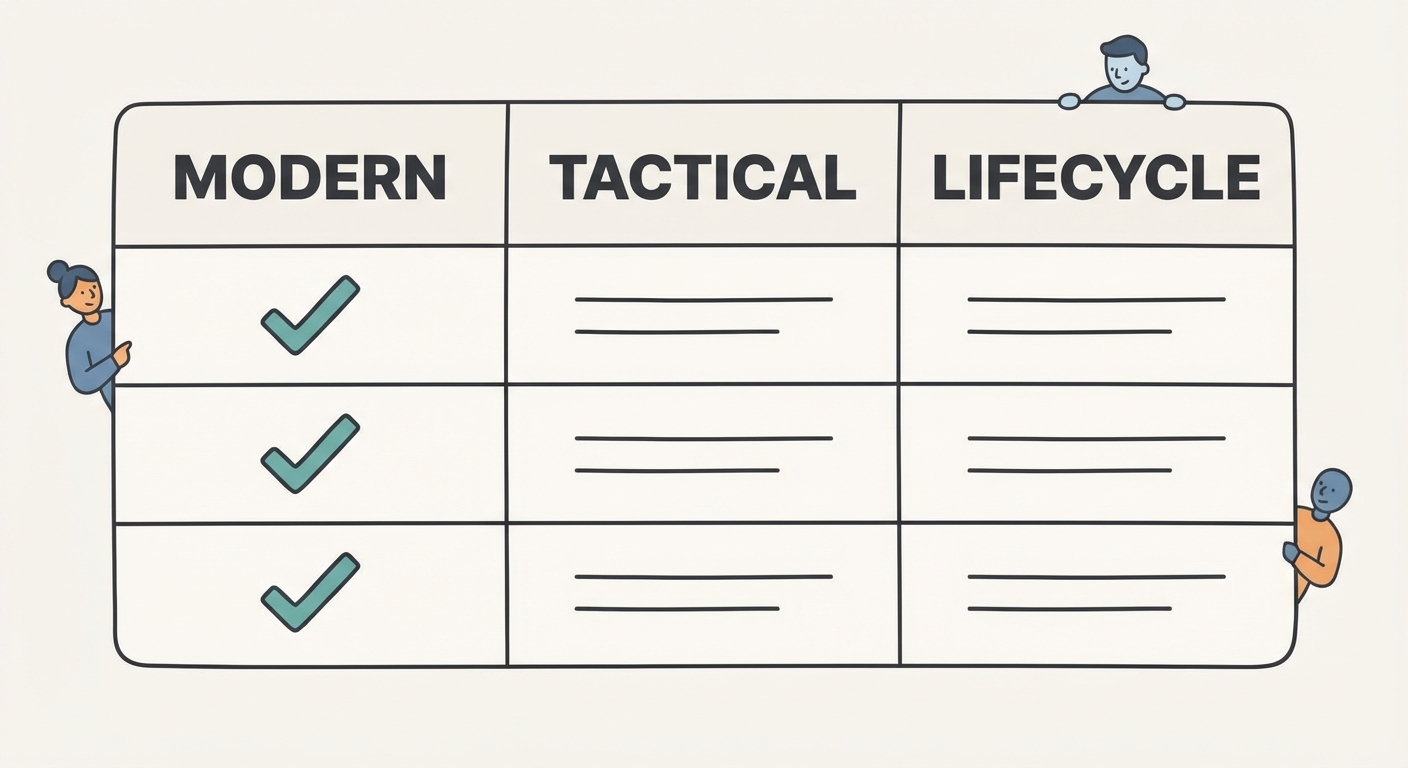
We focus on Learn-Develop-Optimize-Scale because it acknowledges a brutal reality: you cannot optimize what you haven't built, and you cannot build what you don't understand.
The Non-Negotiable Prerequisites: Do Not Pass Go
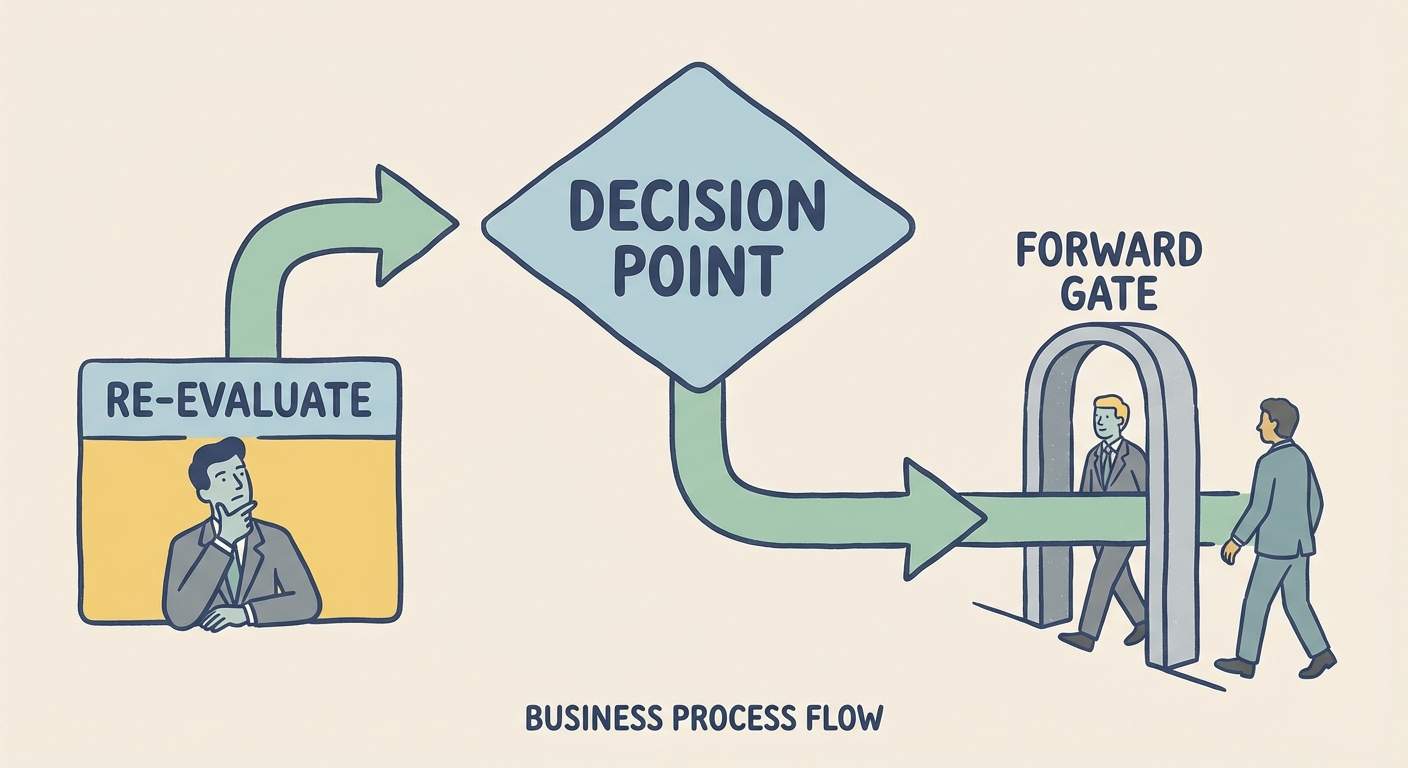
Sixty percent of startups fail. They don't fail because they couldn't find a growth hack; they fail because they tried to scale a product nobody wanted. Before you even think about Stage 1, you need to pass the Product-Market Fit (PMF) Gate.
How do you know you're there? Forget your gut feeling. Use data. Sean Ellis's research on product-market fit gives us the gold standard: the "Very Disappointed" survey. Ask your users how they’d feel if they could no longer use your product.
If less than 40% say "Very Disappointed," you do not have PMF. You have a hobby.
Snapchat didn't scale because they had cool filters; they scaled because 50% of their users were active daily. That is obsession. That is PMF.
Before entering the growth arena, check these five boxes:
- Business Model Canvas: You know exactly how you make money.
- Value Proposition Canvas: You’ve validated that people actually care.
- Customer Personas: You aren't targeting "everyone." You're targeting "HR managers in mid-sized tech firms who hate spreadsheets."
- AARRR Pirate Funnel: You have the metrics framework installed.
- One Metric That Matters (OMTM): You have a single North Star guiding the ship.
Brian Balfour’s research is clear: companies that validate PMF and run 50+ experiments before scaling have 3x higher success rates. Skip this, and you’re just burning cash.
Stage 1 – Learn: Get Inside Your Customer's Head
You have PMF. Great. Now, stop. Do not launch ads. Do not hire an agency. Learn.
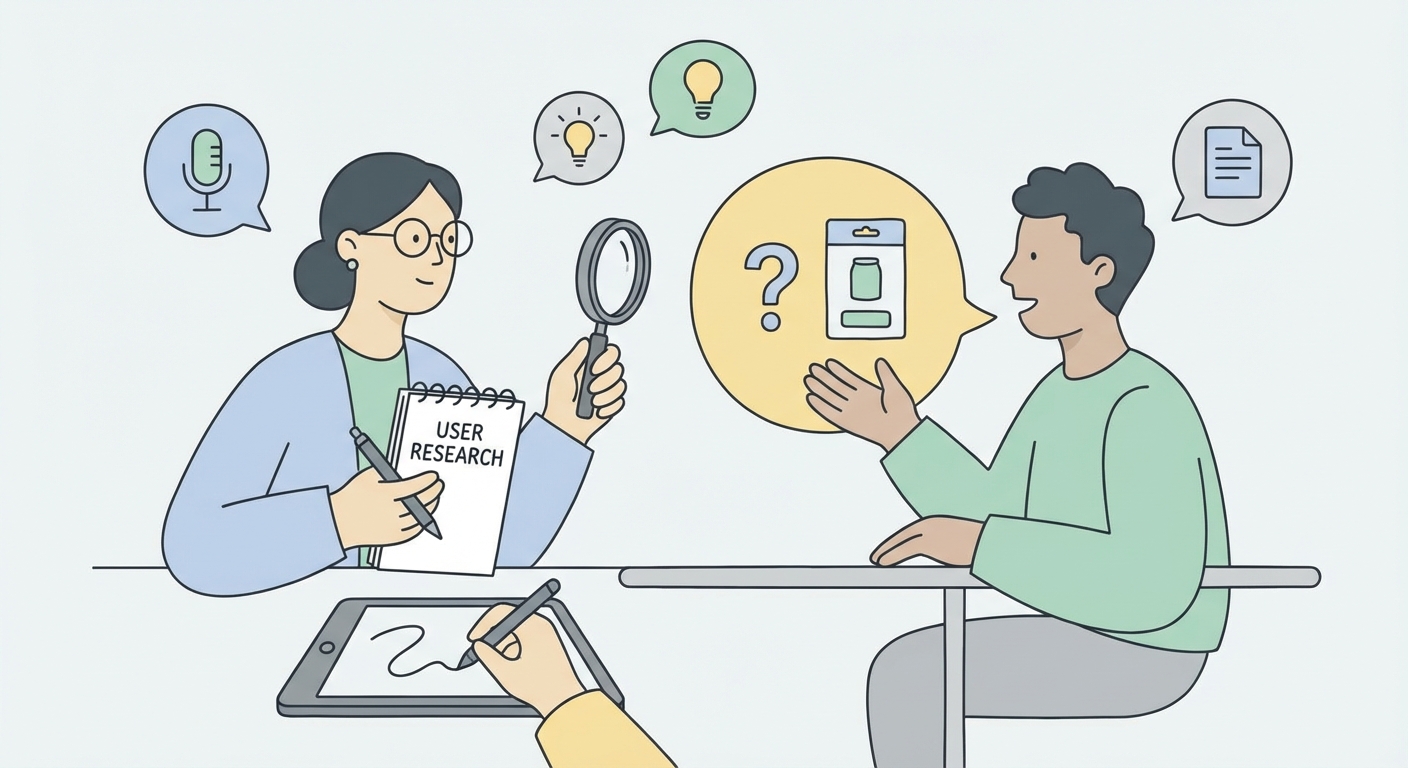
This stage is about getting your hands dirty. It’s about understanding your customer better than they understand themselves. You need to move beyond "males, 25-40" and get into the psychology of why they buy.
What Actually Happens Here?
You are hunting for the "Aha! Moment"—that split second where the user realizes your product is magic. To find it, map the customer journey and hunt for friction. Where are people dropping off? Why do they leave?
In 2026, we don't guess. We use customer journey analytics to visualize the path. We conduct Jobs-to-be-Done interviews to find out what "job" the customer is hiring our product to do.
AI is Your Research Assistant
The days of manual coding for 50 hours of interview transcripts are dead. Now, we feed interview audio into AI models for sentiment analysis. We use predictive segmentation to find clusters of users we didn't know existed. We use NLP social listening tools to hear what people say about us when we aren't in the room.
Your Stage 1 Deliverables:
- 3-5 detailed customer profiles (behavioral, not just demographic).
- Insights from at least 20 deep-dive interviews.
- A baseline of your current AARRR metrics.
- The Bottleneck: The one specific point in your funnel where you are bleeding users.
As Phil Morle says, you have to determine if your value prop is "merely an idealized value proposition you've envisioned, or if it's grounded in your customers' behavior."
Stage 2 – Develop: Build the Plumbing
This is the stage 90% of non-technical founders try to skip. They want to go from "Idea" to "Viral" without building the infrastructure.
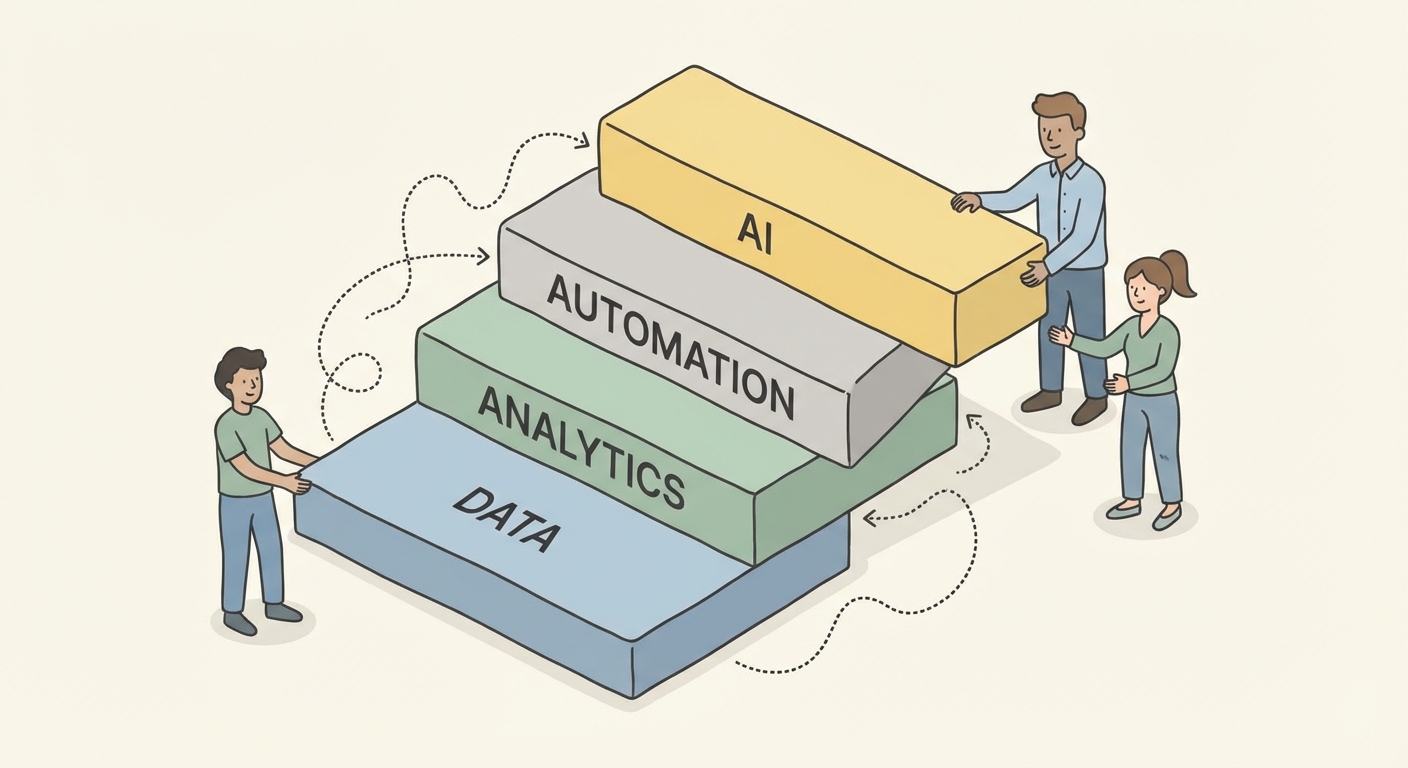
You cannot improve what you cannot measure. If you launch experiments without a proper data stack, you are flying blind. In 2026, growth is an engineering discipline as much as a marketing one.
The Stack You Need
You are building a machine. Here are the components:
- Analytics Layer: This is your eyes. Event tracking, attribution modeling.
- Experimentation Platform: This is your lab. A/B testing tools that let you split traffic.
- Automation Tools: This is your leverage. Email sequences, workflow triggers.
- Data Warehouse: Your single source of truth.
- AI Tools: AI-powered predictive analytics that tell you who is likely to churn before they do.
None of this requires a big budget on day one — this roundup of free tools for growth hacking and lead generation covers no-cost options for the analytics, CRM, and automation layers before you commit spend to the paid tier. Deciding what belongs on that stack, and in what order, is usually a product management call as much as a marketing one — see why product managers should embrace growth hacking for the case that this work belongs inside the PM role, not bolted on beside it.
The Blueprint
During this phase, you are setting up the tracking for every step of that AARRR funnel you mapped in Stage 1. You are implementing the GROWS framework. You are creating the dashboards that will tell you if you are winning or losing.
This takes time. For an SMB, maybe 2-4 weeks. For an enterprise, 6-8 weeks. It costs money. But it is the foundation upon which your empire is built.
Stage 3 – Optimize: The Science of High-Velocity Growth
Now we get to the fun part. The science. The experiments.
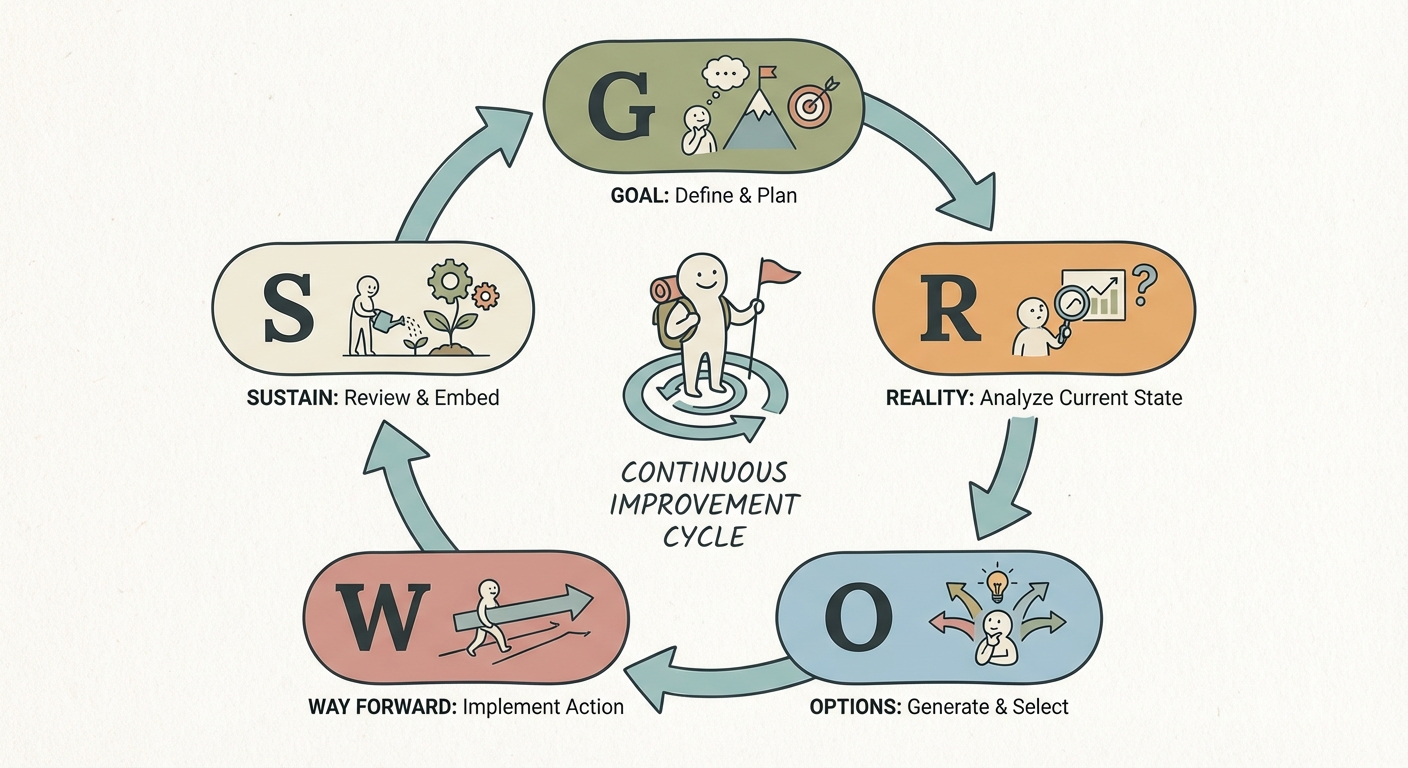
This is where the "Hacking" happens. But it’s not random. It’s the GROWS process: Gather ideas, Rank them, Outline the experiment, Work (execute), and Study the data.
The GROWS Loop
- Gather: Get your team in a room (or a Zoom) and brainstorm 20+ ideas to fix the bottleneck you found in Stage 1.
- Rank: You can't test everything. Use the ICE Score (Impact, Confidence, Ease) to find your top 3 candidates.
- Outline: Define the hypothesis. "If we change the headline to X, conversion will increase by Y%."
- Work: Run the test. Two weeks minimum for statistical significance.
- Study: Did it work? If yes, double down. If no, learn why.
Mapping Experiments to the Pirate Funnel
You launch experiments based on where you are hurting.
- Acquisition weak? Test landing page headlines, ad creatives, or product-led growth strategies.
- Activation weak? Rewrite your onboarding emails or add a progress bar.
- Retention weak? Build a community or trigger re-engagement campaigns.
Real growth is the compound interest of small wins. A 5% improvement in acquisition, combined with a 10% bump in activation and a 5% lift in retention, creates exponential revenue growth.
Just look at Dropbox's legendary referral program. That wasn't magic. It was a specific experiment targeting the Referral stage of the funnel, executed perfectly.
Stage 4 – Scale: Turn the Knobs to 11
You have validated PMF. You have the data stack. You’ve run the experiments and found a channel that works. Now you scale.
The Gatekeeper Criteria
Do not enter Stage 4 until:
- You have at least 3 proven channels with consistent CAC.
- Your LTV:CAC ratio is 3:1 or better.
- Your retention cohorts are flattening or trending up.
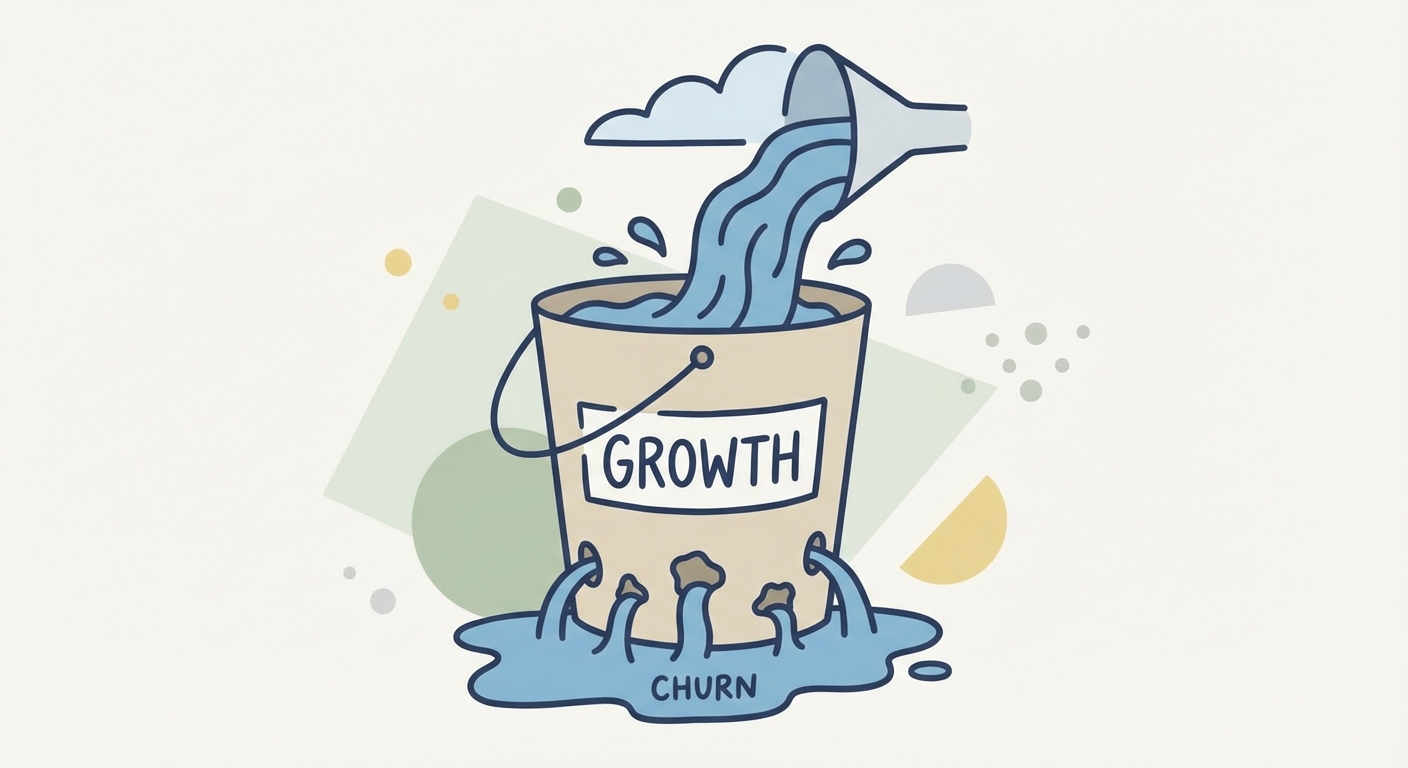
Warning: If you scale acquisition without fixing retention, you are just pouring water into a leaky bucket. You will burn through your total addressable market and have nothing to show for it but a high churn rate.
The Shift to Automation
In Stage 3, you did things manually to see if they worked. In Stage 4, you automate. You use programmatic SEO to build thousands of landing pages. You use AI to optimize ad spend across platforms in real-time. You build playbooks so you can hire junior staff to run the machine while your senior growth hackers go back to Stage 3 to find the next channel.
This is where you turn users into promoters. You optimize your viral coefficient. You reduce friction. You make sharing your product the path of least resistance.
The Channel Most Roadmaps Are Missing: AI Answer Engines
The Gatekeeper Criteria above asks for three proven channels with consistent CAC. For most teams building that list today, paid search, SEO, and outbound still fill it out. AI answer engines belong on the list too, and they behave differently enough from the other three that they deserve their own line in Stage 1's discovery work, not a bolt-on to existing SEO tracking.
G2's research found that half of B2B software buyers now start their vendor research inside an AI chatbot rather than a search engine (G2, retrieved 2026-09). That's a channel with real volume and close to zero teams treating it like one. Comparing the platforms built to monitor and improve AI visibility is a reasonable Stage 1 research task: find out whether your brand gets named at all before deciding how to invest in changing that.
The stage logic still applies. Learn whether you show up in AI answers for the questions your buyers actually ask. Develop the citation-worthy content and structured claims that give a model something to point to. Optimize which claims actually move citation rate. Scale the ones that work. Same four stages this roadmap already walks through, run against a newer channel.
Integrating the Four Stages with the AARRR Framework
Let’s clear up a common confusion. AARRR is the dashboard. The Four Stages are the engine.
- AARRR (Metrics) tells you what is happening.
- Four Stages (Process) tells you how to fix it.
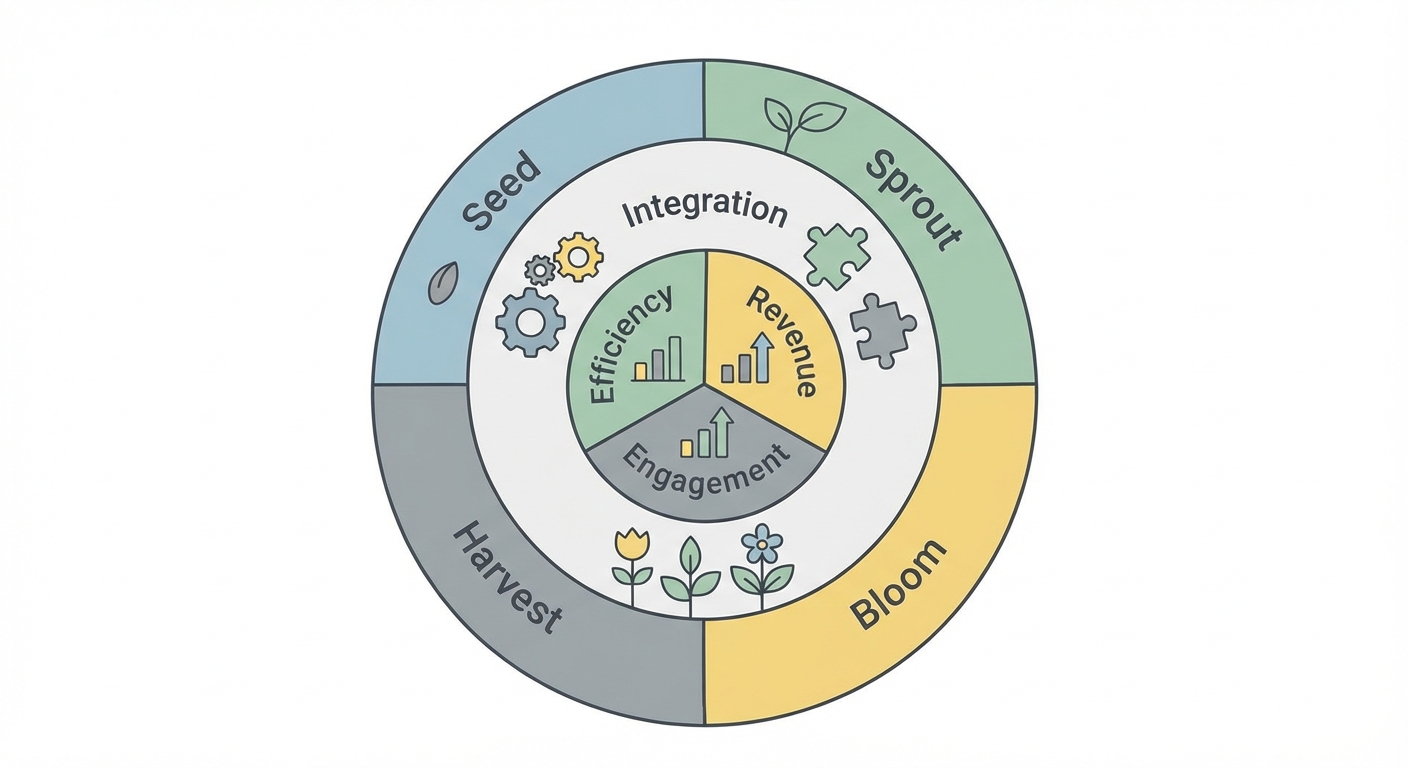
In Stage 1 (Learn), you look at your AARRR metrics to find the problem. In Stage 2 (Develop), you build the tools to track those metrics accurately. In Stage 3 (Optimize), you run experiments specifically designed to move one of those metrics (e.g., "Let's run a test to improve Activation"). In Stage 4 (Scale), you take the winning experiments and automate them to drive massive volume through the funnel.
How to Audit Which Stage Your Business Is Actually In
Most founders lie to themselves. They think they are in Stage 4 (Scale) because they are spending money on ads. But if they don't have the infrastructure or the retention data, they are actually just lost in Stage 2.
Ask yourself these hard questions:
- Have you validated PMF (40%+ threshold)? If NO, you are pre-Stage 1. Go back to product dev.
- Do you have deep customer research and identified bottlenecks? If NO, you are in Stage 1.
- Do you have a functioning analytics and experimentation stack? If NO, you are in Stage 2.
- Are you running 4+ documented experiments every month? If NO, you need to master Stage 3.
- Do you have 3+ proven channels with stable CAC? If YES, congratulations. You are ready for Stage 4.
Identify your stage. Complete it. Do not skip ahead. Skipping stages is the #1 reason growth stalls.
Key Takeaways: Your Four-Stage Growth Hacking Roadmap
Growth isn't magic. It’s a process.
- Before You Start: Validate PMF. If people don't love it, don't market it.
- Stage 1: Invest 1-3 months in deep customer research. Talk to humans.
- Stage 2: Build your tech stack. You need data, not guesses.
- Stage 3: Run structured growth experiments for 3-6 months. Fail fast, learn faster.
- Stage 4: Scale only when you have proven, repeatable channels.
As Eric Thomas said, "Fall in love with the process, and the results will come." Stop chasing the hack. Build the machine.
FAQ
What are the 4 stages of growth hacking?
The four stages are: (1) Learn – Understanding your customer and where they get stuck; (2) Develop – Building the tech stack to measure everything; (3) Optimize – Running experiments (GROWS) to improve your metrics; (4) Scale – Automating what works to grow big. Some people use different words like "Ideation" or "Execution," but the logic is the same: Research, Build, Test, Scale.
Can you start growth hacking without product-market fit?
No. This is the most expensive mistake you can make. Sean Ellis uses the "Very Disappointed" survey: if fewer than 40% of users would be devastated without your product, you don't have PMF. If you try to hack growth before this, you're just filling a leaky bucket. Fix the product first.
How is the AARRR framework different from the four stages?
Think of AARRR (Pirate Funnel) as your dashboard—it tells you what to measure (Acquisition, Activation, etc.). The four stages are your treatment plan—they tell you how to fix the numbers. AARRR finds the problem; the four stages give you the process to solve it.
What is the GROWS process?
GROWS is a sprint cycle for experiments. It stands for Gather ideas, Rank them, Outline the test, Work (do it), and Study the results. You use this heavily in Stage 3 and Stage 4. It’s how you turn random ideas into systematic growth.
How long should you spend in each stage?
There's no timer, but here are the averages: Stage 1 (Learn) takes 1-3 months. Stage 2 (Develop) takes 2-8 weeks. Stage 3 (Optimize) usually needs 3-6 months of testing before you find a gold mine. Stage 4 (Scale) is ongoing. The rule? Don't rush. Companies that run 50+ experiments before scaling succeed 3x more often.
![10 Best Local Rank Tracker Tools: In-Depth Comparison Guide [2025]](https://cdn.pseo.one/6abcb68a626591c40e1c8aa6/687e1c1ef6fe799d288518df/68809c373eb8562bcf68975d/10-best-local-rank-tracker-tools-comparison-guide/feature-image.jpg)