AI-Powered Growth Funnels Fueling B2B SaaS Domination

TL;DR
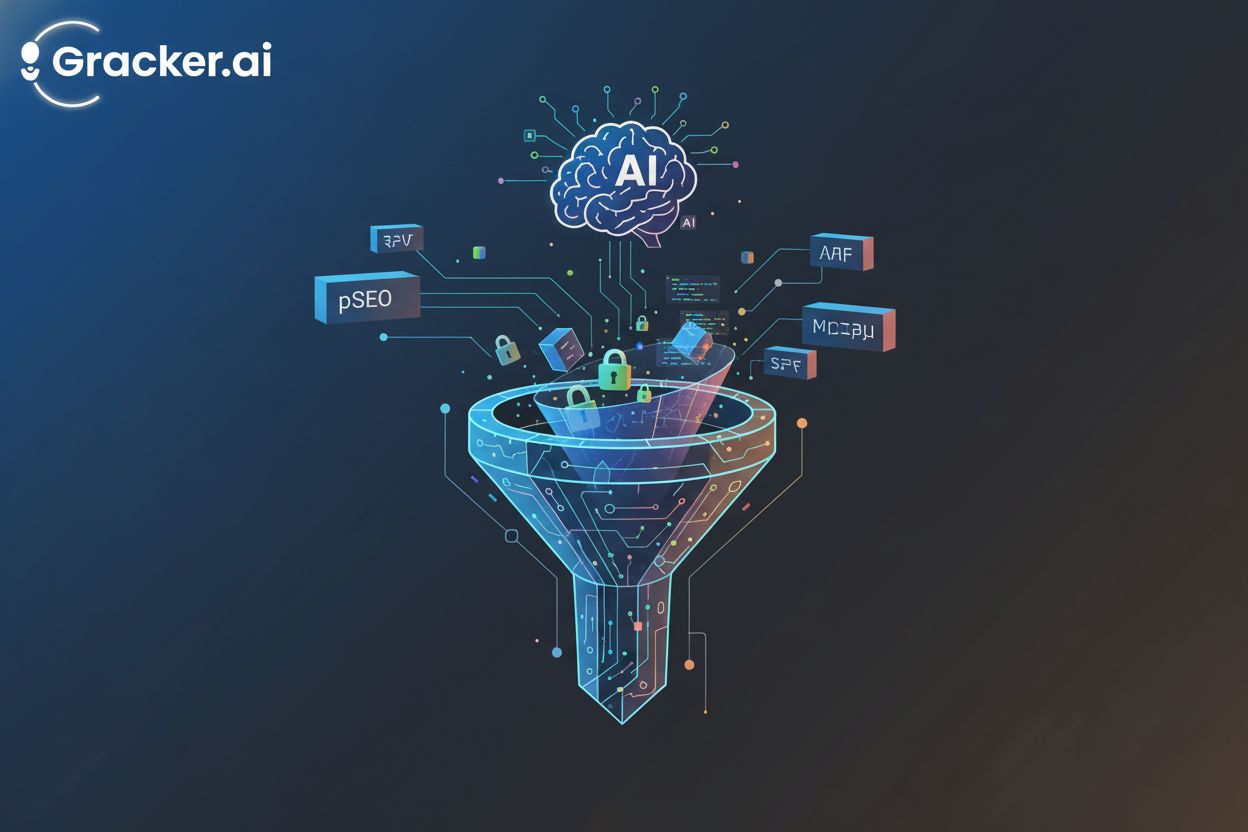
- This article covers how to leverage growth hacking funnels for AI-powered B2B SaaS products, focusing on strategies like pSEO, programmatic SEO and cybersecurity growth hacks. It provides a practical guide to improve user acquisition, engagement, and retention by integrating AI into every stage of the funnel. Learn how to optimize your marketing efforts and achieve scalable growth.
Understanding the Fusion of AI and Growth Hacking
AI is changing growth hacking by turning single-touch tactics into systems that read behavior and adjust in real time. For B2B SaaS companies, that means moving beyond simple, linear user journeys toward understanding and influencing complex, multi-touchpoint interactions across the entire customer lifecycle.
This fusion produces AI-powered growth funnels that are both more efficient and more personalized, which typically shows up as better customer acquisition and retention. Three ideas anchor the rest of this guide:
- AI-powered products use machine learning throughout the product itself — predictive analytics, in-app recommendations, and chatbots that resolve real questions rather than deflect them.
- Growth hacking is a data-driven, fast-iteration discipline focused on growth that actually scales, not one-off wins.
- Traditional funnels break down under AI-era complexity. User journeys now span more channels and touchpoints than a static funnel diagram can represent, which is exactly the gap AI-driven personalization is built to close.
With the basics in place, the next question is how to actually build an acquisition funnel that uses AI well. (If you're starting from a leaky funnel rather than a blank page, diagnosing where a B2B SaaS conversion funnel breaks down is a useful first step before layering AI on top of it.)
Building an AI-Enhanced Acquisition Funnel
An AI-enhanced acquisition funnel starts with identifying high-intent traffic at scale, not just running more ads. Three tactics do most of the work.
- Programmatic SEO (pSEO). This creates landing pages at scale, each tailored to a specific user intent or search query. AI can analyze large volumes of search and behavioral data to identify high-intent keywords, then help generate optimized landing pages for each use case — more relevant traffic, higher conversion rates.
- AI-driven content marketing. Personalizing content recommendations and drafting blog posts, whitepapers, and case studies at scale only works if the output is still discoverable. AI can help identify trending topics, target specific keywords, and suggest internal linking strategies that keep AI-generated content from disappearing into search and AI-answer obscurity.
- AI-powered ads. Using AI to refine ideal customer profiles (ICPs) and build campaigns based on what users actually do — not just declared interest — while optimizing bids and targeting in real time.
None of this is set-and-forget, but it changes acquisition economics meaningfully — for a longer list of tactics beyond these three, see 20 B2B SaaS lead generation strategies. Once people are in the door, the next challenge is turning them into active users.
Activation and Engagement Tactics Powered by AI
Personalized onboarding directly affects long-term customer value, because the first session is where most users decide whether a product is worth their time. AI makes three activation tactics practical at scale.
- Personalized onboarding. AI can analyze a new user's role, how they interact with initial setup steps, and the content they've previously engaged with, then dynamically adjust the onboarding flow — surfacing CRM features for a sales rep, or developer tools for a technical user. That relevance reduces the drop-off that generic onboarding causes.
- Contextual AI chatbots. Instead of generic FAQs, a chatbot grounded in what the user is actually doing in the app can offer a specific tip or link to the right tutorial the moment someone gets stuck.
- Gamification. AI can track individual progress and issue rewards — progress bars, badges, milestone nudges — tuned to each user's behavior and goals rather than a single fixed path.
With users engaged, the next step is keeping them around and turning them into advocates.
Retention and Referral Strategies Using AI
Retention improves when outreach reflects actual behavior instead of a generic send schedule. AI supports this in three ways.
- Personalized email marketing. Segmenting users by real behavior — not just firmographic data — supports tailored sequences that drive engagement instead of reading as spam. AI can also optimize send times for open and click-through rates.
- AI-powered loyalty programs. Rewarding specific actions with incentives chosen by usage patterns, and personalizing loyalty tiers based on how a customer actually uses the product.
- Referral programs. Using AI to identify the reward structure most likely to drive referrals, and personalizing referral messaging so it reads as a genuine recommendation rather than a templated ask.
For more on the predictive models behind personalization at this stage, see AI predictive analytics for B2B SaaS growth. With acquisition, activation, and retention covered, the remaining question is whether the whole system is built securely.
Cybersecurity Growth Hacks and AI
A growth funnel that leaks customer data is not a growth asset — it is a liability with a nice dashboard. Three practices keep AI-powered funnels secure as they scale.
- Implement robust security controls. Encryption, access controls, and regular audits protect user data from breaches at every stage of the funnel.
- Maintain regulatory compliance. GDPR, CCPA, and sector-specific rules carry real financial penalties for non-compliance, and personalization pipelines that touch customer data are squarely in scope.
- Monitor the AI systems themselves for vulnerabilities. AI can help find threats, but AI models are also susceptible to adversarial attacks — inputs deliberately designed to trigger incorrect predictions or classifications. Mitigating this means secure coding practices for AI development, regular model updates, data sanitization, and AI-powered monitoring that watches for anomalous behavior in the AI systems, not just in the surrounding infrastructure.
For cybersecurity and B2B SaaS companies specifically, there's a second layer to this: the funnel you build has to be found in the first place. Buyers increasingly research vendors through AI answer engines like ChatGPT and Perplexity before they ever fill out a form — Gartner forecasts that AI agents will intermediate more than $15 trillion in B2B spending by 2028, with 90% of B2B purchases involving AI agents within three years (Gartner, via Digital Commerce 360, retrieved 2026-09-19). A funnel that only optimizes for Google rankings misses that shift entirely. GrackerAI's AI visibility tracking measures whether your brand actually shows up in those AI-mediated research moments, which is the acquisition-stage counterpart to everything else in this section.
Frequently Asked Questions
What's the difference between a traditional growth funnel and an AI-powered one?
A traditional funnel treats acquisition, activation, and retention as separate, largely static stages. An AI-powered funnel uses behavioral data to adjust each stage in real time — for example, changing onboarding content based on a user's role rather than showing every user the same flow.
Do I need a data science team to build an AI-powered growth funnel?
No. Most of the tactics in this guide — personalized onboarding, AI chatbots, segmented email — are available through existing marketing automation, CRM, and product analytics tools with built-in AI features. A dedicated data science team becomes useful once you're building custom predictive models, not before.
How does AI change B2B SaaS customer acquisition specifically?
AI changes acquisition in two ways: it makes programmatic, intent-matched content production possible at scale, and it changes where buyers research vendors in the first place, since a growing share of B2B research now happens inside AI answer engines rather than traditional search.
What's the biggest security risk in an AI-powered growth funnel?
The two biggest risks are mishandled customer data across personalization pipelines and adversarial manipulation of the AI models themselves. Both require the same fundamentals — encryption, access controls, monitoring — applied specifically to the AI layer, not just the surrounding application.
How do I know if AI answer engines are recommending my B2B SaaS product?
You have to actually query the engines and track the results over time — ChatGPT, Perplexity, and similar tools don't publish who they cite. Tools built for this, including GrackerAI's AI visibility tracking, run structured prompts against multiple engines and report which brands get mentioned and how often.
Conclusion: The Future is AI-Powered Growth
AI is not a buzzword bolted onto growth hacking — it changes how B2B SaaS companies acquire, activate, and retain customers at every stage. Personalized content and ads improve acquisition; tailored onboarding and contextual help improve activation; behavior-driven email and loyalty programs improve retention. None of it holds up without securing the AI systems doing the work, and increasingly, none of it matters if your brand doesn't show up when a buyer asks an AI answer engine for a recommendation in the first place. Building AI-powered growth funnels — and building visibility into how AI engines represent your brand along the way — is how B2B SaaS companies compound these gains instead of chasing them stage by stage.
![10 Best Local Rank Tracker Tools: In-Depth Comparison Guide [2025]](https://cdn.pseo.one/6abcb68a626591c40e1c8aa6/687e1c1ef6fe799d288518df/68809c373eb8562bcf68975d/10-best-local-rank-tracker-tools-comparison-guide/feature-image.jpg)