Use Cases · SIEM

Nobody asks which SIEM is best. They ask what it will cost at ingest.

SIEM evaluations are decided by ingest economics, detection content and migration pain, and buyers now put all three to an assistant first. GrackerAI shows you how the engines answer, which vendors they name, and what it would take to be one of them.

7-day free trial. Cancel anytime before it ends.
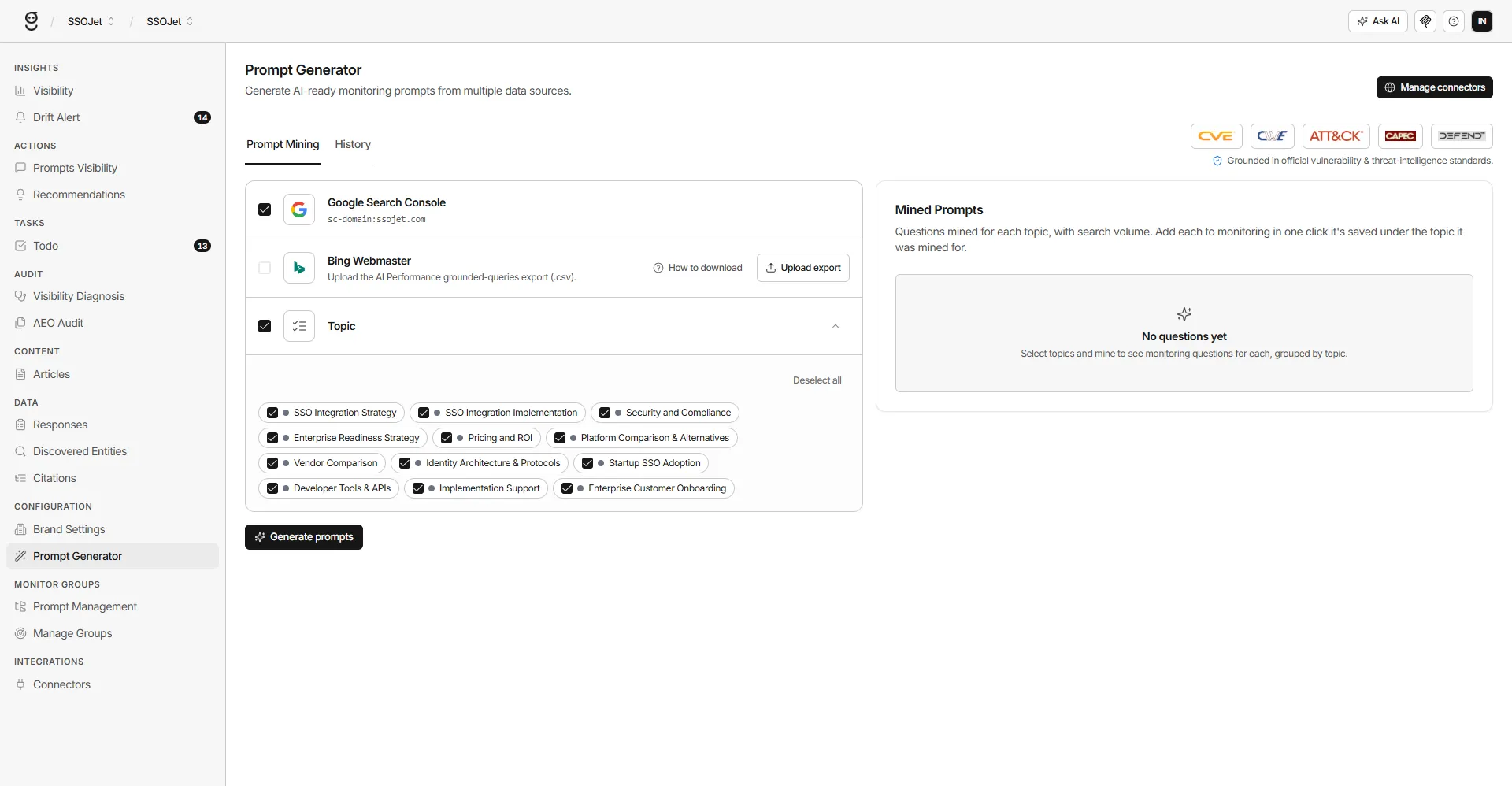
GrackerAI tracking how AI engines recommend SIEM and security analytics platforms
The SIEM AEO reality

The objection is always cost, and the model answers it without you.

Ingest pricing is the defining anxiety of this category, and it is exactly the kind of question buyers take to an assistant rather than a sales team. Whoever published a comprehensible answer gets to frame it.

Why SOC buyers research differently
Ingest cost dominates every evaluation Buyers model data volume against licensing long before they contact a vendor
Migration pain is the real switching barrier Detection content and tuning represent years of work nobody wants to redo
Detection content is a product decision Rule coverage and the ability to write your own decide more than the UI
Log source coverage is verified early A missing parser for a core system ends the evaluation quietly
What you get

What the platform does when cost is the objection

Intelligence

Who is answering the cost question

LLM Citations shows which domains the engines read when they explain SIEM pricing, so you can see whether a competitor's calculator or a consultancy blog is framing your economics.

See LLM Citations
Diagnosis

Why a rival owns the migration answer

Diagnosis takes any prompt about switching platforms, finds the page on your site that should have answered it, and scores it against the pages the engines actually cited.

See Diagnosis
Verification

Every identifier checked at the authority

CVE, CWE, ATT&CK, CAPEC and NIST references on your pages are resolved against the body that issued them, and an active-exploit claim is checked against CISA's Known Exploited Vulnerabilities catalog.

See Security Verification
Content

Fabricated identifiers never ship

Identifiers are resolved before a draft is written, and anything the model produced that is not in that resolved set is stripped out before the page publishes.

See Content Engine
Monitoring

CVE and news sweeps that become prompts

New vulnerabilities and security news are swept on a schedule, scored for exploitability and for how closely they touch your products, and the survivors become monitored prompts automatically.

See AI Visibility Monitoring
Prompt coverage

The prompts that decide a SIEM shortlist

Cost and migration prompts pull cited sources heavily, which makes Perplexity the engine to watch most closely here.

Prompt categoryExample queryWhere it lands most
CostWhat does SIEM ingest actually cost at 2TB a dayPerplexityChatGPT
MigrationMoving detection content off a legacy SIEMClaudePerplexity
DetectionSIEM platforms with strong out-of-the-box ATT&CK coverageClaudePerplexity
SourcesWhich SIEM parses Kubernetes audit logs properlyClaudeChatGPT
ConsolidationReplacing SIEM and SOAR with one platformChatGPTPerplexity
Plays

Four plays that move SIEM pipelines

01

Publish real ingest economics

Buyers model cost with an assistant before they talk to anyone. If the engines answer from a competitor's calculator, the framing is set against you before the first call.

Explore Content Engine →
02

Make migration look survivable

Detection content is the switching barrier. The vendor whose migration documentation the engines can actually read is the one that appears when someone asks how hard it would be.

Explore Diagnosis →
03

Keep ATT&CK references verifiable

Detection coverage claims lean on ATT&CK technique ids. Verification resolves each one against MITRE, so a coverage page is checkable rather than merely confident.

Explore Security Verification →
04

Answer the log source question

A missing parser ends evaluations silently. Explicit, current source-coverage pages give the engines something concrete to cite instead of an assumption.

Explore LLM Citations →
The stack

The right product for every stage of the work

StageWhat you use
Diagnose Find where you are missing todayPrompt Research AI Visibility Monitoring AI Visibility Score
Explain Understand why a prompt goes to someone elseVisibility Diagnosis LLM Citations Competitor Monitoring
Fix Turn findings into published pagesTechnical AEO Audit Recommendation Engine Content Engine
Ship Get it live and keep it movingTasks WordPress Publishing AI Search Analytics

Frequently Asked Questions

Questions B2B SaaS teams ask before getting started

The same all 10 AI engines it tracks for every vertical: ChatGPT, Perplexity, Google AI Mode, Google AI Overviews, Gemini, Microsoft Copilot, DeepSeek, Brave Leo, Grok and Claude. Coverage is by plan — 3 engines on Starter, 4 on Scale and all 10 on Enterprise.

Monitors are weighted toward ingest cost and migration prompts, which is where SIEM decisions are actually made, and ATT&CK technique references are resolved against MITRE before any coverage claim publishes.

Monitoring starts returning answers on the first run, so you can see where you stand immediately. Movement in citations follows publishing, which depends on how fast you ship the fixes the audit and diagnosis hand you.

No. Classic SEO governs ranking; AEO and GEO govern whether a model quotes you. The technical audit overlaps with an SEO audit in places, but the citation work sits alongside what you already do rather than replacing it.

Ready to see your AI visibility score?

60 seconds. 7-day free trial, cancel anytime.

Do not let AI keep
recommending someone else

Start your 7-day free trial and get your AI Visibility Score in about a minute. See exactly where you stand, where competitors are beating you, and the ranked fixes to get into the answer. Cancel anytime before the trial ends.

7-day free trial. Cancel anytime before it ends. Trusted by 500+ B2B SaaS teams.

Partnered with
  • Microsoft
  • Google
  • Amazon AWS
  • Cloudflare
  • Nvidia
Powered by
  • Google Gemini
  • Open AI
  • Claude