Use Cases ยท Data Security

Data security is bought against a regulation, and the regulation changes by country.

Where data lives, who holds the keys and which regime applies are the questions that decide this category, and they are asked of assistants first. GrackerAI shows you which of those answers name you and which quietly do not.

7-day free trial. Cancel anytime before it ends.
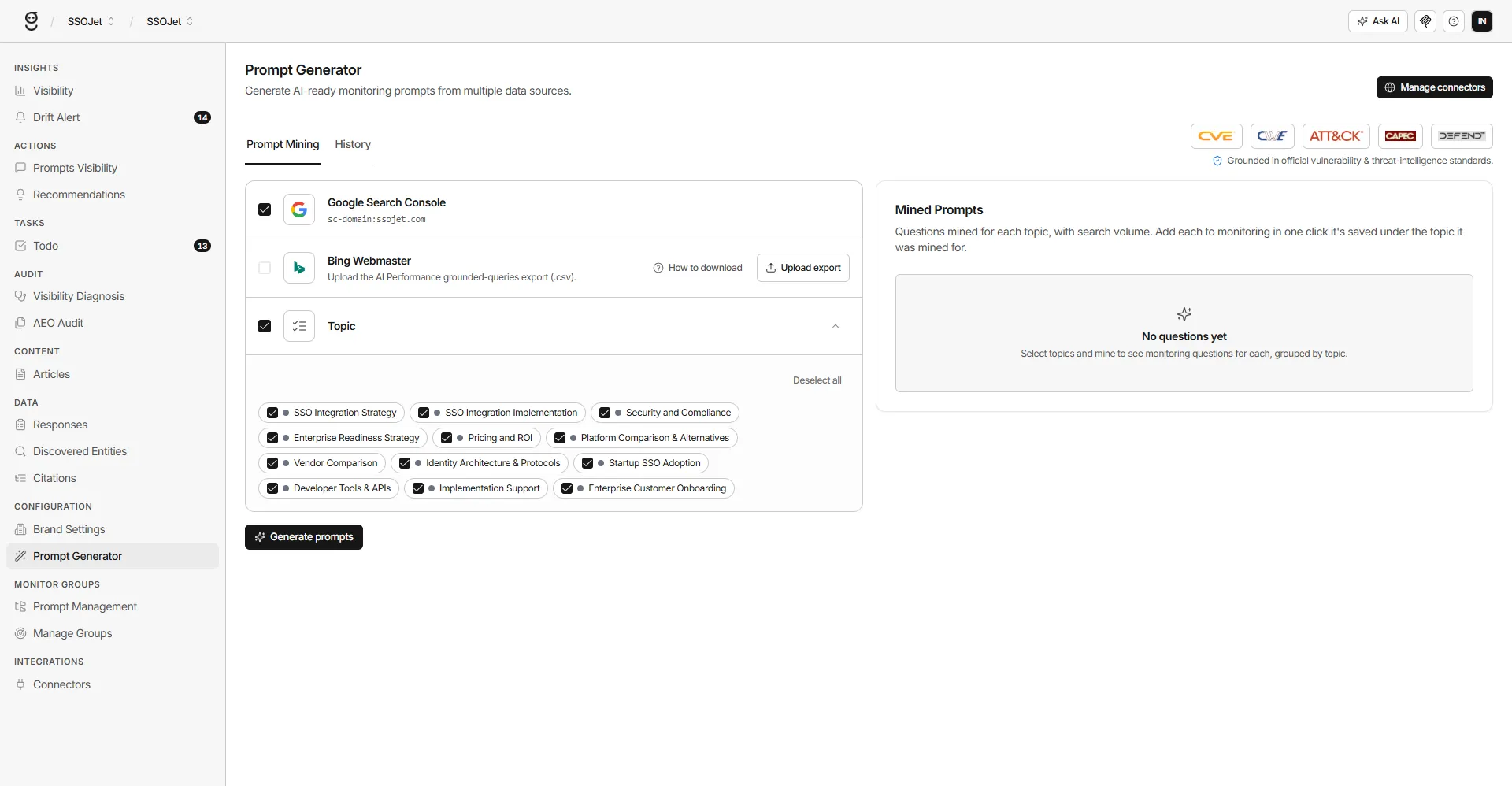
GrackerAI tracking how AI engines recommend data security, DLP and encryption platforms
The data security AEO reality

Residency and key custody decide the shortlist before features are discussed.

A platform that cannot satisfy a residency requirement or a bring-your-own-key demand is not a weaker option, it is an excluded one. Those are verifiable facts, which makes them exactly the sort of thing a model will state confidently and sometimes wrongly.

Why data security buyers research differently
Residency rules change the answer GDPR, Schrems II and regional regimes make the right vendor different per market
Key custody is a hard requirement BYOK and HYOK support is checked before anything else is considered
Discovery is the unglamorous first problem Buyers ask how to find sensitive data before they ask how to protect it
Cryptographic claims are verified FIPS validation and algorithm choices are checked, not taken on trust
What you get

What the platform does when the requirement is verifiable

Monitoring

One topic per regime

Prompt Topics tracks each regulatory context separately, so a strong position under one regime does not hide absence under another.

See Prompt Topics
Audit

Standards references that resolve

The audit verifies that a named publication such as FIPS 197 or SP 800-53 is linked, live, real at the issuing body and relevant to the claim beside it.

See Security Verification
Verification

Every identifier checked at the authority

CVE, CWE, ATT&CK, CAPEC and NIST references on your pages are resolved against the body that issued them, and an active-exploit claim is checked against CISA's Known Exploited Vulnerabilities catalog.

See Security Verification
Content

Fabricated identifiers never ship

Identifiers are resolved before a draft is written, and anything the model produced that is not in that resolved set is stripped out before the page publishes.

See Content Engine
Monitoring

CVE and news sweeps that become prompts

New vulnerabilities and security news are swept on a schedule, scored for exploitability and for how closely they touch your products, and the survivors become monitored prompts automatically.

See AI Monitoring
Prompt coverage

The prompts that decide a data security shortlist

Regulatory prompts pull cited sources heavily, so weight Perplexity and Claude on this vertical.

Prompt categoryExample queryWhere it lands most
ResidencyEncryption platforms that keep EU data in the EUPerplexityClaude
Key custodyWhich vendors support hold-your-own-key properlyClaudePerplexity
DiscoveryFinding sensitive data across unmanaged storageChatGPTClaude
ValidationFIPS 140-3 validated encryption for regulated workloadsPerplexityChatGPT
CoverageDLP that works across SaaS as well as endpointsChatGPTPerplexity
Plays

Four plays that move data security pipelines

01

Publish per regime

One global data-protection page cannot answer a question that changes by jurisdiction. Track the regimes separately and publish where the engines currently answer without you.

Explore Content Engine โ†’
02

State key custody unambiguously

BYOK and HYOK support is a yes-or-no filter. If the engines are unsure, they will name someone who was explicit. An exact, current support page settles it.

Explore Diagnosis โ†’
03

Make validation claims verifiable

FIPS and NIST references are checked by this audience as a matter of habit. Verification resolves each named publication at the issuing catalog before it publishes.

Explore Security Verification โ†’
04

Answer the discovery question

Buyers ask how to find sensitive data long before they ask how to encrypt it. That earlier prompt set is usually unclaimed and leads directly into the rest of the evaluation.

Explore Prompt Mining โ†’
The stack

The right product for every stage of the work

StageWhat you use
Diagnose Find where you are missing todayAI Prompt Mining AI Monitoring AI Visibility Score
Explain Understand why a prompt goes to someone elseVisibility Diagnosis LLM Citations Competitor Monitoring
Fix Turn findings into published pagesTechnical AEO Audit Recommendation Engine Content Engine
Ship Get it live and keep it movingTasks WordPress Publishing AI Search Analytics

Frequently Asked Questions

Questions B2B SaaS teams ask before getting started

The same all 10 AI engines it tracks for every vertical: ChatGPT, Perplexity, Google AI Mode, Google AI Overviews, Gemini, Microsoft Copilot, DeepSeek, Brave Leo, Grok and Claude. Coverage is by plan โ€” 3 engines on Starter, 4 on Scale and all 10 on Enterprise.

Each regulatory regime is tracked as its own topic, and cryptographic and standards references such as FIPS 197 are verified against the issuing catalog rather than trusted.

Monitoring starts returning answers on the first run, so you can see where you stand immediately. Movement in citations follows publishing, which depends on how fast you ship the fixes the audit and diagnosis hand you.

No. Classic SEO governs ranking; AEO and GEO govern whether a model quotes you. The technical audit overlaps with an SEO audit in places, but the citation work sits alongside what you already do rather than replacing it.

Ready to see your AI visibility score?

60 seconds. 7-day free trial, cancel anytime.

Do not let AI keep
recommending someone else

Start your 7-day free trial and get your AI Visibility Score in about a minute. See exactly where you stand, where competitors are beating you, and the ranked fixes to get into the answer. Cancel anytime before the trial ends.

7-day free trial. Cancel anytime before it ends. Trusted by 500+ B2B and security teams.

Partnered with
  • Microsoft
  • Google
  • Amazon AWS
  • Cloudflare
  • Nvidia
Powered by
  • Google Gemini
  • Open AI
  • Claude