AI Visibility Intelligence · Competitor LLM Monitoring

Watch the whole category fight it out inside AI answers.

Your visibility only means something next to everyone else's. Competitor LLM Monitoring shows who owns each prompt, the exact questions where a rival wins and you are missing, and the new brands the models just started naming alongside you — before they become a problem you cannot ignore.

No credit card required. Your competitive view in about a minute.

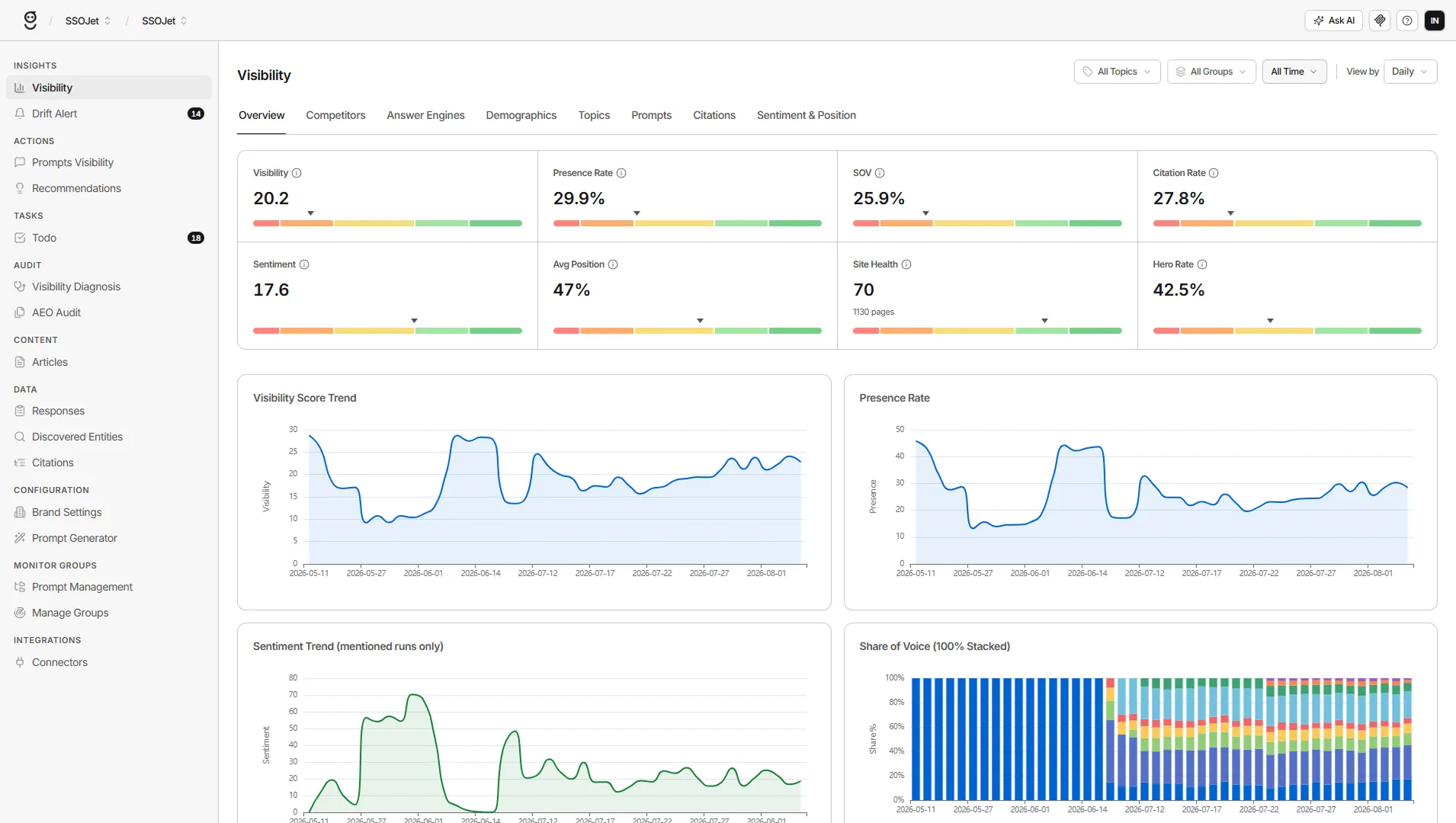
GrackerAI dashboard showing AEO and GEO citation tracking across ChatGPT, Perplexity, Claude, and Gemini
Your own visibility, with nothing to measure it against, is half a number.

Being cited feels like winning. Then you notice the same answer named three rivals above you.

Presence is not the same as winning the comparison. The questions that decide deals are head-to-head, and on those, you either own the answer or a competitor does. Worse, you do not even get to pick who you are compared against. The models choose, and they keep adding names to the list faster than anyone can track by hand.

Cited, still losing

Presence is not a win

You can appear in an answer that recommends a rival first and you fourth. Showing up means nothing if a competitor owns the framing and the top spot.

Blind to the gaps

You cannot target what you cannot see

You do not know the specific prompts a rival owns and you are absent from. Without that, deciding where to win share next is a guess dressed up as a strategy.

A stale rival list

The newcomers you never flagged

You track the competitors you know about. AI introduces buyers to the ones you do not, and by the time you notice, they have banked months of citations.

See the whole category inside AI answers: who owns which prompt, where your gaps are, and which new rivals the models just started naming next to you.

How the competitive view is built

Turning a pile of answers into a live scoreboard

Every answer in your category mentions a set of brands, in some order, with some emphasis. Read enough of them, the right way, and a clear competitive picture appears. Here is how a stream of replies becomes a scoreboard you can act on.

Capture

Collect answers across engines and prompts in your category.

Identify

Find every brand named: you, rivals, and ones you never flagged.

Score

Measure each brand's share and prominence per prompt.

Benchmark

Rank you head-to-head against each competitor.

Surface

Flag the gaps to target and the new rivals to watch.

Scattered answers in. A live, ranked picture of your whole category out.

The hard part we solved

Tracking competitors sounds simple until you realize the list is not fixed. The same recognition that finds your brand in an answer has to find every other brand too, including ones you never entered. We spot product and company names in ordinary text, tie their variants together, and tell a genuine competitor apart from a word that only looks like one.

Then, for each prompt, we measure not just who is named but how prominently and how often across repeated runs and every engine. Because the answers vary from run to run, a single reply is not a verdict. Sampling and smoothing are what turn a noisy set of mentions into a share of voice you can trust and act on.

Citation analysis by competitor

Who owns the answer, prompt by prompt

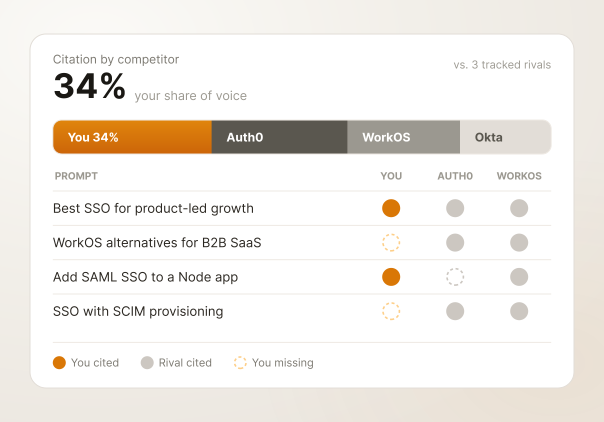
An overall visibility number hides the matchups that matter. So we break it down to the prompt level: on each question your buyers ask, who gets cited, in what order, and whether you are there at all. Side by side, the pattern is impossible to miss.

At the top sits your share of voice, your slice of the whole conversation against each named rival. Below it, the prompt-by-prompt board shows exactly which questions you own and which a competitor has taken.

  • Share of voice against every competitor you track
  • Prompt-level detail, not a single blended figure
  • Your absences marked clearly, so gaps stand out
Dashboard showing share of voice and prompt-by-prompt citation breakdown comparing your brand against named competitors
Targeting the gaps

The exact prompts to win share next

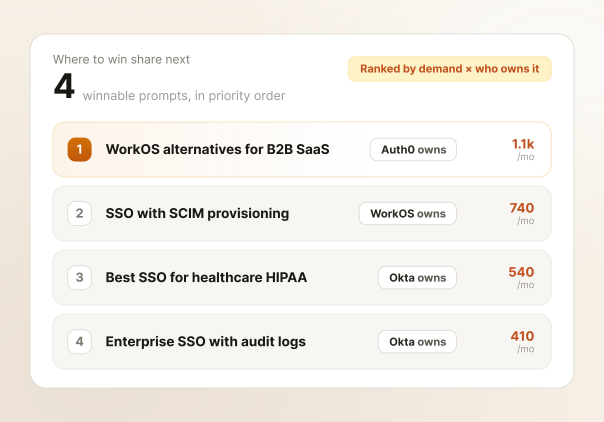
Once you can see where a rival owns the answer and you are absent, the to-do list writes itself. We rank those gaps by how much demand sits behind each prompt and how firmly a competitor holds it, so you spend effort where it changes the score the most.

No more spreading content thin across everything. You get an ordered set of winnable prompts, each one a place a competitor is beating you in front of real buyers right now.

  • Gaps ranked by prompt demand and competitor strength
  • Each gap tied to the rival who currently owns it
  • A clear order of what to work on first
List of competitor-owned prompts ranked by demand volume and gap opportunity, showing where to focus content effort first
Competitor Radar

The rival you should fear most is the one you have not flagged

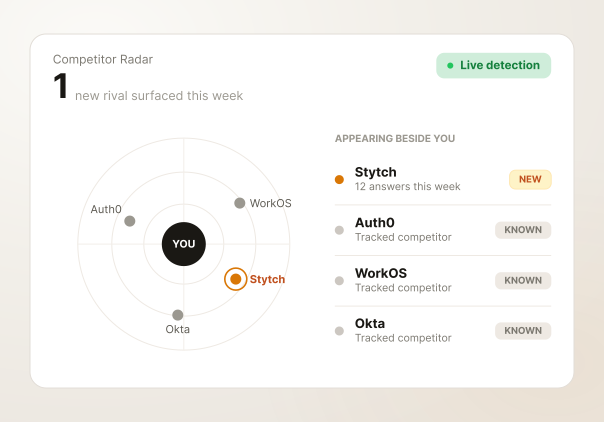
Most tools only watch the competitors you type in, so your view slowly drifts out of date as the market moves. Radar works the other way. It watches for any brand that keeps turning up beside you in answers, decides whether it is really a competitor in your category, and surfaces it the moment it appears.

You hear about an emerging rival from the models themselves, while it is still emerging, instead of discovering it a year later when it is already on every shortlist. Your competitive set stays current with no manual upkeep.

  • New brands detected automatically as they appear beside you
  • Real competitors separated from coincidental mentions
  • Your list stays current without anyone maintaining it
Radar visualization showing newly detected competitor brands appearing alongside your brand in AI answers, ranked by co-occurrence frequency

The hard part we solved

Discovering a competitor nobody told us about is harder than tracking one we were given. Radar reads the brands that co-occur with you across thousands of answers, judges whether each is a real player in your category rather than a stray noun or an unrelated company, merges its name variants, and ranks it by how often and how prominently it shows up beside you. That is unsupervised discovery with a high bar for relevance, which is what keeps the alerts meaningful instead of noisy.

How it compares

Tracking your own brand tells you half the story. The other half is everyone else.

Single-brand trackingCompetitor LLM Monitoring
Reports your visibility aloneBenchmarks you head-to-head against rivals
One blended numberShare of voice, prompt by prompt
Cannot show where a rival winsMarks the exact prompts you are missing from
Leaves you to prioritize by gutRanks the gaps worth closing first
Tracks only the rivals you enterDiscovers new ones automatically with Radar
Goes stale as the market shiftsStays current with no manual upkeep
In action

What the competitive view lets you do

Two jobs that get sharper the moment you can see the whole field, not just yourself.

Win share from a rival

Pick the competitor beating you most and take their ground prompt by prompt

  1. Open the head-to-head board and filter to the rival you most want to beat.
  2. List the prompts they own where you are absent, ranked by demand.
  3. Ship content and earn the sources that put you in those answers.
  4. Watch your share of voice on each prompt climb against theirs.
Catch a new entrant early

Radar alerts you while they are still emerging — not a year later

Radar spots a new brand co-occurring beside you across several engines.
You get an alert: the name, the prompts it appears on, how often it shows.
Add them to your tracked set and watch their share of voice from day one.
You act while they are still emerging, not after they own half the shortlist.
"We were competing against Okta and WorkOS on ads with no results. GrackerAI flipped our strategy, and prospects now arrive already knowing why we are the right fit."
+67% AI visibility
+39% business impact

David Brown, Head of Marketing, SSOJet

What it means for your team

Compete on what AI actually tells buyers, not on what you assume.

When you can see the whole field inside AI answers, competitive strategy stops being guesswork. You know who owns each prompt, exactly where to take share, and who just entered the race — all from the same place your buyers are getting their advice.

8 engines the head-to-head runs across
Per prompt share of voice, you against each rival
Auto new rivals surfaced without manual upkeep
Ranked the exact prompts to win share next
Works with

See the gaps here. Here is what closes them.

LLM Citations

Find the sources a rival uses to win a prompt, so you can earn a place in the same answers.

See LLM Citations

Recommendation Engine

Turn your ranked competitive gaps into a prioritized plan of exactly what to fix and publish.

See Recommendation Engine

AI Monitoring

The answers behind every share-of-voice score come from monitoring across all eight engines.

See AI Monitoring

Do not let AI keep
recommending someone else

Get your free AI Visibility Score in about a minute. See exactly where you stand, where competitors are beating you, and the ranked fixes to get into the answer. No credit card, no commitment.

Free in about a minute. Trusted by 500+ B2B and security teams.

Partnered with
  • Microsoft
  • Google
  • Amazon AWS
  • Cloudflare
  • Nvidia
Powered by
  • Google Gemini
  • Open AI
  • Claude