AI Visibility Intelligence ยท Technical AEO Audit

Your content can be perfect and still be unreadable to a machine.

AI engines do not see your site the way a person does. They see the code, before the design, often before the JavaScript even runs. The Technical AEO Audit reads your site the way those engines do, finds exactly what is blocking them, and hands you the precise fixes to make every page easy to read, trust, and cite.

No credit card required. Your readiness score in about a minute.
GrackerAI dashboard showing AEO and GEO citation tracking across ChatGPT, Perplexity, Claude, and Gemini
You judge your site by how it looks to you. The machine never sees that.

If an AI engine struggles to read a page, your best content on it never gets cited.

A page that looks full and polished in a browser can arrive nearly empty to a crawler. The content loads with JavaScript the bot never runs, the schema is missing or contradicts the page, there is no llms.txt to guide the models, and key facts sit inside images. None of this is visible when you look at the page yourself, which is exactly why it goes unfixed for months.

Problem one

Great content, unreadable

You published the definitive guide. It renders on the client, so the crawler receives an almost empty shell. The work is done and the machine cannot see it.

Problem two

AEO is not classic SEO

Being crawlable for Google is not the same as being parseable and citable by an LLM. There are new expectations, new standards like llms.txt, and a heavier reliance on clean structured data.

Problem three

Invisible problems

Technical issues do not announce themselves. A marketer cannot see malformed schema or a blocked path. The content just quietly fails to get cited, and nobody can say why.

Read your site the way AI engines do, find exactly what is blocking them, and turn it into the precise fixes that make you easy to cite.

How the audit runs

From a live site to a prioritized list of what to fix

The audit does not guess from the outside. It fetches and renders your pages the way AI engines do, checks the things that decide whether a machine can read and trust them, scores the result, and turns every issue into a specific fix. Here is the path.

Crawl

Fetch your pages the way AI engines do.

Render

Run them the same way, and see what a machine receives.

Check

Validate schema, llms.txt, crawlability and structure.

Score

Rate how readable and citable each page is.

Hand off

Turn each issue into a ranked, specific fix.

A live site in. A clear readiness score and an ordered list of fixes out.

The hard part we solved

The trap is judging a site by how it looks in a browser. An AI crawler does not see your design, it sees the code, and increasingly it reads what is there before any JavaScript runs. So we fetch and render your pages the way these engines do, then compare what a machine actually receives against what a visitor sees. When a page that looks full to you arrives nearly empty to a bot, that gap is the problem, and it is invisible from the outside.

Every check is validated, not just detected. A schema block that exists but contradicts the visible content is worse than none at all, because engines learn to distrust the page. So we confirm that what the code claims and what the page shows actually agree, rather than ticking a box because a tag is present.

What the machine sees

The same page, through two very different eyes

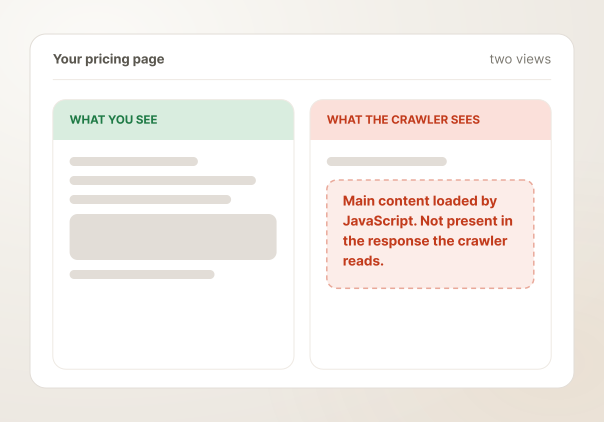
This is the gap that catches almost everyone. Your page looks complete to you because your browser runs all the code that fills it in. Many AI crawlers do not, or they read the raw response first. If your content arrives only after the JavaScript runs, the machine may see a shell where you see an article.

We show you both views side by side, so a problem that is invisible in a browser becomes obvious in a glance.

  • Pages rendered the way AI engines actually fetch them
  • Raw and rendered views compared to expose the gap
  • Content hidden behind client-side rendering flagged clearly
Side-by-side comparison showing what a browser visitor sees versus what an AI crawler receives from the same page
The readiness checks

Four layers decide whether AI can read and trust you

Readiness is not one thing, so the audit looks at the layers that together decide whether an engine can read a page, trust it, and quote it cleanly.

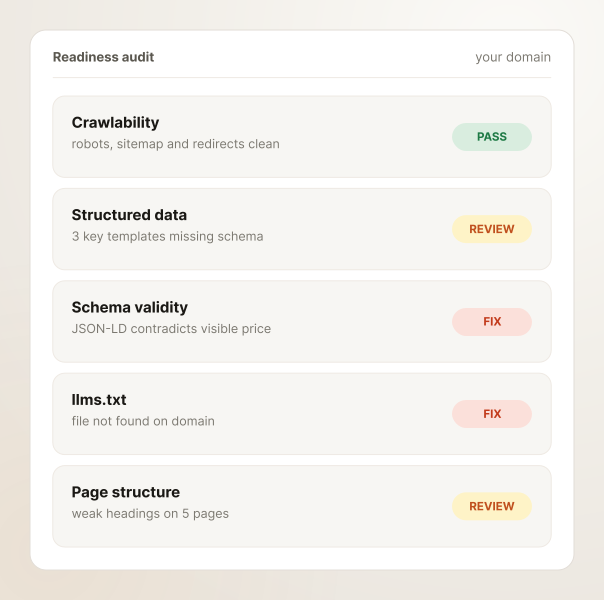
Structured data and schema, so the model knows what a page is and can lift facts without guessing. llms.txt, the emerging file that tells AI systems what your site is and what matters most. Crawlability, the robots rules, sitemaps and redirects that decide what gets seen at all. And page structure, the clear headings and direct answers that make content easy to extract.

  • Schema validated against the visible content, not just detected
  • llms.txt checked for presence, format and coverage
  • Crawl rules, sitemaps and redirects reviewed end to end
  • Heading structure and answer formatting assessed for extraction
Diagram showing the four readiness layers: structured data and schema, llms.txt, crawlability, and page structure
From diagnosis to fixes

An audit that hands you a plan, not a pile of warnings

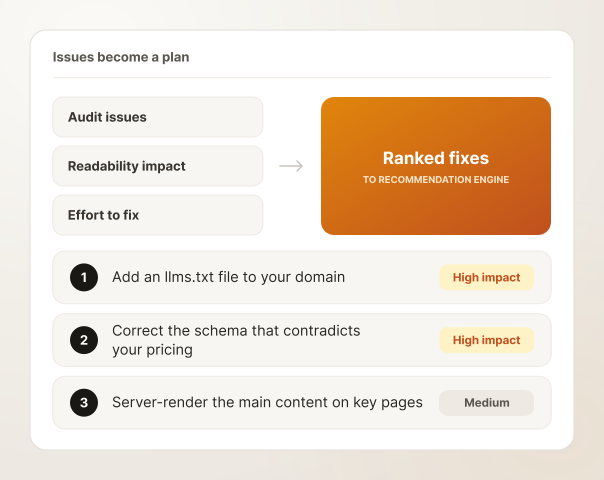
A long list of red flags is just more work. So the audit does not stop at finding problems. Every issue is turned into a specific fix, weighed by how much it improves AI readability and how hard it is to do, and handed to the Recommendation Engine to rank against everything else competing for your time.

What you get is short and ordered: the few changes that will most improve how easily AI can read and cite you, first.

  • Each issue rewritten as a concrete, specific fix
  • Weighed by readability impact and effort
  • Ranked by the Recommendation Engine, not dumped as a list
Illustration showing audit issues transformed into a ranked, prioritized action plan for engineering teams
How it compares

A classic SEO audit checks the old rules. AI reads by new ones.

A traditional SEO auditTechnical AEO Audit
Crawls like a search engine of oldReads your site the way AI engines do
Misses JavaScript-only content gapsCompares raw and rendered to expose them
Detects schema if a tag existsValidates schema against the visible page
Has never heard of llms.txtChecks llms.txt presence, format and coverage
Hands you a long list of warningsHands you a few ranked fixes
In action

What a readiness audit unlocks

Two moments where knowing what the machine sees changes the outcome.

Find what is blocking AI

When your content is strong but the citations are not coming

The audit usually finds the reason in the plumbing.

  1. Run the audit and read your AI readiness score and its weakest layers.
  2. See the pages where a crawler receives far less than a visitor does.
  3. Spot the missing llms.txt and the schema that contradicts the page.
  4. Take the ranked fixes straight to your engineering team.
Ship the fixes and re-check

Technical readiness is not a one-time job

Re-auditing confirms a fix worked before you move on.

  1. Apply the top fixes, from llms.txt to server-rendered content.
  2. Re-run the audit and watch the readiness score climb.
  3. Confirm the crawler now sees the same content your visitors do.
  4. Move on knowing your best pages are finally citable.
"GrackerAI helped us reach developers and decision-makers right when they were researching. The pipeline impact has been remarkable."
+78% AI visibility
+52% business impact

Nathan Sharma, VP of Growth, MojoAuth

What it means for your team

Make sure the machine can read the work you already did.

Most teams pour effort into content and never check whether AI can actually read it. The audit closes that gap, turning silent technical failures into a short, ranked list of fixes that make every page you publish easier to cite.

Bot view your site as the engines actually receive it
4 layers schema, llms.txt, crawlability and structure audited
1 score how readable and citable your site is, in one number
Ranked every issue turned into a prioritized fix
Works with

The audit finds the fixes. Here is what carries them out.

Recommendation Engine

Your technical fixes land here, ranked against every other opportunity by impact, so the most important changes happen first.

See Recommendation Engine

Content Engine

Pair a readable site with content built to be cited, with the structure and schema AI engines reward.

See Content Engine

AI Visibility Score

Technical readiness is one input into how citable you are. Watch your visibility score respond as you fix it.

See Visibility Score

AI Search is evolving every day. Don't get left behind.

Discover your AI visibility gaps and start capturing millions of new product discovery clicks.

Partnered with
  • Microsoft
  • Google
  • Amazon AWS
  • Cloudflare
  • Nvidia
Powered by
  • Google Gemini
  • Open AI
  • Claude