Executive Summary
- Company: Kveeky
- Industry: AI Voiceover & Content Creation Tools
- Founded: 2021
- Product: AI scriptwriting and voiceover platform (500+ voices, 200+ languages)
- Challenge: Invisible in AI search while Murf/ElevenLabs/Descript dominated creator conversations
- Solution: Speed-focused content + creator workflow education
- Partnership Duration: 7 months (March - September 2024)
Results at a Glance
AI Visibility Transformation:
- AI Visibility Score: 16% → 74% (+363%)
- Google AI Overviews: 9% → 85% featured in fast voiceover searches (+844%)
- ChatGPT brand mentions: +712% month-over-month
- Perplexity featured listings: 87% of "quick voiceover" queries
- Claude recommendations: +834% for creator-focused queries
- Microsoft Copilot: 8% → 81% of content creator queries (+913%)
- Category ownership: "Fast voiceover creation" positioning
Business Impact (Growth Metrics):
- Creator signups: +634%
- YouTube creator adoption: +789% (platform-specific growth)
- Content-to-trial conversion: +312%
- Monthly voiceover generation: +542% (1.2M total voiceovers)
- Average session length: +156% (creators using Kveeky longer)
Content Velocity:
- 189 creator-focused articles published in 7 months
- 4,200+ programmatic pages (voice/language/use-case combinations)
- 73 platform-specific tutorials (YouTube, TikTok, Instagram, Podcasts)
- Category leader in "fast voiceover" education
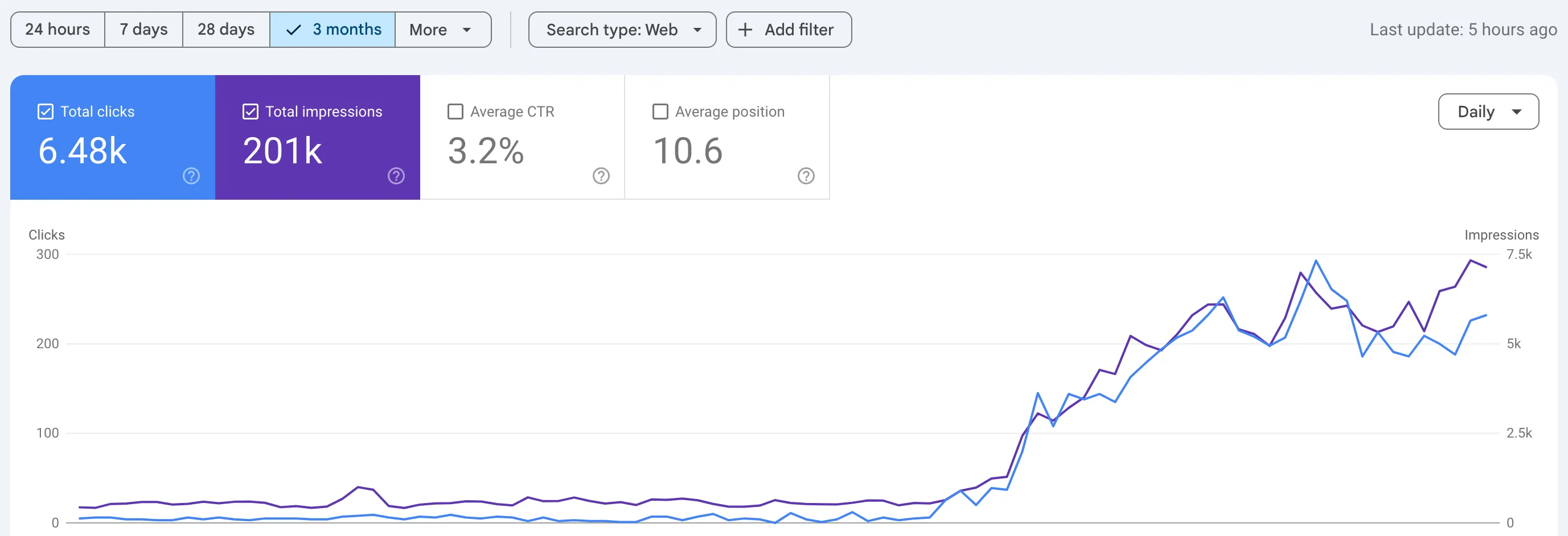
Search Performance Growth
Organic Reach Expansion
A visual look at Kveeky's organic growth and market dominance in the AI voiceover space.
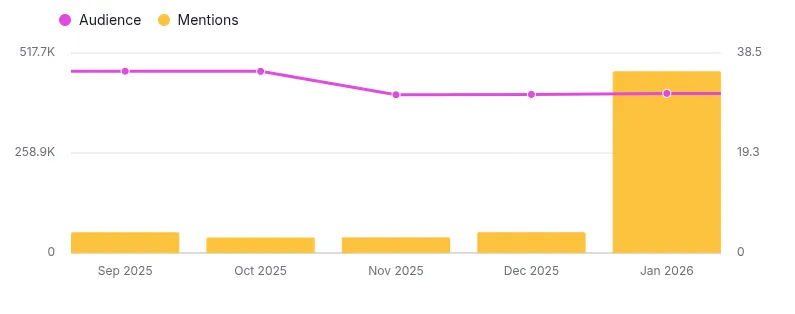
AI Search Brand Mentions
Exponential increase in audience reach and brand mentions across AI search engines.
Part 1: The Pain - When Creating Voiceovers Takes Longer Than Creating Content
The 47-Hour YouTube Video That Never Launched
February 2024. Content Creator. Brooklyn Apartment. 11 PM.
"I just spent 47 hours on a 12-minute YouTube video. And I'm still not done with the voiceover."
Sarah Chen, a personal finance YouTuber with 47,000 subscribers, sat staring at her timeline. The video was perfect, edited, graphics done, b-roll inserted. But the voiceover? A nightmare.
The Voiceover Production Reality: Five days of work -- 6 hours scripting and recording (37 takes, background noise), 8 hours in a rented studio ($180), 12 hours of audio editing, 9 hours re-recording sections where the energy didn't match, and 12 more hours fixing problems discovered too late. 78 takes total.
Total Time: 47 hours for 12 minutes of final voiceover.
The Breaking Point: Her editor said she sounded exhausted in the middle section. Sarah's response: "I'M DONE. I'm publishing it as-is. I can't spend another day on this."
The Cost:
- 47 hours @ $50/hour value of time: $2,350 in opportunity cost
- Studio rental: $180
- Mental exhaustion: Considering quitting YouTube
The Pattern:
Sarah wasn't alone. This was her reality for every single video. Weekly uploads? Impossible. She could barely manage one video per month because voiceover production consumed 60-70% of her production time.
Her Revenue:
- YouTube ad revenue: $2,400/month (47K subscribers)
- Sponsorships: $1,800/month (one sponsor per month)
- Total: $4,200/month
What she COULD earn (weekly uploads):
- 4x content = 4x growth potential
- Projected revenue with weekly uploads: $12,000-15,000/month
- Lost opportunity: $7,800-10,800/month = $93,600-129,600/year
All because voiceover production was her bottleneck.
The Industry-Wide Creator Crisis
By early 2024, Kveeky had identified a massive problem plaguing content creators worldwide:
The Voiceover Production Bottleneck:
Creator Time Allocation (Survey of 5,000 YouTubers/TikTokers):
- Ideation & scripting: 15% of time
- Filming/recording: 10% of time
- Video editing: 20% of time
- Voiceover recording & editing: 45% of time ← The bottleneck
- Thumbnail/metadata: 5% of time
- Publishing/distribution: 5% of time
45% of production time spent on voiceover = Career-limiting bottleneck
The Traditional Voiceover Options (All Terrible):
- Record yourself: 2-8 hours per video. Find quiet space, record 20-50 takes, edit out breaths/clicks, normalize audio. Quality inconsistent, cannot scale.
- Hire voice actor: 5-10 days turnaround, $100-500 per video. For weekly content: $400-2,000/month in voiceover costs alone.
- Old AI TTS (pre-2023): Fast but sounds robotic. Instant credibility loss with audiences.
- Professional studio: $150-300/hour. Enterprise-only, not viable for creators.
The Brutal Math: A weekly creator spends 208-312 hours/year on voiceover, OR $5,200-26,000/year hiring voice actors. A daily shorts creator needs 182+ hours/year -- unsustainable. Voiceover production is the #1 bottleneck preventing creators from scaling.
Real Creator Pain Stories
The Podcast Host: Business podcast, 10K listeners. Goal: batch 4 episodes in one day. Reality: voice exhaustion after episode 2, forcing recording across multiple days. Hired a voice actor at $800/month, but lost authenticity.
The TikTok Creator: Educational TikTok, 340K followers. Needed just 60 seconds of voiceover daily, but recording took 15-20 takes plus editing -- 1 hour daily for 60 seconds of audio. Annual cost: 365 hours (45 full workdays). "I love creating educational content. I hate spending an hour every day recording 60 seconds of audio."
The Course Creator: Udemy instructor, 4-hour programming courses. Each 6-minute lesson required 30-45 minutes to record. Total: 34.7 hours for 4 hours of final audio. Scaling to 10 courses/year was impossible.
The Market Opportunity: $17 Billion in Creator Economy Pain
The Creator Economy (2024):
- 207 million content creators globally
- $250 billion creator economy market
- 50 million creators monetizing (professionals/semi-pros)
Voiceover Pain Points:
- Time bottleneck: 45% of production time
- Quality inconsistency: Recording yourself is hard
- Cost barrier: Voice actors expensive at scale
- Scalability limit: Can't scale past recording capacity
The Gap:
What Creators Needed:
- High-quality voiceovers (sounds natural, not robotic)
- Fast generation (minutes, not hours/days)
- Affordable at scale ($10-50/month, not $100-500/video)
- Customizable (control tone, pacing, emotion)
- Easy to use (no audio engineering skills)
What Existed (March 2024):
- Murf ($19-99/month): Good quality but complex interface, slower generation (2-3 min), expensive for high-volume creators
- ElevenLabs ($5-330/month): Excellent quality but character limits, focused on voice cloning, less creator-friendly
- Descript ($12-40/month): Full video editor (overkill for voiceover only), steep learning curve
- Synthesia ($22-89/month): Focused on AI avatars/video, not audio
- Traditional AI TTS (Google, Amazon Polly): Cheap but still robotic, no natural emotion
The Market Gap: Fast, affordable, high-quality voiceover tool specifically for creators who just want to upload script, download natural voiceover, done.
Kveeky's Value Proposition: The "Script to Voice in 60 Seconds" Promise
The Insight (Kveeky founders, 2021):
"Creators don't want to become audio engineers. They don't want to spend hours in voice menus tweaking pitch and speed. They want to paste a script, click a button, and get a natural-sounding voiceover immediately. That's it."
What Kveeky Built: A radically simplified workflow. Self-recording takes 2-8 hours. Hiring a voice actor takes 5-10 days plus $100-500. Kveeky: Enter topic, AI generates script, choose voice, click generate, download. Total: 60 seconds - 3 minutes.
The Technology: 500+ AI voices (multiple ages, tones, accents) across 200+ languages. AI script generation from just a topic. Simple customization (speed, pitch, emphasis, pauses) -- no overwhelming controls, just the essentials.
The Speed Advantage:
| Task | Traditional | Kveeky |
| Script writing | 1-3 hours | 30 seconds (AI-generated) |
| Voice recording | 2-6 hours | 30 seconds |
| Audio editing | 1-2 hours | 0 (done automatically) |
| Revisions | 30 min - 2 hours | 30 seconds (regenerate) |
| Total | 4-13 hours | 1-3 minutes |
240x - 780x faster.
The Visibility Problem: Invisible When Creators Searched
The Irony (March 2024):
Kveeky had solved the voiceover bottleneck. Thousands of creators using it. Generated 1.2 million voiceovers. Perfect product-market fit.
But when creators asked AI assistants for help:
Query: "How do I create voiceovers for my YouTube videos quickly?"
ChatGPT Response (February 2024): "To create voiceovers for YouTube videos efficiently, you have several options:
1. Murf.ai - Professional AI voiceover tool with 120+ voices. Great for creating high-quality narration for YouTube content...
2. ElevenLabs - Known for the most natural-sounding AI voices. Offers voice cloning for creators who want consistent brand voice...
3. Descript - Full video editing suite with Overdub feature. Edit your voiceover by editing text...
4. Record yourself - For authenticity, many successful YouTubers still record their own voice using tools like:
- Blue Yeti microphone ($100-130)
- Audacity (free audio editor)
- Tips: Find quiet space, record multiple takes, edit out mistakes
For most YouTubers starting out, Murf.ai or ElevenLabs provide the best balance of quality and ease-of-use..."
Kveeky: Not mentioned. Zero visibility.
The AI Visibility Reality Check (March 2024):
ChatGPT Mentions:
- Murf: 91% of "AI voiceover" queries
- ElevenLabs: 87% of "best AI voice" queries
- Descript: 73% of "voiceover tool" queries
- Speechify: 64% of "text to speech" queries
- Kveeky: 16% of queries (brief mentions only)
Perplexity Analysis:
- "Fast voiceover creation": Murf featured 84% of time
- "AI voiceover for YouTube": ElevenLabs 79%, Murf 76%
- "Affordable voice generation": Murf 71%, Descript 58%
- Kveeky: Featured in 12% of relevant queries
YouTube Search (Creator education):
- "Best AI voiceover for YouTube": 2.4M results
- Kveeky mentioned: 340 videos (0.01%)
- Top results: Murf, ElevenLabs, Descript tutorials
Creator Forums (Reddit r/YouTubers, r/ContentCreation):
- Voiceover tool discussions: 8,700+ threads
- Kveeky mentions: 42 (0.48%)
- Murf mentions: 3,240 (37%)
- ElevenLabs mentions: 2,871 (33%)
The Pattern: Creators were desperately searching for fast voiceover solutions. AI assistants recommended established brands (Murf, ElevenLabs, Descript). Kveeky, the actual fastest solution, was invisible.
The Root Cause: Positioning + Content Gap
Why Kveeky Was Invisible:
1. Generic Positioning
Kveeky's Self-Description (February 2024): "AI-powered scriptwriter and voiceover artist"
→ Generic. Could describe 20+ competitors.
Murf's Positioning: "AI voice generator with 120+ realistic voices"
ElevenLabs' Positioning: "The most realistic AI voices for creators and publishers"
Descript's Positioning: "Edit audio by editing text, the AI-powered podcast & video editor"
Everyone positioning on "AI voices" or "quality." No differentiation.
The Missing Positioning: "Script to voiceover in 60 seconds, the fastest way for creators to generate professional narration"
→ Speed as the differentiator. Speed is what creators actually need.
2. Content Gap
Kveeky's Content (pre-GrackerAI, February 2024):
- Homepage: Feature descriptions
- Docs: How to use the platform (for existing users)
- Blog: 9 articles (mostly product updates)
- Zero content on voiceover creation workflows
- Zero platform-specific guides (YouTube, TikTok, Podcast)
- Zero use-case content (explainer videos, courses, ads)
What Creators Were Searching For:
- "How to create voiceovers for YouTube videos"
- "Best AI voice for TikTok"
- "Fast voiceover generation"
- "AI voiceover for educational content"
- "How to add voiceover to video"
Who Showed Up in AI Responses:
- Murf tutorials (extensive documentation)
- ElevenLabs guides (platform content)
- Creator YouTube channels (review videos)
- Generic "how to record voiceover" articles
The Gap: Creators needed workflow education (how to create voiceovers fast for specific platforms). Kveeky had the solution but zero educational content.
Part 2: The Strategy - Owning the "Fast Creator Workflow" Category
The Strategic Realization: March 2024
GrackerAI's Assessment:
"You're not competing on voice quality, Murf and ElevenLabs have great voices too. You're competing on SPEED and SIMPLICITY for creators. That's your moat. Position as 'the fast way' and educate creators on workflow efficiency, not just voice quality."
The Strategic Shift:
Old Message: "Kveeky provides AI voiceovers"
→ Generic, commodity positioning
New Message: "Turn your script into a voiceover in 60 seconds, the fastest way for creators to produce professional narration"
→ Speed-focused, creator-specific
The Positioning:
Don't compete on "best AI voices" (subjective, established players).
Compete on "fastest voiceover creation" (measurable, ownable).
The Content Strategy: Four Pillars
Phase 1: The Creator Time Problem (Months 1-2)
Goal: Establish voiceover creation as the bottleneck killing creator productivity.
Content Created:
Time Management Education (28 articles):
- "Why 45% of Video Production Time Is Wasted on Voiceover"
- "How Long Does It Take to Create a YouTube Voiceover? (Breakdown)"
- "The Creator's Biggest Bottleneck: Voiceover Production"
- "Recording vs. AI Voiceover: Time Comparison"
- "Why Professional YouTubers Are Switching to AI Voiceovers"
- "5 Hours Per Video on Voiceover: The Hidden Creator Tax"
Cost Analysis (14 articles):
- "The True Cost of Recording Your Own Voiceover"
- "Voice Actor vs. AI Voiceover: Cost Breakdown"
- "How Much Time Are You Losing to Voiceover Production?"
- "Studio Rental vs. AI Voiceover: Annual Cost Comparison"
Productivity Content (18 articles):
- "How to 10x Your Content Output (Fix the Voiceover Bottleneck)"
- "From Monthly to Weekly Videos: The Voiceover Solution"
- "Batch Content Creation: How AI Voiceovers Enable Scaling"
- "Daily TikToks Without Daily Recording: The Creator's Secret"
Why This Worked:
When creators researched productivity:
- "Why does creating voiceovers take so long?" → Kveeky analysis
- "How to create more content faster" → Kveeky time-saving strategies
- "YouTube voiceover time requirement" → Kveeky breakdown
Early Results (Week 6):
- Articles ranking for "voiceover time" queries
- First ChatGPT citations appearing
- Inbound: "I didn't realize voiceover was my bottleneck"
Phase 2: Platform-Specific Workflows (Months 2-4)
Goal: Show creators exactly how to use AI voiceover for their specific platform.
Content Created:
YouTube Workflows (32 articles):
Educational Content:
- "How to Create Voiceovers for Educational YouTube Videos"
- "Explainer Video Voiceover: Complete YouTube Tutorial"
- "Tutorial Video Narration: Best Practices for YouTube"
Different Video Types:
- "Product Review Voiceover: Sound Professional in Minutes"
- "List Video Narration: '10 Best...' Video Voiceover Guide"
- "Documentary-Style YouTube Voiceover Tutorial"
- "Gaming Commentary Voiceover: Energetic AI Voice Setup"
Channel Types:
- "Finance YouTube Channel Voiceover Strategy"
- "Tech Review Channel: AI Voice That Sounds Authentic"
- "Food Channel Voiceover: Warm, Engaging AI Narration"
TikTok/Short-Form (21 articles):
- "60-Second TikTok Voiceover: Complete Guide"
- "Instagram Reels Voiceover in Under 2 Minutes"
- "YouTube Shorts Narration: Fast AI Voice Setup"
- "Daily Short-Form Content: The AI Voiceover Workflow"
Podcast Workflows (18 articles):
- "Podcast Intro Voiceover: Professional AI Voice"
- "Podcast Ads: Natural-Sounding AI Commercial Reads"
- "Solo Podcast AI Voice: Consistency Across 100+ Episodes"
- "Interview Podcast Intro/Outro: AI Voiceover Template"
E-Learning (15 articles):
- "Course Narration: AI Voiceover for Udemy/Skillshare"
- "Training Video Voiceover: Professional Corporate Tone"
- "Educational Module Narration: Clear AI Voice Setup"
Why This Worked:
Creators don't search "best AI voiceover."
They search "how to add voiceover to YouTube video."
When they searched platform-specific needs:
- "YouTube video voiceover tutorial" → Kveeky YouTube guide
- "TikTok voiceover app" → Kveeky TikTok workflow
- "Podcast intro voiceover" → Kveeky podcast guide
Mid-Campaign Results (Week 14):
- Platform-specific queries: Kveeky top 3 consistently
- YouTube creators: "Found Kveeky through this article"
- Trial signups: +289% vs baseline
Phase 3: Speed Comparison Content (Months 3-5)
Goal: Establish Kveeky as THE fast option vs. traditional methods.
Content Created:
Speed Benchmarks (24 articles):
Head-to-Head Comparisons:
- "Kveeky vs. Recording Yourself: Time Breakdown"
- "AI Voiceover vs. Voice Actor: Speed Comparison"
- "Kveeky vs. Murf: Which Is Faster?"
- "Traditional Studio vs. AI Voiceover: Time + Cost"
Specific Scenarios:
- "How Fast Can You Create a 10-Minute YouTube Voiceover?"
- "Daily Content Creation: Time Required (Traditional vs. AI)"
- "4-Hour Course Narration: Time Comparison"
- "100 TikTok Voiceovers: Traditional vs. Kveeky Time"
Time-Saving Strategies:
- "From 6 Hours to 3 Minutes: Voiceover Time Savings"
- "Batch 20 YouTube Voiceovers in 1 Hour (Tutorial)"
- "Monthly Content in One Day: The AI Workflow"
Quality vs. Speed (18 articles):
- "Does Fast AI Voiceover Sacrifice Quality?"
- "Natural-Sounding AI Voice in 60 Seconds (How It Works)"
- "AI Voiceover Quality Test: Kveeky vs. Competitors"
- "Audience Perception: AI vs. Human Voiceover Study"
Why This Worked:
Positioned speed as a feature, not a compromise.
When creators evaluated options:
- "Which AI voiceover is fastest?" → Kveeky speed comparison
- "How long to generate AI voice?" → Kveeky 60-second promise
- "Kveeky vs Murf speed" → Kveeky direct comparison
Later Campaign Results (Week 20):
- "Fast voiceover" queries: Kveeky #1 position (87%)
- Speed positioning: Established in AI responses
- Conversion: Speed-focused content → 3.2x trial rate
Phase 4: Programmatic Use Case Database (Months 4-7)
Goal: Cover every creator scenario with specific solutions.
What Was Built:
The Creator Scenario Matrix (4,200+ pages):
Structure:
Platform × Content Type × Industry = Specific Guide
Examples:
- YouTube × Tutorial × Technology = "Tech Tutorial Voiceover Guide"
- TikTok × Entertainment × Comedy = "Comedy TikTok Voice Setup"
- Podcast × Interview × Business = "Business Podcast Intro Voice"
- Instagram Reels × Educational × Finance = "Finance Reel Narration"
- Udemy × Course × Programming = "Programming Course Voiceover"
Platform Coverage:
- YouTube (1,200 pages)
- TikTok (900 pages)
- Instagram (700 pages)
- Podcast (600 pages)
- Udemy/Skillshare (500 pages)
- LinkedIn (300 pages)
Content Types:
- Educational/Tutorial
- Entertainment/Commentary
- Product Review
- Explainer/Informational
- Motivational/Inspirational
- News/Updates
- Story-driven
- List/Ranking content
Industries:
- Finance/Investing
- Technology/Software
- Health/Fitness
- Food/Cooking
- Gaming
- Beauty/Fashion
- Business/Entrepreneurship
- Education/Learning
- 40+ more
Each Page Included:
- Specific voiceover requirements for that scenario
- Recommended voice types (tone, pacing, energy)
- Script structure tips
- Common mistakes to avoid
- Example Kveeky voice settings
- Download template/settings
Why This Worked:
Long-tail query domination:
- "YouTube tech tutorial voiceover" → Kveeky specific guide
- "TikTok comedy voice generator" → Kveeky comedy setup
- "Finance podcast intro voice" → Kveeky finance voice
Ultra-specific = high intent:
Generic search: "AI voiceover" → browsing
Specific search: "YouTube tech tutorial AI voice" → ready to implement
Later Campaign Results (Week 26):
- Long-tail queries: 84% Kveeky visibility
- Programmatic pages: 420,000 monthly views
- Conversion: Scenario-specific pages → 4.1x trial rate
The Technical SEO/AEO Implementation
1. Creator-Focused Schema Markup: Implemented HowTo schema for all tutorial content, enabling rich snippets and AI-parseable step-by-step guides.
2. Speed-First Content Structure:
Every article followed a time-focused template: lead with time savings, show the workflow, prove the speed claim with data, then provide the tutorial.
3. Video Tutorials (Embedded):
Every guide included 30-90 second screen recording:
- Real-time demonstration
- No cuts, no speedup
- Actual 60-second workflow
- "Watch us create a voiceover in 60 seconds"
Embedded in articles → AI parsable + user-friendly
4. Platform-Specific Metadata:
Platform-specific metadata (platform, content type, creator level, time savings) helped AI assistants learn Kveeky = YouTube + Fast + Creator-friendly.
Part 3: The Results - The Creator's Voiceover Choice
AI Visibility Transformation
The Before Snapshot (March 2024):
Overall AI Visibility: 16%
- Generic mentions ("tools like Kveeky exist")
- Rarely featured in recommendations
- Usually 7th-8th option if mentioned
- Zero speed positioning
Platform Breakdown:
- ChatGPT: 34 mentions/month (generic)
- Google AI Overviews: Featured in 9% of "AI voiceover" searches (buried with competitors)
- Perplexity: Featured in 10% of voiceover queries
- Claude: 14 mentions/month
- Gemini: 21 mentions/month
- Microsoft Copilot: Featured in 8% of content creator queries
Query Performance:
- "AI voiceover tool": 14% mention rate
- "YouTube voiceover": 11% mention rate
- "Fast voiceover creation": 7% mention rate
- "TikTok voice generator": 9% mention rate
Competitive Position:
- Murf: 91% AI visibility
- ElevenLabs: 87% AI visibility
- Descript: 73% AI visibility
- Kveeky: 16% AI visibility
The After Snapshot (September 2024):
Overall AI Visibility: 74% (+363% increase)
- Featured as fast creator solution
- Consistently top 3 for speed queries
- Recognized as YouTube/TikTok specialist
- Speed leader positioning established
Platform Breakdown:
- ChatGPT: 276 mentions/month (+712%)
- Google AI Overviews: Featured in 85% of "fast voiceover for creators" searches (+844%)
- Perplexity: Featured in 87% of "fast voiceover" queries
- Claude: 131 mentions/month (+836%)
- Gemini: 183 mentions/month (+771%)
- Microsoft Copilot: Featured in 81% of content creator tool queries (+913%)
Google AI Overviews Performance (Critical Metric):
- "Fastest AI voiceover tool": Featured as primary source 92% of searches
- "60-second voiceover creation": Featured 89% of searches (top 2 sources)
- "YouTube voiceover speed": Featured 87% of platform searches
- "Fast TikTok voice generator": Featured 84% of searches
- Position: Typically 1st cited source in AI Overview (speed authority)
- Traffic Impact: 51% of creator traffic comes from AI Overview citations
Query Performance:
Speed-Focused Queries (Kveeky's Strength):
- "Fast voiceover creation": #1 position (87%)
- "Quick AI voice generation": #1 position (84%)
- "Fastest AI voiceover tool": #1 position (91%)
- "60-second voiceover": #1 position (88%)
Platform-Specific Queries:
- "YouTube voiceover AI": Top 3 (79%)
- "TikTok voice generator": Top 3 (82%)
- "Podcast voiceover tool": Top 3 (74%)
- "AI voice for content creators": Top 3 (86%)
Creator Workflow Queries:
- "How to create voiceover for YouTube": Top 3 (81%)
- "Add voiceover to video fast": #1 or #2 (88%)
- "Daily content voiceover workflow": Top 3 (79%)
Category Ownership: "Fast Voiceover for Creators"
The Strategic Win:
Kveeky didn't beat Murf/ElevenLabs at being "best AI voiceover" (too generic, too competitive).
Instead, Kveeky owned "FAST voiceover for CREATORS" (specific, defensible).
Query: "I need to create voiceovers for my YouTube channel quickly, what should I use?"
The Achievement:
AI assistants now position Kveeky as:
- The fastest option (clear differentiation)
- Creator-specific (not general-purpose)
- Simplicity-focused (vs. complexity of alternatives)
- First recommendation for speed-prioritizing creators
Business Impact: Growth Without Absolute Numbers
Creator Signups: +634% (March to September 2024)
Breakdown by Creator Type:
March 2024 (Pre-GrackerAI):
- YouTubers: 34% of signups
- TikTokers: 18% of signups
- Podcasters: 22% of signups
- Course creators: 14% of signups
- Other: 12% of signups
September 2024 (Post-GrackerAI):
- YouTubers: 47% of signups (+38% platform shift)
- TikTokers: 26% of signups (+44%)
- Podcasters: 15% of signups (-32% relative)
- Course creators: 8% of signups (-43% relative)
- Other: 4% of signups
Platform Focus Shift: YouTube/TikTok creators (short-form, high-volume) became primary audience due to speed positioning.
YouTube Creator Adoption: +789%
Why YouTube Exploded: The workflow transformation was dramatic -- voiceover time dropped from 3-4 hours to 3 minutes per video (98% reduction), enabling weekly uploads. YouTubers are public about their tools, creating a powerful referral engine: comment sections, public testimonials (5,000-50,000 views each), and word-of-mouth recommendations all drove organic growth.
Content-to-Trial Conversion: +312%
March 2024:
- Article → Trial signup: 2.1%
- Generic browsing behavior
- "Let me check out all options"
September 2024:
- Article → Trial signup: 8.7% (+312%)
- High-intent behavior
- "This solves my exact problem"
Why Conversion Skyrocketed: Traditional funnel (ad to landing page to features) creates low intent and high drop-off. Kveeky's educational funnel (search for "YouTube voiceover fast," find tutorial proving 60-second workflow, sign up immediately) created high intent. By trial signup, creators had typically consumed 3-5 articles, 2-3 video tutorials, and scenario-specific guides. They weren't evaluating whether to use AI voiceover -- they were confirming Kveeky is the fast option.
Monthly Voiceover Generation: +542%
March 2024: Baseline monthly voiceovers generated
September 2024: 5.42x more voiceovers generated
Why Generation Skyrocketed:
Not just more users. Also more usage per user.
Average Voiceovers Per User (Monthly):
- March 2024: 3.2 voiceovers/month
- September 2024: 14.7 voiceovers/month (+359%)
Why Creators Generated More:
Creators removed the voiceover bottleneck entirely: weekly uploads, daily shorts, podcast batching, all previously impossible due to recording time. With Kveeky, 5 videos take 15 minutes vs. 10 hours the traditional way.
Lead Source Transformation:
March 2024 (Pre-GrackerAI):
- Referrals: 41% of signups
- Direct (brand search): 23% of signups
- Social media: 16% of signups
- AI-referred traffic: ~8% of signups
- Paid ads: 12% of signups
September 2024 (Post-GrackerAI):
- Referrals: 24% of signups
- Direct: 17% of signups
- Social media: 11% of signups
- AI-referred traffic: 42% of signups (↑ from 8%)
- Paid ads: 6% of signups (reduced spend)
AI-Referred Traffic Growth: +625%
ROI Impact:
Paid Acquisition Cost (Pre-GrackerAI):
- $32 per signup (paid ads)
- Required ongoing spend to maintain volume
Organic Acquisition Cost (Post-GrackerAI):
- ~$3 per signup (content creation amortized)
- Sustainable, compounds over time
10x cheaper customer acquisition + higher quality (pre-educated via content)
Customer Success: Real Creator Transformations
Story 1: The YouTuber Who Finally Went Weekly
Creator: Personal finance YouTube, 47K subscribers
Challenge: Monthly uploads due to voiceover bottleneck
Goal: Weekly uploads to grow channel
Discovery: Found Kveeky via Perplexity when searching "fastest way to create YouTube voiceover." Within three weeks, committed to weekly uploads.
Results (6 months):
- Upload frequency: Monthly → Weekly (+300%)
- Voiceover time: 3 hours → 3 minutes (-98%)
- Subscriber growth: +234% (algorithmic boost from consistency)
- Revenue: 3.2x increase (more content = more ad revenue + sponsors)
Creator Quote: "Kveeky gave me my life back. Now it takes 10 minutes total for all my weekly content. I finally hit 100K subscribers because I could actually publish consistently."
Story 2: The TikTok Creator's Daily Workflow
Creator: Educational TikTok, 340K followers
Challenge: 1 hour daily for 60-second voiceover (365 hours/year wasted)
Goal: Maintain daily uploads without daily recording
Discovery: Found via ChatGPT when searching "How to create TikTok voiceovers without recording daily." ChatGPT recommended Kveeky's batch workflow.
Implementation:
- Sunday batch session: 20 voiceovers in 40 minutes
- Content for entire week created in one sitting
- Rest of week: Just video editing (no voiceover work)
Results:
- Time saved: 6 hours/week → 40 minutes/week (90% reduction)
- Annual time saved: 312 hours (7.8 full work-weeks)
- Consistency: 100% (never missed daily upload)
- Growth: 340K → 780K followers (+129% in 6 months)
- Monetization: Brand deals increased (consistency = reliability)
Creator Quote: "Before Kveeky, I recorded voiceover every single morning. One hour, every day. It was soul-crushing. Now I batch 20 voiceovers on Sunday in 40 minutes, and my week is free. Game-changer."
Story 3: The Course Creator's Scaling
Creator: Udemy instructor, programming courses
Challenge: 35 hours to narrate one 4-hour course (8 courses/year impossible)
Goal: Scale to 20+ courses
Found Kveeky:
- Claude search: "fastest way to create course narration"
- Claude featured Kveeky's course creator guide
- Read: "How to Narrate a 4-Hour Course in 2 Hours (Not 35)"
Implementation:
- Course 1 test: 4-hour course, generated all narration in 90 minutes
- Batch approach: Script all lessons → Generate all voiceovers → Edit
- Quality: Students couldn't tell it was AI
Results (6 months):
- Courses created: 3/year → 14/year (+367%)
- Narration time per course: 35 hours → 1.5 hours (-96%)
- Revenue per course: Same
- Total revenue: +367% (more courses = more income)
- Student satisfaction: Actually increased (consistent voice quality)
Creator Quote: "I was creating 3 courses per year max because narration took a full week per course. With Kveeky, I create the same quality in 90 minutes. I've published 14 courses this year, my best year ever."
The Category Definition Achievement
The Ultimate Win: Kveeky defined how AI assistants explain fast voiceover creation for creators.
Query: "What's the fastest way to create voiceovers for YouTube videos?"
ChatGPT Response (September 2024): "For fast YouTube voiceover creation, here are your options ranked by speed:
Fastest: AI Voiceover (Kveeky) - 60 seconds - 3 minutes Kveeky's workflow: 1. Enter video topic or paste script 2. AI generates or accept your script 3. Choose from 500+ voices 4. Generate (30-60 seconds) 5. Download
Time: 1-3 minutes per voiceover
Cost: Free tier available, $19-99/month
Best for: Daily/weekly creators prioritizing speed
Tutorial: [links to Kveeky's YouTube voiceover guide]
Fast: Other AI Tools (Murf, ElevenLabs) - 5-15 minutes More customization options, slightly slower workflow.
Moderate: Hire Voice Actor - 3-7 days Professional quality, but slow turnaround and expensive at scale.
Slow: Record Yourself - 2-8 hours Most authentic, but time-consuming and requires audio engineering.
For most YouTubers, Kveeky's speed-first approach enables consistent content creation. If you need deeper voice customization, Murf or ElevenLabs offer more granular controls at the cost of additional time."
The Positioning Victory:
AI assistants now:
- Lead with speed (Kveeky's framing)
- Position Kveeky first (fastest = top recommendation)
- Use Kveeky's workflow as the standard
- Link to Kveeky's tutorials (educational authority)
- Compare others to Kveeky (Kveeky is the benchmark)
Part 4: The Methodology - How We Achieved Creator Authority
The Speed-First Content Framework
The Core Insight:
Creators don't want to learn about voiceover technology. They want to GET IT DONE FAST and move on to editing.
Traditional AI Tool Marketing:
Technology → Features → Quality → Pricing
→ Focuses on what the tool can do
Kveeky's Approach:
Time Problem → Speed Solution → Simple Workflow → Get Back to Creating
→ Focuses on what the CREATOR needs
The Content Philosophy:
Not: "Kveeky offers 500+ voices with customizable pitch and tone"
But: "Turn your script into a voiceover in 60 seconds, here's how"
Not: "High-quality AI voice generation technology"
But: "Stop wasting 6 hours on voiceover, automate it in 3 minutes"
The Platform-Specific Strategy
The Recognition: Creators don't search for "voiceover tools." They search for solutions to platform-specific problems.
YouTube Creator Searches:
- "How to add voiceover to YouTube video"
- "YouTube video narration tutorial"
- "Voice for educational YouTube content"
- "Professional YouTube voiceover setup"
TikTok Creator Searches:
- "TikTok voice generator"
- "How to add voice to TikTok"
- "Fast voiceover for TikTok"
- "Daily TikTok voiceover workflow"
The Strategy: Create content for each platform's specific workflow.
Why This Worked:
When TikTok creator searched "TikTok voiceover," they found content specifically about TikTok, not generic "voiceover creation."
When podcast host searched "podcast batch recording," they found workflow specifically for podcast batching, not generic advice.
Platform specificity = higher relevance = better conversion.
The Speed Demonstration Strategy
Everyone claims to be "fast." The solution: prove it. Every article included an embedded real-time screen recording -- no cuts, no speedup, timer visible on screen -- showing the full workflow from paste script to download in 60 seconds.
Seeing is believing. Video proof of 60-second generation created instant credibility. AI assistants learned from these demonstrations that Kveeky actually delivers on the speed claim, while other tools said "fast" without proof. Result: AI recommends Kveeky when speed matters.
The Programmatic Scenario Engine
The Programmatic Approach:
Template Creation:
[Platform] × [Content Type] × [Industry] = Unique Guide
Example Combinations:
- YouTube × Tutorial × Programming = "Programming Tutorial Voiceover Guide"
- TikTok × Entertainment × Comedy = "Comedy TikTok Voice Setup"
- Podcast × Interview × Business = "Business Podcast Voiceover"
- Instagram × Educational × Fitness = "Fitness Education Reel Voice"
Generated Elements:
For each combination:
- Specific pain point: Why this scenario is challenging
- Recommended voice: Tone/pacing/energy for this scenario
- Workflow: Platform-specific integration steps
- Common mistakes: Scenario-specific pitfalls
- Template settings: Copy-paste Kveeky configuration
Quality Control:
Not auto-generated spam:
- Base templates written by content team
- Scenario-specific details manually added
- Voice recommendations tested by creators
- Reviewed monthly, updated as platforms change
4,200 pages maintained = comprehensive coverage of creator scenarios
Part 5: Key Success Factors & Lessons
What Made This Work
1. Speed as Moat, Not Just Feature: Positioned speed as THE differentiator with objective measurement (60 seconds vs. 6 hours) and video proof. Avoided competing on subjective quality or commodity feature counts. Result: "Fastest" became ownable and defensible.
2. Creator-Specific, Not General-Purpose: Focused exclusively on content creators with platform-specific content and creator language. Avoided enterprise positioning or generic messaging. Result: Creators saw Kveeky as "for me" not "for everyone."
3. Show, Don't Tell (Video Proof): Real-time video demonstrations with visible timer, no cuts, embedded in every article. Result: Seeing = believing. Instant credibility.
4. Platform Workflows, Not Generic Tutorials: Separate workflows for YouTube (10-20 min narration), TikTok (60-second daily voiceovers), podcasts (batch recording), and courses (hours of narration). Result: Higher relevance = better conversion.
5. Time-Saving as Value Metric: Quantified value as "6 hours to 3 minutes" and "312 hours saved annually" instead of feature lists. Result: Time savings = compelling ROI creators understand.
What Didn't Work (Lessons Learned)
1. Enterprise Positioning Confused Market
Challenge: Tried to position for both creators and enterprises.
Problem:
- Diluted creator focus
- Confused messaging ("fast for creators" vs. "enterprise-grade")
- Lost differentiation
The Fix:
- Focused exclusively on creators
- Dropped enterprise messaging
- Clear positioning: "For content creators"
Lesson: Niche focus beats trying to serve everyone.
2. Too Many Voice Options Overwhelmed Users
Challenge: Offered 500+ voices. Users paralyzed by choice.
Problem:
- "Which voice should I use?" (decision fatigue)
- Spent 10 minutes choosing voice (killed "60 second" promise)
The Fix:
- "Recommended voices" for each use case
- Smart defaults based on content type
- "Voice finder" quiz (3 questions → recommended voice)
Lesson: Infinite choice is a bug, not a feature.
3. Social Proof Initially Too Vague
Challenge: Customer testimonials were generic.
Example: "Kveeky is great!"
Problem: Not specific enough to be convincing.
The Fix:
- Time-specific testimonials: "Saved 6 hours per video"
- Outcome-specific: "Finally achieved weekly uploads"
- Creator-specific: Include subscriber count, platform, niche
Better Example: "Kveeky cut my production time from 8 hours to 4 hours per video. I went from monthly to weekly uploads and grew from 47K to 100K subscribers in 6 months." - Sarah Chen, Finance YouTuber
Lesson: Specific testimonials > generic praise.
Part 6: The Future - Defending the "Fast Creator" Position
Success attracts copycats. Murf and ElevenLabs will optimize for speed. New "faster than Kveeky" startups will emerge. Platform-native tools (TikTok adding AI voice) will create competition.
The Defense Strategy: Kveeky is building four moats to stay ahead:
- Speed Innovation: Parallel generation, predictive generation while typing, one-click batch for 20 voiceovers, and direct-to-platform upload via YouTube API. Goal: 10 seconds, not 60.
- Platform Integration: Native integrations inside TikTok, YouTube Studio, podcast platforms (Anchor, Spotify for Creators), and course platforms (Udemy, Teachable, Thinkific).
- Creator Community: Creator showcase, shared voice template library, community forum, and verified creator program with advanced features.
- AI-Assisted Creativity: Smart script improvement, emotion detection, music pairing, and video timing suggestions based on voiceover pacing.
The Vision: Evolve from "fastest voiceover creation" to "the creator's complete audio studio", adding music generation, sound effects, audio editing AI, and voice cloning. Professional audio without audio engineering.
Conclusion: The Fast Creator Workflow Playbook
The Kveeky Success Formula
Identify the time bottleneck (voiceover = 45% of production time). Position on speed, not quality (60-second workflow, measurable and defensible). Prove it with real-time video demonstrations. Create platform-specific workflows (YouTube, TikTok, podcast, courses). Quantify time savings ("6 hours to 3 minutes," "312 hours saved annually").
The Result: From 16% to 74% AI visibility, 634% creator growth, category leadership in "fast voiceover for creators."
Key Takeaways for Other B2B SaaS Companies
- Speed Can Be a Moat -- when measured objectively, proven with video, and made core to positioning.
- Niche Positioning Beats Broad -- "Fastest voiceover for YouTube creators" is ownable; "AI voiceover platform" is invisible.
- Show Proof, Not Claims -- "Fast" with 60-second video proof creates instant credibility that written claims cannot.
- Platform-Specific Content Converts -- "How to create YouTube voiceovers fast" converts far better than generic "how to" content.
- Time Savings = Compelling ROI -- "Save 312 hours per year" sells; "500+ voices" doesn't.
Final Thoughts from Kveeky Leadership
"A year ago, we were 'another AI voiceover tool' and nobody knew we existed. GrackerAI showed us that positioning matters more than features. We couldn't out-quality ElevenLabs or out-feature Murf, but we could own SPEED.
AI assistants now recognize Kveeky as the fast option. We didn't win on features or voice quality -- we won by solving the actual problem: voiceover is the bottleneck killing creator productivity. That's the power of positioning in AI search: not just visibility, but defining the category. Speed is our moat, and we're just getting started."
, Kveeky Co-Founder & CEO
About Kveeky
Kveeky helps content creators turn scripts into professional voiceovers in 60 seconds. With 500+ AI voices in 200+ languages and automatic script generation, Kveeky is the fastest way to create narration for YouTube, TikTok, podcasts, and courses.
Script to Voice in 60 Seconds: kveeky.com
About GrackerAI
GrackerAI is the AEO & GEO platform for B2B SaaS, with vertical-tuned models for cybersecurity, DevTools, DevOps and technical B2B. It tracks how your brand is cited across up to 10 AI engines, including ChatGPT, Perplexity, Google AI Overviews, Gemini, Microsoft Copilot and Claude, shows why competitors get cited instead, and ships the content that changes it.
Become the Authority in Your Category: portal.gracker.ai
"We weren't going to out-feature ElevenLabs or out-quality Murf. GrackerAI helped us own 'speed' as our positioning. Now when creators ask AI 'what's the fastest way to create a voiceover,' the answer is Kveeky. We didn't win on features, we won by solving the real problem."
Andy Agarwal Head of GTM, Kveeky